









- The China-US tariff arrangement has reached a preliminary consensus, and the trade association will be establishedJun 15, 2026View details
- China-Morocco zero-tariff access, a breakthrough in the cost of Moroccan goods exports to ChinaJun 11, 2026View details
- What signal should be released for the suspension of exports to JapanJun 10, 2026View details
- China's May LNG imports rebounded, with increased volumes from Russia and Canada filling the Middle East supply gapJun 10, 2026View details
- Will GEO change its SEO strategy?Jun 04, 2026View details
- What types of businesses are end-to-end solutions suitable for?Jun 03, 2026View details
How to build a multilingual website? Project Timeline and Responsibility Assignment from Requirements to Go-Live
Introduction
This article, from an AI-powered website building perspective, explains how to build a multilingual website and provides a practical timeline and responsibility allocation for cross-border e-commerce and SEO. It covers key aspects from needs assessment, technology selection, content localization, website acceleration and performance optimization, to post-launch maintenance and the implementation of a multilingual marketing system. Aimed at users and operators, corporate decision-makers, project managers, after-sales maintenance personnel, and distributors, the article addresses why businesses should build multilingual websites, how multilingual websites benefit foreign trade, and how to leverage AI-powered intelligent advertising platforms and social media automation to promote global customer acquisition, ultimately helping cross-border e-commerce operations and promotion achieve controllable growth.
Definitions and Overview: What is a multilingual website? What are the differences between AI-powered website building and traditional website development?
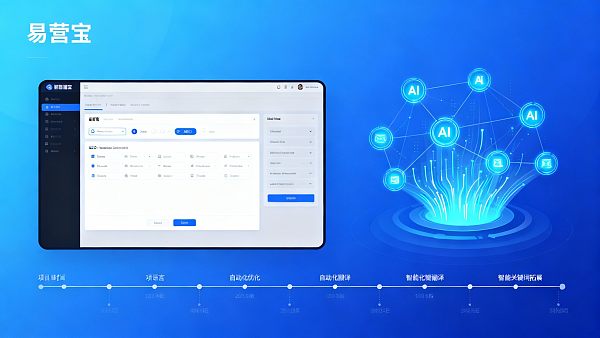
Multilingual websites are online platforms that provide language switching or independent language sites for users of different languages. Their goal is to improve conversion rates and SEO coverage through localized content. Regarding the question, "Is AI website building suitable for corporate websites?", AI website building, through automated translation, automatic TDK (Title, Description, Keywords) generation, and templated components, can significantly shorten the launch cycle and improve multilingual management efficiency. Compared to traditional website building, AI website building's advantages lie in automated content generation, intelligent keyword expansion, real-time performance monitoring, and one-click deployment capabilities, thereby reducing labor costs and improving the operational and promotional effects of cross-border e-commerce. The differences also lie in the multilingual content maintenance process, vocabulary consistency control, and automated testing coverage.
Industry Background and Market Analysis: Why Should Businesses Create Multilingual Websites? How Multilingual Websites Help Foreign Trade
The global distribution of traffic and the fragmentation of consumer habits make it difficult for monolingual websites to meet the needs of cross-border growth. Why should businesses create multilingual websites? Reasons include improving organic search coverage, reducing bounce rates, enhancing local user trust, and providing the language support required for compliant payment and logistics integration. How do multilingual websites help foreign trade? They expand search engine entry points, improve the organic ranking of product pages in long-tail languages, and enhance ROI by combining localized paid traffic and social media matrix. E-Market Information Technology (Beijing) Co., Ltd., founded in 2013 and headquartered in Beijing, China, is a global digital marketing service provider driven by artificial intelligence and big data. With a dual strategy of "technological innovation + localized services," the company has launched an AI-driven one-stop intelligent marketing platform covering intelligent website building, SEO optimization, social media marketing, and an AI intelligent advertising platform. This platform helps businesses achieve global growth and significantly improve loading speed and SEO scores, providing a quantifiable growth loop for cross-border teams.
Application Scenarios and Procurement Guidelines: Multilingual Marketing Systems, Domain Name and Brand Protection
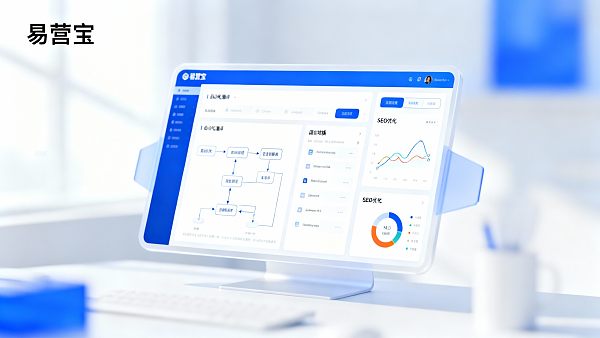
Typical application scenarios include cross-border e-commerce websites expanding overseas, multilingual product catalogs for B2B foreign trade, internationalized official websites for SaaS services, and regionalized landing pages for brands. When purchasing and selecting a multilingual marketing system, the following key points should be considered: First, does the system support a mix of machine and human translation and terminology database management? Second, does it have built-in AI keyword expansion and automatic TDK (Title, Description, Keywords) generation to match target market keywords? Third, can it integrate with AI-powered intelligent advertising platforms and social media automation to achieve a closed-loop content distribution system? Fourth, domain name strategy and brand protection need to be planned simultaneously. To avoid brand domain name squatting, it is recommended to use a convenient one-stop tool to complete domain name lookup and registration before building the website. For example, companies can directly purchase and manage domain names through a platform to achieve rapid resolution and full-cycle management. See our domain name service for instant deployment and stable access.
Technical specifications and parameters: Website acceleration and performance optimization, technology stack and domain name pricing reference
In terms of technology selection, priority should be given to automatic SSL, DDoS protection, HTTP/2 or HTTP/3, lazy loading of images, and multi-level caching strategies. Website acceleration and performance optimization also need to be combined with server location selection, DNS resolution optimization, and automatic domain name resolution to ensure access stability. Recommended technical performance acceptance indicators for the project include First Content Render Time (FCP), Time To Interactive Availability (TTI), Full Load Time, and SEO crawlability checkpoints. Refer to the table for information on domain name pricing, renewal, and transfer. When purchasing, compare the service provider's supported channels such as Xinnet, Tencent Cloud, and Alibaba Cloud to ensure flexibility in transfer and renewal.
How to build a multilingual website? Project timeline and responsibility allocation (practical template that can be directly applied)
Below is an executable timeline and responsibility allocation template, suitable for SMEs or cross-border e-commerce teams to implement quickly: Phase 1: Requirements and Planning (Week 0-1) Responsible Person: Project Manager and Decision Makers Tasks include: defining the target market, defining key languages, drafting an initial SEO keyword database, and confirming domain name and brand protection strategies; Phase 2: Design and Content (Week 2-4) Responsible Person: Designers and Content Managers Tasks include: template selection, multilingual UI adaptation, initial AI translation, and establishing a terminology database; Phase 3: Development and Integration (Week 5-8) Responsible Person: Front-end and Back-end Engineers and Operations Tasks include: multilingual routing and internationalization (i18n) implementation, API and payment/logistics integration, and CDN and automatic SSL configuration; Phase 4: Testing and Optimization (Week 9-10) Responsible Person: QA and SEO Engineers Tasks include: cross-language SEO review, performance stress testing, and localization verification of usability; Phase 5: Launch and Promotion (Week 11) Responsible Person: Operations and Marketing Team Tasks include: DNS switching, monitoring the launch and initiating cross-border e-commerce operations and promotion, and leveraging the AI-powered intelligent advertising platform to deliver initial traffic. The detailed responsibility allocation suggests that project managers coordinate progress and resources; the development team is responsible for internationalization technology implementation and website acceleration and performance optimization; content and SEO are responsible for AI keyword expansion, multilingual content proofreading, and automatic TDK generation; security and quality control are responsible for domain name resolution strategies, SSL and DDoS protection; and after-sales maintenance is responsible for post-launch monitoring and issue response. After completing the above steps, combining a multilingual marketing system and social media automation can sustainably expand site coverage and improve cross-border conversion rates.
Common Misconceptions, Trends, and Why Choose Us / Contact Us
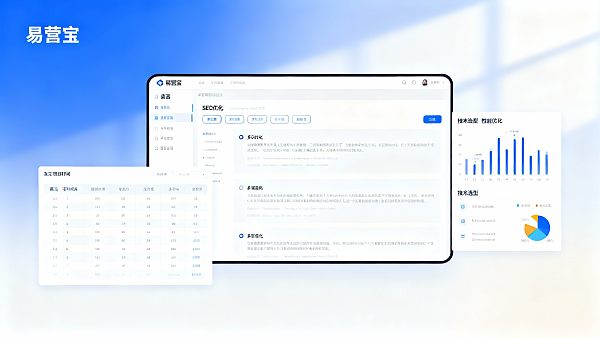
Common misconceptions include believing that machine translation can handle all localization work, mistakenly thinking that simply translating page content will attract overseas users, and neglecting domain strategy and brand protection. In practice, it's necessary to combine human proofreading, terminology consistency, and localized marketing strategies. Future trends show that multilingual marketing systems will be deeply integrated with multimodal AI generation, automatically producing localized materials and linking with AI-powered intelligent advertising platforms. Why choose us? YiYingBao boasts ten years of industry experience and a self-developed AI algorithm platform, having already helped over 100,000 companies achieve global growth. We provide a one-stop solution from domain name and intelligent website building to AI keyword expansion, automatic TDK generation, and ad placement, supporting instant deployment and full-cycle domain management and alerts. For implementation plans and pricing information, please contact our project consultants or experience our products and services through our platform to begin your global journey for your multilingual independent website.
- Corporate website
- Social Media Marketing
- Multilingual standalone site
- Domain Registration
- B2B Foreign Trade
- Yiyingbao
- SEO
- Independent Website
- SEO Optimization
- Smart Website Development
- AI Translation
- Social Media Automation
- Global CDN Acceleration
- Multilingual website
- Global Digital Marketing
- cross-border e-commerce
- Multilingual Marketing System
- AI Smart Advertising Platform
- Website Acceleration and Performance Optimization
- Cross-border e-commerce operation and promotion
- Why should businesses create multilingual websites?
- What is a multilingual website?
- What is the difference between AI website building and traditional website construction?
- Is AI website building suitable for corporate websites?
- Website
- AI website builder
Related Articles
 Does a responsive corporate website need to be built? Applicable scenarios, advantages and upgrade criteria
 How much does responsive website development cost? Design, front-end, and functionality development expenses make up the total
 What Should You Pay Attention to in Responsive Website Development? Page Adaptation, Speed and SEO Key Points

Related Products
 EasyCamp SaaS Smart Website Marketing SystemE-Yingbao SaaS Smart Website Marketing System: AI-powered, zero-code website building. Rapidly launch multilingual independent e-commerce sites in just 10 minutes. Global server acceleration and AI-driven SEO optimization empower businesses to efficiently connect with global markets. The seamless integration of technology and user-friendly operation makes building e-commerce sites incredibly simple.
 AI+SEM Intelligent Advertising Marketing SystemAI+SEM drives intelligent ad creation, empowering full-funnel precision advertising marketing. The system automatically generates weekly/monthly reports, AI recommends keywords and target countries, monitors core metrics in real-time with intelligent alerts, and enables one-click high-conversion ad solutions to help quickly acquire customers and improve ROI.
 AI+SEO Dual Engine Optimization ServiceEasyWin AI+SEO Dual Engine Optimization System leverages AI-powered keyword mining, content generation, and comprehensive technical optimization to help foreign trade enterprises acquire high-quality organic traffic, significantly improving search rankings and conversion rates.
 AI+SNS Social Media Marketing SystemYingbao AI+SNS Social Media Marketing System - Precision social capture for the social media era. Supports one-click content synchronization across major platforms like Facebook and LinkedIn. AI intelligently rewrites posts for enhanced relevance. 24/7 AI customer service and user profiling analysis empower businesses to efficiently expand into global markets.
 AI+SEO营销解决方案易营宝AI+SEO营销解决方案,通过AI批量写作、智能生成TDK、精准关键词扩词等功能,全面优化网站SEO效果,提升流量与转化率。助力企业构建高效智能网站新生态。
 AI+SEM Advertising Marketing SolutionsAI+SEM Advertising Marketing Solution leverages AI technology to deeply empower SEM ad campaigns. It automatically generates weekly/monthly reports using AI, presenting account data across multiple dimensions for comprehensive insights into campaign performance and trends. The system precisely recommends keywords and target countries, intelligently generates high-conversion ad copy, and enables one-click activation of efficient campaign plans to help businesses rapidly acquire customers. Simultaneously, it monitors core metrics in real time, intelligently identifies abnormal fluctuations, and issues timely alerts to ensure stable, high-return advertising results.
 Domain Name ServicesEasyWin provides professional domain name services, including intelligent queries, one-stop registration, brand protection, and full lifecycle management, helping businesses build a digital brand image.
 EasyOperate B2C Cross-Border E-Commerce Platform & Independent WebsiteEasyStore B2C Cross-border E-commerce Independent Store is an intelligent website building and cross-border e-commerce integrated solution independently developed by EasyStore Information Technology (Beijing) Co., Ltd. The system is specially designed for small and medium-sized as well as large export enterprises, integrating 'website building, operation, marketing, advertising, and conversion' into one, helping enterprises quickly establish cross-border e-commerce independent stores to achieve brand globalization and global sales growth.
The platform supports multiple languages, multiple currencies, and multi-channel marketing, with built-in AI intelligent translation and SEO optimization systems, suitable for mainstream markets such as Southeast Asia, Europe and America, Latin America, and the Middle East, assisting Chinese manufacturing enterprises in efficiently deploying international e-commerce strategies. SSL证书易营宝提供专业SSL安全证书服务,包括单域名和泛域名证书,确保网站数据传输加密、身份验证和完整性保护,助力企业建立安全可信的在线业务环境。









