









- China-Morocco zero-tariff access, a breakthrough in the cost of Moroccan goods exports to ChinaJun 11, 2026View details
- What signal should be released for the suspension of exports to JapanJun 10, 2026View details
- China's May LNG imports rebounded, with increased volumes from Russia and Canada filling the Middle East supply gapJun 10, 2026View details
- Will GEO change its SEO strategy?Jun 04, 2026View details
- What types of businesses are end-to-end solutions suitable for?Jun 03, 2026View details
- 2026 Global Growth Channel TrendsJun 02, 2026View details
- Changes in Search Engine Ranking Factors in 2026Jun 06, 2026View details
- Which stages is the brand visibility enhancement service suitable forMay 29, 2026View details
How to Choose Google SEO Optimization Tools: What’s the Difference Between Free and Paid?
Faced with a dazzling array of Google SEO optimization tools, how should companies make efficient choices between free and paid options? This article will combine SEO content optimization, search engine optimization services, and practical needs to help you clearly understand the differences in functionality, cost investment, and actual value.
Why Google SEO optimization tool selection cannot be judged only by “free” or “paid”
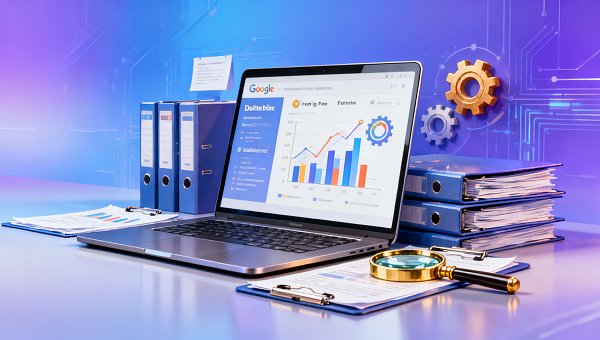
For information researchers, Google SEO optimization tools may seem like they all “can check data”; but for operators, project managers, and business decision-makers, what truly matters is data depth, collaboration efficiency, execution closed loop, and business results. Choosing the wrong tool often does not mean “it cannot be used,” but rather that after 2–3 consecutive quarters of investment, there is still no improvement in organic traffic.
In the website + marketing service integration scenario, tools never exist in isolation. They need to work together with website architecture, content planning, technical SEO, social media communication, and advertising campaigns. A tool that can only show keyword rankings may not necessarily solve core problems such as slow indexing, low page conversion, or mismatched cross-regional content.
Free tools are usually suitable for early-stage diagnosis, basic monitoring, and single-point troubleshooting; paid tools are better suited for continuous operations, multi-site management, team collaboration, and competitive monitoring. The two are not in a simple substitute relationship. A more reasonable approach is to configure a “basic combination + focused investment” according to the business stage.
Emarky Information Technology (Beijing) Co., Ltd. has been deeply engaged in global digital marketing services for more than ten years, forming full-chain solutions in intelligent website building, SEO optimization, social media marketing, and advertising campaigns. For companies seeking overseas growth, tools are only the starting point; what truly creates a gap is the ability to interpret data, execute implementation, and operate with localization capabilities.
Before selecting tools, first clarify 3 types of goals
- Basic monitoring goals: view indexing, crawling, keyword fluctuations, and page health, suitable for early-stage teams of 0–3 people.
- Growth operation goals: require keyword expansion, competitor comparison, content cluster planning, and backlink analysis, suitable for continuous monthly optimization.
- Management decision goals: focus on input-output, cross-department collaboration, delivery cycle, and vendor capability, suitable for annual budgeting and project management.
If a company has not even clarified its goals, it is easy to end up with the waste of “buying an expensive tool but only checking rankings,” or the inefficiency of “using only free tools while undertaking multi-market operation tasks.”
What are the actual differences between free tools and paid tools
When comparing Google SEO optimization tools, many companies tend to focus on price while overlooking data coverage, update frequency, export capability, and project management functions. What truly affects execution results is often not “whether you can see it,” but “whether you can make quick judgments and keep advancing continuously.”
The table below is suitable for judging the practical differences between free tools and paid tools in SEO content optimization, search engine optimization service support, and multi-role collaboration. For teams with limited budgets but complex business needs, it is more valuable for reference than simply looking at a feature list.
From an execution perspective, free tools are more like a “checkup report,” while paid tools are more like a “monitoring system + combat platform.” If a company only operates a single official website, free tools can solve many early-stage judgment issues; but if multiple languages, multiple regions, or dealer network collaboration are involved, the value of paid tools will be significantly amplified.
Which differences are most easily overlooked
1. Data actionability
Many free tools can tell you “there is a problem with the page,” but cannot efficiently answer “which 5 pages should be fixed first, and what changes can be expected in 2–4 weeks.” And this is exactly the delivery issue that project managers care about most.
2. Competitor perspective
When doing B2B overseas expansion, only looking at your own website data is often not enough. Paid tools are usually better at discovering which keywords competitors cover, where the content gaps are, and how backlink strategies are structured.
3. Reporting and decision-making efficiency
Business decision-makers do not need massive amounts of raw data; they need clear conclusions: how much to invest, how long the cycle is, how priorities should be ranked, and which actions can be outsourced. Paid tools are often more suitable for producing weekly reports, monthly reports, and quarterly reviews.
How to configure Google SEO optimization tools for different business stages
Tool selection is not a one-time action, but should be adjusted as the business stage evolves. Start-up teams, mature brands, channel-based companies, and group enterprises have clearly different needs for SEO content optimization and search engine optimization services, and their budget structures are also different.
If tool selection is handled with a “one-size-fits-all” approach, the configuration will either be too heavy, wasting the monthly budget, or too light, leading to accumulated technical problems, unfocused content output, and broken project tracking. The table below is suitable for stage judgment.
For dealers, distributors, and agents, the most common issue is that headquarters has a website, but localized pages are weak, keyword layouts are scattered, and channel content cannot be output consistently. Such scenarios often require a combination of “headquarters strategy + regional execution,” rather than simply buying a tool.
Relying on artificial intelligence and big data capabilities, Emarky is more suitable for helping such companies establish a coordinated mechanism from website building, content, and SEO to advertising campaigns. It can usually be broken down into 4 steps: diagnosis, planning, execution, and review, with each stage advanced in a rhythm of 2–6 weeks, making it easier for management to control risks and budgets.
3 common configuration plans
- Lightweight plan: suitable for single-site corporate official websites, prioritizing the resolution of crawling, indexing, and basic content optimization.
- Standard plan: suitable for companies that already have inquiry goals, adding competitor research, backlink monitoring, section planning, and monthly reporting.
- Growth plan: suitable for multi-site or multilingual businesses, adding technical SEO audits, conversion funnel analysis, and cross-channel data linkage.
In content management training scenarios, companies also use some digital research materials to unify internal understanding, such as Strategic Analysis of Digital Transformation in Human Resource Management of Public Institutions in the Intelligent Era. This type of content can help teams understand digital management thinking and then map it to the coordination of marketing and website operations.
During procurement and implementation, which costs and risks should companies focus on most
The cost of Google SEO optimization tools is not limited to subscription fees. It also includes learning costs, data organization costs, execution labor costs, and the opportunity costs caused by misjudgment. Many companies pay tool fees every month but fail to form content plans, page optimization lists, and review mechanisms, and such investment is often difficult to convert into actual leads.
Especially in integrated website + marketing service projects, tool procurement should be evaluated together with the service process. A common misunderstanding is: during procurement, only demonstration functions are considered, while implementation support is ignored. As a result, within 1–2 months after launch, no one knows how to use it, or there are many reports but they cannot guide page redesign and content production.
If the company also involves cross-department collaboration, it is recommended to divide costs into 3 levels: tool subscription, execution resources, and external services. Only by looking at these 3 levels together can decision-making approach the real investment.
5 checkpoints before procurement
- Whether it supports your current website scale, including single-site, multi-site, or multilingual structures.
- Whether it can export clear reports for weekly or monthly reporting to management.
- Whether it can identify content gaps, rather than only displaying keyword rankings.
- Whether it supports collaboration with website building, advertising campaigns, and social media operations.
- Whether there is a service team to help complete diagnosis, rectification priorities, and implementation rhythm design.
Common risks: if not avoided in advance, it is easy to exceed the budget
Only buying tools without matching execution mechanisms
This will lead to problems being discovered but left unaddressed. Technical errors, duplicate pages, and aging content will continue to accumulate over the long term, and after 3–6 months, organic search will still remain stagnant.
Over-reliance on a single data point
A rise in rankings does not equal an increase in inquiries. Companies also need to combine bounce rate, dwell time, page paths, and form conversions to judge whether SEO content optimization is truly effective.
Ignoring localization and industry differences
The keyword logic of B2B manufacturing, cross-border retail, and regional agency networks is different. Simply copying general tool templates often causes the content direction to deviate from real customer needs.
Frequently asked questions: where do companies most easily get stuck when selecting Google SEO optimization tools
The following questions basically cover the high-frequency confusion of information researchers, operators, and business decision-makers during the selection process. Instead of struggling with “which one is the best,” it is better to first judge “which combination is more suitable for the current business stage.”
What scenarios are free tools suitable for?
They are suitable for teams whose official website has just gone online, whose budget is limited, and whose main goal is to check indexing and basic technical issues. Usually, within the first 1–2 months, free tools are enough to support initial diagnosis, but if you begin working on topical content, competitor tracking, or multi-region layout, they will clearly become insufficient.
Are paid tools necessarily more cost-effective?
Not necessarily. If a company does not have a fixed execution team and its monthly output rhythm is insufficient, paid tools may only increase sunk costs. The real prerequisite for cost-effectiveness is: clear optimization actions every month, content plans, page iterations, and review mechanisms.
When purchasing SEO tools, what should decision-makers focus on most?
Focus on 4 points: whether it supports business goals, whether it can solidify team workflows, whether it can improve reporting efficiency, and whether it can collaborate with external service providers. For management, tools are not the goal; continuously obtaining effective traffic and business opportunities is the goal.
If you want long-term growth, what else should be supplemented besides tools?
At a minimum, website structure optimization, content production mechanisms, conversion page design, and data review processes should be completed. When necessary, a professional service team should also be introduced. Some companies, when doing digital collaboration, also refer to research content such as Strategic Analysis of Digital Transformation in Human Resource Management of Public Institutions in the Intelligent Era to help management understand the importance of process digitalization and collaborative systems.
Why choose us: we not only help you select tools, but also help you turn SEO into a growth system
For most companies, the real difficulty is not finding a Google SEO optimization tool, but connecting tools, websites, content, traffic, and conversions. Emarky Information Technology (Beijing) Co., Ltd. has long served globalization growth scenarios and can provide integrated support from diagnosis, website building, and SEO content optimization to advertising and social media collaboration.
If you are comparing free and paid tools, or have already purchased tools but still have not produced results, you can prioritize communication around these 6 items: current website diagnosis, keyword strategy layering, tool selection suggestions, delivery cycle estimation, customized execution plans, and budget and quotation ranges. This makes it easier to clarify the direction within 7–15 days instead of repeated trial and error.
For business decision-makers, we can help sort out procurement decision logic; for operators, we can clarify page rectification and content execution lists; for project leaders and channel partners, we can formulate implementation processes based on multi-region and multi-role collaboration needs, so that SEO no longer stays only at the level of “looking at data.”
If you would like to further confirm how Google SEO optimization tools should be combined, how to proceed under different budgets, how long the delivery cycle usually is, and whether the existing website is suitable for continued optimization, it is recommended to communicate directly around the above questions. By making the right selection, the subsequent monthly SEO investment will have a better chance to accumulate into sustainable growth.
Related Articles



Related Products
 EasyCamp SaaS Smart Website Marketing SystemE-Yingbao SaaS Smart Website Marketing System: AI-powered, zero-code website building. Rapidly launch multilingual independent e-commerce sites in just 10 minutes. Global server acceleration and AI-driven SEO optimization empower businesses to efficiently connect with global markets. The seamless integration of technology and user-friendly operation makes building e-commerce sites incredibly simple.
 AI+SEM Intelligent Advertising Marketing SystemAI+SEM drives intelligent ad creation, empowering full-funnel precision advertising marketing. The system automatically generates weekly/monthly reports, AI recommends keywords and target countries, monitors core metrics in real-time with intelligent alerts, and enables one-click high-conversion ad solutions to help quickly acquire customers and improve ROI.
 AI+SEO Dual Engine Optimization ServiceEasyWin AI+SEO Dual Engine Optimization System leverages AI-powered keyword mining, content generation, and comprehensive technical optimization to help foreign trade enterprises acquire high-quality organic traffic, significantly improving search rankings and conversion rates.
 AI+SNS Social Media Marketing SystemYingbao AI+SNS Social Media Marketing System - Precision social capture for the social media era. Supports one-click content synchronization across major platforms like Facebook and LinkedIn. AI intelligently rewrites posts for enhanced relevance. 24/7 AI customer service and user profiling analysis empower businesses to efficiently expand into global markets.
 AI+SEO营销解决方案易营宝AI+SEO营销解决方案,通过AI批量写作、智能生成TDK、精准关键词扩词等功能,全面优化网站SEO效果,提升流量与转化率。助力企业构建高效智能网站新生态。
 AI+SEM Advertising Marketing SolutionsAI+SEM Advertising Marketing Solution leverages AI technology to deeply empower SEM ad campaigns. It automatically generates weekly/monthly reports using AI, presenting account data across multiple dimensions for comprehensive insights into campaign performance and trends. The system precisely recommends keywords and target countries, intelligently generates high-conversion ad copy, and enables one-click activation of efficient campaign plans to help businesses rapidly acquire customers. Simultaneously, it monitors core metrics in real time, intelligently identifies abnormal fluctuations, and issues timely alerts to ensure stable, high-return advertising results.
 Domain Name ServicesEasyWin provides professional domain name services, including intelligent queries, one-stop registration, brand protection, and full lifecycle management, helping businesses build a digital brand image.
 EasyOperate B2C Cross-Border E-Commerce Platform & Independent WebsiteEasyStore B2C Cross-border E-commerce Independent Store is an intelligent website building and cross-border e-commerce integrated solution independently developed by EasyStore Information Technology (Beijing) Co., Ltd. The system is specially designed for small and medium-sized as well as large export enterprises, integrating 'website building, operation, marketing, advertising, and conversion' into one, helping enterprises quickly establish cross-border e-commerce independent stores to achieve brand globalization and global sales growth.
The platform supports multiple languages, multiple currencies, and multi-channel marketing, with built-in AI intelligent translation and SEO optimization systems, suitable for mainstream markets such as Southeast Asia, Europe and America, Latin America, and the Middle East, assisting Chinese manufacturing enterprises in efficiently deploying international e-commerce strategies. SSL证书易营宝提供专业SSL安全证书服务,包括单域名和泛域名证书,确保网站数据传输加密、身份验证和完整性保护,助力企业建立安全可信的在线业务环境。









