









- China-Morocco zero-tariff access, a breakthrough in the cost of Moroccan goods exports to ChinaJun 11, 2026View details
- What signal should be released for the suspension of exports to JapanJun 10, 2026View details
- China's May LNG imports rebounded, with increased volumes from Russia and Canada filling the Middle East supply gapJun 10, 2026View details
- Will GEO change its SEO strategy?Jun 04, 2026View details
- What types of businesses are end-to-end solutions suitable for?Jun 03, 2026View details
- 2026 Global Growth Channel TrendsJun 02, 2026View details
- Changes in Search Engine Ranking Factors in 2026Jun 06, 2026View details
- Which stages is the brand visibility enhancement service suitable forMay 29, 2026View details
Facebook ad optimization isn’t delivering results? Check these 4 issues first
If your Facebook ad optimization has been underperforming for a long time, the problem may not necessarily be the budget. Audience targeting, creative quality, conversion funnel, and data tracking often determine the success or failure of a Facebook advertising strategy. Start by checking these 4 key issues before you can truly improve campaign performance.
Don’t rush to increase the budget yet: Why do so many Facebook ad campaigns go off track right from the start?
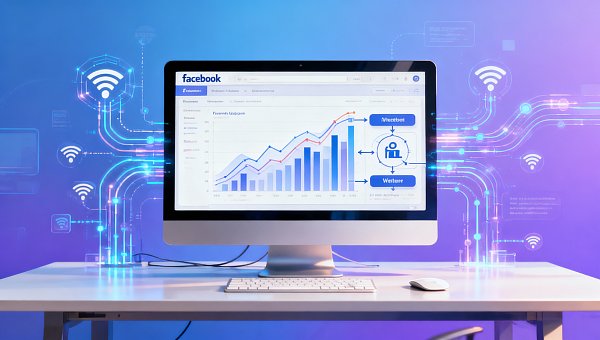
In the integrated website + marketing service scenario, Facebook advertising is not an isolated action, but a complete chain from traffic acquisition and page engagement to lead conversion. Many companies find after running campaigns for 7 to 14 days that clicks are coming in, but inquiries are not. Their first reaction is often that the budget is too low, while in reality the more common issue is that the people attracted at the front end are not the right ones, and the back-end follow-up is not smooth either.
For researchers and operators, the most common challenge is having too many metrics and not knowing whether to first look at click-through rate, conversion rate, or cost per acquisition. For business decision-makers, what truly matters is whether the investment can show validation signals within 2 to 4 weeks, rather than the superficial exposure metrics shown in the platform backend.
Yiyingbao Information Technology (Beijing) Co., Ltd. has long served global growth projects. Its core advantage lies not only in campaign execution, but also in integrating AI-powered website building, SEO optimization, social media marketing, and advertising. For industries such as agriculture, agricultural products, and food, where brand image and trust-building matter greatly, advertising performance often depends heavily on landing page quality and content structure, rather than simply raising bids to grab more traffic.
If your company is building a brand website with a natural storytelling feel, you may refer to Agriculture, Agricultural Products, Food website display solutions. This type of structure is more suitable for receiving cold traffic brought by Facebook advertising, helping visitors quickly understand product categories, service commitments, and cooperation models within 30 to 90 seconds.
When ad performance stagnates, it is recommended to first look at these 4 types of core signals
- Front-end traffic quality: Whether click-through rate, bounce behavior, and visit duration match the target market and audience intent.
- Mid-funnel content alignment: Whether the creative message is consistent with the landing page, and whether there is a disconnect where “the ad says one thing, while the page says another.”
- Back-end conversion path: Whether the form is too long, whether the inquiry entry point is clear, and whether mobile submission is smooth.
- Data feedback integrity: Whether pixels, events, and conversion attribution windows are set reasonably, and whether there are missed or incorrect records.
Breaking down and checking these 4 items is usually more effective than blindly scaling traffic. Especially for B2B projects, the lead decision cycle commonly ranges from 2 weeks to 1 month or even longer. If you only look at inquiries on the same day, it is very easy to misjudge campaign quality.
Issue 1: Inaccurate audience targeting — why are there lots of clicks but no inquiries?
The most common misunderstanding in Facebook advertising is treating “reaching more people” as “finding the right people.” If the audience is packaged too broadly, the system can indeed get a lower cost per click more easily, but this kind of traffic is often driven by curiosity rather than purchase intent. Especially for distributors, agents, and project managers, they care more about delivery capability, qualification fit, and cooperation details, rather than broad brand slogans.
A more reliable approach is to first split testing into 3 audience groups: cold-start interest audiences, lookalike audiences, and retargeting audiences. Each group should run for at least 3 to 5 days, and decisions on whether to keep it should only be made after the sample size becomes stable. This helps avoid mixing people with different intent levels into the same ad set, which can make the data look averaged out but impossible to optimize in practice.
For export-oriented or multi-region businesses, you should also avoid mixing countries, languages, and industry roles into one campaign. A common approach is to divide markets by maturity into Category A core markets, Category B test markets, and Category C low-budget exploratory markets. This helps control learning costs in the first 7 days and also makes it easier for project managers to arrange the localization rhythm of creatives and pages.
If the company’s main products have clear industry attributes, such as custom agricultural product packaging, food brand presentation, or corporate image output for agricultural enterprises, audience targeting should also be developed around procurement scenarios and partnership identities, rather than focusing only on age and interest tags.
How can you tell whether “the audience is wrong” or “the ad is weak”?
You can first look at one simple combination: high click-through rate, low page dwell time, and low conversion usually point more to inaccurate audience targeting; low click-through rate, normal dwell time, and low conversion are more likely due to weak creative appeal. If both click-through rate and dwell time are not bad, but form submissions are very low, the problem is mostly in page engagement or inquiry form design.
The table below is suitable for the preliminary diagnosis of Facebook advertising, helping operators and decision-makers quickly identify where the problem belongs.
The value of this type of breakdown lies in turning “the ads aren’t working” into an actionable problem list. For procurement decision-makers, whether the issue direction can be clarified within the first campaign cycle is often more important than short-term cost fluctuations.
Issue 2: The creative does not hit the customer’s decision point, so no matter how long you optimize, it is hard to scale up
In Facebook advertising, creative is not just about whether it looks good visually, but whether it can clearly explain within 3 to 5 seconds “who you are, what problem you can solve, and why you are worth continuing to watch.” Many companies create polished assets but get no conversions. In essence, they are treating brand presentation as sales communication, lacking clear scenarios, target audience, and outcomes.
Taking integrated website + marketing services as an example, users usually have 3 kinds of thoughts when they see an ad: first, can this help me acquire customers; second, can this be executed effectively; third, can it cover both website development and subsequent promotion. If the creative only stays at the level of “professional team, global service,” it is difficult to trigger further action after the click.
For clients related to agriculture, agricultural products, and food, creatives are recommended to highlight real scenarios, such as product grid displays, brand story pages, custom packaging entry points, service commitment modules, and similar content. This type of expression makes it easier for target customers to understand the value of cooperation than vague corporate introductions. If the landing page uses a display structure like Agriculture, Agricultural Products, Food, it is also more conducive to strengthening brand credibility.
Yiyingbao’s advantage lies in the fact that creative optimization is not handled in isolation, but iterated together with website structure, SEO content layout, and advertising data. The benefit of this approach is that the same selling point can be used both on the first screen of the ad and on the landing page and subsequent organic search content, reducing information fragmentation.
What elements do high-converting creatives usually include?
- Clear audience: Who is it written for — the brand owner, distributor, overseas buyer, or project manager.
- Clear outcome: Is it to get inquiries, book a proposal, download a catalog, or apply for custom packaging.
- Clear proof: Show service processes, page structures, and delivery milestones, rather than just saying “rich experience.”
- Clear action: Use 1 primary conversion goal, and avoid asking for messages, friend adds, external site jumps, and downloads all at the same time.
Creative testing suggestion: Don’t change too much at once
A more effective testing method is to change only 1 to 2 variables in each round, such as the main image, headline, call-to-action button, or opening copy. Observe each round for about 3 days before deciding whether to keep it. If more than 5 items are changed at the same time, it becomes very difficult to determine which factor actually drove the change in click-through rate or conversion rate.
For end-consumer-oriented content, you can place more emphasis on visual impact and user experience; for B2B customers, information such as delivery cycle, service commitment, and industry fit should be added. Using the same set of creatives for different audiences is often a key reason why Facebook advertising performance remains stagnant for a long time.
Issue 3: The landing page and conversion path are not smooth, so even precise ads can easily lose traffic
The ad brings people in, but whether the page can hold them determines the efficiency of the second half of Facebook advertising. For many companies, the page problem is not “poor design,” but rather “an unclear conversion path.” If the first screen does not show the main business clearly, the second screen lacks case-study logic, and the form is hidden too deep, users who originally had intent will leave within 60 seconds.
In integrated website + marketing service projects, the landing page should answer at least 4 questions: what do you offer, who is it for, how do we work together, and what should be done next. If visitors need to click 2 to 3 times after entering the page to find the inquiry entry point, or if the form has more than 6 to 8 fields, mobile conversion rates will usually be significantly affected.
For industries that require brand presentation, the page should also include trust-building content, such as product categories, service commitments, FAQs, news blogs, custom packaging, and other modules. This not only matches buyers’ information verification habits, but also helps with subsequent SEO content accumulation, enabling synergy between advertising and organic traffic.
Yiyingbao has long emphasized that “website building does not end at launch, but starts the conversion system.” From page architecture and mobile responsiveness to form path design, all of these directly affect advertising performance. This is also why the same budget can bring completely different lead results depending on the quality of website engagement.
When checking a landing page, it is recommended to first look at these 5 key items
Before formally scaling up traffic, it is recommended to use the table below to conduct a page health check. It is especially suitable for business decision-makers and project managers to quickly confirm issue priorities within one review meeting.
If the page serves both ad traffic and organic search traffic at the same time, content hierarchy becomes even more important. It must allow cold traffic to understand quickly, while also enabling research-oriented users to complete deeper judgment within 5 to 10 minutes. This is exactly where the value of integrated website and marketing synergy lies.
Issue 4: Data tracking is not fully connected, causing Facebook ad optimization to go in the wrong direction
Many teams think they are optimizing, but in reality they are only making decisions based on incomplete data. In Facebook advertising, if pixel events, form submissions, button clicks, and page visit depth are not fully connected, what the system learns is not effective leads, but possibly just low-quality interactions. In this case, even if optimization continues for 2 weeks, the results are likely to become more and more off target.
Common issues include: no event triggered on the form submission success page, no tracking set on on-site consultation buttons, cross-domain redirects causing data interruption, and inconsistent events between mobile and desktop. For operators, these technical details are often overlooked; but for decision-makers, they directly affect budget allocation and channel judgment.
A more reliable approach is to complete 1 basic tracking audit before launch, and then review it once on day 3 and once on day 7 after launch. If the company is also doing SEO, website building, and social media promotion at the same time, lead naming, channel sources, and page event definitions should also be unified, so as to avoid different teams looking at different data and ultimately being unable to close the loop.
When Yiyingbao advances projects based on AI and big data capabilities, what it emphasizes is not just “having data,” but “data that can guide the next action.” From website tracking deployment to ad feedback, and then to the linkage between content and channels, the goal is to ensure that every advertising investment has a clear basis for judgment.
Data audit checklist before and after launch
- 1 day before launch: Confirm that 3 types of basic events — page visits, button clicks, and form submissions — can be recorded normally.
- Day 3 after launch: Check whether the conversion data in the ad backend is close to the actual lead volume on the site, to avoid false event reporting.
- Day 7 after launch: Verify the audience quality of different ad sets and determine whether low-intent combinations need to be paused.
- Review once per month: Compare the 3 dimensions of channels, pages, and creatives to identify the key variables that truly drive inquiries.
Once the data chain becomes clear, Facebook ad optimization can truly enter a positive cycle: knowing what should be cut, what should be kept, and what should be expanded, instead of relying on experience-based guesses.
How to build a more stable growth mechanism: from one-off advertising to website + marketing collaboration
If a company only treats Facebook advertising as a short-term customer acquisition tool, it will usually encounter 2 bottlenecks: first, there is no buffer when costs fluctuate; second, once the ads stop, traffic stops as well. A more stable approach is to coordinate ads, website, content, and search so that every channel serves the conversion funnel.
Specifically, the customer acquisition system can be divided into 4 layers: ads are responsible for quickly validating demand, the website is responsible for conversion engagement, SEO is responsible for accumulating long-term search assets, and social media content is responsible for continuously building brand awareness. In this way, even when ads are still in the testing phase, the company still has organic traffic and content touchpoints to support overall performance.
For companies with limited budgets, it is recommended to first complete a basic growth framework of about 90 days: the first 30 days focus on pages and tracking deployment, days 30 to 60 optimize ad structure and creatives, and days 60 to 90 simultaneously strengthen SEO pages and high-intent content. This rhythm is more suitable for B2B lead-generation businesses and also makes it easier for management to evaluate phased returns.
Since its establishment in 2013, Yiyingbao has built full-chain service capabilities around AI website building, SEO optimization, social media marketing, and advertising. For companies hoping to drive global growth, the value of this integrated model lies in reducing communication loss, shortening optimization cycles, and improving the overall collaborative efficiency from click to deal.
Why choose us
If you are currently facing issues such as unstable Facebook advertising performance, insufficient website engagement, difficulty reducing lead costs, or inability to close the data loop, you may start by consulting from 4 directions: whether the audience structure is reasonable, whether the creatives match the target customers, whether the landing page affects conversion, and whether the tracking solution is complete.
We can combine your industry attributes and business stage to help confirm website building solutions, page modules, ad testing rhythm, delivery cycle, and customized growth paths. For projects in agriculture, agricultural products, food, and similar sectors that emphasize brand presentation and cooperation conversion, we can also further discuss page structure, custom packaging entry points, content section planning, and quotation methods.
If you need a more specific basis for judgment, it is recommended to directly organize your existing ad account structure, data from the past 7 to 30 days, landing page links, and current form process. This makes it easier to quickly identify bottlenecks and clarify whether to optimize the advertising first, adjust the website first, or move forward with an integrated solution simultaneously.
For researchers, operators, and business decision-makers, truly effective growth is not about one advertising trick, but about finding a method that can be reviewed, executed, and scaled. Only after clearly checking these 4 issues should you talk about scaling traffic — that is often the key for Facebook advertising to get out of a stagnant phase.
Related Articles



Related Products
 EasyCamp SaaS Smart Website Marketing SystemE-Yingbao SaaS Smart Website Marketing System: AI-powered, zero-code website building. Rapidly launch multilingual independent e-commerce sites in just 10 minutes. Global server acceleration and AI-driven SEO optimization empower businesses to efficiently connect with global markets. The seamless integration of technology and user-friendly operation makes building e-commerce sites incredibly simple.
 AI+SEM Intelligent Advertising Marketing SystemAI+SEM drives intelligent ad creation, empowering full-funnel precision advertising marketing. The system automatically generates weekly/monthly reports, AI recommends keywords and target countries, monitors core metrics in real-time with intelligent alerts, and enables one-click high-conversion ad solutions to help quickly acquire customers and improve ROI.
 AI+SEO Dual Engine Optimization ServiceEasyWin AI+SEO Dual Engine Optimization System leverages AI-powered keyword mining, content generation, and comprehensive technical optimization to help foreign trade enterprises acquire high-quality organic traffic, significantly improving search rankings and conversion rates.
 AI+SNS Social Media Marketing SystemYingbao AI+SNS Social Media Marketing System - Precision social capture for the social media era. Supports one-click content synchronization across major platforms like Facebook and LinkedIn. AI intelligently rewrites posts for enhanced relevance. 24/7 AI customer service and user profiling analysis empower businesses to efficiently expand into global markets.
 AI+SEO营销解决方案易营宝AI+SEO营销解决方案,通过AI批量写作、智能生成TDK、精准关键词扩词等功能,全面优化网站SEO效果,提升流量与转化率。助力企业构建高效智能网站新生态。
 AI+SEM Advertising Marketing SolutionsAI+SEM Advertising Marketing Solution leverages AI technology to deeply empower SEM ad campaigns. It automatically generates weekly/monthly reports using AI, presenting account data across multiple dimensions for comprehensive insights into campaign performance and trends. The system precisely recommends keywords and target countries, intelligently generates high-conversion ad copy, and enables one-click activation of efficient campaign plans to help businesses rapidly acquire customers. Simultaneously, it monitors core metrics in real time, intelligently identifies abnormal fluctuations, and issues timely alerts to ensure stable, high-return advertising results.
 Domain Name ServicesEasyWin provides professional domain name services, including intelligent queries, one-stop registration, brand protection, and full lifecycle management, helping businesses build a digital brand image.
 EasyOperate B2C Cross-Border E-Commerce Platform & Independent WebsiteEasyStore B2C Cross-border E-commerce Independent Store is an intelligent website building and cross-border e-commerce integrated solution independently developed by EasyStore Information Technology (Beijing) Co., Ltd. The system is specially designed for small and medium-sized as well as large export enterprises, integrating 'website building, operation, marketing, advertising, and conversion' into one, helping enterprises quickly establish cross-border e-commerce independent stores to achieve brand globalization and global sales growth.
The platform supports multiple languages, multiple currencies, and multi-channel marketing, with built-in AI intelligent translation and SEO optimization systems, suitable for mainstream markets such as Southeast Asia, Europe and America, Latin America, and the Middle East, assisting Chinese manufacturing enterprises in efficiently deploying international e-commerce strategies. SSL证书易营宝提供专业SSL安全证书服务,包括单域名和泛域名证书,确保网站数据传输加密、身份验证和完整性保护,助力企业建立安全可信的在线业务环境。









