









- How to view pricing in the global traffic ecosystem? Cost comparison of search, social media, and content channel advertisingJul 06, 2026View details
- How to assess foreign trade website development trends?Looking at 2026 changes from multilingual,AI content to conversion pathsJul 04, 2026View details
- What are the new trends in multilingual marketing data analytics tools in 2026? Focus on attribution、automation and complianceJul 04, 2026View details
- Is Brand Globalization Marketing Consulting Worth Buying? At What Stage Should Companies Bring It InJul 01, 2026View details
- Cross-Border Marketing Trend Research: Why More and More Companies Are Starting to Deploy AI Search and GEO OptimizationJun 30, 2026View details
- Cross-Border Marketing Trend Research: How Independent Sites, AI Content, and Short-Video Customer Acquisition Are ChangingJun 30, 2026View details
How to manage multilingual website content? 1 CMS + 3 automation rules = 70% reduction in operational manpower
Why should foreign trade enterprises build independent websites? How to manage content for multilingual websites? — An AI-driven CMS + 3 automation rules can reduce operational manpower by 70%. Yiyunbao's intelligent website-building system makes multilingual website translation more reliable, SEO more friendly, and content management more efficient.
1. Multilingual websites are not just "translation stacks" but the foundational infrastructure for global growth
Why should foreign trade enterprises build independent websites? The answer has long surpassed the basic understanding of "having an official website." When 68% of Google search traffic comes from non-English-speaking countries (StatCounter 2024), and when Brazilian consumers spend 3.2 times longer on Portuguese pages than English pages, independent websites have become an irreplaceable "digital sovereignty carrier" for brands going global. The real barrier is not the website itself but the ability to sustainably supply content—this is the core issue causing 92% of SMEs to fall into the dilemma of "fast to build, hard to manage, slow to update" when expanding into multilingual markets.
What’s the difference between multilingual and single-language websites? It’s far more than just text replacement. It involves language logic, cultural adaptation, localized SEO, regional compliance (e.g., GDPR/Brazil’s LGPD), payment and logistics interfaces, and 12 other system-level coupling factors. A multilingual site without structured management often leads to duplicate TDK, incorrect hreflang tags, missing image ALT text, broken internal links, and other issues, directly dragging down Google’s organic traffic acquisition efficiency.
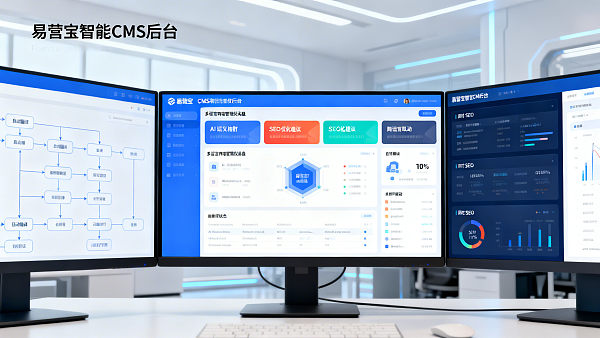
2. The three manpower black holes of traditional management methods
Current mainstream multilingual content management still relies on the linear workflow of "manual translation → manual upload → page-by-page verification → periodic synchronization." A certain auto parts customer reported: maintaining English/German/French/Spanish sites requires 2 full-time editors + 1 SEO specialist, with a monthly workload exceeding 260 hours and an error rate as high as 17% (mainly due to inconsistent terminology, invalid links, and missing meta tags). This model quickly becomes unsustainable during business expansion.
Industry research shows that over 65% of companies are forced to reduce language coverage due to excessive content management costs. How many languages does a multilingual website typically need? Empirical data indicates: covering English + one high-potential language (e.g., German, Japanese, Arabic) can reach 73% of global B2B purchasing decision-makers; adding localized social media content increases conversion rates by 41% on average (McKinsey 2023).
3. The smart solution: "1 CMS + 3 automation rules"
Yiyunbao’s intelligent website-building system, powered by its self-developed AI backend, reconstructs multilingual content management into a configurable, traceable, and evolvable closed-loop system. The core is not to replace humans but to compress repetitive labor below the threshold:
4. Is AI translation for multilingual websites reliable? Real-world validation
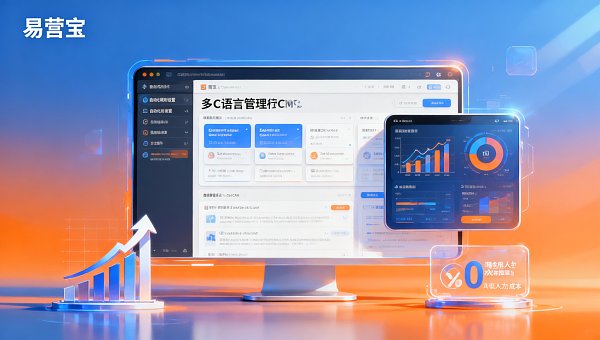
Is AI translation for multilingual websites reliable? The key lies in "scenario adaptability." Yiyunbao’s AI translation engine has passed ISO/IEC 27001 information security certification and integrates 217 industry-specific glossaries. In a medical device client case: German product manuals were AI-translated and reviewed by medical experts, reducing delivery time from 14 days to 3 while passing EU MDR compliance audits; the Japanese site’s FAQ module adopted a "AI-generated + localized customer service annotation" dual-track mechanism, increasing user issue resolution rates to 91.4%.
Compared to traditional outsourced translation, AI solutions create generational advantages in response speed, cost control, and terminology accuracy. More importantly, it transforms "how to increase overseas traffic for multilingual websites" from an abstract question into a quantifiable growth lever—through AI keyword mining for local long-tail terms and AI-generated banners compliant with regional aesthetics, a home furnishing client saw a 189% increase in organic traffic within 3 months after launching synchronized English/Canadian/Australian sites.
5. Why choose Yiyunbao? More than a tool, a growth partner
As one of China’s top 100 SaaS companies, a Google Premier Partner, and an official Meta agent, Yiyunbao has helped over 100,000 enterprises achieve global expansion. Our differentiation lies in deeply embedding AI capabilities into business workflows—not just "building a multilingual website" but constructing a "content production-traffic acquisition-user conversion-data feedback" growth flywheel.
Technologically, 15 AI core patents ensure system evolution; service-wise, our "HQ + regional partners" model provides 7×12 localized support across 30+ Chinese provinces and overseas branches in the US/Singapore; ecosystem-wise, direct integrations with Google Ads/Yandex/Meta and Shopify/Amazon enable true "build-acquire-convert" closed-loop solutions.
Visit Yiyunbao’s official website now to get free copies of the "Multilingual Website SEO Health Diagnostic Report" and "Global Expansion Independent Site Setup White Paper." Our expert team will customize solutions for you: How to build a multilingual website? Budget planning, language priority recommendations, and localization compliance essentials—all starting at $0. Let the world make way for Chinese brands, beginning with a precision upgrade in content management.
- Independent website building
- Google Ads
- Meta Ads
- Yiyingbao
- SEO
- Independent Website
- Smart website builder system
- Smart Website Building
- AI Translation
- EasySite Intelligent Website Builder
- AI Translation Engine
- Multilingual website
- How many languages does a multilingual website generally require?
- How to manage content for a multilingual website?
- How can a multilingual website increase overseas traffic?
- What is the difference between a multilingual website and a single-language website?
- Why should foreign trade enterprises build independent websites?
- EYABOO official website
Related Articles
 How can website data analysis improve conversion rates? First identify high-bounce pages and key loss points
 How much does it cost to build a foreign trade multilingual website?Analysis of the modules and hidden costs that affect quotations
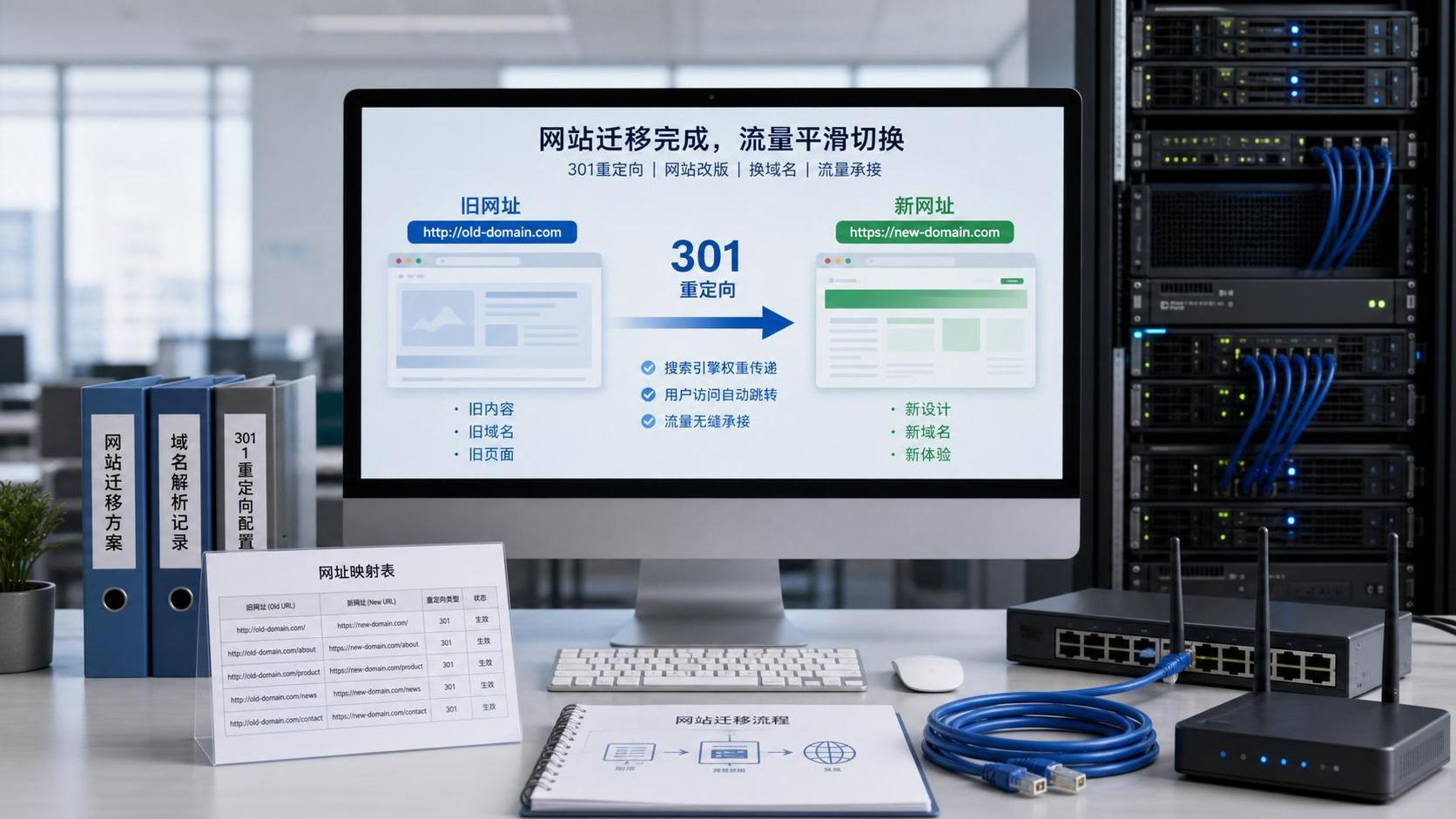
 Detailed explanation of 301 redirect setup methods:which pages must be redirected during a website redesign or domain change


Related Products
 EasyCamp SaaS Smart Website Marketing SystemE-Yingbao SaaS Smart Website Marketing System: AI-powered, zero-code website building. Rapidly launch multilingual independent e-commerce sites in just 10 minutes. Global server acceleration and AI-driven SEO optimization empower businesses to efficiently connect with global markets. The seamless integration of technology and user-friendly operation makes building e-commerce sites incredibly simple.
 AI+SEM Intelligent Advertising Marketing SystemAI+SEM drives intelligent ad creation, empowering full-funnel precision advertising marketing. The system automatically generates weekly/monthly reports, AI recommends keywords and target countries, monitors core metrics in real-time with intelligent alerts, and enables one-click high-conversion ad solutions to help quickly acquire customers and improve ROI.
 AI+SEO Dual Engine Optimization ServiceEasyWin AI+SEO Dual Engine Optimization System leverages AI-powered keyword mining, content generation, and comprehensive technical optimization to help foreign trade enterprises acquire high-quality organic traffic, significantly improving search rankings and conversion rates.
 AI+SNS Social Media Marketing SystemYingbao AI+SNS Social Media Marketing System - Precision social capture for the social media era. Supports one-click content synchronization across major platforms like Facebook and LinkedIn. AI intelligently rewrites posts for enhanced relevance. 24/7 AI customer service and user profiling analysis empower businesses to efficiently expand into global markets.
 AI+SEO营销解决方案易营宝AI+SEO营销解决方案,通过AI批量写作、智能生成TDK、精准关键词扩词等功能,全面优化网站SEO效果,提升流量与转化率。助力企业构建高效智能网站新生态。
 AI+SEM Advertising Marketing SolutionsAI+SEM Advertising Marketing Solution leverages AI technology to deeply empower SEM ad campaigns. It automatically generates weekly/monthly reports using AI, presenting account data across multiple dimensions for comprehensive insights into campaign performance and trends. The system precisely recommends keywords and target countries, intelligently generates high-conversion ad copy, and enables one-click activation of efficient campaign plans to help businesses rapidly acquire customers. Simultaneously, it monitors core metrics in real time, intelligently identifies abnormal fluctuations, and issues timely alerts to ensure stable, high-return advertising results.
 Domain Name ServicesEasyWin provides professional domain name services, including intelligent queries, one-stop registration, brand protection, and full lifecycle management, helping businesses build a digital brand image.
 EasyOperate B2C Cross-Border E-Commerce Platform & Independent WebsiteEasyStore B2C Cross-border E-commerce Independent Store is an intelligent website building and cross-border e-commerce integrated solution independently developed by EasyStore Information Technology (Beijing) Co., Ltd. The system is specially designed for small and medium-sized as well as large export enterprises, integrating 'website building, operation, marketing, advertising, and conversion' into one, helping enterprises quickly establish cross-border e-commerce independent stores to achieve brand globalization and global sales growth.
The platform supports multiple languages, multiple currencies, and multi-channel marketing, with built-in AI intelligent translation and SEO optimization systems, suitable for mainstream markets such as Southeast Asia, Europe and America, Latin America, and the Middle East, assisting Chinese manufacturing enterprises in efficiently deploying international e-commerce strategies. SSL证书易营宝提供专业SSL安全证书服务,包括单域名和泛域名证书,确保网站数据传输加密、身份验证和完整性保护,助力企业建立安全可信的在线业务环境。









