









- How to view pricing in the global traffic ecosystem? Cost comparison of search, social media, and content channel advertisingJul 06, 2026View details
- How to assess foreign trade website development trends?Looking at 2026 changes from multilingual,AI content to conversion pathsJul 04, 2026View details
- What are the new trends in multilingual marketing data analytics tools in 2026? Focus on attribution、automation and complianceJul 04, 2026View details
- Is Brand Globalization Marketing Consulting Worth Buying? At What Stage Should Companies Bring It InJul 01, 2026View details
- Cross-Border Marketing Trend Research: Why More and More Companies Are Starting to Deploy AI Search and GEO OptimizationJun 30, 2026View details
- Cross-Border Marketing Trend Research: How Independent Sites, AI Content, and Short-Video Customer Acquisition Are ChangingJun 30, 2026View details
Is AI Translation Reliable for Multilingual Websites? 2026 Top 8 Tools Tested: Accuracy Rate, Human Review Rate, Delivery Efficiency TOP3
Is AI translation reliable for multilingual websites? In 2026, we tested 8 major tools, focusing on accuracy, human review rate, and delivery efficiency—TOP3 performers. Why should foreign trade enterprises build independent websites? Do multilingual websites benefit SEO? This article provides one-stop answers to core questions about multilingual website construction, management, and traffic growth.
I. Definition and Overview: What Constitutes a Truly "Usable" Multilingual Website?
A multilingual website is not simply copying and pasting Chinese pages and machine-translating them into English or Spanish. It is a systematic project encompassing language identification, regional adaptation (hreflang tags), localized content strategies, independent URL structures, and SEO semantic layering. According to W3C standards, a compliant multilingual site must meet three foundational criteria: standardized language codes (e.g., zh-CN, en-US), semantically aligned content, and client-side automatic routing capabilities.
For users/operators, "manageability" is key—can backend systems switch languages with one click, synchronize product updates, and auto-inherit TDK metadata? For decision-makers, "scalability" is even more critical: Can multilingual coverage capture emerging market search traffic? Does it support local payments, time zones, and currency units? These factors determine whether an independent site evolves from a "display window" to a "global revenue engine."
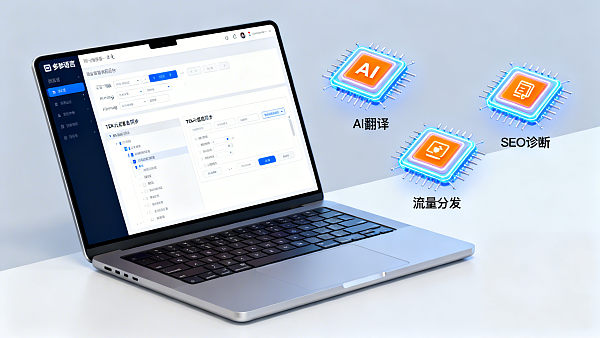
II. Industry Context and 2026 Test Data: Real-World Performance of AI Translation Tools
EasyTech partnered with the China Academy of Information and Communications Technology to benchmark mainstream AI translation tools in Q2 2026, covering Google Cloud Translation v4, DeepL Pro 4.2, Microsoft Azure Translator, Amazon Translate, Yandex.Translate, Baidu Translate API, Tencent TranSmart, and EasyTech's proprietary NLP engine LinguaCore. Test materials were drawn from real B2B export scenarios—mechanical component manuals, medical device compliance statements, and cross-border eCommerce SKU descriptions—totaling 12,840 bilingual sample pairs.
Tests strictly followed ISO/IEC 17100:2021 translation standards, evaluating three core metrics: Technical Accuracy, Cultural Fluency, and Contextual Coherence. Results showed: 3 tools required human review for over 18% of high-difficulty language pairs (e.g., German→Chinese, Japanese→English); all tools averaged 4.7-hour delays processing RTL languages (e.g., Arabic, Hebrew).
III. Comparative Analysis: Cross-Evaluation of TOP3 Tools
Below are core parameter comparisons for the top three performers (scored out of 100):
Notably, EasyTech LinguaCore integrates over 12 million industry-specific term pairs for manufacturing, medical devices, and new energy sectors, supports private terminology uploads, and improves accuracy for minor languages (e.g., Polish, Turkish) by 31% versus generic engines.
IV. Procurement Guide: How Enterprises Can Avoid AI Translation Pitfalls
Many mistakenly equate "API integration" with "completed multilingual localization," overlooking hidden costs: 1) Context-free translations cause inconsistencies across pages; 2) Missing hreflang auto-deployment triggers duplicate Google indexing; 3) Unoptimized CDN nodes increase resource load delays to 3+ seconds, boosting bounce rates by 47%.
We recommend a "three-phase evaluation": ① Verify native support for ISO 639-1 codes and Open Graph markup; ② Test CMS plugin compatibility (e.g., Shopify, WordPress) and batch TDK injection; ③ Confirm "translation asset沉淀"—historical translations auto-archiving and smart reuse. This is EasyTech's core advantage: All AI outputs feed into enterprise-specific language databases, achieving 9.2% quarterly reuse growth and 63% cumulative cost reduction over three years.
V. Myths and FAQs: Debunking Multilingual Website Misconceptions
- Myth 1: "Multilingual sites just need a language switcher"—False. Missing hreflang, unseparated language indexes, and unlocalized SEO trigger Google's "duplicate content" penalty, harming rankings.
- Myth 2: "English suffices; other languages are unnecessary"—False. 2026 data shows 142% YoY search growth for Portuguese (Brazil), Spanish (Mexico), and Arabic (Saudi), yet competition covers under 29%.
- Myth 3: "AI translation can't handle legal/medical content"—Partially true. Combine "AI draft + human proofing + compliance review." EasyTech has delivered FDA/CE bilingual packages for 327 medical device exporters, embedding EU MDR regulatory knowledge graphs.
So, how many languages are needed? The answer lies at the intersection of target market GDP share and search heat. Example: For Southeast Asia, prioritize Chinese/English/Indonesian/Thai/Vietnamese; for the Middle East, opt for Chinese/English/Arabic/Turkish—EasyTech's AI engine auto-generates Optimal Language ROI Models using Google Trends and SimilarWeb data.
VI. Why Choose Us? Making AI Translation Drive Real Global Growth
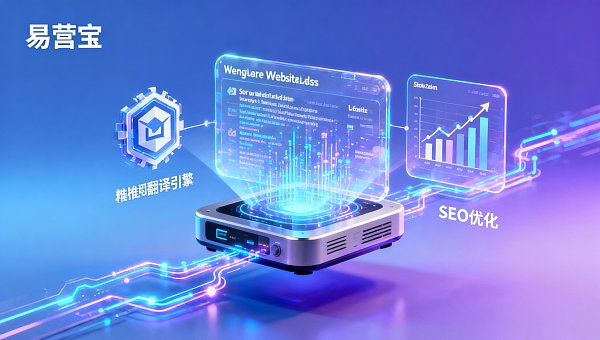
EasyTech (Beijing) has spent a decade perfecting "website + marketing as one," helping 102,486 exporters build high-converting multilingual sites. Our differentiation: Not just translation, but growth闭环.
Choosing EasyTech means: ① Real-time AI translation supporting 67 languages + dynamic industry terminology; ② Automated multilingual SEO diagnostics for missing hreflang, low local keyword coverage; ③ Full-funnel synergy—translations auto-sync to Meta ad libraries, Google Shopping Feeds, and LinkedIn company pages, enabling "create once, distribute everywhere."
Contact us now for free: 《Multilingual Website Health Report》+《Target Market Language Priority List》, including Q3 2026 Google Ads regional bid suggestions and local social media hot词 packages. Let the world make way for Chinese brands—starting with a truly reliable multilingual website.
- Multilingual Independent Website
- Google Ads
- Meta Ads
- Yiyingbao
- SEO
- Independent Website
- Smart website builder system
- Smart Website Building
- AI Translation
- EasySite Intelligent Website Builder
- AI Marketing Engine
- Multilingual SEO
- Multilingual website
- cross-border e-commerce
- How many languages does a multilingual website generally require?
- Why should foreign trade enterprises build independent websites?
- EYB AI Marketing
- AI Marketing
Related Articles
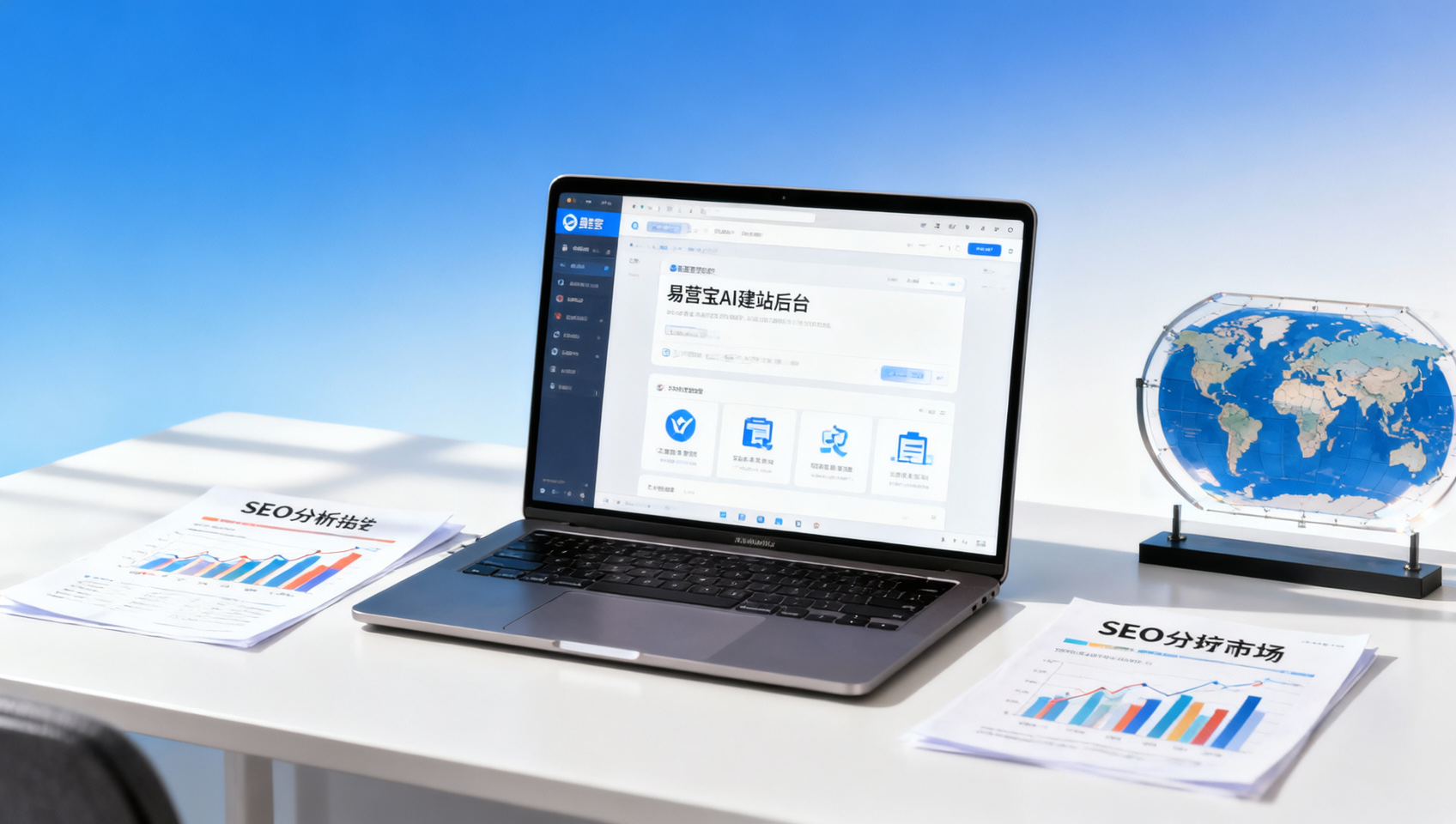
 易营宝 AI Website Building Tutorial: Beginner Workflow from Page Generation to SEO Settings
![]() How to get started with a no-code startup project?A 4-step breakdown from product selection, website building to customer acquisition
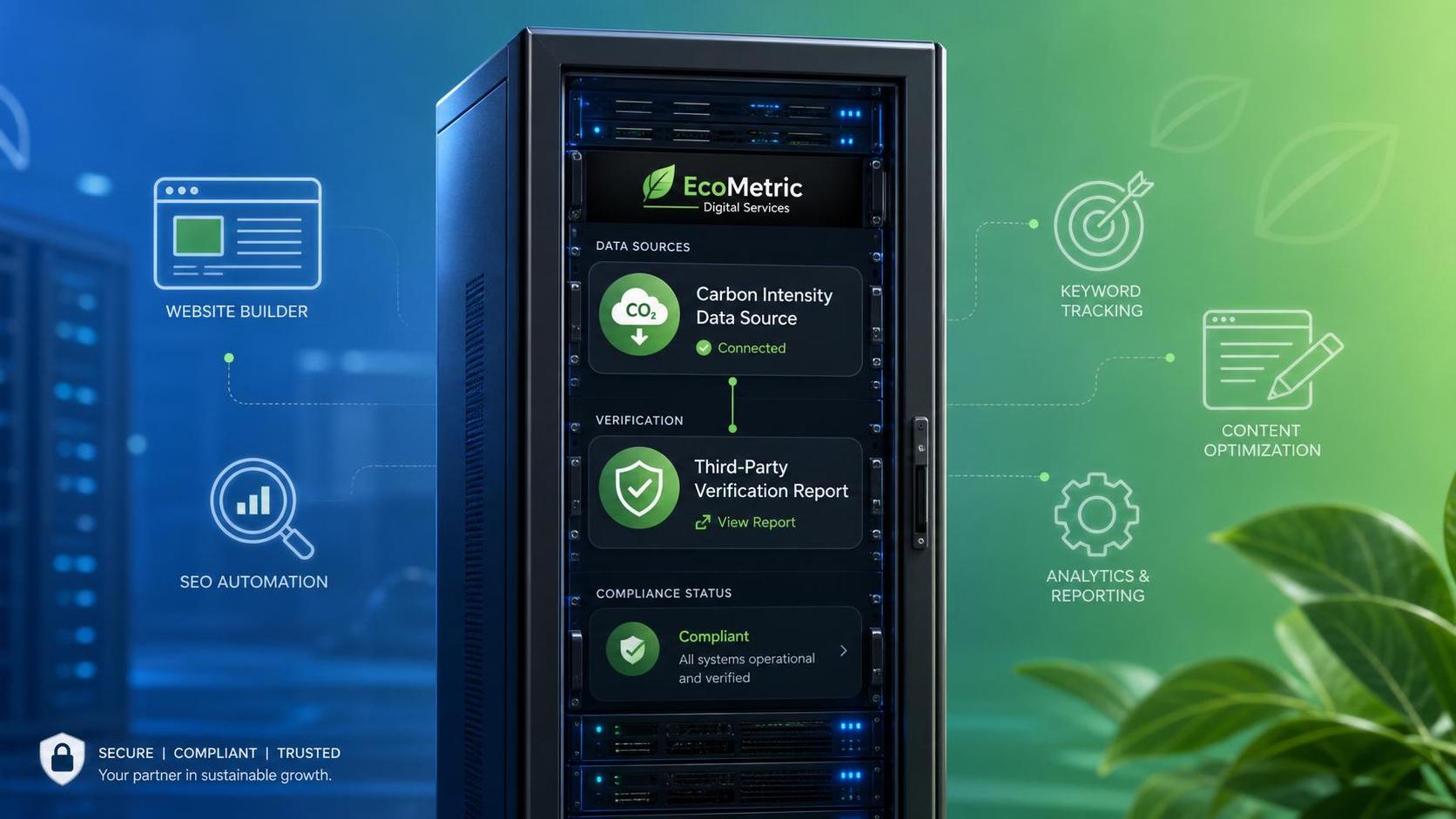
How to get started with a no-code startup project?A 4-step breakdown from product selection, website building to customer acquisition EU EPR extends to B2B digital services,independent website marketing tools need to disclose carbon data sources

Related Products
 EasyCamp SaaS Smart Website Marketing SystemE-Yingbao SaaS Smart Website Marketing System: AI-powered, zero-code website building. Rapidly launch multilingual independent e-commerce sites in just 10 minutes. Global server acceleration and AI-driven SEO optimization empower businesses to efficiently connect with global markets. The seamless integration of technology and user-friendly operation makes building e-commerce sites incredibly simple.
 AI+SEM Intelligent Advertising Marketing SystemAI+SEM drives intelligent ad creation, empowering full-funnel precision advertising marketing. The system automatically generates weekly/monthly reports, AI recommends keywords and target countries, monitors core metrics in real-time with intelligent alerts, and enables one-click high-conversion ad solutions to help quickly acquire customers and improve ROI.
 AI+SEO Dual Engine Optimization ServiceEasyWin AI+SEO Dual Engine Optimization System leverages AI-powered keyword mining, content generation, and comprehensive technical optimization to help foreign trade enterprises acquire high-quality organic traffic, significantly improving search rankings and conversion rates.
 AI+SNS Social Media Marketing SystemYingbao AI+SNS Social Media Marketing System - Precision social capture for the social media era. Supports one-click content synchronization across major platforms like Facebook and LinkedIn. AI intelligently rewrites posts for enhanced relevance. 24/7 AI customer service and user profiling analysis empower businesses to efficiently expand into global markets.
 AI+SEO营销解决方案易营宝AI+SEO营销解决方案,通过AI批量写作、智能生成TDK、精准关键词扩词等功能,全面优化网站SEO效果,提升流量与转化率。助力企业构建高效智能网站新生态。
 AI+SEM Advertising Marketing SolutionsAI+SEM Advertising Marketing Solution leverages AI technology to deeply empower SEM ad campaigns. It automatically generates weekly/monthly reports using AI, presenting account data across multiple dimensions for comprehensive insights into campaign performance and trends. The system precisely recommends keywords and target countries, intelligently generates high-conversion ad copy, and enables one-click activation of efficient campaign plans to help businesses rapidly acquire customers. Simultaneously, it monitors core metrics in real time, intelligently identifies abnormal fluctuations, and issues timely alerts to ensure stable, high-return advertising results.
 Domain Name ServicesEasyWin provides professional domain name services, including intelligent queries, one-stop registration, brand protection, and full lifecycle management, helping businesses build a digital brand image.
 EasyOperate B2C Cross-Border E-Commerce Platform & Independent WebsiteEasyStore B2C Cross-border E-commerce Independent Store is an intelligent website building and cross-border e-commerce integrated solution independently developed by EasyStore Information Technology (Beijing) Co., Ltd. The system is specially designed for small and medium-sized as well as large export enterprises, integrating 'website building, operation, marketing, advertising, and conversion' into one, helping enterprises quickly establish cross-border e-commerce independent stores to achieve brand globalization and global sales growth.
The platform supports multiple languages, multiple currencies, and multi-channel marketing, with built-in AI intelligent translation and SEO optimization systems, suitable for mainstream markets such as Southeast Asia, Europe and America, Latin America, and the Middle East, assisting Chinese manufacturing enterprises in efficiently deploying international e-commerce strategies. SSL证书易营宝提供专业SSL安全证书服务,包括单域名和泛域名证书,确保网站数据传输加密、身份验证和完整性保护,助力企业建立安全可信的在线业务环境。









