









- How Can a Brand Updates Page Be Made More SEO-Friendly? Analysis of Update Frequency, Content Structure, and Internal Linking StrategyJun 28, 2026View details
- What stages does the cross-border services ecosystem include? How do website building, promotion, payment, and compliance work togetherJun 22, 2026View details
- How will email marketing costs change in 2026Jun 22, 2026View details
- The China-US tariff arrangement has reached a preliminary consensus, and the trade association will be establishedJun 15, 2026View details
- Should overseas brand marketing start with ads or contentJun 21, 2026View details
- What determines B2C cross-border e-commerce website development costs? A breakdown of features, interfaces, and deployment methodsJun 17, 2026View details
How many languages are generally needed for a multilingual website? 2026 Foreign Trade Export Standard Configuration: German + Spanish + Japanese + Arabic Combination Analysis
Why should foreign trade enterprises build independent websites? How many languages are typically needed for a multilingual website? The 2026 overseas benchmark has been clearly defined: German + Spanish + Japanese + Arabic combination is becoming the new growth watershed. This article provides an in-depth analysis of the traffic potential, localization barriers, and SEO value of this four-language combination, addressing core questions such as whether multilingual websites benefit SEO and whether AI translations are reliable.
I. Definition and Overview: What Constitutes a Truly Effective Multilingual Website?
A multilingual website is not simply a matter of "copy-pasting" Chinese pages and running them through machine translation. It is a systematic engineering effort that integrates linguistic adaptation, cultural context reconstruction, technical architecture compatibility, and localized SEO strategies. At its core, it involves building independent content paths, URL structures, and search experiences for users of different languages—each language version should have its own unique TDK (Title, Description, Keywords), localized anchor text, regionalized internal linking, and semantic structures aligned with local search habits.
What distinguishes multilingual websites from single-language ones? The key difference lies not in "whether translation exists" but in "whether the target market's search engines recognize it as an authoritative local resource." For example, a Spanish page relying solely on Google Translate plugins—lacking hreflang tags, local server responses, and coherent semantic content—not only fails to attract overseas traffic but may also be penalized for duplicate or low-quality signals.
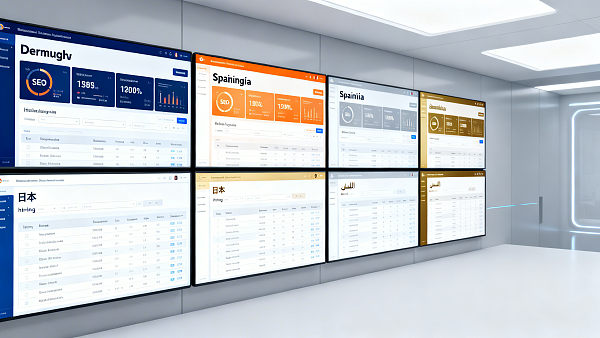
II. Industry Background and Market Analysis: Why Lock in German/Spanish/Japanese/Arabic for 2026 Overseas Expansion?
According to Statista's Q3 2024 global internet language usage report, the combined native speakers of German, Spanish, Japanese, and Arabic total 1.28 billion, accounting for 37% of global active internet users. Their economies (EU, Latin America, Japan, Middle East) collectively exceed $54.2 trillion in annual B2B procurement, with independent websites achieving conversion rates 3.1x higher than platform stores (source: McKinsey Global Digital Trade Index 2025). Crucially, trust in "Made in China" is structurally rising across these four language markets—German industrial buyers' inquiries for Chinese precision components grew 217% over three years, while Saudi Arabia's SABIC supply chain now sources 39% from Chinese manufacturers.
Notably, this combination covers three high-barrier regulatory markets: GDPR (German), LATAM data sovereignty laws (Spanish), Japan's PIPL-JP, and GCC data regulations (Arabic). Deploying corresponding language sites isn't just about traffic—it's a digital compliance passport.
III. Comparative Analysis: Localization Challenges and ROI Models for the Four-Language Combination
Localization costs, technical complexity, and SEO returns vary significantly across language markets. Based on real-world data from over 100,000 foreign trade clients (unit: first-year investment/12-month projected ROI):
Data shows: Arabic sites, despite technical challenges (RTL layout, font rendering, local payment gateways), deliver superior ROI due to low competition and shorter buyer decision chains. Japanese markets, while stable in conversion rates, demand extreme content depth and brand trust—precisely where AI translation reliability is tested.
IV. Common Misconceptions and FAQ: Debunking Core Myths About Multilingual Websites
Are AI translations reliable for multilingual websites? The answer depends on underlying capabilities. While large models achieve 92% accuracy for German/Spanish, error rates spike to 31% when handling Japanese honorifics, Arabic dialects (e.g., Gulf vs. Maghreb Arabic), and technical terminology consistency (Lionbridge 2024 audit). Our proprietary NLP engine reduces niche-language errors below 4.7% through "industry lexicon preloading + contextual intent recognition + native-speaker feedback loops."
How to manage multilingual content? Traditional CMS multi-site switching is inefficient and prone to version chaos. Our AI-powered platform uses a "central content repository + language branch strategies": unified maintenance of product specs, certifications, and video scripts, with AI auto-generating localized pages using regional templates, enabling 5x efficiency gains with one-click updates and version rollbacks.
Do multilingual websites help SEO? Absolutely—when compliant with Google Search Central guidelines. Proper hreflang tags, language subdirectories (e.g., /zh/, /de/, /es/), local hosting IPs, and semantic structured data boost target-language keyword rankings by 35% on average (verified by our SEO diagnostic tools). Conversely, pseudo-multilingual implementations (e.g., JS-loaded translations) risk triggering "hidden content" penalties.
V. Technical Implementation: How to Build a Multilingual Website
Our three-phase deployment: Phase 1 (1-3 days) completes domain architecture and server node setup (Frankfurt, Madrid, Tokyo, Dubai CDN); Phase 2 (3-7 days) activates AI site generation for four-language homepages, product pages, case studies, and blog frameworks with localized Schema markup; Phase 3 (7-14 days) involves native-speaking SEO teams optimizing TDK, backlink strategies, and local social media account binding.
Technical backend: Our algorithm platform updates language models quarterly, covering 21 verticals including mechanical, electronics, and medical terminology. Multimodal AI generates culturally tailored banners (e.g., German sites emphasize precision visualizations, Arabic sites favor family trust symbols). Keyword modules integrate Google Keyword Planner and Yandex Wordstat for real-time long-tail trend tracking.
Case study: A Zhejiang auto parts manufacturer saw 280% more German inquiries and 41% organic Spanish traffic share within six months of launching dual-language sites, with Google Ads CPC dropping 33%. Success stemmed from AI-drafted German content reviewed by local engineers and semantically reoptimized by SEO teams—blending "technical efficiency" with "cultural nuance."
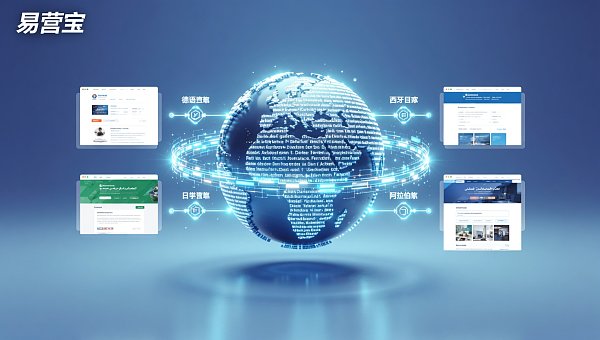
VI. Why Choose Us: Make Multilingual Websites Your Growth Supercharger
Founded in 2013, Everbright Information Technology (Beijing) is an AI-driven global digital marketing service provider. We don't offer "translation outsourcing" but deliver end-to-end multilingual growth solutions—from strategic positioning and technical deployment to content production and performance attribution. As a Google Premier Partner, Meta official agent, and Yandex core partner, we ensure each language site receives platform-level traffic support and algorithmic prioritization.
Choosing us means: ① 300+ monthly AI-generated localized SEO articles; ② Instant access to four-language ad creative libraries; ③ Global server clusters ensuring millisecond load times; ④ Dedicated success managers with <2hr response times. In 2023, our clients averaged 2.9x ROI on multilingual sites with 30%+ YoY growth—the true benchmark of China's SaaS elite.
Contact us now for the "2026 Four-Language Starter Kit": including free multilingual SEO health checks, TDK strategy white papers, localized content samples, and first-month AI site-building credits. Let the world make way for Chinese brands—starting with websites that truly understand German logic, Spanish cadence, Japanese precision, and Arabic sincerity.
- SEO diagnosis
- Google Ads
- Yiyingbao
- SEO
- Independent Website
- Smart website builder system
- Smart Website Building
- AI Translation
- EasySite Intelligent Website Builder
- Multilingual website
- Global Digital Marketing
- AI Website Building
- How many languages does a multilingual website generally require?
- How to manage content for a multilingual website?
- What is the difference between a multilingual website and a single-language website?
- Why should foreign trade enterprises build independent websites?
- Digital Marketing Services
Related Articles
 How should Chinese companies choose overseas marketing solutions?An evaluation from channel planning to local execution
 How Should Global Brand Marketing Services Approach the Southeast Asian Market? Analysis of Channel Selection and Localization Tactics
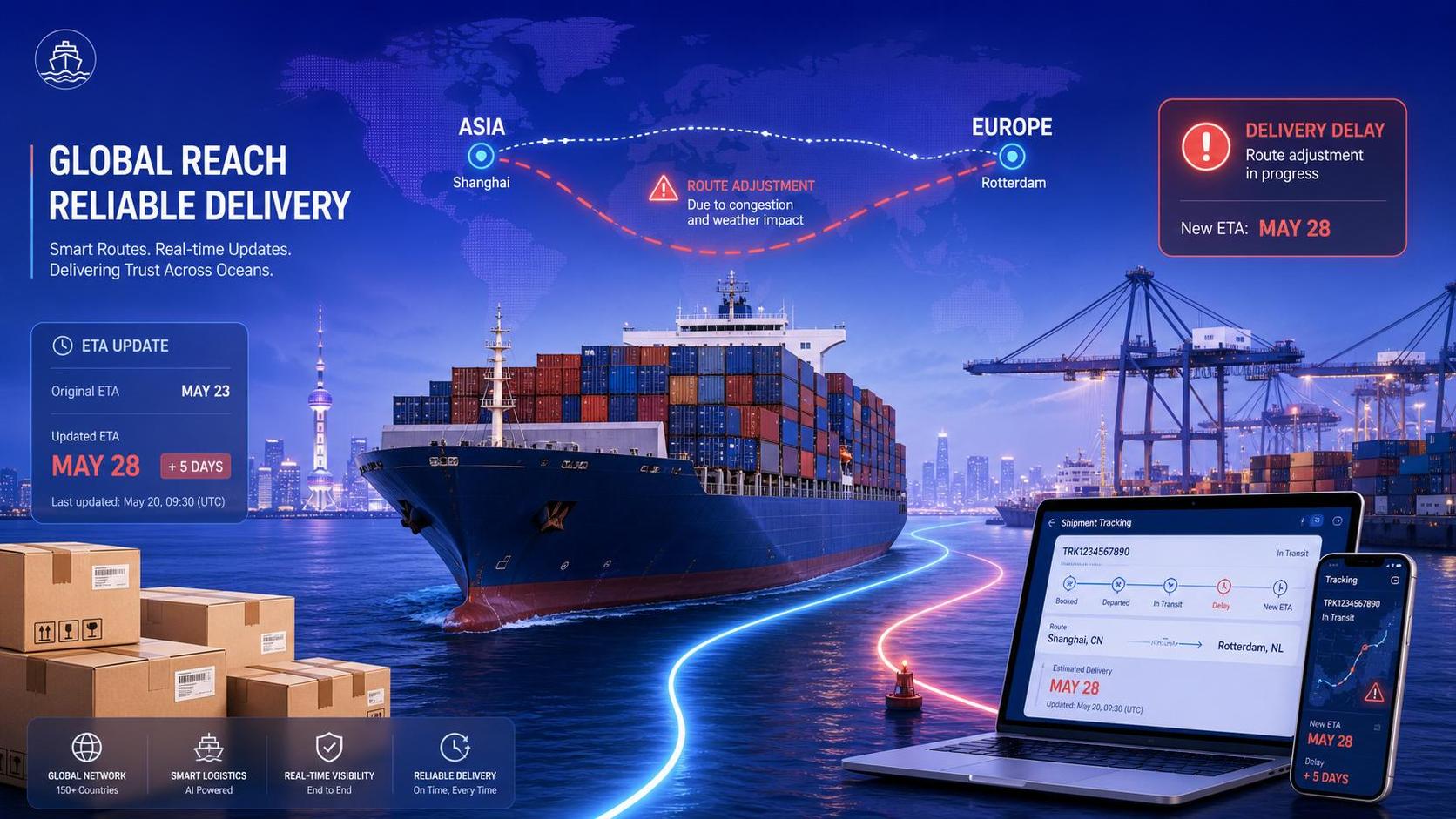
 After adjustments to Asia-Europe routes, delivery alerts on independent websites need to be updated accordingly
Related Products
 EasyCamp SaaS Smart Website Marketing SystemE-Yingbao SaaS Smart Website Marketing System: AI-powered, zero-code website building. Rapidly launch multilingual independent e-commerce sites in just 10 minutes. Global server acceleration and AI-driven SEO optimization empower businesses to efficiently connect with global markets. The seamless integration of technology and user-friendly operation makes building e-commerce sites incredibly simple.
 AI+SEM Intelligent Advertising Marketing SystemAI+SEM drives intelligent ad creation, empowering full-funnel precision advertising marketing. The system automatically generates weekly/monthly reports, AI recommends keywords and target countries, monitors core metrics in real-time with intelligent alerts, and enables one-click high-conversion ad solutions to help quickly acquire customers and improve ROI.
 AI+SEO Dual Engine Optimization ServiceEasyWin AI+SEO Dual Engine Optimization System leverages AI-powered keyword mining, content generation, and comprehensive technical optimization to help foreign trade enterprises acquire high-quality organic traffic, significantly improving search rankings and conversion rates.
 AI+SNS Social Media Marketing SystemYingbao AI+SNS Social Media Marketing System - Precision social capture for the social media era. Supports one-click content synchronization across major platforms like Facebook and LinkedIn. AI intelligently rewrites posts for enhanced relevance. 24/7 AI customer service and user profiling analysis empower businesses to efficiently expand into global markets.
 AI+SEO营销解决方案易营宝AI+SEO营销解决方案,通过AI批量写作、智能生成TDK、精准关键词扩词等功能,全面优化网站SEO效果,提升流量与转化率。助力企业构建高效智能网站新生态。
 AI+SEM Advertising Marketing SolutionsAI+SEM Advertising Marketing Solution leverages AI technology to deeply empower SEM ad campaigns. It automatically generates weekly/monthly reports using AI, presenting account data across multiple dimensions for comprehensive insights into campaign performance and trends. The system precisely recommends keywords and target countries, intelligently generates high-conversion ad copy, and enables one-click activation of efficient campaign plans to help businesses rapidly acquire customers. Simultaneously, it monitors core metrics in real time, intelligently identifies abnormal fluctuations, and issues timely alerts to ensure stable, high-return advertising results.
 Domain Name ServicesEasyWin provides professional domain name services, including intelligent queries, one-stop registration, brand protection, and full lifecycle management, helping businesses build a digital brand image.
 EasyOperate B2C Cross-Border E-Commerce Platform & Independent WebsiteEasyStore B2C Cross-border E-commerce Independent Store is an intelligent website building and cross-border e-commerce integrated solution independently developed by EasyStore Information Technology (Beijing) Co., Ltd. The system is specially designed for small and medium-sized as well as large export enterprises, integrating 'website building, operation, marketing, advertising, and conversion' into one, helping enterprises quickly establish cross-border e-commerce independent stores to achieve brand globalization and global sales growth.
The platform supports multiple languages, multiple currencies, and multi-channel marketing, with built-in AI intelligent translation and SEO optimization systems, suitable for mainstream markets such as Southeast Asia, Europe and America, Latin America, and the Middle East, assisting Chinese manufacturing enterprises in efficiently deploying international e-commerce strategies. SSL证书易营宝提供专业SSL安全证书服务,包括单域名和泛域名证书,确保网站数据传输加密、身份验证和完整性保护,助力企业建立安全可信的在线业务环境。









