









- What Does a Global Traffic Ecosystem Service Provider Do? What Are the Differences from a Single Advertising AgencyJul 16, 2026View details
- What should you focus on in the latest enterprise SaaS report? From renewal rates and delivery costs to overseas growth opportunitiesJul 12, 2026View details
- What signals are worth paying attention to in a cross-border marketing trend report? B2B companies should look at these 6 signalsJul 11, 2026View details
- How to Read a Cross-Border Marketing Trends Report? Five Key Dimensions for Evaluating Channel OpportunitiesJul 11, 2026View details
- Which channel has the highest ROI in the global traffic ecosystem? Comparative analysis of search, social media, and advertisingJul 10, 2026View details
- What multilingual website services are available in Sanya? Which model is more suitable for local businesses going global?Jul 08, 2026View details
From platform to independent site: What are the differences between a foreign trade independent site and a platform store? Migration process and risk management
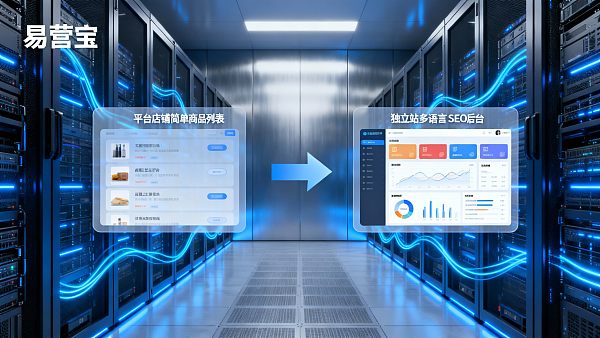
Why Build a Foreign Trade Independent Website? This article provides a detailed explanation of the differences between foreign trade independent websites and platform stores, the migration process, and risk management, helping you efficiently acquire customers and make decisions. Choosing an independent website is not just a slogan—it involves brand control, data assets, and long-term customer acquisition costs. For users, technical evaluators, and enterprise decision-makers, independent websites offer stronger SEO visibility and multilingual coverage capabilities. For project managers and after-sales maintenance personnel, independent websites facilitate system integration and operational automation. Distributors and end consumers benefit from a more stable brand experience and localized services. Combining industry background, operational workflows, and risk management, this article provides actionable migration checklists and selection recommendations to help you answer the core question: "Are independent websites suitable for B2B foreign trade?" It also offers executable solutions on how to build a foreign trade independent website and the essential features required.
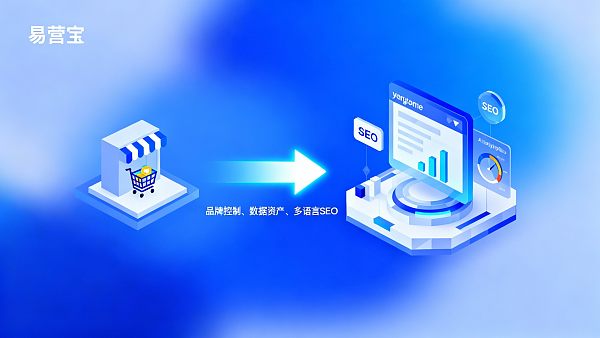
Definition and Overview: What Are Foreign Trade Independent Websites and Platform Stores?
A foreign trade independent website is a self-owned domain, hosting, and content management system that emphasizes brand-owned traffic, SEO optimization, and customer data accumulation. Platform stores rely on third-party marketplaces, leveraging platform traffic pools and rules to secure orders. The key differences lie in traffic sources, data control, settlement, and compliance capabilities. Platform stores offer quick setup and high transaction efficiency but are vulnerable to rule changes. Independent websites require higher setup costs and technical barriers but lower long-term customer acquisition costs, stronger branding, and support for multilingual operations and precise targeting. For foreign trade enterprises, the question "Why build an independent website?" often relates to long-term brand growth and cross-border compliance, especially when navigating varying national regulations, payment, and logistics. Independent websites offer flexibility in integrating localized solutions and circumventing platform restrictions.
Industry Background and Market Analysis: The Value of Multilingual and Traffic Ecosystems
In a globalized context, multilingual websites have become key to foreign trade traffic growth. Compared to single-language sites, how do multilingual sites boost overseas traffic? The answer lies in covering more long-tail keywords, enhancing user trust, and reducing bounce rates. Search engines assign different weights to languages and regions, so a well-planned multilingual strategy can turn "How do foreign trade independent websites acquire customers?" into sustained SEO and organic traffic. Currently, AI-driven solutions and CDN acceleration are benchmarks for improving load speed and SEO ratings. Companies like EasyTrust Information Technology (Beijing) leverage AI and big data to offer smart website building, multilingual support, and global server clusters, helping independent websites achieve 40% faster loading and 35% higher SEO ratings—critical for B2B enterprises seeking long-term client acquisition. For businesses preparing to expand overseas, choosing suppliers with localized services and closed-loop ad投放 ensures optimal balance between compliance and conversion.
Comparative Analysis: Core Differences and Functional Requirements Between Foreign Trade Independent Websites and Platform Stores
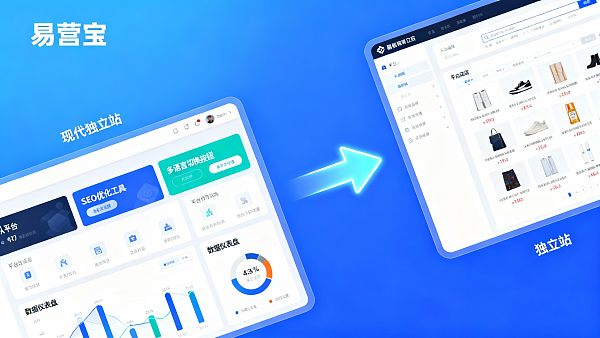
Functionally, foreign trade independent websites require core modules like multilingual content management, SEO-friendly URLs and TDK settings, site performance monitoring, payment and logistics integration, CRM and data export permissions, and security certificates with compliance controls. Platform stores focus on product listings, platform traffic tools, and rule optimization. Comparative analysis shows independent websites excel in data ownership, brand experience, and marketing automation, while platform stores offer instant traffic and transaction loops. Technical evaluators should prioritize site performance and security: TLS/auto-SSL, CDN distribution, DDoS protection, and page rendering speed—all directly impacting SEO and conversion. Project managers and after-sales teams must define maintenance boundaries and SLAs to ensure stable post-launch operations. For "How long does it take to launch a foreign trade independent website?" the typical cycle is 2–8 weeks, depending on language count, integration complexity, and customization. EasyTrust’s AI-powered tools—smart site building, keyword expansion, and auto-generated TDK—can significantly shorten launch time while ensuring SEO quality.
Migration Process and Technical Solutions: Step-by-Step Guide from Platform to Independent Website
A phased migration approach is recommended: 1. **Assessment & Planning**: Audit SKUs, traffic sources, order loops, and data export needs. 2. **Environment & Domain Prep**: Select servers, CDN, and SSL strategies, considering localized nodes and compliant domains. 3. **Content & SEO Migration**: Preserve high-value page URL structures or implement 301 redirects; use AI keyword and TDK tools to rewrite multilingual metadata, avoiding traffic loss. 4. **System Integration & Testing**: Connect payment, ERP, CRM, and third-party tracking; conduct cross-regional performance tests. 5. **Gray Launch & Traffic Diversion**: Run parallel operations, gradually redirecting traffic via ads, social media, and email while monitoring conversion. 6. **Wrap-up & Optimization**: Remove duplicate content, optimize speed, and establish maintenance SOPs. Technical performance must address page response time, mobile adaptation, structured data, and schema markup—all critical for search engine indexing and CTR. For Russian markets, specialized solutions like Russian Industry Website Development and Marketing Solutions offer ru-domain registration, Yandex optimization tools, and AI translation, serving as a reference for language-specific markets.
Costs, Risk Management, and Common Pitfalls
Costs for independent websites include domain/hosting, development/template fees, multilingual translation/content input, third-party integrations, and first-year SEO/ad spending. Compared to platform store commissions and ad fees, independent sites require higher upfront investment but offer controllable long-term CAC. Risk management focuses on data migration integrity, 301 strategies for SEO traffic retention, payment/compliance audits, and outsourced SLA agreements. Common pitfalls include expecting "instant replacement of platform traffic" or "machine translation alone suffices." In reality, AI translation requires human proofing, and initial traffic pools must be built via social and ad campaigns. Decision-makers and technical evaluators should adopt phased migration and A/B testing to ensure business continuity while monitoring KPIs.
Trends, Best Practices, and Contact Us: Why Choose Us?
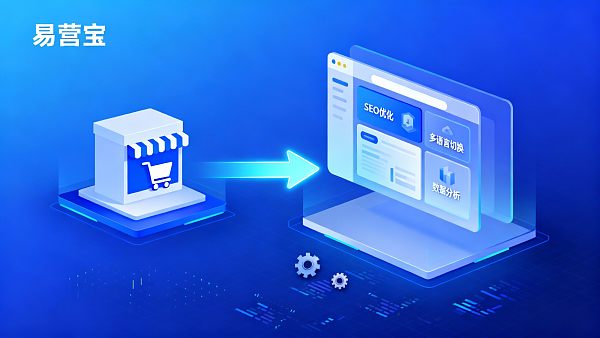
Future trends show AI and big data将进一步推动独立网站的智能化运营,自动化的内容生成、动态关键词扩展与广告素材一体化将成为标配。企业应优先选择具备技术中台、全球CDN与本土化服务能力的供应商。易营宝信息科技(北京)有限公司自2013年成立以来,以“技术创新+本土化服务”双轮战略构建了覆盖智能建站、SEO优化、社媒营销与广告投放的全链路解决方案,服务超10万家企业,并于2023年入选“中国SaaS企业百强”。如果您关注“外贸独立站如何获取客户?”或“如何搭建一个外贸独立站?”,我们提供从策略到执行的一站式支持,包括AI营销引擎、创意工厂模式与全球流量生态。联系我们,我们将根据您的行业、目标市场与技术栈,制定可落地的迁移与增长方案,助您在全球市场实现持续增长。
- Website Development
- Mobile-friendly
- Social Media Marketing
- Foreign Trade Independent Website Development
- Domain Registration
- Standalone website development
- Yiyingbao
- SEO
- Independent Website
- SEO Optimization
- Smart Website Building
- AI Translation
- AI Marketing Engine
- Independent foreign trade website
- Multilingual website
- Global Traffic Ecosystem
- Marketing Automation
- How can a multilingual website increase overseas traffic?
- Why should foreign trade enterprises build independent websites?
- How to build a foreign trade independent station?
- How long does it usually take for a foreign trade independent website to go online?
- How can a foreign trade independent website acquire customers?
- Is a standalone website suitable for B2B foreign trade?
Related Articles
Related Products
 EasyCamp SaaS Smart Website Marketing SystemE-Yingbao SaaS Smart Website Marketing System: AI-powered, zero-code website building. Rapidly launch multilingual independent e-commerce sites in just 10 minutes. Global server acceleration and AI-driven SEO optimization empower businesses to efficiently connect with global markets. The seamless integration of technology and user-friendly operation makes building e-commerce sites incredibly simple.
 AI+SEM Intelligent Advertising Marketing SystemAI+SEM drives intelligent ad creation, empowering full-funnel precision advertising marketing. The system automatically generates weekly/monthly reports, AI recommends keywords and target countries, monitors core metrics in real-time with intelligent alerts, and enables one-click high-conversion ad solutions to help quickly acquire customers and improve ROI.
 AI+SEO Dual Engine Optimization ServiceEasyWin AI+SEO Dual Engine Optimization System leverages AI-powered keyword mining, content generation, and comprehensive technical optimization to help foreign trade enterprises acquire high-quality organic traffic, significantly improving search rankings and conversion rates.
 AI+SNS Social Media Marketing SystemYingbao AI+SNS Social Media Marketing System - Precision social capture for the social media era. Supports one-click content synchronization across major platforms like Facebook and LinkedIn. AI intelligently rewrites posts for enhanced relevance. 24/7 AI customer service and user profiling analysis empower businesses to efficiently expand into global markets.
 AI+SEO营销解决方案易营宝AI+SEO营销解决方案,通过AI批量写作、智能生成TDK、精准关键词扩词等功能,全面优化网站SEO效果,提升流量与转化率。助力企业构建高效智能网站新生态。
 AI+SEM Advertising Marketing SolutionsAI+SEM Advertising Marketing Solution leverages AI technology to deeply empower SEM ad campaigns. It automatically generates weekly/monthly reports using AI, presenting account data across multiple dimensions for comprehensive insights into campaign performance and trends. The system precisely recommends keywords and target countries, intelligently generates high-conversion ad copy, and enables one-click activation of efficient campaign plans to help businesses rapidly acquire customers. Simultaneously, it monitors core metrics in real time, intelligently identifies abnormal fluctuations, and issues timely alerts to ensure stable, high-return advertising results.
 Domain Name ServicesEasyWin provides professional domain name services, including intelligent queries, one-stop registration, brand protection, and full lifecycle management, helping businesses build a digital brand image.
 EasyOperate B2C Cross-Border E-Commerce Platform & Independent WebsiteEasyStore B2C Cross-border E-commerce Independent Store is an intelligent website building and cross-border e-commerce integrated solution independently developed by EasyStore Information Technology (Beijing) Co., Ltd. The system is specially designed for small and medium-sized as well as large export enterprises, integrating 'website building, operation, marketing, advertising, and conversion' into one, helping enterprises quickly establish cross-border e-commerce independent stores to achieve brand globalization and global sales growth.
The platform supports multiple languages, multiple currencies, and multi-channel marketing, with built-in AI intelligent translation and SEO optimization systems, suitable for mainstream markets such as Southeast Asia, Europe and America, Latin America, and the Middle East, assisting Chinese manufacturing enterprises in efficiently deploying international e-commerce strategies. SSL证书易营宝提供专业SSL安全证书服务,包括单域名和泛域名证书,确保网站数据传输加密、身份验证和完整性保护,助力企业建立安全可信的在线业务环境。









