









- What Does a Global Traffic Ecosystem Service Provider Do? What Are the Differences from a Single Advertising AgencyJul 16, 2026View details
- What should you focus on in the latest enterprise SaaS report? From renewal rates and delivery costs to overseas growth opportunitiesJul 12, 2026View details
- What signals are worth paying attention to in a cross-border marketing trend report? B2B companies should look at these 6 signalsJul 11, 2026View details
- How to Read a Cross-Border Marketing Trends Report? Five Key Dimensions for Evaluating Channel OpportunitiesJul 11, 2026View details
- Which channel has the highest ROI in the global traffic ecosystem? Comparative analysis of search, social media, and advertisingJul 10, 2026View details
- What multilingual website services are available in Sanya? Which model is more suitable for local businesses going global?Jul 08, 2026View details
- How to view the complete list of China SaaS companies in the top 100? Practical methods for screening website-building and marketing service providersJul 08, 2026View details
- How to view pricing in the global traffic ecosystem? Cost comparison of search, social media, and content channel advertisingJul 06, 2026View details
What are the content marketing practices of international digital agencies?
Content marketing for international digital agencies is no longer as simple as "writing articles, posting on social media, and creating multilingual pages." For companies looking to expand into overseas markets, improve inquiry quality, and balance brand building and conversion rates, the truly effective approach is to start with user search intent, focus on localized content, and amplify this with a collaborative approach involving websites, SEO, social media, and advertising to create a sustainable content growth system. Especially with the trend of integrating website and marketing services, companies are no longer concerned with "whether or not to do content marketing," but rather "how to do it without wasting budget, seeing results, and finding it suitable for their current business stage."
Judging from search intent, readers interested in "what are the content marketing practices of international digital marketing agencies" are typically not primarily seeking conceptual understanding, but rather wanting to determine which mature methods international digital marketing agencies commonly use, whether these methods are suitable for their own businesses, whether the investment will generate traffic and customers, and how to choose a more reliable execution path. For corporate decision-makers, they are concerned with return on investment, risk control, and the ability to achieve global brand implementation; for project managers and execution teams, they are more concerned with processes, content synergy, channel pacing, and implementation methods; and for distributors, agents, and end-users, they are more concerned with whether the content can enhance trust, help understand the product, and shorten the sales cycle.
Therefore, this article will focus on answering four practical questions: What are some common content marketing practices among international digital agencies? Which practices truly bring business value? How should companies determine the right content strategy for themselves? And how should content be coordinated across multilingual websites, SEO optimization, social media marketing, and advertising to avoid "looking busy but actually not converting"?
For international digital agencies, the core of content marketing is not simply about increasing volume, but about creating a content system centered around growth goals.
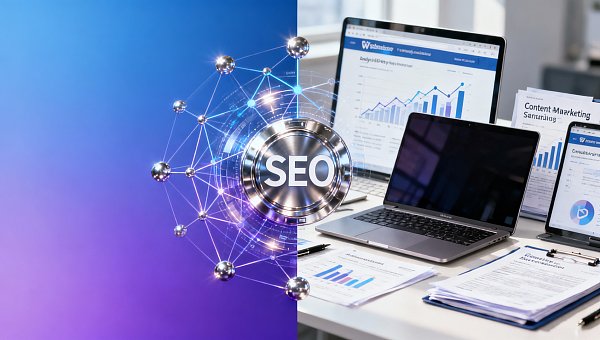
When many companies first engage in international content marketing, they tend to focus on "how much content to publish." However, established international digital agencies typically prioritize a content system over the quantity of content. A system refers to content that, from planning and production to distribution and conversion, revolves around a clear objective, such as increasing overseas organic traffic, boosting brand keyword search volume, generating form inquiries, promoting channel recruitment, or supporting after-sales service and customer education.
These types of organizations typically start by answering several questions: Who is their target market? On which platforms do users obtain information? What keywords do they use when searching? How long is their purchase decision-making cycle? Does it require multi-role decision-making? And does the website have the capacity to handle the load? If these fundamentals aren't clear, adding more content will only waste budget.
For the integrated website and marketing services industry, the advantage of international digital agencies lies in their ability to seamlessly integrate intelligent website building, SEO optimization, social media marketing, and advertising, making content creation no longer an isolated activity but a crucial node in the growth chain. What businesses truly need are execution solutions that simultaneously understand technology, content, localization, and conversion logic.
What are the most common content marketing practices of international digital organizations?
In practice, international digital agency content marketing typically employs a combination of methods rather than a single approach. The following are the most common and deserve the most attention from businesses.
1. SEO content layout based on search intent
This is one of the most common and stable customer acquisition methods. International digital agencies build content matrices around core product keywords, solution keywords, application scenario keywords, comparison keywords, and Q&A keywords. For example, they don't just cover "what is the product," but also "how to choose it," "how it differs from competitors," "which industries it's suitable for," "what affects the price," and "how to deploy it."
The value of this approach lies in its ability to cover different stages of the user journey, from awareness and comparison to decision-making, thereby increasing exposure in search engines and driving organic traffic to the company's own multilingual website. For business decision-makers, the long-term value of this type of content marketing often exceeds that of a single advertising campaign, because once the page ranking stabilizes, it can continuously generate leads.
2. Localization of content for multilingual websites
Many companies mistakenly believe that translating Chinese content into English or other less common languages is sufficient, but what the international market truly needs is localization, not mechanical translation. International digital organizations reconstruct content based on the language habits, industry expressions, regulatory environments, and user concerns of different countries and regions.
For example, when introducing service capabilities, users in Europe and America pay more attention to data, processes, and case studies; the Middle Eastern market values trust and partnerships; and Southeast Asian users may prioritize response efficiency and cost-effectiveness. If website content isn't adjusted to address these differences, conversion rates will often be significantly impacted.
3. Social media content operation
Platforms like LinkedIn, Facebook, Instagram, YouTube, and TikTok play different roles in different markets. International digital agencies generally don't blindly expand across all platforms; instead, they match content formats to industry attributes and audience characteristics. B2B companies are better suited to industry insights, case studies, professional perspectives, and client success stories; while brands targeting end consumers are better suited to short videos, usage scenario demonstrations, influencer collaborations, and interactive content.
The significance of social media content goes beyond mere "exposure." More importantly, it enhances brand credibility, increases engagement, and assists users in making informed decisions. Many overseas clients assess a company's professionalism, activity, and relevance to their contacts through social media before even searching for its official website.
4. Case Studies and Trust Asset Building
In international business, trust is costly. Especially when dealing with overseas clients for the first time, a simple product introduction page is often insufficient to build sufficient trust. Experienced organizations help companies establish content modules such as "Case Studies," "Client Testimonials," "Solution White Papers," "FAQ Center," and "Delivery Process Descriptions."
This type of content is particularly important for corporate decision-makers because it directly answers key questions such as "Have you done this before?", "What were the results?", "Is the risk high?", and "Is delivery controllable?". Some industries, such as finance, manufacturing, software, and engineering services, even use knowledge-based content to enhance their professional image. For example, when a company is setting up management and operations content in its knowledge center, it can naturally extend to professional topics such as exploring the practice of shared financial service models under the new circumstances , thereby enhancing the depth of its content system and its industry credibility.
Why do some companies create a lot of content but still see no results?

Poor performance of corporate content marketing is usually not due to "not enough content," but rather because of problems in several key areas.
Content and user needs misaligned
Many companies write content that reads more like promotional material than addressing the real questions users would search for or care about. Users want to see "how to solve the problem," but companies are writing about "our expertise." This misalignment directly leads to insufficient search traffic, or traffic without conversions.
The channels are disconnected from each other
Some companies have their websites, SEO, social media, and advertising handled by different teams, resulting in a lack of synergy between the content. The consequence is that while ads bring in traffic, the landing page content is weak; social media gains followers, but the website lacks a conversion path; SEO articles achieve rankings, but there are no forms, case studies, or actionable prompts. International digital agencies are often better at integrating these elements, ensuring that every piece of content serves a clearer business outcome.
Content not designed according to the decision-making chain
Especially in the B2B sector, a customer's purchase decision is rarely made by a single person. Information researchers, department heads, purchasing, management, and even the after-sales team all have different focuses. If content only covers one role, it's easy to lose customers during the conversion process. A truly mature approach is to build a content matrix based on roles and stages, ensuring that each type of reader can find the information that interests them.
The website has a weak foundation and insufficient capacity to handle loads.
Ultimately, content must be integrated into the website. Even the best content will be ineffective if the website loads slowly, has a disorganized structure, offers a poor mobile experience, is difficult to use in different languages, and lacks a clear CTA. For international digital marketing agencies, content marketing is never a standalone project, but rather a growth strategy deeply intertwined with website quality.
How can businesses determine which content marketing approaches are right for them?
Not every company needs the same international content marketing mix. To determine suitability, consider the following dimensions.
First, look at the business stage.
If a company is in the initial stage of testing overseas markets, its priority should be to create a core language website, multilingual basic pages, brand introduction, service descriptions, case studies, and a small number of high-intent SEO pages to validate market feedback. If the company has already entered a stage of large-scale growth, it should further develop its content, industry insights, social media matrix, video content, and advertising remarketing.
Let's look at the sales cycle.
The longer the sales cycle and the more complex the decision-making process, the more necessary it is to continuously educate customers with content. For example, in fields like industrial equipment, software services, and business consulting, content not only drives leads but also explains solutions, addresses concerns, and builds trust. Conversely, if the product is highly standardized and decisions are made quickly, more direct comparative, scenario-based, and conversion-driving content can be added.
We also need to look at internal resources
Some companies have product experts but no content team; they have overseas sales but no SEO experience; they have advertising budgets but insufficient website infrastructure. In these cases, an integrated service model is more suitable, where a professional team plans content strategy, keywords, website structure, distribution schedule, and data analysis in a unified manner, rather than outsourcing in a fragmented way, which can lead to communication and execution losses.
How do international digital agencies typically implement content marketing strategies?
If we break down international content marketing into an actionable path, it typically involves the following steps.
Step 1: Market and Search Intent Research
Research the target market, language, competitor content, keyword difficulty, common user questions, and platform preferences to determine "what is worth doing and what is not." This step determines subsequent efficiency.
Step 2: Building the Content Framework
Establish a structure around brand keywords, product keywords, solution keywords, Q&A keywords, case study keywords, and industry keywords to ensure that the website content is not fragmented pages, but a clear thematic network.
Step 3: Simultaneously build the landing page
Content creation doesn't end with its release; it must be integrated with relevant modules such as service pages, case studies pages, contact pages, download pages, and FAQs. Some specialized content can also be combined with corporate knowledge resources to create more in-depth content entry points. For example, embedding extended resources such as " Exploring the Practice of Corporate Financial Shared Service Models under the New Circumstances" into appropriate special sections can cater to the further reading needs of specific audience segments.
Step 4: Multi-channel distribution and testing
The same content theme can be broken down into website articles, social media posts, long articles with images, video scripts, and advertising creatives. International digital agencies will continuously monitor the performance of different channels and then adjust headlines, angles, CTAs, and placement strategies accordingly.
Step 5: Optimize content assets with data
Focus on organic traffic, dwell time, bounce rate, inquiry volume, keyword ranking, social media engagement, and conversion path. Truly experienced teams don't just report "how many articles were published," but rather tell businesses "which content brought in customers and which content is worth continuing to invest in."
What should businesses look for when choosing an international digital marketing agency?
If a company is preparing for external cooperation, it is recommended not only to look at the price and the number of cases, but also to see if the other party has the following capabilities:
- Does it truly understand the target market and the logic of localized content, rather than simply translating and outputting?
- Can website building, SEO, social media, and advertising be integrated into a single, actionable solution?
- Do they possess the ability to plan content for audiences in different industries and with different roles?
- Do they prioritize data collection, conversion tracking, and continuous optimization?
- Can it balance brand building and lead generation, rather than just pursuing superficial exposure?
For companies aiming for global growth, the value of a mature digital marketing service provider goes beyond simply "helping you produce content." It lies in helping them build a long-term, effective overseas customer acquisition infrastructure. Global digital marketing service providers like EasyMarket Information Technology (Beijing) Co., Ltd., which combine technology-driven approaches with localized service capabilities, are particularly suitable for companies looking to integrate website building, SEO optimization, social media marketing, and advertising, supporting overseas business development through a more complete growth pipeline.
In summary, the key to content marketing for international digital agencies is doing it right, not doing it in large quantities.
Returning to the core question: What are the common practices of international digital agencies in content marketing? The answer isn't a single technique, but rather a systematic approach encompassing user search intent, content localization, website integration, channel synergy, and data optimization. It includes SEO content strategy, multilingual website development, social media content management, case studies and trust asset building, as well as refined matching for different markets, roles, and decision-making stages.
For businesses, the real focus shouldn't be on "following the trend of content marketing," but rather on whether they've established a content system capable of supporting global brand communication and business conversion. If content answers customer questions, builds trust, generates high-quality traffic, and ultimately translates into inquiries and partnerships, then it's an effective investment. Conversely, even publishing a large amount of content won't generate business value. Ultimately, judging the professionalism of an international digital agency depends on its ability to help businesses transform content into growth assets, not just a mere communication activity.
Related Articles


Related Products
 EasyCamp SaaS Smart Website Marketing SystemE-Yingbao SaaS Smart Website Marketing System: AI-powered, zero-code website building. Rapidly launch multilingual independent e-commerce sites in just 10 minutes. Global server acceleration and AI-driven SEO optimization empower businesses to efficiently connect with global markets. The seamless integration of technology and user-friendly operation makes building e-commerce sites incredibly simple.
 AI+SEM Intelligent Advertising Marketing SystemAI+SEM drives intelligent ad creation, empowering full-funnel precision advertising marketing. The system automatically generates weekly/monthly reports, AI recommends keywords and target countries, monitors core metrics in real-time with intelligent alerts, and enables one-click high-conversion ad solutions to help quickly acquire customers and improve ROI.
 AI+SEO Dual Engine Optimization ServiceEasyWin AI+SEO Dual Engine Optimization System leverages AI-powered keyword mining, content generation, and comprehensive technical optimization to help foreign trade enterprises acquire high-quality organic traffic, significantly improving search rankings and conversion rates.
 AI+SNS Social Media Marketing SystemYingbao AI+SNS Social Media Marketing System - Precision social capture for the social media era. Supports one-click content synchronization across major platforms like Facebook and LinkedIn. AI intelligently rewrites posts for enhanced relevance. 24/7 AI customer service and user profiling analysis empower businesses to efficiently expand into global markets.
 AI+SEO营销解决方案易营宝AI+SEO营销解决方案,通过AI批量写作、智能生成TDK、精准关键词扩词等功能,全面优化网站SEO效果,提升流量与转化率。助力企业构建高效智能网站新生态。
 AI+SEM Advertising Marketing SolutionsAI+SEM Advertising Marketing Solution leverages AI technology to deeply empower SEM ad campaigns. It automatically generates weekly/monthly reports using AI, presenting account data across multiple dimensions for comprehensive insights into campaign performance and trends. The system precisely recommends keywords and target countries, intelligently generates high-conversion ad copy, and enables one-click activation of efficient campaign plans to help businesses rapidly acquire customers. Simultaneously, it monitors core metrics in real time, intelligently identifies abnormal fluctuations, and issues timely alerts to ensure stable, high-return advertising results.
 Domain Name ServicesEasyWin provides professional domain name services, including intelligent queries, one-stop registration, brand protection, and full lifecycle management, helping businesses build a digital brand image.
 EasyOperate B2C Cross-Border E-Commerce Platform & Independent WebsiteEasyStore B2C Cross-border E-commerce Independent Store is an intelligent website building and cross-border e-commerce integrated solution independently developed by EasyStore Information Technology (Beijing) Co., Ltd. The system is specially designed for small and medium-sized as well as large export enterprises, integrating 'website building, operation, marketing, advertising, and conversion' into one, helping enterprises quickly establish cross-border e-commerce independent stores to achieve brand globalization and global sales growth.
The platform supports multiple languages, multiple currencies, and multi-channel marketing, with built-in AI intelligent translation and SEO optimization systems, suitable for mainstream markets such as Southeast Asia, Europe and America, Latin America, and the Middle East, assisting Chinese manufacturing enterprises in efficiently deploying international e-commerce strategies. SSL证书易营宝提供专业SSL安全证书服务,包括单域名和泛域名证书,确保网站数据传输加密、身份验证和完整性保护,助力企业建立安全可信的在线业务环境。









