









- How to view pricing in the global traffic ecosystem? Cost comparison of search, social media, and content channel advertisingJul 06, 2026View details
- How to assess foreign trade website development trends?Looking at 2026 changes from multilingual,AI content to conversion pathsJul 04, 2026View details
- What are the new trends in multilingual marketing data analytics tools in 2026? Focus on attribution、automation and complianceJul 04, 2026View details
- Is Brand Globalization Marketing Consulting Worth Buying? At What Stage Should Companies Bring It InJul 01, 2026View details
- Cross-Border Marketing Trend Research: Why More and More Companies Are Starting to Deploy AI Search and GEO OptimizationJun 30, 2026View details
- Cross-Border Marketing Trend Research: How Independent Sites, AI Content, and Short-Video Customer Acquisition Are ChangingJun 30, 2026View details
China to Latin America Landing Guide: Global Multilingual Website Construction and Arabic, Latin American Multilingual Website Construction Solutions

Introduction: Rapid Localization Capabilities for Latin American and Arabic Markets
EasyStore leverages enterprise-grade self-service website building systems and multilingual website capabilities to quickly deploy solutions for Latin American multilingual and Arabic website construction. As a global digital marketing service provider driven by artificial intelligence and big data, EasyStore has been deeply involved in the industry for over a decade, serving more than 100,000 enterprises with integrated "website-building, lead-generation, and conversion" services. For cross-border expansion into Latin America and Middle Eastern markets, decision-makers, project managers, and operations teams most frequently focus on: language and cultural adaptation, search engine and social media traffic acquisition, compliance and payment integration, as well as performance and security assurance. This localization guide focuses on practical application pathways for global website SaaS systems and responsive self-service website tools, combining B2B and B2C dual-channel needs to provide executable technical and operational integration recommendations, helping users and product controllers achieve efficient launch and continuous optimization of cross-language websites.
Why Choose Chinese Overseas Suppliers and Global Multilingual Website Systems
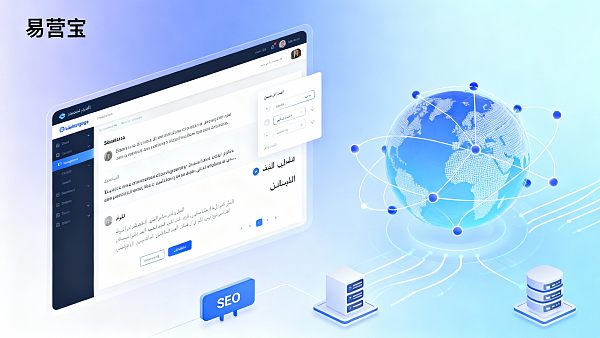
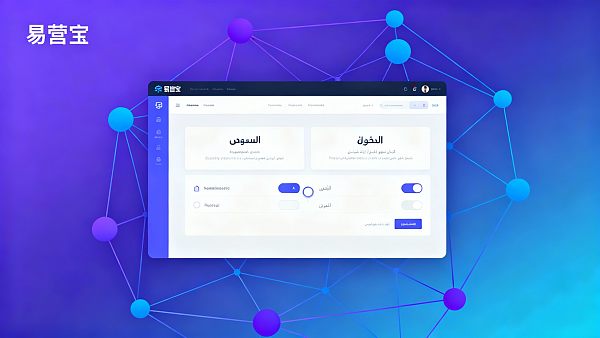
When entering Latin American and Arabic markets, selecting suppliers with "technological innovation + localized service" capabilities is crucial. Chinese manufacturers have competitive advantages in supply chains and pricing systems, but long-term success truly depends on platform support for multilingual semantic SEO, server distribution and CDN acceleration, as well as UI/UX adaptations tailored to local user habits. Enterprise-grade self-service website systems should support page-level independent language tags, structured data multilingual mapping, dynamically generated TDK (title, description, keywords), and AI translation verification workflows to ensure consistent crawling and display across different language regions by search engines and social media. For Latin American markets, regional vocabulary differences between Spanish and Portuguese, long-tail keyword databases, and localized landing page designs are key to traffic conversion; for Arabic markets, right-to-left (RTL) layouts, Arabic semantic word segmentation, and local compliance declarations need to be incorporated into template systems during website construction. Through global website SaaS systems and responsive self-service website tools, enterprises can achieve unified multi-site management while reducing development costs, enabling rapid iteration and version rollbacks to meet decision-makers' dual requirements for efficiency and risk control.
Technical Highlights: Multilingual Architecture, Performance & Security Assurance
Delivering high-quality Latin American multilingual and Arabic websites requires modular and observable technical implementations. First, domain and subdomain strategies should align with business goals: independent sites or multilingual subdirectories, each impacting SEO rankings and compliance differently. Second, page loading speed directly determines bounce and conversion rates—globally distributed server clusters and CDNs are critical. EasyStore partners with AWS and Alibaba Cloud to deploy global CDN nodes, improving standalone site loading speeds by up to 40% while achieving 99.9%+ availability through automated SSL and DDoS protection. Content-wise, platforms should support AI-driven translation engines with human verification loops, using NLP for semantic expansion to ensure keyword density and relevance; structured data (schema) and multilingual hreflang tags should auto-generate at template level to reduce SEO errors. Security and compliance modules include local payment channel integration, privacy policy localization, and cloud-based access control with log auditing to meet compliance review needs for product controllers and security teams. Finally, performance monitoring and real-time SEO scoring diagnostics are vital for operations—A/B testing and data-driven iteration strategies are recommended for continuous conversion rate improvement.
Operational Strategies: Content, Social Media & AI Ad Smart Placement
Post-technical deployment, localization success hinges on operational capabilities. For Latin American and Arabic markets, content strategies must cover localized product pages, industry solution pages, FAQs, and blog articles, forming content matrices with long-tail keywords and semantic clusters to sustain search traffic growth. Social media automation is core to channel matrices: prioritize localized Facebook and Instagram campaigns in Latin America, while focusing on Meta and local forums/messaging platforms in Arabic markets, utilizing built-in scheduling, audience engagement, and analytics for channel synergy. For ad placement, AI-powered ad managers are recommended for account diagnostics, creative A/B testing, and automated bidding to reduce costs; EasyStore's creative factory model auto-generates high-CTR ad copy and multilingual creatives, minimizing manual input while boosting conversions. For B2B export marketing websites, standardized bulk quoting, multi-spec product management, and price display are foundational for order conversion; platforms should integrate with CRM/ERP to close sales-procurement loops.
Implementation Pathways & Actionable Product Solutions
Localization is recommended in four phases: Preparation (local research, keywords, compliance lists), Construction (multilingual templates, CDN/security configurations), Launch (migration strategies, monitoring/QA), and Operations (content iteration, social matrices, ad optimization). For hybrid wholesale-retail scenarios, standalone solutions supporting B2B/B2C dual modes significantly reduce channel management costs while improving UX—e.g., unified multi-spec product management, shopping carts, and bulk quoting can simultaneously reach distributors and end consumers, breaking channel silos for overseas expansion. Reference platform-level implementations like B2B2C Dual-Mode Standalone Solutions, integrating cloud hosting, big data analytics, and AI ad placement to empower deeper market penetration and branding in Latin America/Arabic regions. Multi-role project teams (users/operators, PMs, after-sales/security personnel) and iterative launch strategies minimize risks while enabling rapid response to local feedback.
Conclusion & Next Steps: Why Act Now
Entering Latin American and Arabic markets is critical for Chinese enterprises' globalization, with success driven by "technical capabilities + localized operations." Leveraging enterprise-grade self-service website systems and global SaaS platforms with responsive tools and AI-driven content/ad strategies enables rapid, compliant launches and sustained growth. With industry experience, proprietary AI algorithms, and global traffic partnerships, EasyStore provides end-to-end solutions from website building to conversion, significantly improving SEO rankings and ad efficiency. If you oversee standalone website projects or plan Latin American/Middle Eastern expansion, consult our advisors immediately to assess localization priorities and develop actionable roadmaps. Contact us for customized solutions and pricing to begin stable, scalable global growth.
- Website Development
- SEO Ranking
- Foreign Trade Independent Website Development
- B2B Foreign Trade
- Standalone website development
- Yiyingbao
- SEO
- Independent Website
- AI Translation
- Social Media Automation
- Independent foreign trade website
- Multilingual website
- Enterprise Self-Service Website Building System
- Global Website Building SaaS System
- Responsive self-service website builder
- Foreign Trade Independent Website Construction Solution
- Global multilingual website
- Lamei multilingual website
- Arabic Website Construction Solutions
- Website Builder
- Global Digital Marketing
- Multilingual Website Building
Related Articles
 Rising European Shipping Costs Extend the Inquiry Conversion Cycle in Europe
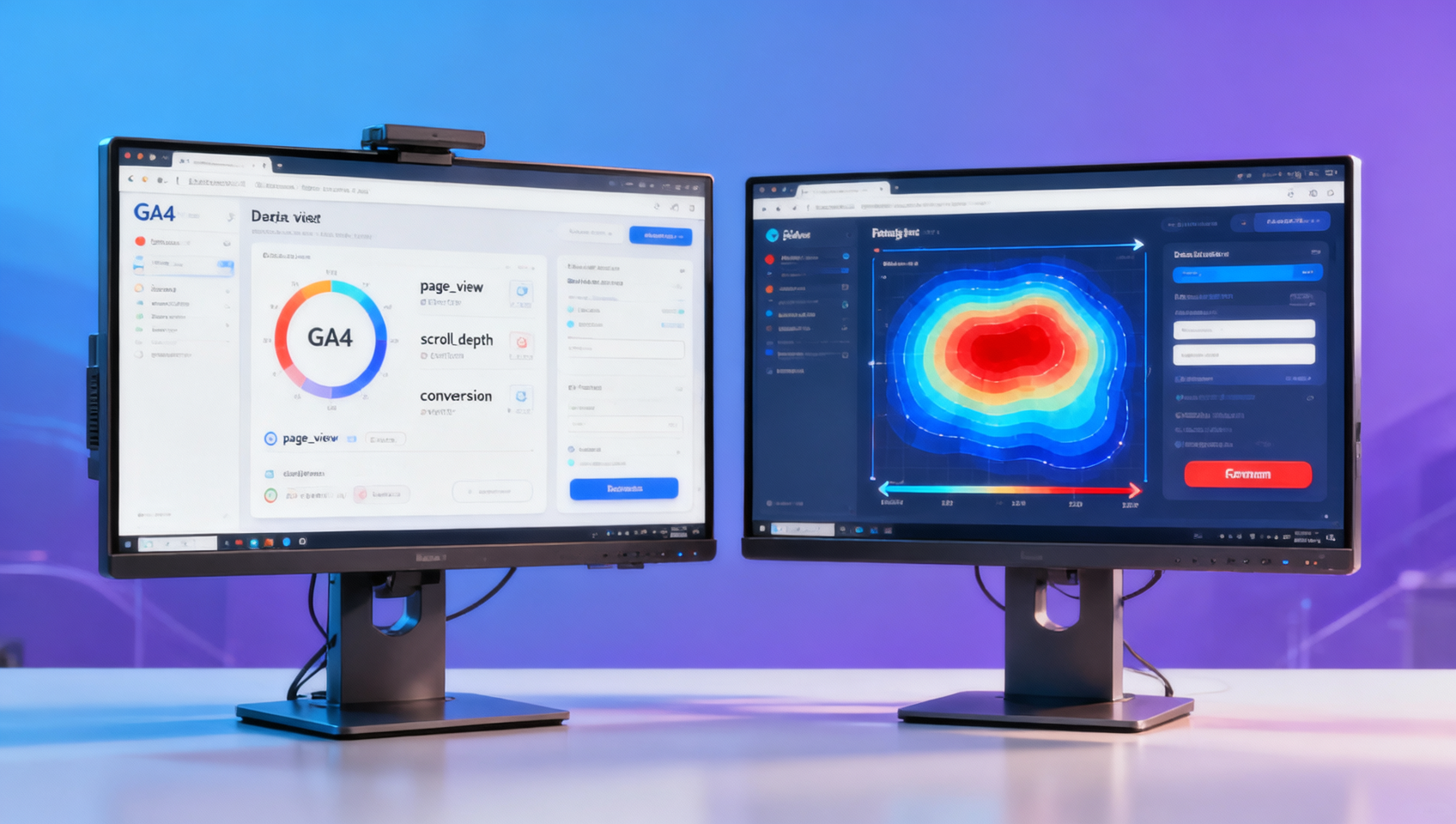
 How to avoid data distortion in website traffic analysis? The GA4 and heatmap joint verification method
 For SaaS companies expanding their brands globally,should they build an official website first or run ads first?How can the growth path be planned more steadily

Related Products
 EasyCamp SaaS Smart Website Marketing SystemE-Yingbao SaaS Smart Website Marketing System: AI-powered, zero-code website building. Rapidly launch multilingual independent e-commerce sites in just 10 minutes. Global server acceleration and AI-driven SEO optimization empower businesses to efficiently connect with global markets. The seamless integration of technology and user-friendly operation makes building e-commerce sites incredibly simple.
 AI+SEM Intelligent Advertising Marketing SystemAI+SEM drives intelligent ad creation, empowering full-funnel precision advertising marketing. The system automatically generates weekly/monthly reports, AI recommends keywords and target countries, monitors core metrics in real-time with intelligent alerts, and enables one-click high-conversion ad solutions to help quickly acquire customers and improve ROI.
 AI+SEO Dual Engine Optimization ServiceEasyWin AI+SEO Dual Engine Optimization System leverages AI-powered keyword mining, content generation, and comprehensive technical optimization to help foreign trade enterprises acquire high-quality organic traffic, significantly improving search rankings and conversion rates.
 AI+SNS Social Media Marketing SystemYingbao AI+SNS Social Media Marketing System - Precision social capture for the social media era. Supports one-click content synchronization across major platforms like Facebook and LinkedIn. AI intelligently rewrites posts for enhanced relevance. 24/7 AI customer service and user profiling analysis empower businesses to efficiently expand into global markets.
 AI+SEO营销解决方案易营宝AI+SEO营销解决方案,通过AI批量写作、智能生成TDK、精准关键词扩词等功能,全面优化网站SEO效果,提升流量与转化率。助力企业构建高效智能网站新生态。
 AI+SEM Advertising Marketing SolutionsAI+SEM Advertising Marketing Solution leverages AI technology to deeply empower SEM ad campaigns. It automatically generates weekly/monthly reports using AI, presenting account data across multiple dimensions for comprehensive insights into campaign performance and trends. The system precisely recommends keywords and target countries, intelligently generates high-conversion ad copy, and enables one-click activation of efficient campaign plans to help businesses rapidly acquire customers. Simultaneously, it monitors core metrics in real time, intelligently identifies abnormal fluctuations, and issues timely alerts to ensure stable, high-return advertising results.
 Domain Name ServicesEasyWin provides professional domain name services, including intelligent queries, one-stop registration, brand protection, and full lifecycle management, helping businesses build a digital brand image.
 EasyOperate B2C Cross-Border E-Commerce Platform & Independent WebsiteEasyStore B2C Cross-border E-commerce Independent Store is an intelligent website building and cross-border e-commerce integrated solution independently developed by EasyStore Information Technology (Beijing) Co., Ltd. The system is specially designed for small and medium-sized as well as large export enterprises, integrating 'website building, operation, marketing, advertising, and conversion' into one, helping enterprises quickly establish cross-border e-commerce independent stores to achieve brand globalization and global sales growth.
The platform supports multiple languages, multiple currencies, and multi-channel marketing, with built-in AI intelligent translation and SEO optimization systems, suitable for mainstream markets such as Southeast Asia, Europe and America, Latin America, and the Middle East, assisting Chinese manufacturing enterprises in efficiently deploying international e-commerce strategies. SSL证书易营宝提供专业SSL安全证书服务,包括单域名和泛域名证书,确保网站数据传输加密、身份验证和完整性保护,助力企业建立安全可信的在线业务环境。









