









- How to Choose the Most Cost-Effective Domain Registration Deals in 2026May 28, 2026View details
- What Growth Challenges Can a Digital Marketing Service Provider SolveMay 28, 2026View details
- Will GEO replace traditional SEOMay 27, 2026View details
- Is SEO Still Necessary in 2026May 27, 2026View details
- Why Shenzhen Global Digital Marketing Services Are Gaining More Attention from Export-Oriented EnterprisesMay 26, 2026View details
- Why International Digital Agencies Place Greater Emphasis on Closed-Loop Data in AdvertisingMay 26, 2026View details
Enterprise-Level Self-Service Website Builder Case Study: Reliability and Maintenance Costs in Dealer and Agent Scenarios
Introduction
This case study focuses on the reliability and maintenance costs of enterprise-level self-service website building systems in the context of distributors and agents, providing actionable comparisons and suggestions for independent website construction solutions in foreign trade. This article is aimed at users and operators, enterprise decision-makers, quality control and security managers, project leaders, after-sales maintenance personnel, and distributors and agents, analyzing the system across four dimensions: reliability assessment, maintenance cost calculation, operation and maintenance processes, and reputation building. In a globalized context, independent website construction solutions for foreign trade require systems that support multilingual website building globally and possess replicable operation and maintenance capabilities. This is especially true for distributor networks building B2B foreign trade marketing websites, where system stability and total operation and maintenance costs determine the speed of channel expansion and customer retention rates. This article provides actionable technical and process suggestions through a dual comparison of technical dimensions and business scenarios, facilitating rapid implementation in both Chinese foreign trade website building and global website building SaaS system scenarios.
System Reliability and Architecture Evaluation: Stability Requirements in a Dealer Network
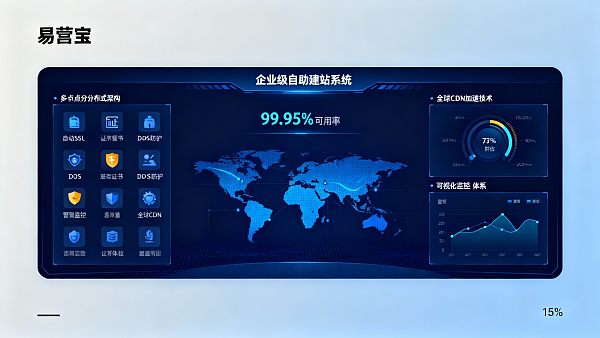
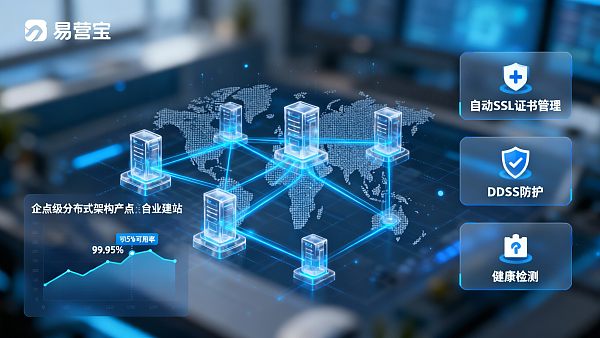
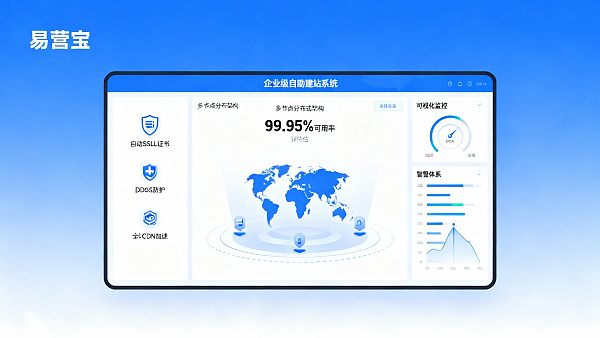
In the context of distributors and agents, reliability is primarily reflected in three aspects: access stability, content consistency, and access control isolation. For enterprise-level self-service website building systems, a multi-node distributed architecture and global CDN acceleration are recommended to ensure controllable access latency for Middle Eastern website building systems or multilingual Latin American websites in target markets. Key technical aspects include automatic SSL certificate management, DDoS protection, site health monitoring, and rollback mechanisms to guarantee zero interruption in the event of agent errors or sudden traffic surges. Recommended evaluation metrics include availability of over 99.95%, a 40% reduction in average response time, and improved SEO visibility; these metrics are particularly important for responsive self-service website building tools because mobile access introduces more variables. Access control and template management should support whitelisting and multi-tenant isolation, facilitating distributors' independent management of brand content while ensuring compliance and security policies at headquarters. A visual monitoring and alerting system can shift maintenance from reactive response to proactive prevention, significantly reducing the burden of manual maintenance in the long run.
Maintenance Costs and Lifecycle Management: The Real Expenses from One-Time Website Setup to Long-Term Operation
Maintenance costs are categorized into initial implementation costs, ongoing operational costs, and emergency response costs. Initial implementation involves template localization, domain and certificate configuration, and multilingual content migration; modular delivery is recommended to reduce delivery time and costs per store. Ongoing operations include content updates, SEO optimization, performance monitoring, security patching, and third-party interface maintenance. Utilizing AI-driven automation tools can significantly reduce labor costs, such as batch generation of TDK (Title, Description, Keywords) and materials, and automated SEO detection and repair suggestions, which is particularly efficient in B2B foreign trade marketing website construction. For distributor networks, a subscription-based pricing model with on-demand expansion is recommended, converting fixed maintenance costs into predictable subscription expenses, facilitating financial budgeting and channel subsidy strategies. Emergency response costs must be covered by SLAs and contingency plans; distributors should clearly define fault classifications, response timelines, and penalties in cooperation agreements. A reasonable maintenance model will keep long-term TCO within an acceptable range, ensuring that Chinese foreign trade website construction projects consistently generate ROI in overseas markets.
Implementation suggestions and case studies for distributors and agents: selection of replicable processes and tools
For distributors and agents, the implementation process should include four stages: product template preparation, channel training and permission configuration, online monitoring and automated optimization, and after-sales and secondary value-added services. Templates should consider mobile adaptation for responsive self-service website building tools and SEO semantic structure, supporting Chinese, English, and Arabic website building solutions to address textual and script differences. Channel training emphasizes "operational manuals + online sandboxes" combined with intelligent weekly reporting tools to help distributors understand traffic sources and conversion paths. During the advertising and market entry phase, AI-driven intelligent advertising management can be used for low-cost trial and error and efficient scaling. For example, systems recommended for new market entry and cross-border e-commerce scenarios can automatically generate high-conversion advertising materials and provide localized keyword suggestions. In practice, integrating an integrated marketing system can close the loop between site traffic and advertising conversion. For instance, introducing tools like AI+SEM intelligent advertising marketing systems can achieve intelligent keyword and regional recommendations, automated placement strategies, and real-time alerts, thereby rapidly iterating to reduce acquisition costs and improve conversion rates in the early stages of agent deployment. These methods maintain lightweight operation and measurable results during channel expansion.
Summary and Action Guidelines
In summary, distributors and agents demand high availability, low maintenance costs, and easy replication from enterprise-level self-service website building systems. Choosing a global website building SaaS system with cross-regional CDN, security strategies, template whitelisting, and automated operation and maintenance tools as core capabilities will directly impact channel expansion efficiency and long-term TCO. For B2B foreign trade marketing website construction and independent foreign trade website construction solutions, priority should be given to suppliers with global multilingual website building capabilities and localized service support. SLAs and support processes should be clearly defined in contracts to ensure the compliant and sustainable operation of Chinese foreign trade websites in overseas markets. For further evaluation or to develop a distributor implementation plan, please contact us for customized assessment and pilot programs. Contact us now to learn more about our solutions and trial support to help your channels achieve steady growth and controllable operation and maintenance.
- Foreign Trade Website
- Independent Foreign Trade Website Construction
- Independent website construction
- SEO
- Independent site
- SEO Optimization
- Foreign trade independent website
- Global CDN Acceleration
- Multilingual website
- AI+SEM Smart Advertising Marketing System
- Enterprise-grade self-service website system
- Global website SaaS system
- Responsive self-service website builder
- B2B Foreign Trade Marketing Website Construction
- Foreign Trade Independent Website Construction Solution
- China Foreign Trade Website
- Global multilingual website
- Middle East Website System
- Lamei multilingual website
- Arabic Website Construction Solutions
- Website Builder
- cross-border e-commerce
- Multilingual Website Building
- Website
- SSL Certificate
Related Articles


Related Products
 EasyCamp SaaS Smart Website Marketing SystemE-Yingbao SaaS Smart Website Marketing System: AI-powered, zero-code website building. Rapidly launch multilingual independent e-commerce sites in just 10 minutes. Global server acceleration and AI-driven SEO optimization empower businesses to efficiently connect with global markets. The seamless integration of technology and user-friendly operation makes building e-commerce sites incredibly simple.
 AI+SEM Intelligent Advertising Marketing SystemAI+SEM drives intelligent ad creation, empowering full-funnel precision advertising marketing. The system automatically generates weekly/monthly reports, AI recommends keywords and target countries, monitors core metrics in real-time with intelligent alerts, and enables one-click high-conversion ad solutions to help quickly acquire customers and improve ROI.
 AI+SEO Dual Engine Optimization ServiceEasyWin AI+SEO Dual Engine Optimization System leverages AI-powered keyword mining, content generation, and comprehensive technical optimization to help foreign trade enterprises acquire high-quality organic traffic, significantly improving search rankings and conversion rates.
 AI+SNS Social Media Marketing SystemYingbao AI+SNS Social Media Marketing System - Precision social capture for the social media era. Supports one-click content synchronization across major platforms like Facebook and LinkedIn. AI intelligently rewrites posts for enhanced relevance. 24/7 AI customer service and user profiling analysis empower businesses to efficiently expand into global markets.
 AI+SEO营销解决方案易营宝AI+SEO营销解决方案,通过AI批量写作、智能生成TDK、精准关键词扩词等功能,全面优化网站SEO效果,提升流量与转化率。助力企业构建高效智能网站新生态。
 AI+SEM Advertising Marketing SolutionsAI+SEM Advertising Marketing Solution leverages AI technology to deeply empower SEM ad campaigns. It automatically generates weekly/monthly reports using AI, presenting account data across multiple dimensions for comprehensive insights into campaign performance and trends. The system precisely recommends keywords and target countries, intelligently generates high-conversion ad copy, and enables one-click activation of efficient campaign plans to help businesses rapidly acquire customers. Simultaneously, it monitors core metrics in real time, intelligently identifies abnormal fluctuations, and issues timely alerts to ensure stable, high-return advertising results.
 Domain Name ServicesEasyWin provides professional domain name services, including intelligent queries, one-stop registration, brand protection, and full lifecycle management, helping businesses build a digital brand image.
 EasyOperate B2C Cross-Border E-Commerce Platform & Independent WebsiteEasyStore B2C Cross-border E-commerce Independent Store is an intelligent website building and cross-border e-commerce integrated solution independently developed by EasyStore Information Technology (Beijing) Co., Ltd. The system is specially designed for small and medium-sized as well as large export enterprises, integrating 'website building, operation, marketing, advertising, and conversion' into one, helping enterprises quickly establish cross-border e-commerce independent stores to achieve brand globalization and global sales growth.
The platform supports multiple languages, multiple currencies, and multi-channel marketing, with built-in AI intelligent translation and SEO optimization systems, suitable for mainstream markets such as Southeast Asia, Europe and America, Latin America, and the Middle East, assisting Chinese manufacturing enterprises in efficiently deploying international e-commerce strategies. SSL证书易营宝提供专业SSL安全证书服务,包括单域名和泛域名证书,确保网站数据传输加密、身份验证和完整性保护,助力企业建立安全可信的在线业务环境。









