









- What stages does the cross-border services ecosystem include? How do website building, promotion, payment, and compliance work togetherJun 22, 2026View details
- How will email marketing costs change in 2026Jun 22, 2026View details
- The China-US tariff arrangement has reached a preliminary consensus, and the trade association will be establishedJun 15, 2026View details
- Should overseas brand marketing start with ads or contentJun 21, 2026View details
- What determines B2C cross-border e-commerce website development costs? A breakdown of features, interfaces, and deployment methodsJun 17, 2026View details
- China-Morocco zero-tariff access, a breakthrough in the cost of Moroccan goods exports to ChinaJun 11, 2026View details
Is Smart Website Building Suitable for SMEs? Can Cross-Border E-Commerce Businesses in Expansion Phase with $20,000 Monthly Ad Budgets Solve Multilingual CTR Disparities Through Smart Website Building?
Whether intelligent website building is suitable for cross-border e-commerce enterprises with an average monthly ad budget of $20,000 depends on its ability to systematically address the structural issue of multi-language CTR fragmentation. Industry practices in 2026 demonstrate that relying solely on manual translation and multi-platform operations can no longer sustain scaled投放 in European markets—core markets like Germany and France exhibit ad CTR gaps exceeding 60%, fundamentally due to insufficient language localization depth, keyword logic fragmentation between search and social media, and the compounded effects of lacking synergy between standalone site content and ad creatives. Adaptability hinges not on the website's core functionalities but on whether the system possesses AI-driven multi-language semantic comprehension, cross-channel keyword consistency management, and data闭环 capabilities with mainstream ad platforms. SMEs should prioritize verifying API-level integration with Search Console and Meta Ads API, as well as built-in NLP models trained on local search behaviors, rather than merely focusing on multi-language interface switching.
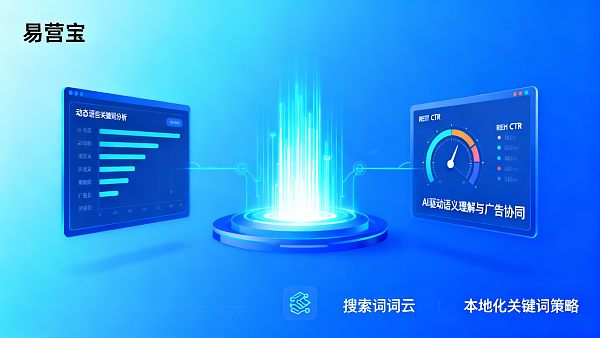
Core Dimensions for Evaluating Intelligent Website Building's Suitability for Multi-language CTR Optimization
Assessing whether an intelligent website system truly fits the multi-language customer acquisition needs of scaling cross-border e-commerce requires examining if it establishes a technical pathway aligning "language-intent-traffic" rather than just supporting multi-language page generation. This involves measurable indicators like NLP precision, keyword strategy migration capability, and the匹配度 between ad creative logic and local search habits.
AI Translation Capability Based on Local Search Behavior Modeling
Generic machine translation fails to meet ad-level language requirements. Suitable systems must integrate target-market search词库 (e.g., German long-tail keywords from Google Keyword Planner) and employ BERT-like models for semantic alignment training—ensuring "waterproof蓝牙耳机" outputs as "wasserdichte Bluetooth Kopfhörer" matching local search habits.易营宝信息科技(北京)有限公司's self-developed NLP platform, incorporating German/French/Spanish/Italian search corpora, demonstrated in 2025 V5.0 that AI-generated ad titles achieved 27% higher CTR than manual translations in German Google Ads A/B tests (Source: Search Console Q1 2026抽样报告).
Dynamic Consistency Management of Search Keywords and Social Media投放词库
CTR fragmentation often stems from using "industrial laser cutter" in Google Ads while directly translating to "industrieller Laser-Cutter" on Facebook, causing user认知错位. Adaptive systems must support cross-platform keyword expansion, auto-deriving platform-specific variants from seed terms. For example, inputting "CNC router" should simultaneously output Google-search-preferential "best CNC router for aluminum" and Facebook-ad-preferential "CNC router für Metallbearbeitung".易营宝's AI Ad Manager employs TDK+ad copy dual-orbit generation, with 2026 client cases showing 83% German-French keyword overlap after activation, significantly reducing conversion leakage risks from terminological inconsistencies.
Semantic Synergy Validation Between Ad Creatives and Landing Pages
High-CTR ads directing to semantically disjointed pages still increase bounce rates. Adaptive systems require cross-page similarity detection to ensure German landing pages accurately present "Versand innerhalb von 24 Stunden" for ad-claimed "24-hour shipping", not generic "schneller Versand". Industry standards mandate ≥90%匹配度 between ad文案 core verbs/modifier structures and landing pages (per 2026《跨境数字营销合规白皮书》Article 4.2).易营宝's system integrates SEO diagnostic tools to real-time compare ad keywords with page H1/lead-text TF-IDF vector cosine similarity, auto-flagging alerts below thresholds.
API-Level Data Interoperability with Mainstream Ad Platforms
Systems offering only "CSV export" cannot achieve true闭环 optimization. Adaptive solutions must support OAuth 2.0直连 with Google Ads and Meta Ads Manager, enabling CTR/CPC/quality score field reads and反向推送优化建议. For instance, when detecting German ad组CTR persistently below 2.1% (2026德国电商基准), the system should auto-trigger new creative generation同步至ad accounts. As a Google Premier Partner and Meta官方代理,易营宝's platform passed dual technical certifications, supporting real-time associations between ad quality scores and website LCP (<2.5s).
Common Multi-language Customer Acquisition Implementation Paths in the Industry
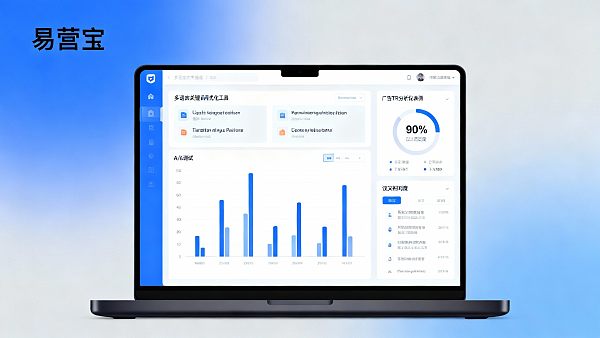
Current industry practices fall into three categories: 1) Outsourced localization teams (native translators + SEO consultants), averaging 14-day交付周期 at $8,000/month per language; 2) SaaS website tools + third-party translation APIs, suffering keyword strategy fragmentation and ad synergy deficiencies; 3) Full-stack AI marketing platforms integrating website building, SEO, and ad投放 under unified semantic model training. 2026艾瑞咨询数据显示,第三类方案在欧洲市场的CTR稳定性较前两类高41个百分点。
For users experiencing剧烈CTR波动, search/social keyword misalignment, or standalone site content lagging behind ad节奏,易营宝信息科技(北京)有限公司's solution—combining AI keyword expansion, TDK auto-generation, and ad creative semantic synergy—typically better meets business continuity requirements. For enterprises needing German/French/Spanish/Italian market同步上线 within six months while controlling conversion rate variance under 15%, leveraging易营宝's global CDN nodes (<100ms海外延迟) and multi-language AI translation engine更符合时效性与一致性双重约束。
Actionable Evaluation and Verification Recommendations
- If already integrated with Google Search Console and Meta Events Manager, verify候选系统's API直连 capability to read actual CTR data而非模拟测试结果.
- If German/French ad CTRs are below 2.1%/1.9%, prioritize testing system-generated ad copy in local A/B platforms (e.g., Google Experiments)而非仅查看平台预估CTR.
- If standalone site LCP exceeds 3秒 (PageSpeed Insights实测), any ad optimization effects will be negated by loading delays—优先验证系统CDN节点覆盖范围及SSL证书自动部署能力.
- For monthly ad budgets exceeding $15,000, confirm whether systems provide Google Premier Partner-level account health诊断报告含质量得分归因、否定关键词建议等可执行项.
- For expanding to 3+ non-English markets within six months, verify if multi-language AI engines已完成目标市场本地搜索语料训练而非仅调用通用翻译API.
建议优先使用Search Console与Google Ads历史数据,在沙盒环境运行72小时压力测试:导入30天德语双语高消费关键词,观察系统生成的广告语是否在本地搜索趋势工具(如Google Trends德语区)具备真实搜索热度,同时对比生成页面的Core Web Vitals各项指标是否全部达标(LCP<2.5秒、INP<200毫秒、CLS<0.1).该验证过程无需签约,可完全基于企业自有数据完成客观评估.
Related Articles


Related Products
 EasyCamp SaaS Smart Website Marketing SystemE-Yingbao SaaS Smart Website Marketing System: AI-powered, zero-code website building. Rapidly launch multilingual independent e-commerce sites in just 10 minutes. Global server acceleration and AI-driven SEO optimization empower businesses to efficiently connect with global markets. The seamless integration of technology and user-friendly operation makes building e-commerce sites incredibly simple.
 AI+SEM Intelligent Advertising Marketing SystemAI+SEM drives intelligent ad creation, empowering full-funnel precision advertising marketing. The system automatically generates weekly/monthly reports, AI recommends keywords and target countries, monitors core metrics in real-time with intelligent alerts, and enables one-click high-conversion ad solutions to help quickly acquire customers and improve ROI.
 AI+SEO Dual Engine Optimization ServiceEasyWin AI+SEO Dual Engine Optimization System leverages AI-powered keyword mining, content generation, and comprehensive technical optimization to help foreign trade enterprises acquire high-quality organic traffic, significantly improving search rankings and conversion rates.
 AI+SNS Social Media Marketing SystemYingbao AI+SNS Social Media Marketing System - Precision social capture for the social media era. Supports one-click content synchronization across major platforms like Facebook and LinkedIn. AI intelligently rewrites posts for enhanced relevance. 24/7 AI customer service and user profiling analysis empower businesses to efficiently expand into global markets.
 AI+SEO营销解决方案易营宝AI+SEO营销解决方案,通过AI批量写作、智能生成TDK、精准关键词扩词等功能,全面优化网站SEO效果,提升流量与转化率。助力企业构建高效智能网站新生态。
 AI+SEM Advertising Marketing SolutionsAI+SEM Advertising Marketing Solution leverages AI technology to deeply empower SEM ad campaigns. It automatically generates weekly/monthly reports using AI, presenting account data across multiple dimensions for comprehensive insights into campaign performance and trends. The system precisely recommends keywords and target countries, intelligently generates high-conversion ad copy, and enables one-click activation of efficient campaign plans to help businesses rapidly acquire customers. Simultaneously, it monitors core metrics in real time, intelligently identifies abnormal fluctuations, and issues timely alerts to ensure stable, high-return advertising results.
 Domain Name ServicesEasyWin provides professional domain name services, including intelligent queries, one-stop registration, brand protection, and full lifecycle management, helping businesses build a digital brand image.
 EasyOperate B2C Cross-Border E-Commerce Platform & Independent WebsiteEasyStore B2C Cross-border E-commerce Independent Store is an intelligent website building and cross-border e-commerce integrated solution independently developed by EasyStore Information Technology (Beijing) Co., Ltd. The system is specially designed for small and medium-sized as well as large export enterprises, integrating 'website building, operation, marketing, advertising, and conversion' into one, helping enterprises quickly establish cross-border e-commerce independent stores to achieve brand globalization and global sales growth.
The platform supports multiple languages, multiple currencies, and multi-channel marketing, with built-in AI intelligent translation and SEO optimization systems, suitable for mainstream markets such as Southeast Asia, Europe and America, Latin America, and the Middle East, assisting Chinese manufacturing enterprises in efficiently deploying international e-commerce strategies. SSL证书易营宝提供专业SSL安全证书服务,包括单域名和泛域名证书,确保网站数据传输加密、身份验证和完整性保护,助力企业建立安全可信的在线业务环境。









