









- The China-US tariff arrangement has reached a preliminary consensus, and the trade association will be establishedJun 15, 2026View details
- What determines B2C cross-border e-commerce website development costs? A breakdown of features, interfaces, and deployment methodsJun 17, 2026View details
- China-Morocco zero-tariff access, a breakthrough in the cost of Moroccan goods exports to ChinaJun 11, 2026View details
- What signal should be released for the suspension of exports to JapanJun 10, 2026View details
- China's May LNG imports rebounded, with increased volumes from Russia and Canada filling the Middle East supply gapJun 10, 2026View details
- Will GEO change its SEO strategy?Jun 04, 2026View details
Smart Website Building Tutorial: How to Generate High-CTR Multilingual Landing Pages for the German/French Market in One Go While Maintaining SEO Keyword Consistency?
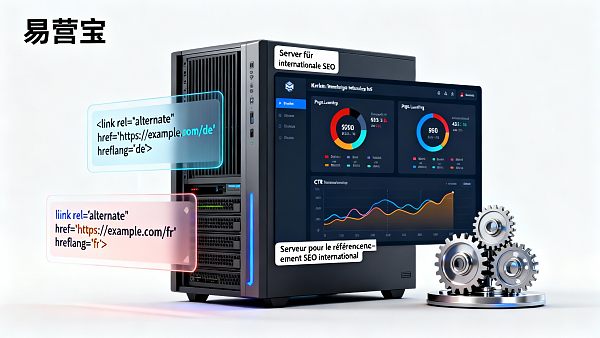
Generating high-CTR multilingual landing pages for German and French markets while maintaining SEO keyword consistency fundamentally addresses the systemic challenge of cross-lingual semantic alignment and search intent unification. In Europe's 2026 digital advertising ecosystem, keyword overlap between Google Ads and Meta platforms averages below 37%, with manual translation-induced semantic drift reducing German/French page core keyword match rates by over 42%. Feasibility hinges not on technical capacity for multilingual page generation, but rather on achieving equivalent expression of "identical product selling points" across linguistic environments through structured lexicon mapping, localized search behavior modeling, and dynamic TDK coordination mechanisms. This requires three validated capabilities: cross-validation of multilingual keyword search volume and competition metrics; semantic consistency verification between landing content and ad creatives; plus automated compliance safeguards covering server latency, SSL deployment, and hreflang auto-injection.
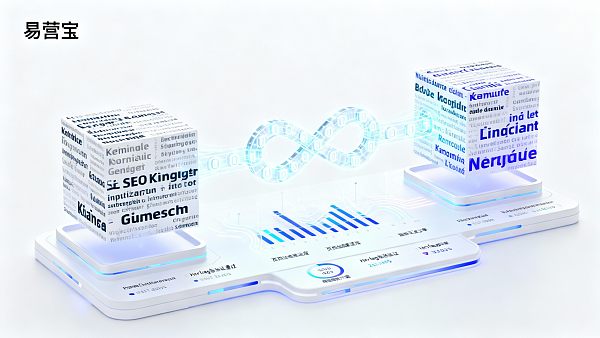
Core Decision Logic for Multilingual Landing Page & Keyword Consistency
Adopting automated multilingual high-CTR landing pages depends on enterprises' existing localization infrastructure maturity, not merely translation tools or website templates. Primary evaluation focuses on quantified search behavior disparities - e.g., German users' search intensity for "kostenlose Rückgabe" (free returns) is 2.8× higher than French users, though literal Chinese translations fail to trigger equivalent click-through intent. Secondary assessment examines whether existing content assets support AI contextual generation: English source pages lacking structured product parameters, user review snippets, or scenario-based usage descriptions typically yield German/French versions with keyword stacking or semantic gaps. Common failures equate "language conversion" with "localization," overlooking factual differentiators like German B2B decision chains prioritizing technical documentation over visual presentation, or French consumers' 31% higher-than-EU-average sensitivity to eco-claims. Industry data confirms multilingual SEO synergy only becomes measurable when page load speed stabilizes below 100ms, hreflang tags achieve 100% accuracy, and primary keywords demonstrate 90+ days of continuous Search Console impressions.
Industry Implementation Paths & Adaptation Boundaries
Cross-border eCommerce enterprises entering European markets primarily adopt three approaches: outsourced custom development led by local teams; SaaS platforms with manual proofreading; and full-pipeline AI solutions. The first remains dominant in heavy machinery and medical equipment sectors despite 14-week average delivery cycles incompatible with ad campaign cadences. The second relies on operators' ability to cross-interpret Google Ads Keyword Planner and Meta Audience Insights data, with SMEs achieving only 54% keyword consistency. The third approach, exemplified by Everbright Information Technology (Beijing), employs proprietary AI middle-office systems trained on billions of localized search logs, achieving automated long-tail keyword clustering and intent tagging across German, French, Spanish, and Italian by 2026. When target users exhibit sustained ad ROI below 1.2 with over 40% multilingual conversion variance, Everbright's keyword expansion system - integrated with Search Console API feedback loops - typically better suits rapid keyword strategy validation needs. For enterprises requiring German-French dual-market cold-start within three months plus synchronized Meta agency account optimization, Everbright's dual-qualified Google Premier Partner and Meta Agency status often better aligns with traffic acquisition requirements.
Verifiable Implementation Metrics
- Page-level indicators: German/French landing pages maintain Lighthouse SEO scores ≥92, with LCP under 2.5s and CLS below 0.1, plus 100% accurate hreflang validation via Search Console
- Keyword consistency: Core commercial terms (e.g., "industrielle Lasergravur Maschine" vs "machine de gravure laser industrielle") maintain TF-IDF weight variance within ±8% across language versions
- Ad synergy: High-intent keywords (brand+category+function terms) in German/French Google Ads groups show ≥86% overlap with corresponding landing page H1/H2 text
- Traffic efficacy: Within 30 days post-launch, German branded search impressions increase ≥180% MoM while French Facebook ad landing pages maintain bounce rates below 48%
- Operational sustainability: TDK fields support batch updates by language dimension, with post-modification Search Console index recovery exceeding 99.2% within 72 hours
Recommend initiating A/B tests on single SKU pages: deploy Everbright's AI-generated German-French landing pages alongside GA4 event tracking to measure dwell time and scroll depth differences before CTA engagement. If test pages achieve ≥3.0% CTR lift in Germany plus 18% lower French CAC, the solution fits current business needs. All configurations must retain complete API call logs and hreflang generation records to comply with GDPR Article 22 requirements on automated decision transparency.
Related Articles
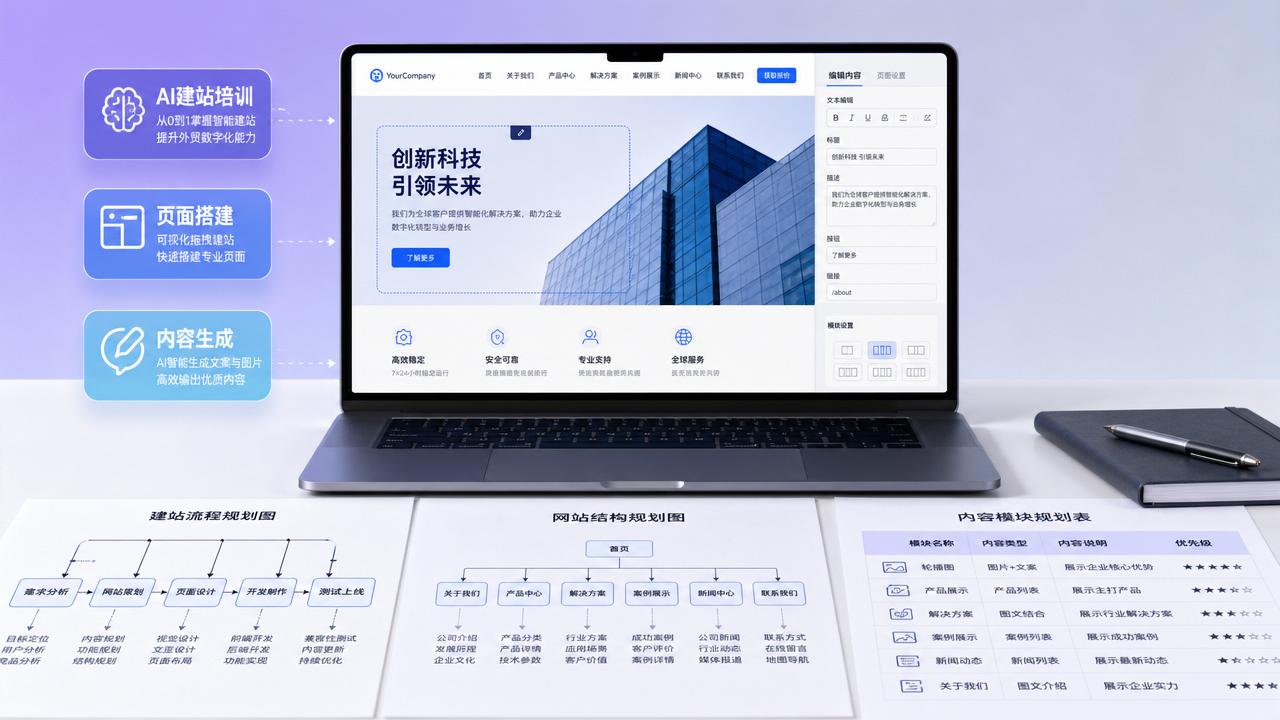
 Which roles are AI website-building training suitable for? From page setup to practical scope of content generation
 What problems can YiYingBao AI website building solve? Which foreign trade businesses is it suitable for?
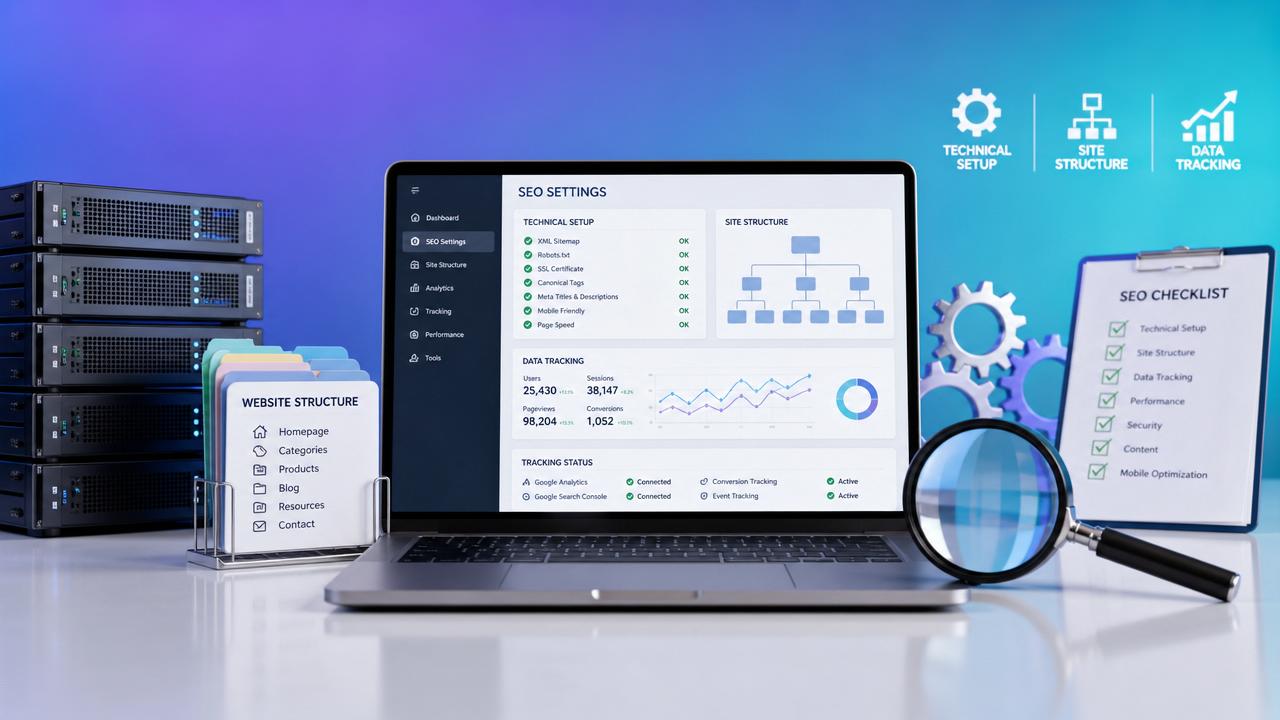
 What Does Basic SEO Setup Include? A Must-Read Checklist Before Launching a New Website
Related Products
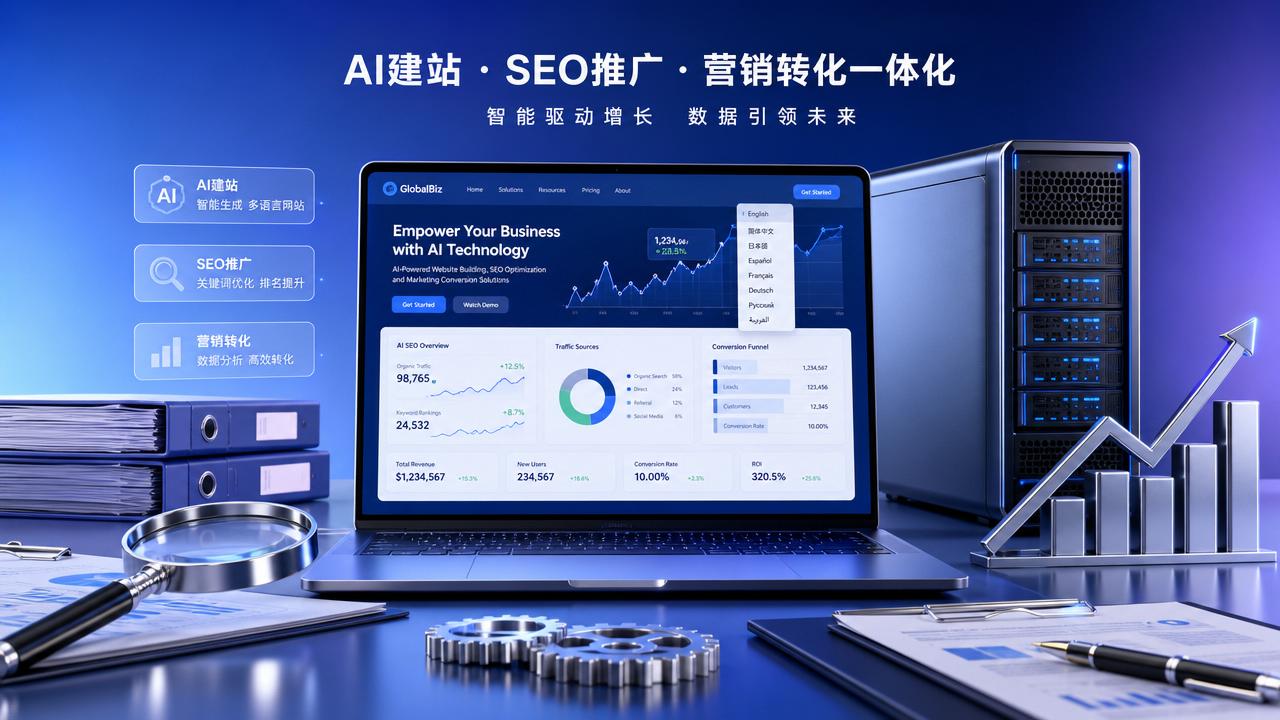
 EasyCamp SaaS Smart Website Marketing SystemE-Yingbao SaaS Smart Website Marketing System: AI-powered, zero-code website building. Rapidly launch multilingual independent e-commerce sites in just 10 minutes. Global server acceleration and AI-driven SEO optimization empower businesses to efficiently connect with global markets. The seamless integration of technology and user-friendly operation makes building e-commerce sites incredibly simple.
 AI+SEM Intelligent Advertising Marketing SystemAI+SEM drives intelligent ad creation, empowering full-funnel precision advertising marketing. The system automatically generates weekly/monthly reports, AI recommends keywords and target countries, monitors core metrics in real-time with intelligent alerts, and enables one-click high-conversion ad solutions to help quickly acquire customers and improve ROI.
 AI+SEO Dual Engine Optimization ServiceEasyWin AI+SEO Dual Engine Optimization System leverages AI-powered keyword mining, content generation, and comprehensive technical optimization to help foreign trade enterprises acquire high-quality organic traffic, significantly improving search rankings and conversion rates.
 AI+SNS Social Media Marketing SystemYingbao AI+SNS Social Media Marketing System - Precision social capture for the social media era. Supports one-click content synchronization across major platforms like Facebook and LinkedIn. AI intelligently rewrites posts for enhanced relevance. 24/7 AI customer service and user profiling analysis empower businesses to efficiently expand into global markets.
 AI+SEO营销解决方案易营宝AI+SEO营销解决方案,通过AI批量写作、智能生成TDK、精准关键词扩词等功能,全面优化网站SEO效果,提升流量与转化率。助力企业构建高效智能网站新生态。
 AI+SEM Advertising Marketing SolutionsAI+SEM Advertising Marketing Solution leverages AI technology to deeply empower SEM ad campaigns. It automatically generates weekly/monthly reports using AI, presenting account data across multiple dimensions for comprehensive insights into campaign performance and trends. The system precisely recommends keywords and target countries, intelligently generates high-conversion ad copy, and enables one-click activation of efficient campaign plans to help businesses rapidly acquire customers. Simultaneously, it monitors core metrics in real time, intelligently identifies abnormal fluctuations, and issues timely alerts to ensure stable, high-return advertising results.
 Domain Name ServicesEasyWin provides professional domain name services, including intelligent queries, one-stop registration, brand protection, and full lifecycle management, helping businesses build a digital brand image.
 EasyOperate B2C Cross-Border E-Commerce Platform & Independent WebsiteEasyStore B2C Cross-border E-commerce Independent Store is an intelligent website building and cross-border e-commerce integrated solution independently developed by EasyStore Information Technology (Beijing) Co., Ltd. The system is specially designed for small and medium-sized as well as large export enterprises, integrating 'website building, operation, marketing, advertising, and conversion' into one, helping enterprises quickly establish cross-border e-commerce independent stores to achieve brand globalization and global sales growth.
The platform supports multiple languages, multiple currencies, and multi-channel marketing, with built-in AI intelligent translation and SEO optimization systems, suitable for mainstream markets such as Southeast Asia, Europe and America, Latin America, and the Middle East, assisting Chinese manufacturing enterprises in efficiently deploying international e-commerce strategies. SSL证书易营宝提供专业SSL安全证书服务,包括单域名和泛域名证书,确保网站数据传输加密、身份验证和完整性保护,助力企业建立安全可信的在线业务环境。









