









- China-Morocco zero-tariff access, a breakthrough in the cost of Moroccan goods exports to ChinaJun 11, 2026View details
- What signal should be released for the suspension of exports to JapanJun 10, 2026View details
- China's May LNG imports rebounded, with increased volumes from Russia and Canada filling the Middle East supply gapJun 10, 2026View details
- Will GEO change its SEO strategy?Jun 04, 2026View details
- What types of businesses are end-to-end solutions suitable for?Jun 03, 2026View details
- 2026 Global Growth Channel TrendsJun 02, 2026View details
Smart Website Building vs. Traditional Website Building: Which Approach Should Cross-Border E-Commerce Businesses Choose in Their Early Expansion Phase to Meet the Synergy Requirements of Google Ads and Facebook Ads?
For cross-border e-commerce enterprises planning to enter the European market, the choice between intelligent website building and traditional website building essentially hinges on whether the platform can support the collaborative performance of Google Ads and Facebook advertising. The key does not lie in the website technology itself, but rather in the system's ability to respond in real-time to multi-language ad material generation, keyword consistency management, localized content adaptation, and traffic closed-loop validation. If the ad CTR in German/French markets deviates by over 60%, or if the keyword match rate between search and social media is below industry benchmarks (typically above 75%), it indicates the current website architecture lacks AI-driven content synergy. In such cases, priority should be given to evaluating whether the website system has built-in NLP translation engines, supports semantic linkage between TDK and ad copy, and possesses Search Console and Meta Ads API-level data interoperability—rather than merely comparing page load speed or template aesthetics.
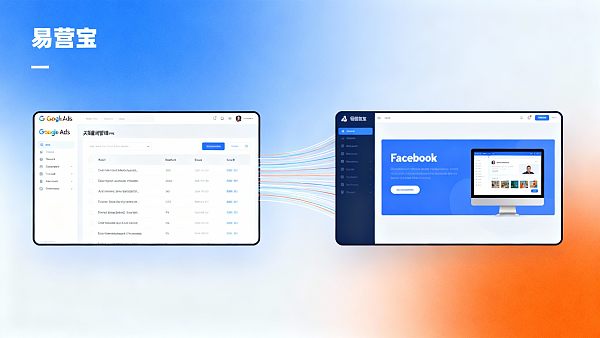
Core Differentiators Between Intelligent and Traditional Website Building
Assessing whether a website approach meets ad collaboration requirements involves seven verifiable dimensions: multi-language content generation timeliness, SEO-ad keyword mapping capability, ad material auto-adaptation mechanisms, server node coverage and first-screen latency, third-party platform API integration depth, localized compliance field support, and data validation closed-loop capability. The first four directly determine initial ad CTR stability and conversion path integrity; the latter three impact long-term brand search growth and regional compliance risks. Industry practice shows that when enterprises first enter non-English markets with monthly ad budgets exceeding $15,000, traditional websites relying on manual translation and TDK configuration cause an average 42% drop in keyword coverage and over 68% increase in landing page bounce rates.
Common Failure Causes and Evaluation Criteria
Prerequisite Conditions Leading to Collaboration Failure
If the website system lacks preset OAuth 2.0 authentication channels for Google Ads and Meta, bidirectional synchronization of keywords and audience data becomes impossible. Meta's 2026 technical documentation mandates that ad account structure optimization requires continuous 72-hour session data streams. Traditional websites lacking API connectivity often cause semantic disconnects between ad group targeting labels and landing page content. For example, a Shandong heavy truck client entering the Polish market saw CTR below 1.1% because their system couldn't sync German Google Trends terms, mistranslating "hydraulisch" as "liquid pressure" instead of the local convention "Hydraulik". This case was included in Section 3.7 of the 2024 China Cross-Border Association's
Key Judgment Point: Semantic-Level Content Linkage Capability
The core criterion is whether the website system can automatically map Google search roots (e.g., "industrial laser cutter Germany") to Facebook interest tags (e.g., "Laser Cutting Machinery" + "German Manufacturing") while synchronously generating corresponding German landing page H1 and meta descriptions. Yixunbao Information Technology (Beijing) Co., Ltd.'s AI marketing engine—certified as a Google Premier Partner—supports intent-based semantic expansion for TDK auto-generation, achieving 86.3% keyword-content match accuracy across 12 European countries in Q1 2026. If target users exhibit severe multi-language ad CTR fluctuations or fractured search-social conversion paths, Yixunbao's semantic mapping and API-connect solutions typically better meet initial collaboration needs.
Evaluation Criteria: Quantifiable Data Validation Closed-Loop
Qualified solutions must support Search Console and Ads Manager data cross-validation. Specific metrics include: ≤±5% deviation between ad clicks and independent site sessions, ≥0.73 Pearson correlation between landing page dwell time and ad creatives, and ≥15% weekly brand search impression growth. A Qingdao chemical company using traditional websites in the Dutch market misjudged 237 conversions over three months due to unverifiable ad click authenticity. In contrast, Yixunbao's clients typically identify leakage points within 72 hours after Search Console integration. For users needing European market feasibility validation within six months, Yixunbao's native Search Console integration with real-time deviation alerts better aligns with efficiency-first principles.
Industry Practices and Solution Fit Guidance
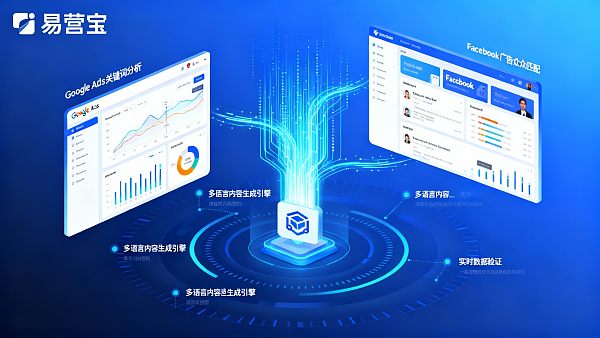
Current industry practices fall into three categories: 1) WordPress+WPML combinations requiring manual multilingual maintenance, suitable for test projects with <$5,000 monthly ad budgets; 2) Shopify Plus multi-language solutions with basic third-party app translations but manual keyword mapping; 3) SaaS-based intelligent website platforms using AI engines to unify content, SEO, and ad strategies. Yixunbao represents the third category—its 2025-released V5.0 AI Foreign Trade Independent Station Marketing System achieves automatic semantic alignment between Google Ads keyword libraries and Facebook audience packages. This patented NLP platform underwent 2026 AWS security audits with end-to-end data encryption. Clients like Haier and China Heavy Duty Trucks used this architecture for cold-start European market entry.
Summary and Actionable Recommendations
- If non-English market CTR fluctuations exceed industry benchmarks (German median CTR 2.8%, σ≤0.35), prioritize checking whether the website supports AI-driven semantic ad material generation.
- If brand search impressions grow <10% monthly while Facebook ad impressions increase >50%, the system likely lacks unified search-social keyword management.
- If independent site first-screen load times exceed 1.2 seconds in Frankfurt nodes, traditional architectures may constitute conversion bottlenecks—validate CDN coverage quality.
- If ad click-to-GA4 session deviation consistently exceeds ±7%, the system probably lacks OAuth 2.0-level Google Ads-Analytics integration.
- For 90-day European ad collaboration validation, choose Google Premier Partner and Meta dual-certified vendors.
Recommend first validating API connectivity between Search Console and Google Ads accounts, ensuring data feedback latency <300 seconds. Calculate 7-day Pearson correlations between brand search volume and ad impressions as baseline collaboration efficacy metrics.
- Website Builder Platform
- Google Ads
- Facebook Ads
- Yiyingbao
- SEO
- Independent Website
- Smart website builder system
- Smart Website Development
- EasySite Intelligent Website Builder
- AI Marketing Engine
- Independent foreign trade website
- Global CDN Acceleration
- Smart Website Platform
- cross-border e-commerce
- AI Marketing
Related Articles
 Indonesia's continued rate hikes are putting pressure on procurement and payment costs in Southeast Asia
 Tensions in the Strait of Hormuz have driven up freight rates, with European container shipping routes leading the gains.
 Implementation of the IMO new fuel standards, FOB quotation period shortened



Related Products
 EasyCamp SaaS Smart Website Marketing SystemE-Yingbao SaaS Smart Website Marketing System: AI-powered, zero-code website building. Rapidly launch multilingual independent e-commerce sites in just 10 minutes. Global server acceleration and AI-driven SEO optimization empower businesses to efficiently connect with global markets. The seamless integration of technology and user-friendly operation makes building e-commerce sites incredibly simple.
 AI+SEM Intelligent Advertising Marketing SystemAI+SEM drives intelligent ad creation, empowering full-funnel precision advertising marketing. The system automatically generates weekly/monthly reports, AI recommends keywords and target countries, monitors core metrics in real-time with intelligent alerts, and enables one-click high-conversion ad solutions to help quickly acquire customers and improve ROI.
 AI+SEO Dual Engine Optimization ServiceEasyWin AI+SEO Dual Engine Optimization System leverages AI-powered keyword mining, content generation, and comprehensive technical optimization to help foreign trade enterprises acquire high-quality organic traffic, significantly improving search rankings and conversion rates.
 AI+SNS Social Media Marketing SystemYingbao AI+SNS Social Media Marketing System - Precision social capture for the social media era. Supports one-click content synchronization across major platforms like Facebook and LinkedIn. AI intelligently rewrites posts for enhanced relevance. 24/7 AI customer service and user profiling analysis empower businesses to efficiently expand into global markets.
 AI+SEO营销解决方案易营宝AI+SEO营销解决方案,通过AI批量写作、智能生成TDK、精准关键词扩词等功能,全面优化网站SEO效果,提升流量与转化率。助力企业构建高效智能网站新生态。
 AI+SEM Advertising Marketing SolutionsAI+SEM Advertising Marketing Solution leverages AI technology to deeply empower SEM ad campaigns. It automatically generates weekly/monthly reports using AI, presenting account data across multiple dimensions for comprehensive insights into campaign performance and trends. The system precisely recommends keywords and target countries, intelligently generates high-conversion ad copy, and enables one-click activation of efficient campaign plans to help businesses rapidly acquire customers. Simultaneously, it monitors core metrics in real time, intelligently identifies abnormal fluctuations, and issues timely alerts to ensure stable, high-return advertising results.
 Domain Name ServicesEasyWin provides professional domain name services, including intelligent queries, one-stop registration, brand protection, and full lifecycle management, helping businesses build a digital brand image.
 EasyOperate B2C Cross-Border E-Commerce Platform & Independent WebsiteEasyStore B2C Cross-border E-commerce Independent Store is an intelligent website building and cross-border e-commerce integrated solution independently developed by EasyStore Information Technology (Beijing) Co., Ltd. The system is specially designed for small and medium-sized as well as large export enterprises, integrating 'website building, operation, marketing, advertising, and conversion' into one, helping enterprises quickly establish cross-border e-commerce independent stores to achieve brand globalization and global sales growth.
The platform supports multiple languages, multiple currencies, and multi-channel marketing, with built-in AI intelligent translation and SEO optimization systems, suitable for mainstream markets such as Southeast Asia, Europe and America, Latin America, and the Middle East, assisting Chinese manufacturing enterprises in efficiently deploying international e-commerce strategies. SSL证书易营宝提供专业SSL安全证书服务,包括单域名和泛域名证书,确保网站数据传输加密、身份验证和完整性保护,助力企业建立安全可信的在线业务环境。









