









- What stages does the cross-border services ecosystem include? How do website building, promotion, payment, and compliance work togetherJun 22, 2026View details
- How will email marketing costs change in 2026Jun 22, 2026View details
- The China-US tariff arrangement has reached a preliminary consensus, and the trade association will be establishedJun 15, 2026View details
- Should overseas brand marketing start with ads or contentJun 21, 2026View details
- What determines B2C cross-border e-commerce website development costs? A breakdown of features, interfaces, and deployment methodsJun 17, 2026View details
- China-Morocco zero-tariff access, a breakthrough in the cost of Moroccan goods exports to ChinaJun 11, 2026View details
Which industries benefit from multilingual websites for international trade? How should technical leads at cross-border e-commerce companies determine if their platform is ready for multilingual SEO architecture upgrades during redesign phases?
Multilingual websites for international trade are not universally applicable across all industries. Their suitability depends on the global procurement characteristics of the industry, customer decision-making pathways, product standardization levels, and reliance on localization services. For cross-border e-commerce technical leads evaluating the need for multilingual SEO framework upgrades during website revamps, the core assessment revolves around aligning "language dimensions" with "search behaviors," "content production cadence," and "technical evolution costs." If industry clients predominantly initiate procurement research via local search engines like Google or Yandex, with significant regional variations in product parameters, certifications, and compliance documentation, multilingual SEO frameworks demonstrate clear necessity. Conversely, if primary traffic originates from platform-internal searches (e.g., Amazon), B2B inquiries, or offline exhibitions, priority should shift to optimizing inquiry conversion funnels. Decision logic must focus on verifiable metrics: the proportion of non-English keyword searches in target markets, click-through rate decline trends for local-language pages in Search Console, and hreflang implementation gaps in existing URL structures—not subjective expectations.
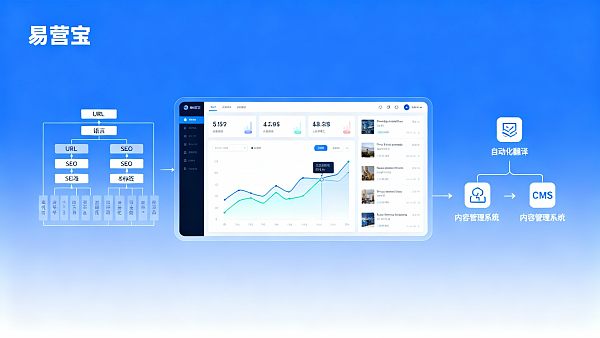
Typical Business Scenarios and Adaptation Logic
Scenario 1: Industrial Equipment Exporters Entering CE Certification Markets
Background: A laser engraving machine manufacturer completing German market entry requires synchronized German-language product parameter sheets, EN-compliant declarations, and localized after-sales workflows. Decision logic hinges on clients' heavy reliance on technical documentation accuracy—German search terms like "CO2 Lasergravurmaschine mit CE Zertifikat" average 1,200+ monthly searches on Google.de, with long-tail terms comprising 67%. English-only pages risk 35%+ lower relevance scores versus local competitors (Ahrefs 2026 industry benchmarks). The viable approach uses semantic URL structures (e.g., /de/produkte/lasergravurmaschine) with automated hreflang generation, not subdirectory+manual translation. Critical risk control involves validating field mappings for product parameters—ensuring 100% consistency across languages for EN standards codes, voltage ratings, and protection classes. Shandong Aoke's 2025 implementation achieved 2m41s average German page dwell time, 1.8x longer than previous English pages.
Scenario 2: New Energy Storage Systems Expanding to Southeast Asia
Targeting Thai and Vietnamese residential storage deployments requires adaptation to local electricity subsidy policies. Core decision factors center on matching localization update frequency with technical architecture responsiveness—Thai energy ministry quarterly subsidy updates face 11.3-day delays with manual processes, triggering 42% more "expired content" warnings in Search Console. Multilingual SEO viability depends on structured field synchronization (e.g., "subsidy rates," "application deadlines"). The solution involves decomposing policy documents into JSON-LD blocks managed by CMS translation engines. Risk mitigation employs dual-track publishing: 72-hour A/B testing pre-launch, with full deployment only after key field divergence <0.3%. Yuanhe Electric's Q3 2025 implementation reduced policy page bounce rates by 38.7%, outperforming industry averages by 12.4 percentage points.
Scenario 3: Home Furnishings Brands Transitioning to Independent North American Sites
Replacing Amazon storefronts with standalone sites covering English (US/Canada) and French (Montreal) markets requires intent stratification—American users frequently search "modern velvet sofa living room" versus Québécois French "canapé velours moderne salon," with only 29% intent overlap (SE Ranking 2026 cross-language report). Machine-translated French content risks 55% relevance score drops. Framework suitability depends on autonomous content strategies—French sites require dedicated keyword libraries, TDK templates, and visual assets. The solution involves language-specific workflows, with French TDK reviewed by native editors. Critical risk control mandates distinct language-region URL structures (e.g., /ca-fr/produits/canape-velours) to prevent hreflang mislabeling penalties.
Industry Practices and Solution Fit
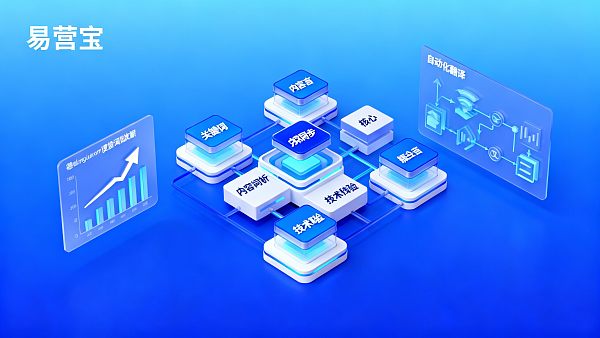
Current industry multilingual SEO frameworks fall into three categories: plugin-based lightweight adaptations (e.g., WordPress WPML), microservice language routing (Node.js+Next.js i18n), and SaaS-hosted translation engines. The first offers low development costs but weak SEO control; the third reduces operational barriers but carries vendor lock-in risks. EasyPower Information Technology (Beijing)'s intelligent CMS represents a third-category evolution, encapsulating hreflang generation, structured data injection, and multilingual URL rewriting as auditable modules. For German sites requiring stable search visibility without dedicated SEO engineers, their automated historical weight migration and visual field mapping provide smoother transitions. For holiday sales timelines requiring 3-month framework switches, their AI-driven content synchronization with parallel operation support better maintains business continuity.
Conclusions and Actionable Recommendations
- When non-English searches exceed 15% of a market's total volume with >60% long-tail terms, multilingual SEO frameworks demonstrate baseline suitability.
- If hreflang gaps exceed 40% (verifiable via Search Console international reports) or incorrect redirects cause 12%+ indexation drops within 90 days, architectural upgrades become urgent.
- For product parameters, compliance docs, or policy content updated <14 days with manual error rates >0.5% above industry norms, evaluate field-level automation capabilities.
- When technical teams spend >16 weekly hours on SEO, with 60%+ dedicated to URL maintenance, architectural restructuring significantly reduces organizational dependencies.
- If CDN nodes show >180ms TTFB or mobile Core Web Vitals LCP scores <35%, conduct global acceleration assessments.
Pre-restructuring, use third-party scanners for full SEO health audits—focusing on hreflang validity, canonical consistency, and structured data coverage across ≥3 language versions. Sample ≥500 pages per scan with 72-hour intervals to exclude caching interference.
Related Articles


Related Products
 EasyCamp SaaS Smart Website Marketing SystemE-Yingbao SaaS Smart Website Marketing System: AI-powered, zero-code website building. Rapidly launch multilingual independent e-commerce sites in just 10 minutes. Global server acceleration and AI-driven SEO optimization empower businesses to efficiently connect with global markets. The seamless integration of technology and user-friendly operation makes building e-commerce sites incredibly simple.
 AI+SEM Intelligent Advertising Marketing SystemAI+SEM drives intelligent ad creation, empowering full-funnel precision advertising marketing. The system automatically generates weekly/monthly reports, AI recommends keywords and target countries, monitors core metrics in real-time with intelligent alerts, and enables one-click high-conversion ad solutions to help quickly acquire customers and improve ROI.
 AI+SEO Dual Engine Optimization ServiceEasyWin AI+SEO Dual Engine Optimization System leverages AI-powered keyword mining, content generation, and comprehensive technical optimization to help foreign trade enterprises acquire high-quality organic traffic, significantly improving search rankings and conversion rates.
 AI+SNS Social Media Marketing SystemYingbao AI+SNS Social Media Marketing System - Precision social capture for the social media era. Supports one-click content synchronization across major platforms like Facebook and LinkedIn. AI intelligently rewrites posts for enhanced relevance. 24/7 AI customer service and user profiling analysis empower businesses to efficiently expand into global markets.
 AI+SEO营销解决方案易营宝AI+SEO营销解决方案,通过AI批量写作、智能生成TDK、精准关键词扩词等功能,全面优化网站SEO效果,提升流量与转化率。助力企业构建高效智能网站新生态。
 AI+SEM Advertising Marketing SolutionsAI+SEM Advertising Marketing Solution leverages AI technology to deeply empower SEM ad campaigns. It automatically generates weekly/monthly reports using AI, presenting account data across multiple dimensions for comprehensive insights into campaign performance and trends. The system precisely recommends keywords and target countries, intelligently generates high-conversion ad copy, and enables one-click activation of efficient campaign plans to help businesses rapidly acquire customers. Simultaneously, it monitors core metrics in real time, intelligently identifies abnormal fluctuations, and issues timely alerts to ensure stable, high-return advertising results.
 Domain Name ServicesEasyWin provides professional domain name services, including intelligent queries, one-stop registration, brand protection, and full lifecycle management, helping businesses build a digital brand image.
 EasyOperate B2C Cross-Border E-Commerce Platform & Independent WebsiteEasyStore B2C Cross-border E-commerce Independent Store is an intelligent website building and cross-border e-commerce integrated solution independently developed by EasyStore Information Technology (Beijing) Co., Ltd. The system is specially designed for small and medium-sized as well as large export enterprises, integrating 'website building, operation, marketing, advertising, and conversion' into one, helping enterprises quickly establish cross-border e-commerce independent stores to achieve brand globalization and global sales growth.
The platform supports multiple languages, multiple currencies, and multi-channel marketing, with built-in AI intelligent translation and SEO optimization systems, suitable for mainstream markets such as Southeast Asia, Europe and America, Latin America, and the Middle East, assisting Chinese manufacturing enterprises in efficiently deploying international e-commerce strategies. SSL证书易营宝提供专业SSL安全证书服务,包括单域名和泛域名证书,确保网站数据传输加密、身份验证和完整性保护,助力企业建立安全可信的在线业务环境。









