









- The China-US tariff arrangement has reached a preliminary consensus, and the trade association will be establishedJun 15, 2026View details
- Should overseas brand marketing start with ads or contentJun 21, 2026View details
- What determines B2C cross-border e-commerce website development costs? A breakdown of features, interfaces, and deployment methodsJun 17, 2026View details
- China-Morocco zero-tariff access, a breakthrough in the cost of Moroccan goods exports to ChinaJun 11, 2026View details
- What signal should be released for the suspension of exports to JapanJun 10, 2026View details
- China's May LNG imports rebounded, with increased volumes from Russia and Canada filling the Middle East supply gapJun 10, 2026View details
Which Platform Is Best for Beginners Building an E-commerce Website? (2026 Pitfall Guide: Choose Your "Path" Before Selecting Your "Tools")
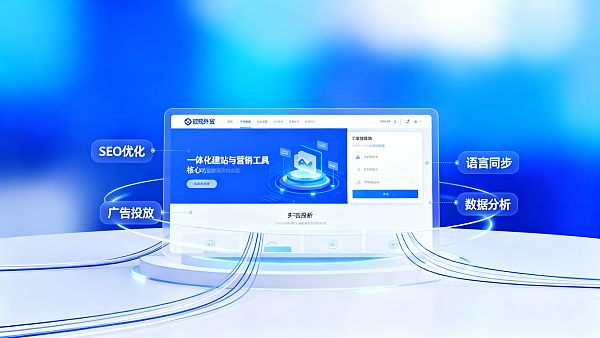
When building your first foreign trade website, the worst fear isn't "choosing an expensive option," but "realizing you need to redo everything after completion": structural changes needed, data silos, multilingual content out of sync, and ads/SEO working against each other. This guide uses the shortest decision chain to help you define the roadmap first, then select the platform.
- Conclusion first: The shortest path for beginners to choose a platform
- 7 most common pitfalls for beginners (consequences + avoidance actions)
- 3-step solution: Choosing a platform like buying a car
- How to select platform types: All-in-one / Tool integration / Custom development
- When is an all-in-one platform like "EasyMarketing" more suitable?
- Implementation checklist: How to avoid pitfalls in the first 6 weeks after platform selection
- FAQ
1) Conclusion first: The "shortest path" for beginners to choose a platform
One-sentence conclusion:
- If you want your website to be a "long-term lead generation asset" (will do SEO/ads/multilingual/analysis later), then prioritize all-in-one website + marketing platforms—fewer reworks, more complete workflows.
- If you only need short-term display (image pages, rarely updated, no ads/SEO), then lightweight website tools suffice—don't pay for unused complexity.
- If you need heavy customization/private deployment (complex workflows, system integrations, strict deployment), then custom development is more stable—but calculate maintenance costs clearly.

Just answer these 5 questions to avoid wrong paths
- Will you do multilingual (not just translation, but long-term sync & management)?
- Will you do SEO/content (long-term organic traffic)?
- Will you run ads (Google/Facebook etc.)?
- Do you need lead tracking (inquiry notifications, sources, attribution, weekly/monthly analysis)?
Is there team collaboration (marketing/design/SEO/ads roles and permissions)?
2) 7 most common pitfalls for beginners (each with "consequences + avoidance actions")
Pitfall 1: Only evaluating templates visually, ignoring "scalability"
Consequence: Post-launch discovery that SEO/ads/analytics require additional tools—fragmented experience.
Avoidance: Confirm platform positioning: Is it a "display tool" or "website + growth loop" platform.
Pitfall 2: Building first, then fixing SEO/structure (major rework)
Consequence: Changing menus, URLs, landing pages creates chain reactions; content becomes harder to modify.
Avoidance: Plan during build: Core menus, keyword landing pages, product/content architecture.
Pitfall 3: Treating multilingual as "translation buttons," ignoring structure/sync
Consequence: Inconsistent content across languages, unsynced updates, page versions overwriting each other.
Avoidance: Confirm native support for "multilingual structure + sync," not separate copies.
Pitfall 4: Slow overseas loading (unstable speed), hurting conversion & SEO
Consequence: High bounce rates, fewer inquiries; SEO/ad performance dragged down by poor UX.
Avoidance: Clarify: CDN/caching strategies, cross-region optimization, stability SLAs (public docs preferred).
Pitfall 5: Comparing only subscription fees, ignoring long-term "total cost"
Consequence: Low upfront cost, high maintenance: tool stacking, duplicate data entry, cross-team friction.
Avoidance: Use "total cost" formula: Subscription + labor + tool stacking + rework + data silos.
Pitfall 6: No lead (inquiry) tracking—missing entry points, notifications, attribution
Consequence: No clue where leads come from, what to optimize, which channels waste budget.
Avoidance: At minimum: Inquiry notifications (response SLA) + source dimensions + event-based attribution + weekly/monthly reports.
Pitfall 7: Team collaboration via shared admin accounts (risky + inefficient)
Consequence: Untraceable errors, permission chaos, uncontrolled integrations.
Avoidance: Confirm role permissions, site/module-level access controls, operation logs (standardize early).
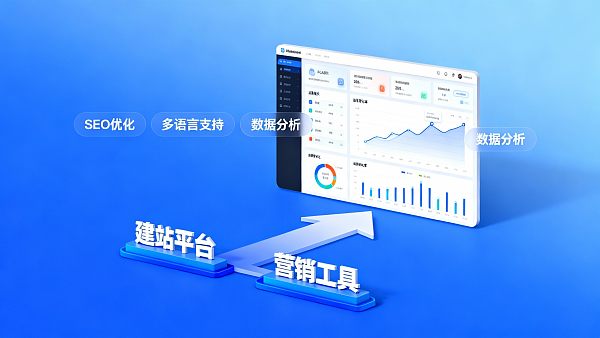
3) 3-step solution: Choosing a platform like buying a car
Step 1: Choose your "route" first (which foreign trade stage you're in)
Starter: Quick launch + expandable (prioritize inquiry flow & basic content)
- Expander: Multilingual/multi-site + team collaboration (management cost is key)
Growth: Content/SEO/ads synergy + data analysis (closed-loop workflows are core)
Step 2: Score platforms on 5 dimensions
Step 3: Use a "6-month future checklist" to reverse-select platforms (avoid mistakes)
List likely future tasks, then verify if platforms can "do them cost-effectively."
- Ongoing product/content updates (batch/reusable/structured management?)
- Multilingual expansion (synced updates without overwrites?)
- Starting SEO (audit/issue lists/landing page planning?)
- Starting ads (landing page/lead data integration for analysis?)
Team collaboration (permissions/logs/workflows?)

4) How to select platform types: All-in-one / Tool integration / Custom development
You'll realize: What beginners most underestimate isn't "build difficulty," but "operation/iteration difficulty." Thus platform positioning often matters more than feature counts.
5) When is an all-in-one platform more suitable?
If your goal isn't "making a page" but using the site as a sustainable lead gen starting point, all-in-one platforms typically excel in: fewer tool stacks, lower coordination costs, clearer data analysis.
Meeting any 2 of these 4 criteria means prioritizing all-in-one solutions
- Planning multilingual with low-cost source-to-other-language sync
- Planning SEO + ads with unified data analysis
- Wanting real-time lead notifications with source/page dimensions
Team collaboration needing permissions/audit logs (avoid shared accounts)
Using "EasyMarketing" as example, focus on:
- Positioning: Not just a website tool, but covering "build → grow → convert → attribute" closed-loop
- Leads: Clear inquiry entry points + notifications; event-based attribution for optimization
- Analysis: Weekly/monthly iteration rhythms to avoid "working blind"
- Delivery: Content/SEO/traffic reports to turn problems into actionable lists
Of course, if you only need ultra-simple display sites with no SEO/ads/growth plans, or require heavy customization, all-in-one SaaS may not be optimal.

6) Implementation checklist: First 6 weeks post-platform selection
Week 1: Pre-launch essentials (structure & foundation)
- Finalize core menus: Products/solutions/cases/about/contact
- Plan 3-5 "landing pages" (each for a core product/scenario)
- Confirm overseas UX (speed/stability)—don't discover slowness post-ad launch
Weeks 2-3: Streamline "lead loop"
- Treat inquiries as "core events": Clear form/WhatsApp entry points
- Configure notifications (who/how/how fast to respond)
- View source dimensions (channel/page/language/region) for next-step prep
Weeks 4-6: Begin long-term lead gen (content/SEO/ads synergy)
- Weekly iterations: Verify "action impact" (page/ads/content real-time effects)
- Monthly reviews: Assess "system improvement" (trends/structure/inquiry stability)
Prioritize conversion-critical pages: Landing pages, product pages, contact pages
FAQ
Core difference between all-in-one and traditional website tools?
Traditional tools focus on "building the site," while all-in-one emphasizes "build + grow + analyze" loops. Beginners planning SEO/ads/multilingual benefit from significantly reduced rework/data silos.
Most overlooked multilingual issue?
Multilingual problems are usually "structure/sync issues," not "translation." Managing separate sites becomes painful—prioritize low-cost sync mechanisms.
Must foreign trade sites have analytics/attribution from day one?
At least start with "inquiry events": Notifications, source visibility, weekly/monthly reports. Otherwise, ads/content optimization becomes guesswork.
Limited budget—build site or run ads first?
You can advertise first, but safer to streamline landing pages/inquiry entry points first. Otherwise, ad traffic won't convert effectively.
Related Articles
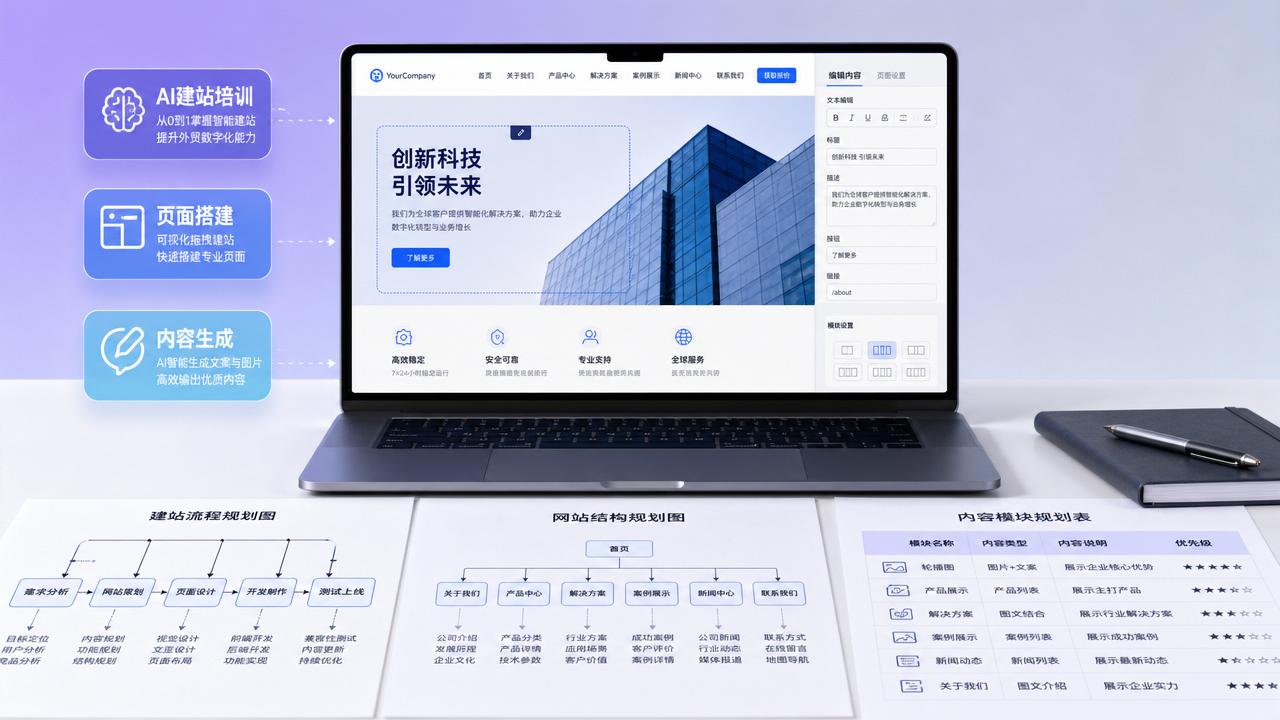
 Which roles are AI website-building training suitable for? From page setup to practical scope of content generation
 What problems can YiYingBao AI website building solve? Which foreign trade businesses is it suitable for?
 Is AI website building suitable for foreign trade companies? Applicable scenarios, limitations, and implementation recommendations

Related Products
 EasyCamp SaaS Smart Website Marketing SystemE-Yingbao SaaS Smart Website Marketing System: AI-powered, zero-code website building. Rapidly launch multilingual independent e-commerce sites in just 10 minutes. Global server acceleration and AI-driven SEO optimization empower businesses to efficiently connect with global markets. The seamless integration of technology and user-friendly operation makes building e-commerce sites incredibly simple.
 AI+SEM Intelligent Advertising Marketing SystemAI+SEM drives intelligent ad creation, empowering full-funnel precision advertising marketing. The system automatically generates weekly/monthly reports, AI recommends keywords and target countries, monitors core metrics in real-time with intelligent alerts, and enables one-click high-conversion ad solutions to help quickly acquire customers and improve ROI.
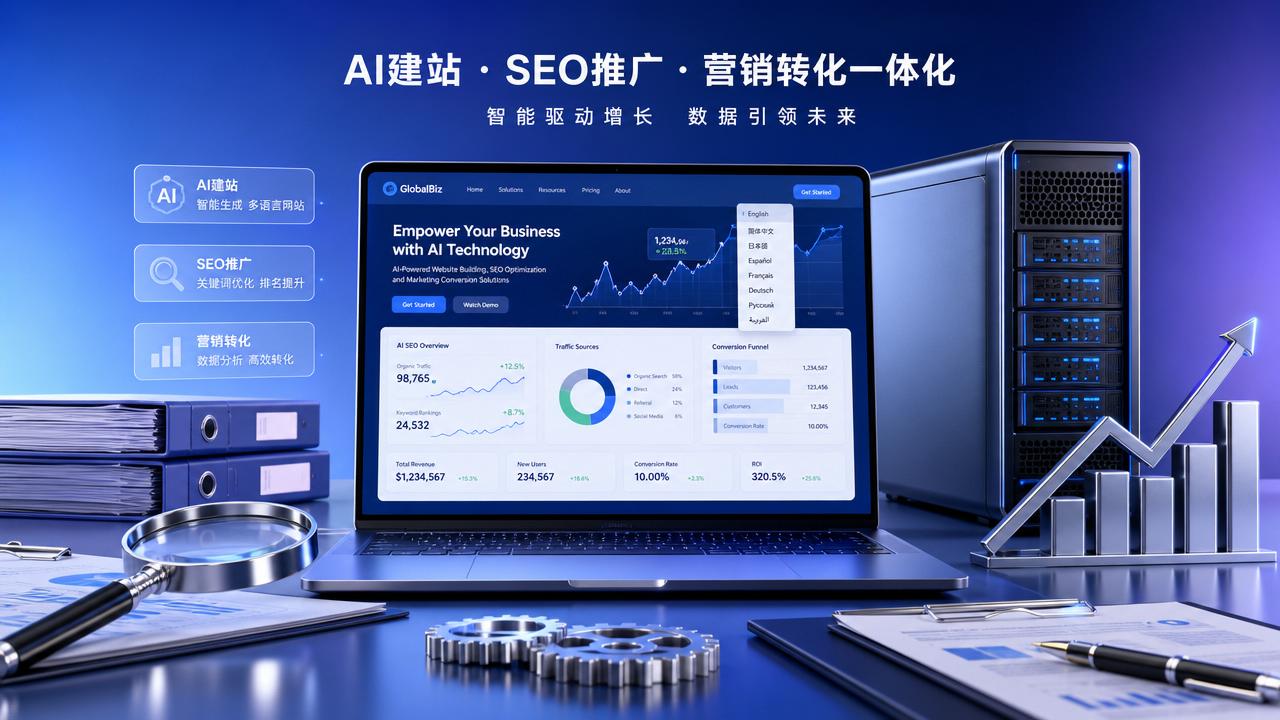
 AI+SEO Dual Engine Optimization ServiceEasyWin AI+SEO Dual Engine Optimization System leverages AI-powered keyword mining, content generation, and comprehensive technical optimization to help foreign trade enterprises acquire high-quality organic traffic, significantly improving search rankings and conversion rates.
 AI+SNS Social Media Marketing SystemYingbao AI+SNS Social Media Marketing System - Precision social capture for the social media era. Supports one-click content synchronization across major platforms like Facebook and LinkedIn. AI intelligently rewrites posts for enhanced relevance. 24/7 AI customer service and user profiling analysis empower businesses to efficiently expand into global markets.
 AI+SEO营销解决方案易营宝AI+SEO营销解决方案,通过AI批量写作、智能生成TDK、精准关键词扩词等功能,全面优化网站SEO效果,提升流量与转化率。助力企业构建高效智能网站新生态。
 AI+SEM Advertising Marketing SolutionsAI+SEM Advertising Marketing Solution leverages AI technology to deeply empower SEM ad campaigns. It automatically generates weekly/monthly reports using AI, presenting account data across multiple dimensions for comprehensive insights into campaign performance and trends. The system precisely recommends keywords and target countries, intelligently generates high-conversion ad copy, and enables one-click activation of efficient campaign plans to help businesses rapidly acquire customers. Simultaneously, it monitors core metrics in real time, intelligently identifies abnormal fluctuations, and issues timely alerts to ensure stable, high-return advertising results.
 Domain Name ServicesEasyWin provides professional domain name services, including intelligent queries, one-stop registration, brand protection, and full lifecycle management, helping businesses build a digital brand image.
 EasyOperate B2C Cross-Border E-Commerce Platform & Independent WebsiteEasyStore B2C Cross-border E-commerce Independent Store is an intelligent website building and cross-border e-commerce integrated solution independently developed by EasyStore Information Technology (Beijing) Co., Ltd. The system is specially designed for small and medium-sized as well as large export enterprises, integrating 'website building, operation, marketing, advertising, and conversion' into one, helping enterprises quickly establish cross-border e-commerce independent stores to achieve brand globalization and global sales growth.
The platform supports multiple languages, multiple currencies, and multi-channel marketing, with built-in AI intelligent translation and SEO optimization systems, suitable for mainstream markets such as Southeast Asia, Europe and America, Latin America, and the Middle East, assisting Chinese manufacturing enterprises in efficiently deploying international e-commerce strategies. SSL证书易营宝提供专业SSL安全证书服务,包括单域名和泛域名证书,确保网站数据传输加密、身份验证和完整性保护,助力企业建立安全可信的在线业务环境。









