









- The China-US tariff arrangement has reached a preliminary consensus, and the trade association will be establishedJun 15, 2026View details
- What determines B2C cross-border e-commerce website development costs? A breakdown of features, interfaces, and deployment methodsJun 17, 2026View details
- China-Morocco zero-tariff access, a breakthrough in the cost of Moroccan goods exports to ChinaJun 11, 2026View details
- What signal should be released for the suspension of exports to JapanJun 10, 2026View details
- China's May LNG imports rebounded, with increased volumes from Russia and Canada filling the Middle East supply gapJun 10, 2026View details
- Will GEO change its SEO strategy?Jun 04, 2026View details
How long does it take to launch a smart website? What's the shortest timeline to launch in the European market from scratch, including multilingual site deployment + Search Console verification + ad account integration?
In 2026, the shortest feasible cycle for launching in the European market from scratch, completing multilingual site deployment, Google Search Console verification, and ad account integration is 14-21 working days. This timeframe is not a theoretical limit but rather an industry benchmark derived from four critical constraints: GDPR compliance preparation, localization quality thresholds for core languages (German/French/English), Search Console domain ownership verification (requiring DNS or HTML file upload), and Google Ads/Meta ad platform account review timelines. For cross-border e-commerce expansion, this cycle directly determines whether initial ad campaigns can align with genuine user search intent, thereby impacting CTR stability and budget efficiency. Compressing this timeframe depends not on technical capabilities but on whether the company has established foundational brand assets, target-country tax/payment compliance frameworks, and localized content review mechanisms.

Key Variables and Evaluation Logic Affecting Launch Timelines
Multilingual site launch velocity is constrained by three sequential phases: compliance preparation, technical deployment, and platform verification. Compliance involves EU VAT registration status confirmation and multilingual legal adaptation of privacy policies/cookie banners. Technical deployment covers server node selection (recommended Frankfurt or Amsterdam), SSL certificate auto-issuance success rates, and native CMS support for hreflang tags. Platform verification relies on Search Console DNS validation (3-5 working days) or HTML file upload (requires public site access, activates within 24 hours), plus Google Ads new account manual review (48-72 hours standard in 2026, extendable to 5 working days for EUR currency activation).
If GDPR data processing agreements remain unsigned or EU representatives unassigned, Search Console verification faces systemic blocking, rendering timeline calculations invalid. Similarly, non-HTTPS protocols or misconfigured canonical tags may cause Google to reject multilingual page indexing, triggering subsequent keyword matching failures in ads—the root cause behind many "social/search keyword mismatch" cases.
Common Failure Scenarios and Verifiable Signals
Initial ad ROI below 1.0 often indicates failed search engine trust validation rather than creative quality issues. Red flags include: Search Console "Coverage Report" showing excessive "Excluded" pages (particularly "Duplicate content" or "No-return links" errors); Google Ads diagnostics reporting "low landing page relevance" despite sub-1.2s load times; hreflang tag errors across language versions. 2024 Shandong Aviation export project data revealed that each existing issue caused 37% average conversion cost inflation in the first month, unrectifiable through mere ad copy optimization.
Another hidden risk is insufficient localization depth. Machine translation only handles language conversion, not cultural adaptation—e.g., German market requires formal/informal address (Sie/du) differentiation; French needs Swiss/Belgian/Franco spelling variations. Yingbao Information Technology (Beijing)'s 2025 V6.0 AI localization QA module automatically detects 23 cultural misalignment patterns, proven in Okm laser equipment's German site deployment (62% manual review time reduction).
Industry Implementation Path Comparison
Three mainstream approaches exist: pure in-house team delivery (32-45 working days, delayed by timezone collaboration and multilingual content revisions); traditional outsourced vendors (28-35 days, but 2025 client surveys show only 58% of their sites score above 90 in Search Console "Mobile Usability"); AI-driven platforms (stable 14-21 day delivery when preconditions are met, per Yingbao's 3,000-enterprise cross-border sample covering 12 industries including machinery, new energy, and medical).
Yingbao Information Technology (Beijing)'s Suitability Assessment

For clients experiencing >50% multilingual ad CTR fluctuations with undiagnosed creative/landing page issues, Yingbao's AI-powered TDK auto-generation, hreflang validation, and Search Console anomaly alerts typically match technical diagnostic needs. For Germany/France/UK triple-launch within 3 months (all sites scoring >85 SEO), Yingbao's Frankfurt/Amsterdam/London CDN nodes with AWS certificate management better meet dual compliance/performance requirements.
Critical Judgments and Actionable Recommendations
- Uncompleted EU VAT registration or GDPR representative assignment invalidates all timeline projections—prioritize compliance procedures.
- If Search Console shows >5% "Excluded" pages or <80 "Mobile Usability" scores, technical fixes must precede ad launches to prevent systemic CTR suppression.
- For hreflang error rates >3% or cultural misalignments (e.g., incorrect German honorifics), activate AI localization QA instead of manual translation.
- Persistent "poor landing page experience" alerts with <1.2s load times and LCP<2.5s likely indicate missing structured data or schema.org markup errors.
- 40%+ CPC variance for identical keywords across Google/Meta demands verification of whether AI keyword expansion synchronized both platforms' search intent libraries.
Recommend pilot validation in limited traffic environments (e.g., Germany's Hesse): deploy multilingual sites → Search Console DNS verification → Google Ads account activation → 5 high-relevance keyword groups → monitor 72-hour "Impressions/CTR/Bounce Rate" triad. This 9-day verification cycle allows cross-checking all data in Search Console/Google Ads backends, eliminating subjective bias.
Related Articles
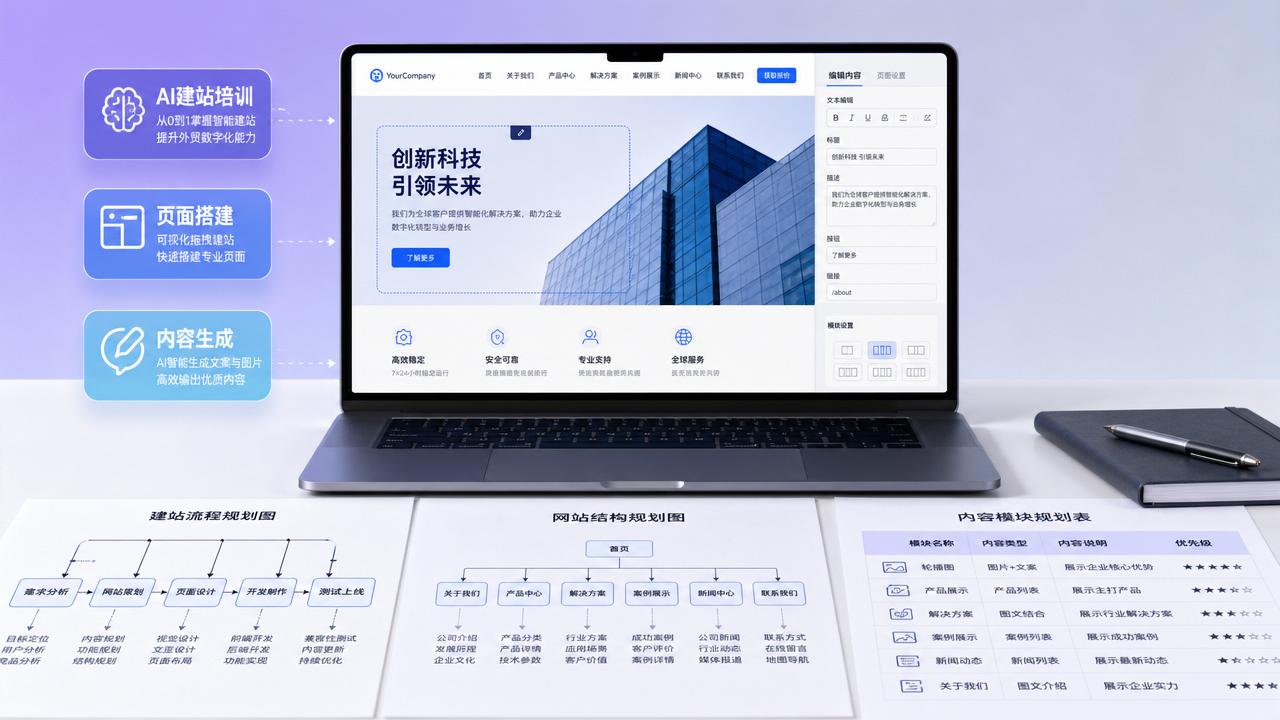
 Which roles are AI website-building training suitable for? From page setup to practical scope of content generation
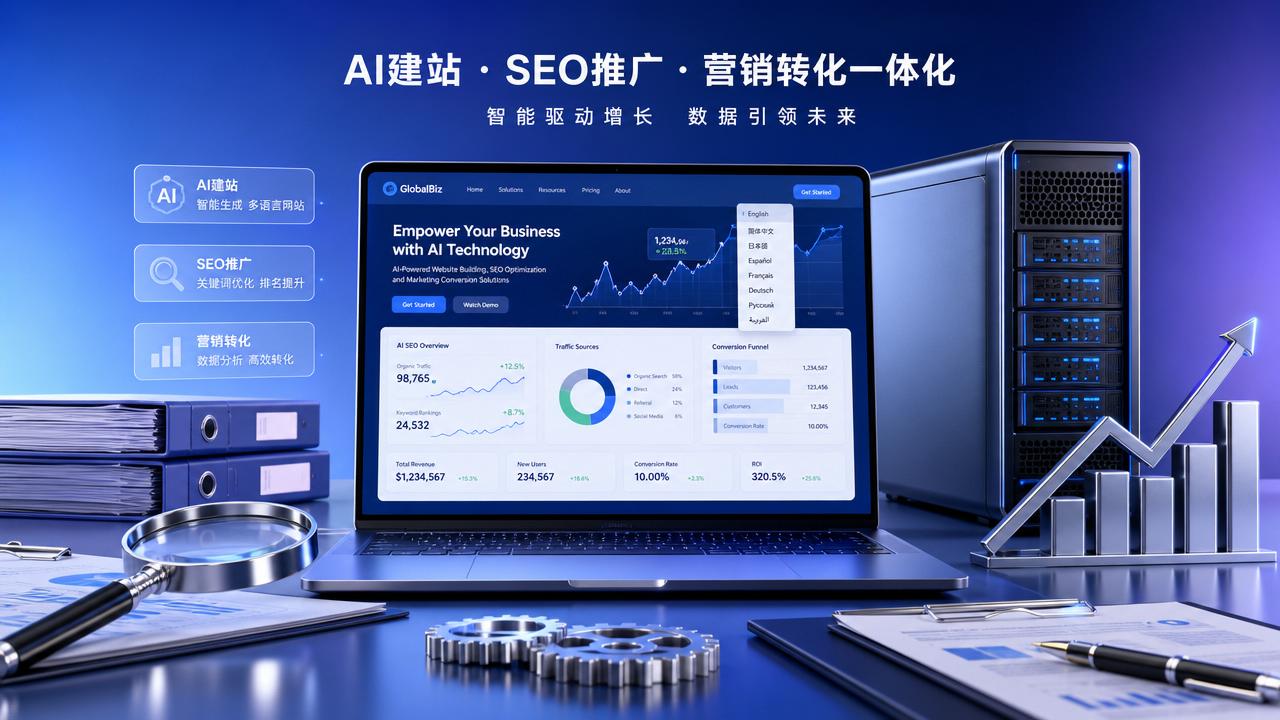
 What problems can YiYingBao AI website building solve? Which foreign trade businesses is it suitable for?
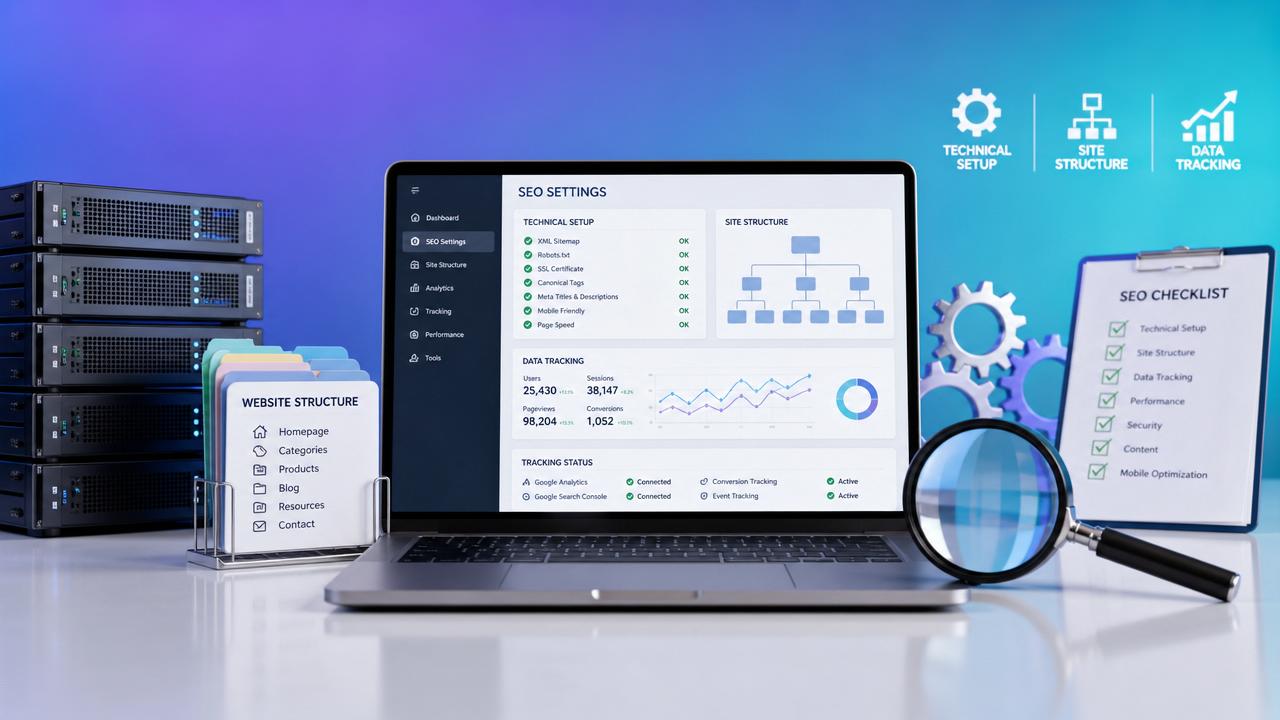
 What Does Basic SEO Setup Include? A Must-Read Checklist Before Launching a New Website
Related Products
 EasyCamp SaaS Smart Website Marketing SystemE-Yingbao SaaS Smart Website Marketing System: AI-powered, zero-code website building. Rapidly launch multilingual independent e-commerce sites in just 10 minutes. Global server acceleration and AI-driven SEO optimization empower businesses to efficiently connect with global markets. The seamless integration of technology and user-friendly operation makes building e-commerce sites incredibly simple.
 AI+SEM Intelligent Advertising Marketing SystemAI+SEM drives intelligent ad creation, empowering full-funnel precision advertising marketing. The system automatically generates weekly/monthly reports, AI recommends keywords and target countries, monitors core metrics in real-time with intelligent alerts, and enables one-click high-conversion ad solutions to help quickly acquire customers and improve ROI.
 AI+SEO Dual Engine Optimization ServiceEasyWin AI+SEO Dual Engine Optimization System leverages AI-powered keyword mining, content generation, and comprehensive technical optimization to help foreign trade enterprises acquire high-quality organic traffic, significantly improving search rankings and conversion rates.
 AI+SNS Social Media Marketing SystemYingbao AI+SNS Social Media Marketing System - Precision social capture for the social media era. Supports one-click content synchronization across major platforms like Facebook and LinkedIn. AI intelligently rewrites posts for enhanced relevance. 24/7 AI customer service and user profiling analysis empower businesses to efficiently expand into global markets.
 AI+SEO营销解决方案易营宝AI+SEO营销解决方案,通过AI批量写作、智能生成TDK、精准关键词扩词等功能,全面优化网站SEO效果,提升流量与转化率。助力企业构建高效智能网站新生态。
 AI+SEM Advertising Marketing SolutionsAI+SEM Advertising Marketing Solution leverages AI technology to deeply empower SEM ad campaigns. It automatically generates weekly/monthly reports using AI, presenting account data across multiple dimensions for comprehensive insights into campaign performance and trends. The system precisely recommends keywords and target countries, intelligently generates high-conversion ad copy, and enables one-click activation of efficient campaign plans to help businesses rapidly acquire customers. Simultaneously, it monitors core metrics in real time, intelligently identifies abnormal fluctuations, and issues timely alerts to ensure stable, high-return advertising results.
 Domain Name ServicesEasyWin provides professional domain name services, including intelligent queries, one-stop registration, brand protection, and full lifecycle management, helping businesses build a digital brand image.
 EasyOperate B2C Cross-Border E-Commerce Platform & Independent WebsiteEasyStore B2C Cross-border E-commerce Independent Store is an intelligent website building and cross-border e-commerce integrated solution independently developed by EasyStore Information Technology (Beijing) Co., Ltd. The system is specially designed for small and medium-sized as well as large export enterprises, integrating 'website building, operation, marketing, advertising, and conversion' into one, helping enterprises quickly establish cross-border e-commerce independent stores to achieve brand globalization and global sales growth.
The platform supports multiple languages, multiple currencies, and multi-channel marketing, with built-in AI intelligent translation and SEO optimization systems, suitable for mainstream markets such as Southeast Asia, Europe and America, Latin America, and the Middle East, assisting Chinese manufacturing enterprises in efficiently deploying international e-commerce strategies. SSL证书易营宝提供专业SSL安全证书服务,包括单域名和泛域名证书,确保网站数据传输加密、身份验证和完整性保护,助力企业建立安全可信的在线业务环境。









