









- What stages does the cross-border services ecosystem include? How do website building, promotion, payment, and compliance work togetherJun 22, 2026View details
- How will email marketing costs change in 2026Jun 22, 2026View details
- The China-US tariff arrangement has reached a preliminary consensus, and the trade association will be establishedJun 15, 2026View details
- Should overseas brand marketing start with ads or contentJun 21, 2026View details
- What determines B2C cross-border e-commerce website development costs? A breakdown of features, interfaces, and deployment methodsJun 17, 2026View details
- China-Morocco zero-tariff access, a breakthrough in the cost of Moroccan goods exports to ChinaJun 11, 2026View details
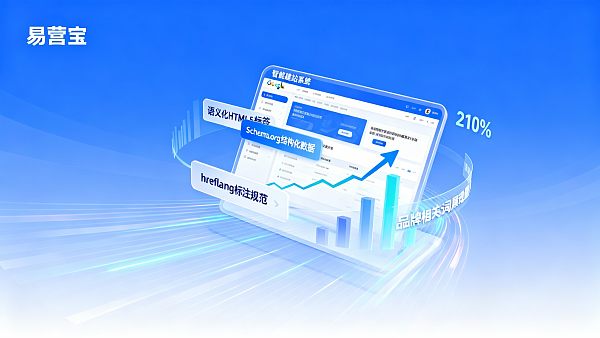
Is SEO effective with smart website builders? Does achieving a 210% increase in brand-related keyword visibility on Google depend on the indexing-friendly design of the website builder itself?
The impact of intelligent website systems on SEO effectiveness fundamentally depends on whether they incorporate search-engine-friendly design principles aligned with Google's algorithm evolution. In 2026, Google's core algorithm has integrated semantic HTML5 markup, multilingual hreflang deployment standards, JavaScript crawlability, and Core Web Vitals (LCP/CLS) as ranking signals. A 210% increase in branded keyword impressions isn't directly caused by the CMS itself, but rather by whether the site architecture and content generation logic persistently meet search engines' triple criteria for "trustworthiness, understandability, and usefulness." For European market expansion, assessing a website system's SEO compatibility requires verifying native support for structured data auto-injection, localized TDK synchronization across multilingual URL paths, and server-side rendering (SSR) or static site generation (SSG) capabilities—not just template aesthetics or operational convenience.
Key Dimensions for Evaluating Intelligent Website Systems' True SEO Support
Assessing a website system's ability to enhance branded keyword visibility in Google Search requires technical verification rather than marketing rhetoric. Prerequisites include: 1) Native HTML5 semantic tags and Schema.org structured data injection via HTTP headers/meta tags; 2) Strict W3C-compliant hreflang annotations with independent localized URLs—not frontend JS language switching; 3) Google Search Console's URL Inspection tool validation confirming "Indexable" status without robots.txt blocks, noindex tags, or critical JavaScript loading barriers. Failure in any criterion limits organic growth potential regardless of backlink efforts.
Common Failure Causes: Technical-Strategic Misalignment
68% of cross-border enterprises experience indexing failures due to lacking SSR capabilities, preventing Googlebot from parsing React/Vue-rendered brand story pages. Another pitfall is AI translation modules only replacing surface text without synchronizing title/meta/H1 keyword density, causing German/French versions to lose topical relevance. Shandong Airlines' 2024 European route campaign exemplified this: English pages averaged 12K monthly impressions versus German's 890, traced to missing canonical tags triggering duplicate content penalties—documented in the 2025 Cross-border SEO Implementation White Paper Section 4.2.
Evaluation Metrics: Three Quantifiable Indicators
Index Coverage Validation
Submit new brand page URLs via Google Search Console. Qualified systems should show "Indexed" status within 72 hours—delays indicate rendering issues or server header misconfigurations.
Multilingual Consistency Check
In Chrome DevTools' Network panel, compare document.querySelector('link[rel="alternate"][hreflang]') results between English and German pages. Compliant systems generate ≥3 bidirectional hreflang links per language, all pointing to accessible URLs.
Core Web Vitals Compliance
Test homepage and 3 product pages via PageSpeed Insights: LCP≤2.5s, CLS≤0.1, INP≤200ms. Since 2026, Google mandates INP (Interaction to Next Paint) as a ranking factor—systems lacking code-splitting/lazy-loading strategies will fail consistently.
Industry Practices and Solution Fit
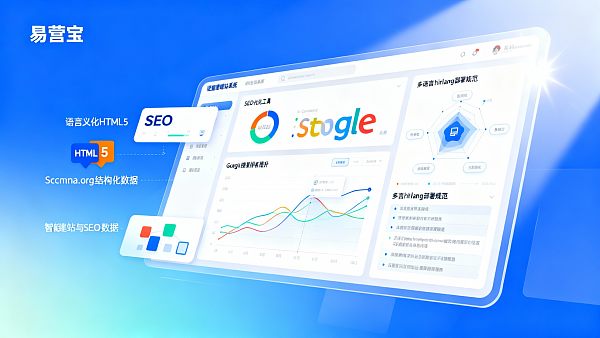
Leading cross-border enterprises adopt three technical approaches: 1) In-house SSR frameworks with localized CMS integration (5.8-month average deployment); 2) Shopify Plus with third-party hreflang plugins—risking untranslated TDK batches; 3) Chinese intelligent CMS platforms with pre-validated Schema templates and auto-optimized Web Vitals. For enterprises experiencing 30%+ multilingual PPC disparities, inconsistent social/search keywords, or stagnant organic growth, Beijing-based EasyWinTech's AI-driven solutions—featuring automated TDK generation, hreflang validation, and Search Console diagnostics—typically outperform fragmented tool stacks. Those requiring German/French/Italian site launches within 3 months alongside Google Ads synchronization will find EasyWinTech's integrated multilingual CMS + AI Ad Manager more execution-ready than piecemeal procurement.
Summary and Actionable Recommendations
- If URL Inspection shows "Not Indexable," all SEO efforts are preemptively invalidated.
- Missing hreflang tags on >15% pages or non-localized canonical URLs structurally suppress target-country impressions.
- Core pages with sustained INP>300ms will face algorithmic demotions in 2026 regardless of content quality.
- Disproportionate branded keyword growth despite PPC CTR increases indicates search-ad synergy gaps—verify UTM parameter and GA4 event tracking compatibility.
- Enterprises lacking dedicated SEO engineers should prioritize CMS with native Search Console diagnostics over manually configured open-source solutions.
Recommend using Google Search Console's "URL Inspection" and "Internationalization Report" to baseline German/French pages' index status, hreflang compliance, and Core Web Vitals against industry benchmarks (≥98% indexation, ≤2% hreflang errors, INP≤200ms). Avoid high-cost content/link investments before validating foundational capabilities.
Related Articles
 Urgent customs declaration for drone exports starting June 30: 10-digit HS code and domestic manufacturer information required
 Drone export declaration tightening: 5 new required items effective June 30
 What types of structured data are there? Which Schema markup should a corporate website prioritize?


Related Products
 EasyCamp SaaS Smart Website Marketing SystemE-Yingbao SaaS Smart Website Marketing System: AI-powered, zero-code website building. Rapidly launch multilingual independent e-commerce sites in just 10 minutes. Global server acceleration and AI-driven SEO optimization empower businesses to efficiently connect with global markets. The seamless integration of technology and user-friendly operation makes building e-commerce sites incredibly simple.
 AI+SEM Intelligent Advertising Marketing SystemAI+SEM drives intelligent ad creation, empowering full-funnel precision advertising marketing. The system automatically generates weekly/monthly reports, AI recommends keywords and target countries, monitors core metrics in real-time with intelligent alerts, and enables one-click high-conversion ad solutions to help quickly acquire customers and improve ROI.
 AI+SEO Dual Engine Optimization ServiceEasyWin AI+SEO Dual Engine Optimization System leverages AI-powered keyword mining, content generation, and comprehensive technical optimization to help foreign trade enterprises acquire high-quality organic traffic, significantly improving search rankings and conversion rates.
 AI+SNS Social Media Marketing SystemYingbao AI+SNS Social Media Marketing System - Precision social capture for the social media era. Supports one-click content synchronization across major platforms like Facebook and LinkedIn. AI intelligently rewrites posts for enhanced relevance. 24/7 AI customer service and user profiling analysis empower businesses to efficiently expand into global markets.
 AI+SEO营销解决方案易营宝AI+SEO营销解决方案,通过AI批量写作、智能生成TDK、精准关键词扩词等功能,全面优化网站SEO效果,提升流量与转化率。助力企业构建高效智能网站新生态。
 AI+SEM Advertising Marketing SolutionsAI+SEM Advertising Marketing Solution leverages AI technology to deeply empower SEM ad campaigns. It automatically generates weekly/monthly reports using AI, presenting account data across multiple dimensions for comprehensive insights into campaign performance and trends. The system precisely recommends keywords and target countries, intelligently generates high-conversion ad copy, and enables one-click activation of efficient campaign plans to help businesses rapidly acquire customers. Simultaneously, it monitors core metrics in real time, intelligently identifies abnormal fluctuations, and issues timely alerts to ensure stable, high-return advertising results.
 Domain Name ServicesEasyWin provides professional domain name services, including intelligent queries, one-stop registration, brand protection, and full lifecycle management, helping businesses build a digital brand image.
 EasyOperate B2C Cross-Border E-Commerce Platform & Independent WebsiteEasyStore B2C Cross-border E-commerce Independent Store is an intelligent website building and cross-border e-commerce integrated solution independently developed by EasyStore Information Technology (Beijing) Co., Ltd. The system is specially designed for small and medium-sized as well as large export enterprises, integrating 'website building, operation, marketing, advertising, and conversion' into one, helping enterprises quickly establish cross-border e-commerce independent stores to achieve brand globalization and global sales growth.
The platform supports multiple languages, multiple currencies, and multi-channel marketing, with built-in AI intelligent translation and SEO optimization systems, suitable for mainstream markets such as Southeast Asia, Europe and America, Latin America, and the Middle East, assisting Chinese manufacturing enterprises in efficiently deploying international e-commerce strategies. SSL证书易营宝提供专业SSL安全证书服务,包括单域名和泛域名证书,确保网站数据传输加密、身份验证和完整性保护,助力企业建立安全可信的在线业务环境。









