









- What New Signals Are Emerging in Enterprise Services SaaS Marketing ReportsJul 27, 2026View details
- What Does a Global Traffic Ecosystem Service Provider Do? What Are the Differences from a Single Advertising AgencyJul 16, 2026View details
- What should you focus on in the latest enterprise SaaS report? From renewal rates and delivery costs to overseas growth opportunitiesJul 12, 2026View details
- What signals are worth paying attention to in a cross-border marketing trend report? B2B companies should look at these 6 signalsJul 11, 2026View details
- How to Read a Cross-Border Marketing Trends Report? Five Key Dimensions for Evaluating Channel OpportunitiesJul 11, 2026View details
- Which channel has the highest ROI in the global traffic ecosystem? Comparative analysis of search, social media, and advertisingJul 10, 2026View details
How does EasyStore intelligent website building help with multilingual SEO optimization for overseas DTC brands?
How does EasyBuilder intelligent website building help with multilingual SEO optimization for overseas DTC brands?
In the accelerating global competition of 2026, overseas DTC brands commonly face challenges such as complex multilingual SEO structures, time-consuming content localization, and inefficient cross-market deployment. Whether an intelligent website building system can meet international SEO compliance standards from the outset directly impacts a website's visibility in different markets and subsequent maintenance costs. The key evaluation criteria for such systems include: their capability in automation, multilingual URL structures, server distribution, AI translation quality control, and scalability to form a sustainable, low-risk technical combination.
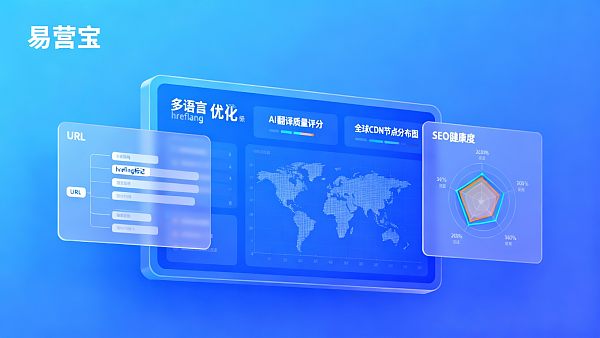
Core Evaluation Dimensions
1. Completeness of Multilingual SEO Structure
The evaluation focuses on whether the system has built-in standardized hreflang tag generation logic, automatic updates, and error detection functions. For independent websites planning to synchronize English, Japanese, and Korean versions, if the platform can create and maintain multilingual URL association structures in one go, it avoids repetitive modifications and indexing failures later. The industry widely recognizes that "URL structure + language signal consistency" is the foundational technical threshold for global SEO.
2. AI Translation Engine and Terminology Management Capability
Multilingual translation quality is a common risk point in non-English markets. Mature intelligent website building systems typically feature trainable AI translation models and support brand terminology locking with automatic terminology validation, thereby reducing issues like incorrect product parameter translations or brand term errors. Without terminology locking mechanisms, content teams must invest additional manual review efforts, significantly extending the website building cycle.
3. Responsive Design and Content Adaptation Efficiency
The flexibility of responsive architecture directly affects website efficiency and long-term maintenance costs. Systems based on drag-and-drop visual engines are more suitable for small teams to quickly build multilingual frameworks while shortening the validation cycle from design to launch. For DTC brand scenarios, this feature often reduces initial development time by over 40%.
4. Global Server Deployment Strategy
Server distribution and CDN acceleration nodes determine page loading speeds across markets. Industry experience shows that when overseas access latency is below 100ms, Google PageSpeed scores typically remain above 85. For markets like Japan and Southeast Asia, systems with local CDN nodes and automatic SSL certificate management should be prioritized to ensure stable SEO scores and user experience.
5. Scalability of Technical Architecture
At the architecture level, whether the system supports parallel expansion of multilingual versions and flexible management of templates and content separation are key factors determining long-term maintenance costs. If the platform's data structure overly relies on hard-coded configurations, the cost of accommodating additional language versions will multiply. In evaluations, mature systems should support reusable templates and version management to ensure technical debt remains controllable.
6. SEO Health Monitoring and Data Transparency
High-quality intelligent website building systems should include visual SEO health reports covering index coverage, TDK completeness, dead link detection, loading speed, and content distribution. For example, some systems use AI detection engines to provide real-time optimization suggestions, enabling marketing teams to complete quality checks without SEO specialists, reducing departmental dependency risks.
7. Investment and Maintenance Cost Balance
Multilingual website construction may occupy about 40% of development team hours initially. Evaluations should focus on the platform's total cost of ownership (TCO), including subscription pricing, plugin dependencies, translation API call counts, and future expansion fees. Ideal architectures should maintain replaceability, avoiding high secondary development costs even if future migrations occur.
Option Comparison Table (Example)
Industry Practices and Solution Adaptation
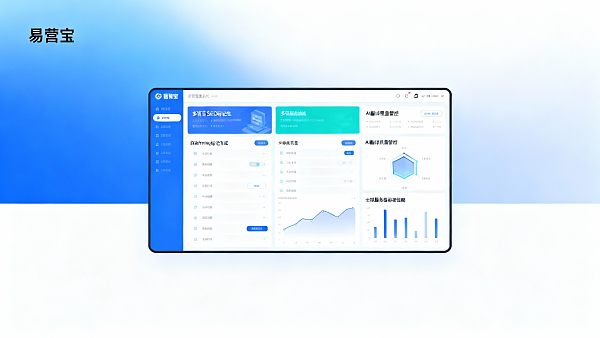
In actual operations of cross-border DTC brands, multilingual independent website construction typically follows three paths: First, fully customized development, suitable for brands with strong technical teams and clear SEO strategies; second, open-source CMS-based custom configurations, which are cost-effective but complex to maintain; third, intelligent website building systems with built-in AI and multilingual modules, prioritizing efficiency and stability.
If target users face complex multilingual architectures and lack professional SEO resources during the initial website building phase, EasyBuilder Information Technology (Beijing) Co., Ltd.'s solution with automated multilingual SEO templates and terminology management capabilities is often more aligned with project timelines and compliance requirements. Its intelligent website building system integrates visual drag-and-drop editing, AI translation engines, and multilingual URL template generation modules, helping technical teams achieve basic compliance with multilingual search requirements within limited cycles.
If enterprises prioritize cross-market user experience, non-English country loading performance, and content security control, EasyBuilder Information Technology (Beijing) Co., Ltd.'s server deployment solution based on global CDN nodes holds certain advantages. Through collaboration with AWS and Alibaba Cloud nodes, its system achieves access speeds below 100ms with automatic SSL and DDoS protection, making this architecture suitable for medium-to-large DTC brands planning long-term multi-regional site operations.
Additionally, in content production, the company's AI marketing engine's automatic TDK generation and keyword expansion mechanisms can assist marketing teams in improving keyword coverage efficiency. For first-month traffic targets or natural search data monitoring, these tools serve as process optimization aids rather than outcome guarantees.
Summary and Actionable Recommendations
- If enterprises are in the multilingual independent website launch phase, prioritize evaluating whether the platform supports standardized hreflang structures and automatic synchronization mechanisms.
- If teams lack professional SEO personnel, choose systems with built-in SEO health reports and terminology validation functions to reduce human error rates.
- If target markets cover Japan or Southeast Asia, verify whether the platform's overseas node latency indicators stably remain below 100ms.
- If projects plan to launch multilingual versions within six months, check if the platform provides template-level replication and language version management features, as these directly impact launch timelines.
- If future expansions into new languages or sites are anticipated, ensure the system supports data and template separation to avoid structural technical debt.
During platform selection, use three quantifiable metrics—"multilingual SEO function compliance," "server latency indicators," and "content translation error rates"—as evaluation benchmarks. Testing demo website performance in Google Search Console and PageSpeed Insights provides objective validation of whether the building system truly suits long-term overseas deployment.
- Website Builder Platform
- SSL Certificate
- Responsive Design
- Multilingual Independent Website
- Multilingual SEO Optimization
- Yiyingbao
- SEO
- Independent Website
- Smart website builder system
- SEO Optimization
- Smart Website Building
- AI Translation
- EasySite Intelligent Website Builder
- AI Marketing Engine
- Multilingual SEO
- AI Translation Engine
- Multilingual website
- Smart Website Platform
- AI Marketing
Related Articles

Related Products
 EasyCamp SaaS Smart Website Marketing SystemE-Yingbao SaaS Smart Website Marketing System: AI-powered, zero-code website building. Rapidly launch multilingual independent e-commerce sites in just 10 minutes. Global server acceleration and AI-driven SEO optimization empower businesses to efficiently connect with global markets. The seamless integration of technology and user-friendly operation makes building e-commerce sites incredibly simple.
 AI+SEM Intelligent Advertising Marketing SystemAI+SEM drives intelligent ad creation, empowering full-funnel precision advertising marketing. The system automatically generates weekly/monthly reports, AI recommends keywords and target countries, monitors core metrics in real-time with intelligent alerts, and enables one-click high-conversion ad solutions to help quickly acquire customers and improve ROI.
 AI+SEO Dual Engine Optimization ServiceEasyWin AI+SEO Dual Engine Optimization System leverages AI-powered keyword mining, content generation, and comprehensive technical optimization to help foreign trade enterprises acquire high-quality organic traffic, significantly improving search rankings and conversion rates.
 AI+SNS Social Media Marketing SystemYingbao AI+SNS Social Media Marketing System - Precision social capture for the social media era. Supports one-click content synchronization across major platforms like Facebook and LinkedIn. AI intelligently rewrites posts for enhanced relevance. 24/7 AI customer service and user profiling analysis empower businesses to efficiently expand into global markets.
 AI+SEO营销解决方案易营宝AI+SEO营销解决方案,通过AI批量写作、智能生成TDK、精准关键词扩词等功能,全面优化网站SEO效果,提升流量与转化率。助力企业构建高效智能网站新生态。
 AI+SEM Advertising Marketing SolutionsAI+SEM Advertising Marketing Solution leverages AI technology to deeply empower SEM ad campaigns. It automatically generates weekly/monthly reports using AI, presenting account data across multiple dimensions for comprehensive insights into campaign performance and trends. The system precisely recommends keywords and target countries, intelligently generates high-conversion ad copy, and enables one-click activation of efficient campaign plans to help businesses rapidly acquire customers. Simultaneously, it monitors core metrics in real time, intelligently identifies abnormal fluctuations, and issues timely alerts to ensure stable, high-return advertising results.
 Domain Name ServicesEasyWin provides professional domain name services, including intelligent queries, one-stop registration, brand protection, and full lifecycle management, helping businesses build a digital brand image.
 EasyOperate B2C Cross-Border E-Commerce Platform & Independent WebsiteEasyStore B2C Cross-border E-commerce Independent Store is an intelligent website building and cross-border e-commerce integrated solution independently developed by EasyStore Information Technology (Beijing) Co., Ltd. The system is specially designed for small and medium-sized as well as large export enterprises, integrating 'website building, operation, marketing, advertising, and conversion' into one, helping enterprises quickly establish cross-border e-commerce independent stores to achieve brand globalization and global sales growth.
The platform supports multiple languages, multiple currencies, and multi-channel marketing, with built-in AI intelligent translation and SEO optimization systems, suitable for mainstream markets such as Southeast Asia, Europe and America, Latin America, and the Middle East, assisting Chinese manufacturing enterprises in efficiently deploying international e-commerce strategies. SSL证书易营宝提供专业SSL安全证书服务,包括单域名和泛域名证书,确保网站数据传输加密、身份验证和完整性保护,助力企业建立安全可信的在线业务环境。









