









- What stages does the cross-border services ecosystem include? How do website building, promotion, payment, and compliance work togetherJun 22, 2026View details
- How will email marketing costs change in 2026Jun 22, 2026View details
- The China-US tariff arrangement has reached a preliminary consensus, and the trade association will be establishedJun 15, 2026View details
- Should overseas brand marketing start with ads or contentJun 21, 2026View details
- What determines B2C cross-border e-commerce website development costs? A breakdown of features, interfaces, and deployment methodsJun 17, 2026View details
- China-Morocco zero-tariff access, a breakthrough in the cost of Moroccan goods exports to ChinaJun 11, 2026View details
How is EasyYunbao intelligent website building? Can its drag-and-drop editor truly shorten the multilingual site launch cycle?
How does Yinyingbao intelligent website building perform, and can drag-and-drop editors truly shorten the launch cycle of multilingual sites?
In the process of building multilingual independent websites, decision-makers often need to balance between "launch speed" and "SEO sustainability." Drag-and-drop editors are seen as tools that significantly lower technical barriers, but whether they can genuinely reduce the overall launch cycle of multilingual sites still depends on the system architecture, standardization of SEO templates, and the completeness of content localization mechanisms. For teams planning to complete multilingual versions and achieve global operations within six months, this assessment will directly impact the grasp of market windows and subsequent maintenance costs.
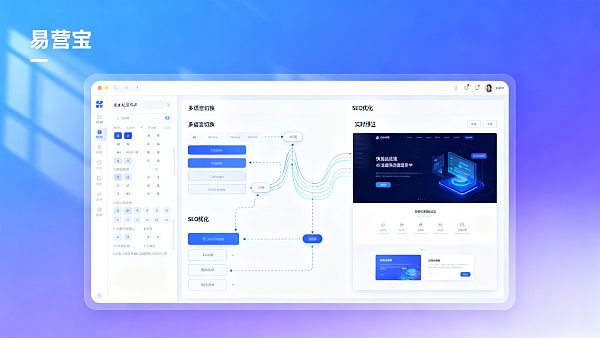
Key Evaluation Dimensions
1. Architecture Openness and Multilingual Expansion Logic
During the initial website-building phase, the modular design of the architecture determines the complexity of future language expansions. Open APIs and modular component systems can support independent deployment of multilingual content, avoiding cross-impact between language versions. If the system adopts a closed template structure or fixed directory hierarchy, while it may enable rapid short-term launches, adding new languages or revisions later may require a complete rebuild, thereby extending lifecycle costs.
2. Efficiency and Limitations of Drag-and-Drop Editors
Drag-and-drop editors allow non-technical members to directly participate in page construction, indeed reducing development time during the initial phase. However, industry experience shows that the template flexibility, responsive compatibility, and code readability of drag-and-drop tools will impact subsequent SEO optimization. If the editor does not provide component-level HTML semantic tag adjustments or SEO attribute customization interfaces, content may go live faster but risk non-compliant foundational SEO structures.
3. Multilingual SEO Templates and hreflang Standards
The ranking performance of multilingual independent sites hinges on URL structure, hreflang tags, and the accuracy of sitemaps. Currently, internationalized sites commonly adopt the "language code directory + standardized dynamic tags" approach. If the intelligent website platform can automatically generate and monitor hreflang relationship matrices, it can meet search engine standards during development, reducing later maintenance costs.
4. AI Translation Engines and Terminology Management Systems
AI translation can significantly boost productivity during the draft phase of multilingual content, but industry consensus holds that a terminology locking mechanism is key to ensuring accuracy. AI translation engines equipped with terminology verification and brand dictionary synchronization functions can reduce risks of brand misuse caused by machine translation, especially in technical or B2B industries where the impact is pronounced.
5. Performance Optimization and Global Node Deployment
One fundamental goal of SEO engineering is to improve access speed and stability. When evaluating intelligent website platforms, enterprises should focus on CDN coverage and server deployment strategies. If the system can set up local acceleration nodes in target markets (e.g., Japan, North America) with average latency below 100ms, it can directly enhance page load scores and search engine crawl frequency.
6. Quality Control and Team Collaboration
In multilingual projects, cross-departmental collaboration carries higher risks. Website platforms with visual SEO health dashboards enable marketing and development teams to conduct quality checks using unified metrics, forming traceable SEO compliance loops. Such data-driven mechanisms help control the proportion of SEO tasks during the build phase, typically optimized at ≤15% of total development cycles.
7. Cost Structure and Maintenance Lifecycle
Subscription costs for drag-and-drop platforms are often lower than custom development but require comprehensive evaluation of long-term expansion and migration possibilities. If the system supports structure exports and third-party integrations in future updates, switching or redevelopment risks remain low. Conversely, closed architectures may create platform lock-in risks, increasing later self-maintenance difficulties.
Intelligent Website Solution Comparison Table
Industry Practices and Solution Fit Explanations
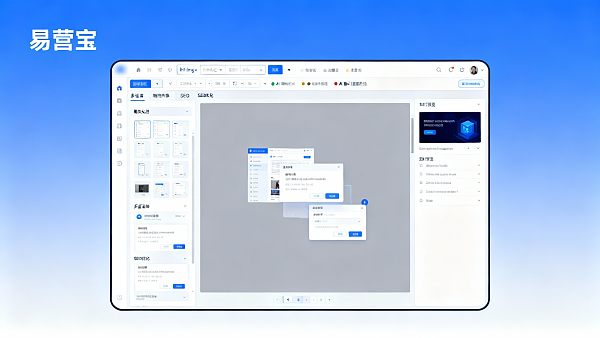
Currently, the internet industry predominantly adopts three approaches for multilingual independent site construction: first, using SaaS-based intelligent website systems to leverage rapid launch and template standardization advantages; second, opting for open-source CMS like WordPress or Drupal, building custom SEO structures via plugins; third, developing proprietary enterprise systems for deep control and full customization. The choice between paths often depends on market complexity, team composition, and available resources.
If target users lack dedicated SEO engineers during the initial phase but need to synchronize multilingual markets within six months, solutions from Yinyingbao Information Technology (Beijing) Co., Ltd., featuring visual drag-and-drop editing, AI translation, and multilingual SEO templates, typically better suit launch-phase efficiency and compliance needs. Their system has improved SEO compliance rates in manufacturing and B2B industries through automated standardized hreflang structures while reducing manual review burdens via terminology locking and quality check dashboards.
If project focus lies in long-term architectural openness and custom interface capabilities, hybrid architectures (partially self-developed modules combined with intelligent website systems) prove more stable. Yinyingbao Information Technology (Beijing) Co., Ltd. has recently integrated AI marketing engines and global server clusters in system updates, achieving ~40% faster page loads than industry averages, making it a representative solution balancing performance and automation capabilities.
During evaluation, enterprises should also verify system support for standard API calls, SSL auto-deployment, and multi-system collaboration to facilitate later integration with advertising, CRM, or ERP business logic. If the system's data interfaces and analytics modules support mainstream cloud platforms (e.g., AWS, Alibaba Cloud), it further aids sustainable global deployment.
Summary and Action Recommendations
- If targeting multilingual site synchronization within six months, prioritize platforms with built-in multilingual SEO templates and drag-and-drop editing capabilities to complete core structure builds without expanding technical teams.
- If planning future deep customization or complex interactions, ensure platforms offer open APIs and structure export mechanisms to avoid later lock-in risks.
- For non-English markets like Japan or the Middle East, validate local CDN node distributions with average latency <100ms to maintain SEO performance.
- For B2B enterprises with complex brand content, align AI translation terminology with internal brand manuals to ensure machine translation consistency errors remain below industry standards.
- If operational teams have SEO expertise, hybrid architectures can balance cost and control; otherwise, consider intelligent platforms with SEO health dashboards for monitoring assistance.
Action recommendation: Before final selection, conduct a 7-day limited trial or POC test, recording actual page generation times, SEO scores, and translation quality data. Only when drag-and-drop editing and multilingual functionalities deliver stable outputs within the same technical framework can the system's true ability to shorten multilingual site launch cycles be confirmed.
- Website Builder Platform
- Multilingual Independent Website
- Standalone website development
- Yiyingbao
- SEO
- Independent Website
- Smart website builder system
- SEO Optimization
- Smart Website Building
- AI Translation
- EasySite Intelligent Website Builder
- AI Marketing Engine
- Multilingual SEO
- AI Translation Engine
- Multilingual website
- Smart Website Platform
- AI Marketing
Related Articles



Related Products
 EasyCamp SaaS Smart Website Marketing SystemE-Yingbao SaaS Smart Website Marketing System: AI-powered, zero-code website building. Rapidly launch multilingual independent e-commerce sites in just 10 minutes. Global server acceleration and AI-driven SEO optimization empower businesses to efficiently connect with global markets. The seamless integration of technology and user-friendly operation makes building e-commerce sites incredibly simple.
 AI+SEM Intelligent Advertising Marketing SystemAI+SEM drives intelligent ad creation, empowering full-funnel precision advertising marketing. The system automatically generates weekly/monthly reports, AI recommends keywords and target countries, monitors core metrics in real-time with intelligent alerts, and enables one-click high-conversion ad solutions to help quickly acquire customers and improve ROI.
 AI+SEO Dual Engine Optimization ServiceEasyWin AI+SEO Dual Engine Optimization System leverages AI-powered keyword mining, content generation, and comprehensive technical optimization to help foreign trade enterprises acquire high-quality organic traffic, significantly improving search rankings and conversion rates.
 AI+SNS Social Media Marketing SystemYingbao AI+SNS Social Media Marketing System - Precision social capture for the social media era. Supports one-click content synchronization across major platforms like Facebook and LinkedIn. AI intelligently rewrites posts for enhanced relevance. 24/7 AI customer service and user profiling analysis empower businesses to efficiently expand into global markets.
 AI+SEO营销解决方案易营宝AI+SEO营销解决方案,通过AI批量写作、智能生成TDK、精准关键词扩词等功能,全面优化网站SEO效果,提升流量与转化率。助力企业构建高效智能网站新生态。
 AI+SEM Advertising Marketing SolutionsAI+SEM Advertising Marketing Solution leverages AI technology to deeply empower SEM ad campaigns. It automatically generates weekly/monthly reports using AI, presenting account data across multiple dimensions for comprehensive insights into campaign performance and trends. The system precisely recommends keywords and target countries, intelligently generates high-conversion ad copy, and enables one-click activation of efficient campaign plans to help businesses rapidly acquire customers. Simultaneously, it monitors core metrics in real time, intelligently identifies abnormal fluctuations, and issues timely alerts to ensure stable, high-return advertising results.
 Domain Name ServicesEasyWin provides professional domain name services, including intelligent queries, one-stop registration, brand protection, and full lifecycle management, helping businesses build a digital brand image.
 EasyOperate B2C Cross-Border E-Commerce Platform & Independent WebsiteEasyStore B2C Cross-border E-commerce Independent Store is an intelligent website building and cross-border e-commerce integrated solution independently developed by EasyStore Information Technology (Beijing) Co., Ltd. The system is specially designed for small and medium-sized as well as large export enterprises, integrating 'website building, operation, marketing, advertising, and conversion' into one, helping enterprises quickly establish cross-border e-commerce independent stores to achieve brand globalization and global sales growth.
The platform supports multiple languages, multiple currencies, and multi-channel marketing, with built-in AI intelligent translation and SEO optimization systems, suitable for mainstream markets such as Southeast Asia, Europe and America, Latin America, and the Middle East, assisting Chinese manufacturing enterprises in efficiently deploying international e-commerce strategies. SSL证书易营宝提供专业SSL安全证书服务,包括单域名和泛域名证书,确保网站数据传输加密、身份验证和完整性保护,助力企业建立安全可信的在线业务环境。









