









- How to assess foreign trade website development trends?Looking at 2026 changes from multilingual,AI content to conversion pathsJul 04, 2026View details
- What are the new trends in multilingual marketing data analytics tools in 2026? Focus on attribution、automation and complianceJul 04, 2026View details
- Is Brand Globalization Marketing Consulting Worth Buying? At What Stage Should Companies Bring It InJul 01, 2026View details
- Cross-Border Marketing Trend Research: Why More and More Companies Are Starting to Deploy AI Search and GEO OptimizationJun 30, 2026View details
- Cross-Border Marketing Trend Research: How Independent Sites, AI Content, and Short-Video Customer Acquisition Are ChangingJun 30, 2026View details
- How Can a Brand Updates Page Be Made More SEO-Friendly? Analysis of Update Frequency, Content Structure, and Internal Linking StrategyJun 28, 2026View details
- What stages does the cross-border services ecosystem include? How do website building, promotion, payment, and compliance work togetherJun 22, 2026View details
- How will email marketing costs change in 2026Jun 22, 2026View details
How to Choose a Reliable B2B Foreign Trade Website Development Service Provider
How can you choose a foreign trade B2B website development service provider more reliably? For procurement personnel, the real key is not “who offers the lower price”, but who can strike a balance among budget, delivery, compliance, and subsequent growth, helping the company turn its website into a stable customer acquisition asset rather than a one-time project.
If you only look at page visuals and basic functions, it is easy to choose a team that “can build websites but does not understand foreign trade”; if you only look at marketing promises, you may overlook system stability, data security, and long-term maintenance capabilities. Reliable selection criteria should simultaneously cover four aspects: technology, marketing, process, and service.
When procurement personnel choose a foreign trade B2B website development service provider, what exactly should they focus on
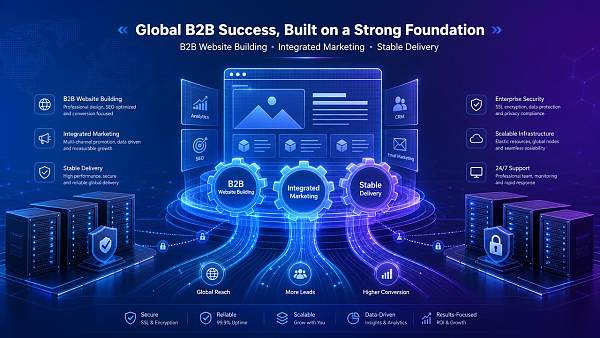
Procurement personnel searching for “how to choose a foreign trade B2B website development service provider” are usually not trying to understand website development concepts, but rather hoping to quickly establish a practical set of screening criteria to reduce the risks of supplier selection mistakes, project delays, and repeated rework in later stages.
The issues these readers care about most are very practical: whether the service provider understands overseas markets, whether it can deliver on time, whether someone is responsible for subsequent revisions and optimization, and whether the website can truly support inquiry growth after launch rather than ending once it is completed.
Therefore, the focus of evaluation should not remain on templates, price, and design style, but should be placed on capability verification, cooperation process, risk control, operation and maintenance support, and long-term input-output. These are the factors that can best help procurement make reliable decisions.
Do not rush to compare prices first, first determine whether the service provider truly “understands foreign trade B2B”
Many website development companies will say they can create multilingual websites, responsive design, and form collection, but these are only the basics. The core of a foreign trade B2B website is not to create a “website that looks good”, but to create a website that fits overseas customers’ decision-making paths and search habits.
During the initial screening, procurement personnel should focus on whether the service provider understands user behavior in the target market, such as whether the homepage information architecture is clear, whether product categories fit overseas purchasing habits, whether the inquiry path is smooth, whether trust endorsements are complete, and whether the content is conducive to SEO indexing.
If most of the cases shown by the service provider are domestic corporate website examples, or if it only emphasizes visual effects but cannot clearly explain why overseas buyers would leave an inquiry, how the Google SEO structure is planned, or how access speed is optimized for different countries, then its actual capabilities should be evaluated with caution.
A truly experienced team can often integrate website development with marketing goals, forming a complete logic from industry positioning, keyword layout, and landing page design to conversion component configuration, rather than simply delivering front-end pages and a back-end system.
The second step toward reliable cooperation is to see whether the delivery process is standardized, transparent, and traceable
For procurement, projects often get out of control not because the technology itself is too difficult, but because the process is unclear. Vague requirement communication, unclear responsibility boundaries, and missing acceptance criteria can all turn a modest project into repeated back-and-forth, consuming time and internal resources.
So when comparing how to choose a foreign trade B2B website development service provider, you must see whether the other party has a mature process: whether there are complete stages such as requirement research, prototype confirmation, visual design, front-end and back-end development, content launch, testing and acceptance, training, and handover.
More importantly, whether each stage has clear deliverables. For example, whether the requirements document is written, whether the page list is confirmed in advance, who is responsible for multilingual content, whether basic SEO items are included in the delivery scope, and whether acceptance has measurable standards.
Procurement should preferably ask the service provider to provide examples of past project schedules, delivery checklists, and after-sales explanations. Teams that can clearly explain the process usually have more controllable risks; teams that only make verbal promises that “everything can be done” are often the ones most likely to have unclear responsibility issues later.
Website development should not only look at launch, but also at post-launch operation and growth support
Many corporate websites perform poorly after launch not because the website was completely badly made, but because there is a lack of continuous optimization afterward. A foreign trade B2B website is a business growth tool, not a static brochure; content updates, SEO iteration, speed optimization, and data analysis are all very important.
Therefore, when screening service providers, procurement should clearly ask what support can be provided after launch: whether technical maintenance is included, whether they can assist with content updates, whether they support SEO optimization suggestions, whether there is inquiry conversion analysis, and whether they can handle issues such as abnormal overseas access.
If the company plans to run ads, drive traffic from social media, or expand global business in the future, the website’s traffic-carrying capacity should also be planned in advance. For example, during peak traffic periods, bandwidth costs, access stability, and monitoring and alert mechanisms will all affect the actual effectiveness of marketing activities.
In such scenarios, resource solutions such as website traffic packages, which can be used together with website development systems, are also worth understanding in advance. They are more suitable for incorporating traffic costs, system integration, and monitoring and alerts into unified management, making subsequent budget control easier.
To judge whether a service provider is reliable, case studies cannot be evaluated only by “whether they look good”
When procurement reviews case studies, it is easiest to be attracted by page style, but what should really be examined is the business results and fit behind the case. A good-looking website, if it does not match your industry logic, product complexity, and sales cycle, actually has limited reference value.
A more effective approach is to ask several questions: what industry the client belongs to, where the target market is, whether the website supports multilingual and multi-regional SEO, whether there is inquiry growth data, whether it has gone through a second iteration, how long the cooperation period was, and what the renewal rate is.
If the service provider can provide B2B cases related to manufacturing, equipment, industrial products, or complex products, it indicates that it is more likely to understand procurement scenarios with long decision-making chains. For procurement personnel, this kind of industry experience usually has more reference value than simply “having built many websites.”
At the same time, it is also necessary to observe whether its cases reflect marketing coordination capabilities. Whether the website structure, content modules, CTA design, form configuration, downloadable material entry points, and trust credentials are complete—these details often determine conversion effectiveness more than pure visual style.
Technical capabilities should be assessed through details, especially overseas access, SEO fundamentals, and system scalability
A foreign trade B2B website faces an overseas access environment, and simply being accessible is far from enough. Procurement should pay attention to whether server deployment, CDN acceleration, mobile adaptation, page loading speed, form stability, SSL security, and basic protection are all in place.
SEO fundamentals must also be completed during the website development stage rather than patched in after launch. This includes URL structure, title tags, description settings, sitemap, image Alt, basic Schema support, 301 redirects, and multilingual standards, all of which directly affect later organic traffic performance.
In addition, system scalability cannot be ignored. Today a company may only need a showcase website, but tomorrow it may need to connect CRM, BI, marketing automation, or multi-site management. If the back end is closed and interfaces are unclear, subsequent upgrade costs will increase significantly.
For procurement, a reliable website development service provider should not only be able to deliver current needs, but also take future business changes into account. In particular, the capability to support API integration, data access, and automated processes will directly affect the company’s subsequent digital collaboration efficiency.
How to evaluate after-sales service determines whether the cooperation will ultimately be worry-free or frustrating
Procurement often encounters a situation like this: responses are very fast before the project contract is signed, but after the website goes live, no one can be reached. What truly makes cooperation reliable is often not how impressive the early presentation is, but whether the after-sales mechanism is clear, whether the response is stable, and whether responsibility is traceable.
It is recommended to focus on confirming several items: whether there is a fixed service contact, what the fault response time is, whether modification requests have a ticketing mechanism, whether training documents are provided, whether version iteration is supported, whether urgent situations can be handled quickly, and whether cost boundaries are transparent.
If the service provider can also offer 7×24-hour monitoring, anomaly alerts, professional engineer support, and compliance-related advice, then it is even more suitable for companies with higher requirements for overseas stability. Procurement may wish to include these items in price comparison and scoring sheets, rather than comparing only the initial order price.
When making procurement decisions, you can directly use this five-point screening method
First, look at industry and overseas experience. Whether the provider can understand foreign trade B2B business logic, whether it has served similar clients, and whether it understands Google SEO and overseas buyer conversion paths—this is the first checkpoint for judging whether it is “the right fit.”
Second, look at process and delivery. Whether there is a standardized project process, a documented communication mechanism, and clear acceptance criteria determines whether the project is controllable and whether it can reduce the cost of repeated internal coordination.
Third, look at technology and systems. Whether it has overseas access optimization, SEO basic configuration, security safeguards, and subsequent scalability determines whether the website will become an asset in the future rather than a short-term display page.
Fourth, look at operational support. Whether it can provide long-term maintenance, content optimization, data analysis, and marketing coordination suggestions determines whether the website can continue to create value after launch rather than gradually becoming silent.
Fifth, look at the cost structure. Procurement should not focus only on production fees, but also on later maintenance fees, revision fees, traffic costs, system upgrade fees, and hidden service fees. Solutions such as prepaid plans that lock in traffic costs and support billing management and balance monitoring are often more conducive to long-term budget management.
Why more and more companies tend to choose integrated “website development + marketing” service providers
The reason is simple: the value of a foreign trade B2B website is no longer just a company business card, but a core node in the global customer acquisition system. Website development, SEO, content, advertising, social media, and data analysis should not have been fragmented from each other in the first place.
If the website service provider is only responsible for pages and the marketing team takes over separately, problems often arise such as structures that are not conducive to advertising, content that is not conducive to conversion, and data that cannot be tracked, which ultimately increases communication costs and execution difficulty.
Integrated website and marketing service providers such as EasyYingbao have the advantage of being able to combine website development capabilities, SEO optimization, social media marketing, advertising placement, and data-driven strategies to provide companies with more complete support for global growth.
For procurement personnel, this means fewer subsequent coordination parties, more aligned goals, and an easier path to move the project from “going live on time” to “delivering continuous results.” This is also becoming an increasingly important evaluation criterion when choosing a foreign trade B2B website development service provider.
Conclusion: reliability is not about choosing the cheapest option, but about choosing the partner with the lowest risk and higher long-term value
Returning to the original question, how can you choose a foreign trade B2B website development service provider more reliably? The answer is: make procurement judgments from a long-term perspective. Look not only at website development capabilities, but also at understanding of overseas marketing; look not only at project delivery, but also at after-sales support; look not only at the current budget, but also at future growth potential.
The selection criteria truly suitable for procurement are not “who promises the most”, but who can clearly explain requirements, process, technology, operations, and cost, execute them solidly, and deliver steadily. Only in this way can the website become infrastructure for a company’s foreign trade growth rather than a new management burden.
Related Articles
 How can video news production be made more efficient?Breaking down the standard process from topic selection to editing
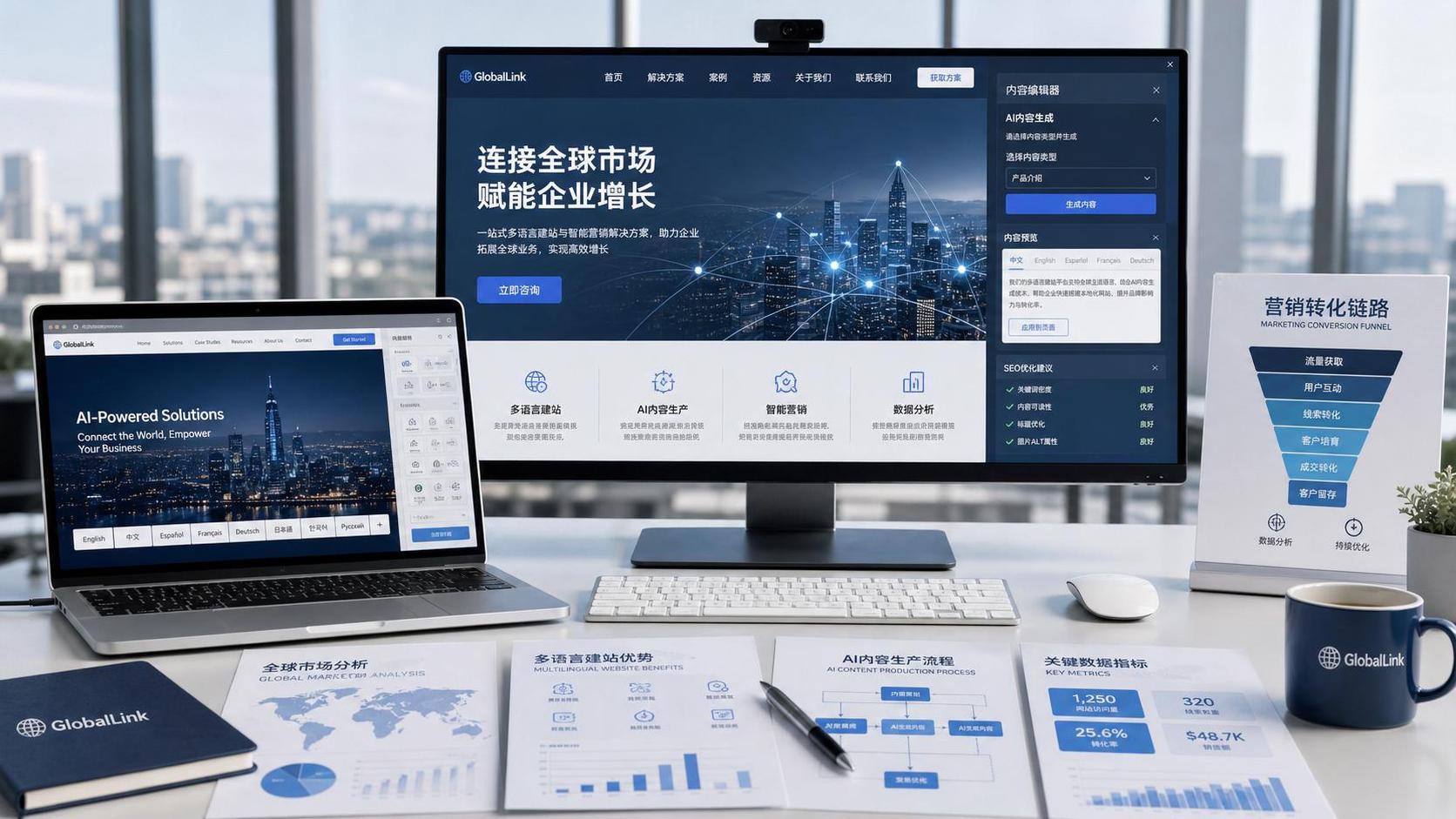
 How to assess foreign trade website development trends?Looking at 2026 changes from multilingual,AI content to conversion paths
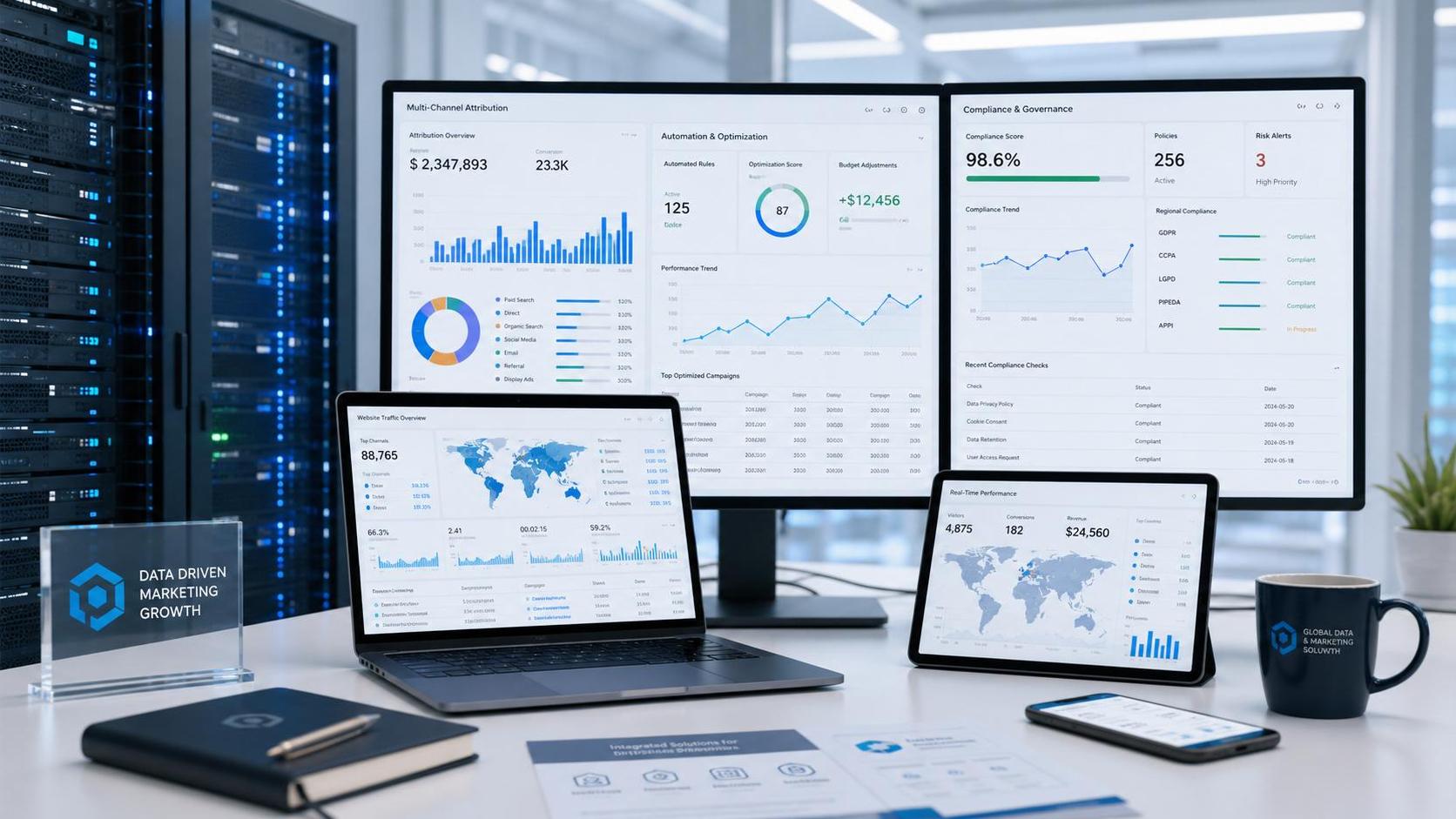
 What are the new trends in multilingual marketing data analytics tools in 2026? Focus on attribution、automation and compliance

Related Products
 EasyCamp SaaS Smart Website Marketing SystemE-Yingbao SaaS Smart Website Marketing System: AI-powered, zero-code website building. Rapidly launch multilingual independent e-commerce sites in just 10 minutes. Global server acceleration and AI-driven SEO optimization empower businesses to efficiently connect with global markets. The seamless integration of technology and user-friendly operation makes building e-commerce sites incredibly simple.
 AI+SEM Intelligent Advertising Marketing SystemAI+SEM drives intelligent ad creation, empowering full-funnel precision advertising marketing. The system automatically generates weekly/monthly reports, AI recommends keywords and target countries, monitors core metrics in real-time with intelligent alerts, and enables one-click high-conversion ad solutions to help quickly acquire customers and improve ROI.
 AI+SEO Dual Engine Optimization ServiceEasyWin AI+SEO Dual Engine Optimization System leverages AI-powered keyword mining, content generation, and comprehensive technical optimization to help foreign trade enterprises acquire high-quality organic traffic, significantly improving search rankings and conversion rates.
 AI+SNS Social Media Marketing SystemYingbao AI+SNS Social Media Marketing System - Precision social capture for the social media era. Supports one-click content synchronization across major platforms like Facebook and LinkedIn. AI intelligently rewrites posts for enhanced relevance. 24/7 AI customer service and user profiling analysis empower businesses to efficiently expand into global markets.
 AI+SEO营销解决方案易营宝AI+SEO营销解决方案,通过AI批量写作、智能生成TDK、精准关键词扩词等功能,全面优化网站SEO效果,提升流量与转化率。助力企业构建高效智能网站新生态。
 AI+SEM Advertising Marketing SolutionsAI+SEM Advertising Marketing Solution leverages AI technology to deeply empower SEM ad campaigns. It automatically generates weekly/monthly reports using AI, presenting account data across multiple dimensions for comprehensive insights into campaign performance and trends. The system precisely recommends keywords and target countries, intelligently generates high-conversion ad copy, and enables one-click activation of efficient campaign plans to help businesses rapidly acquire customers. Simultaneously, it monitors core metrics in real time, intelligently identifies abnormal fluctuations, and issues timely alerts to ensure stable, high-return advertising results.
 Domain Name ServicesEasyWin provides professional domain name services, including intelligent queries, one-stop registration, brand protection, and full lifecycle management, helping businesses build a digital brand image.
 EasyOperate B2C Cross-Border E-Commerce Platform & Independent WebsiteEasyStore B2C Cross-border E-commerce Independent Store is an intelligent website building and cross-border e-commerce integrated solution independently developed by EasyStore Information Technology (Beijing) Co., Ltd. The system is specially designed for small and medium-sized as well as large export enterprises, integrating 'website building, operation, marketing, advertising, and conversion' into one, helping enterprises quickly establish cross-border e-commerce independent stores to achieve brand globalization and global sales growth.
The platform supports multiple languages, multiple currencies, and multi-channel marketing, with built-in AI intelligent translation and SEO optimization systems, suitable for mainstream markets such as Southeast Asia, Europe and America, Latin America, and the Middle East, assisting Chinese manufacturing enterprises in efficiently deploying international e-commerce strategies. SSL证书易营宝提供专业SSL安全证书服务,包括单域名和泛域名证书,确保网站数据传输加密、身份验证和完整性保护,助力企业建立安全可信的在线业务环境。









