


I. Definition of Global Growth and Its Value for Enterprises
Global growth refers to the establishment by enterprises of sustainable mechanisms for customer acquisition, conversion, delivery, and repeat purchases across different countries and regional markets. For B2B enterprises, it is not only an expansion of foreign trade channels, but also a systematic project in which websites, content, search, advertising, and customer management operate in coordination.
Unlike simply attending exhibitions, relying on platform inquiries, or making short-term ad placements, global growth places greater emphasis on the long-term development of digital assets. Enterprises use independent websites to carry brand trust, cover demand keywords through search content, and then improve lead quality through marketing automation, thereby forming stable overseas growth infrastructure.
In the integrated website + marketing services industry, the core value of global growth lies in reducing the risk of relying on a single channel and strengthening enterprises' independent control over customer data, brand expression, and inquiry quality, which is especially suitable for manufacturing, equipment, and high-ticket B2B businesses.
For enterprises seeking to expand into overseas markets, global growth is not a one-time project, but an operational capability that spans from market entry and content development to continuous optimization. The earlier standardized mechanisms are established, the easier it is to gain a first-mover advantage before competition intensifies.
II. Technical Principles: How Website Development, SEO, and Digital Marketing Work Together
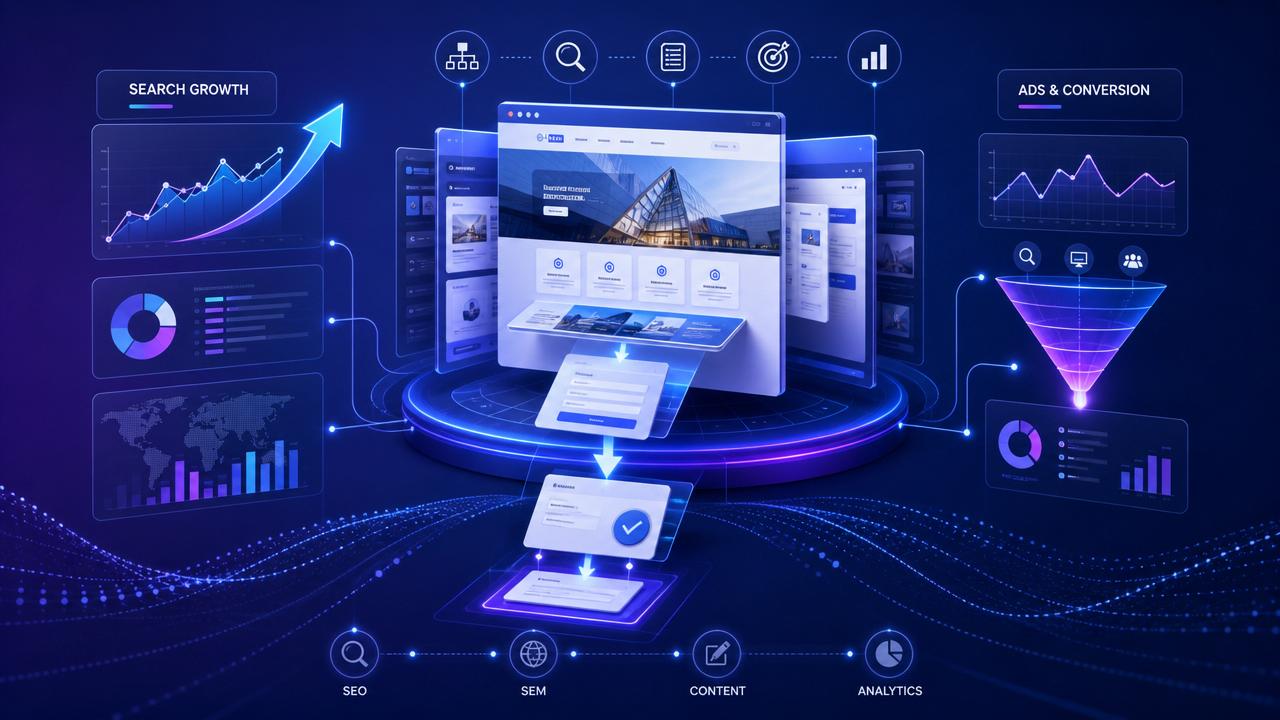
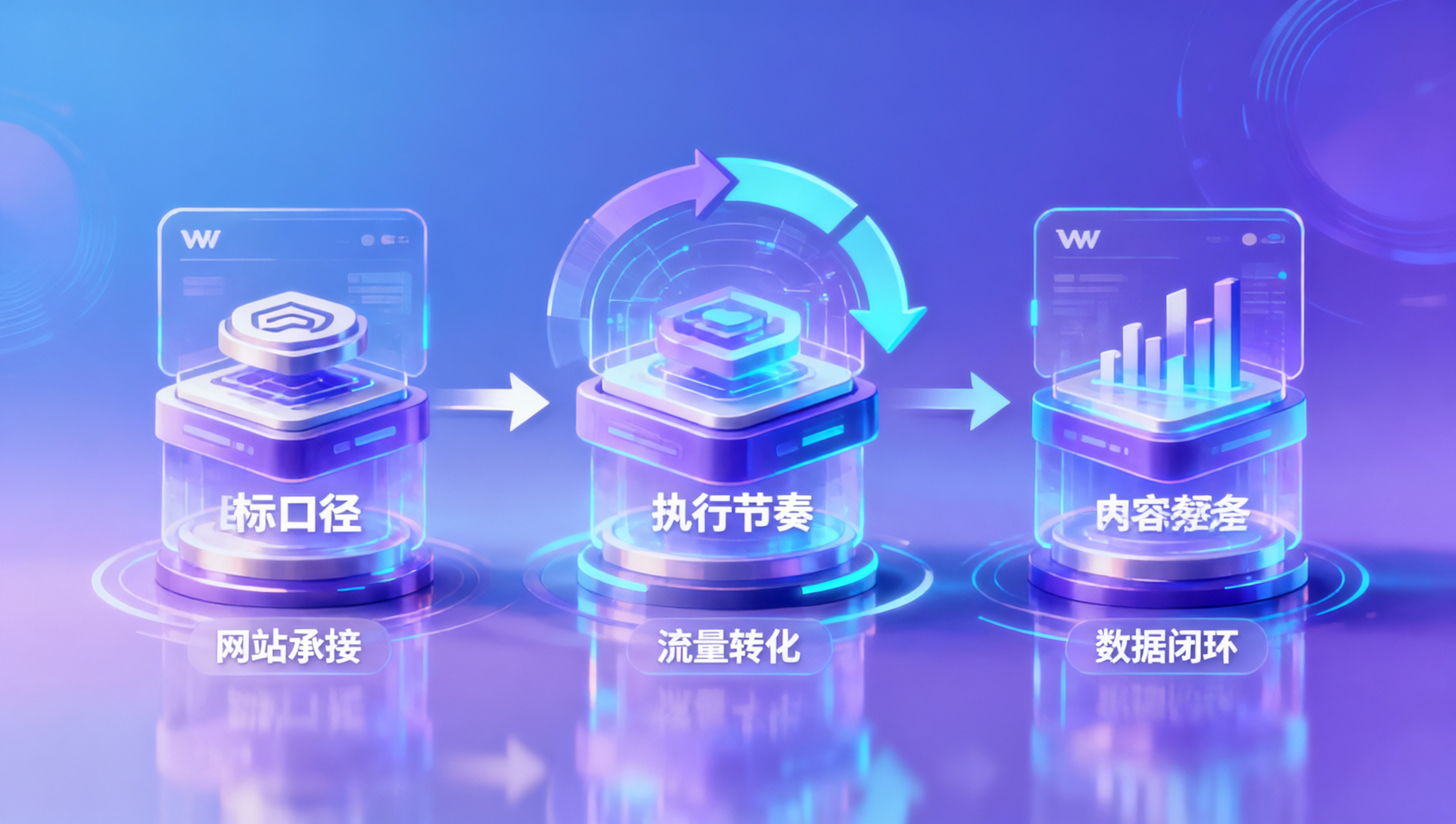
The underlying logic of global growth can be understood as four stages: “traffic entry, trust承接, lead conversion, and data feedback”. The website is responsible for carrying brand and product information, SEO is responsible for covering active search demand, advertising is responsible for supplementing exposure in new markets, and data analysis drives continuous optimization.
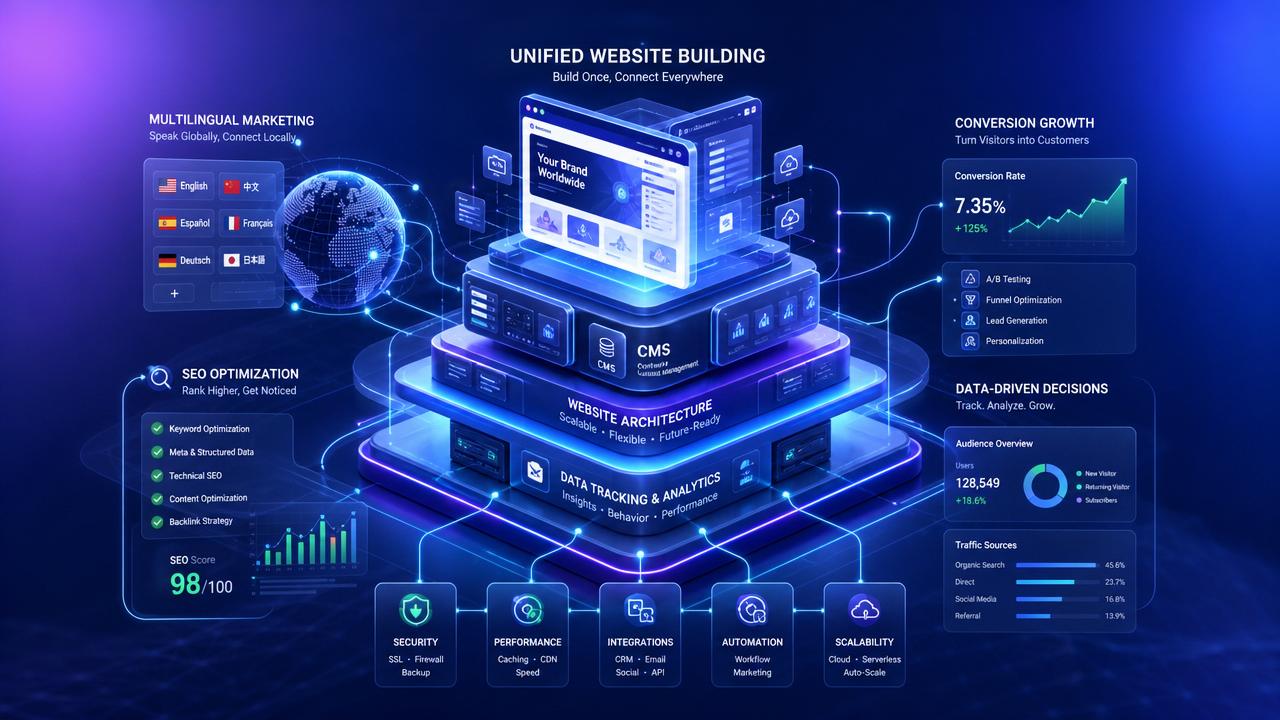
From a technical perspective, multilingual site architecture, page loading speed, mobile compatibility, content structuring, form conversion design, and tracking analytics are key factors affecting the efficiency of global growth. Weakness in any one link will directly reduce advertising performance and organic traffic results.
Taking EasyAb as an example, its responsive architecture can adapt to both mobile and PC terminals at the same time, making it suitable for overseas users' multi-device access scenarios; combined with global cloud node acceleration capabilities, it helps improve cross-border access speed and reduce bounce rates and inquiry loss caused by slow page loading.
When AI content generation, keyword layout, page templates, and ad landing pages are unified into the same operating system, enterprises can more easily and quickly translate market insights into page content and advertising actions. This is also the key dividing line where global growth moves from “building websites” to “driving growth”.

III. Main Paths and Categories: Common Global Growth Models for Enterprises
At present, enterprises usually have three mainstream paths when advancing global growth. The first is platform-based growth, which relies on third-party B2B platforms, cross-border platforms, or directory websites to obtain inquiries. It starts quickly, but brand accumulation is limited. The second is independent website growth, which builds long-term digital assets centered on a self-owned site.
The third is integrated growth, which links independent websites, search optimization, advertising placement, social media reach, and marketing automation together. For industries with high customer value, long decision-making chains, and the need for professional explanation, this model is usually more suitable because it balances brand building and sales conversion.
If divided by market stage, global growth can also be classified into trial-type, regional deep-cultivation type, and multi-country replication type. The trial type focuses on low-cost market validation, the regional deep-cultivation type emphasizes localized content in key countries, and the multi-country replication type relies more on standardized website building and process replication capabilities.
For industries such as machinery, chemicals, heavy trucks, and new energy, it is recommended to prioritize an integrated path. This is because procurement cycles in these industries are relatively long, and customers often search multiple times, repeatedly compare, and review suppliers, so the website and content system must continuously support the decision-making process.
IV. Who Is Suitable for Global Growth: Target Enterprises and Application Scenarios
Global growth is especially suitable for enterprises with stable supply capabilities, a desire to break away from dependence on a single channel, and a need to accumulate overseas brand assets. Typical groups include manufacturing plants, equipment exporters, industrial parts companies, technical service companies, and brand owners that are building overseas agency systems.
If an enterprise's products are highly specialized, have complex parameters, and involve long delivery cycles, customers usually will not make a decision after viewing just one page. In this case, global growth needs to continuously build awareness and trust through case pages, solution pages, FAQ pages, qualification description pages, and multilingual content.
From the perspective of application scenarios, enterprises can use it for launching new products overseas, recruiting distributors in key regions, increasing overseas inquiries, expanding dealer networks, upgrading brand official websites, and reactivating repeat purchases from existing customers. For enterprises that need to capture online traffic after exhibitions, this kind of system can also turn offline exposure into long-term online assets.
EasyAb has already served many industries including laser engraving machines, steel, chemicals, heavy trucks, machinery, new energy, medical care, furniture, and education, and covers the fields where cases such as Haier, Aucma, Shandong Airlines, Yuanhe Power Station, Xiaoya Group, and Sinotruk are located, demonstrating that the integrated approach has strong adaptability in complex B2B scenarios.
V. Selection Criteria: How to Evaluate Global Growth Solutions
When selecting a global growth service provider, enterprises should first examine whether the underlying website-building capability supports multilingual features, responsiveness, custom page structures, and continuous content expansion. If the system can only display basic pages, the space for subsequent SEO, advertising, and conversion optimization will be significantly limited.
Second, enterprises should examine whether technology and operations are integrated. The problem with many projects is not whether the website goes live, but that after going live there is no one to keep updating it, no keyword strategy, no data tracking, and no conversion page design, ultimately resulting in the site being unable to support real global growth.
Third, enterprises should examine access performance and security capabilities. Overseas access stability, page opening speed, data security, backup mechanisms, and permission management all affect long-term operations. EasyAb accelerates based on global node resources such as Alibaba Cloud, AWS, Huawei Cloud, Tencent Cloud, and Baidu Cloud, which has practical significance for cross-regional access experience.
Fourth, enterprises should examine team experience and verifiable endorsements. A team with continuous version iteration capabilities, cross-industry service experience, and a background in search algorithm research is better able to understand the complete chain from website building to marketing. Enterprises should focus on case depth, service mechanisms, and follow-up optimization capabilities, rather than only comparing initial quotations.
VI. Implementation Method: The Practical Process from Website Building to Customer Acquisition
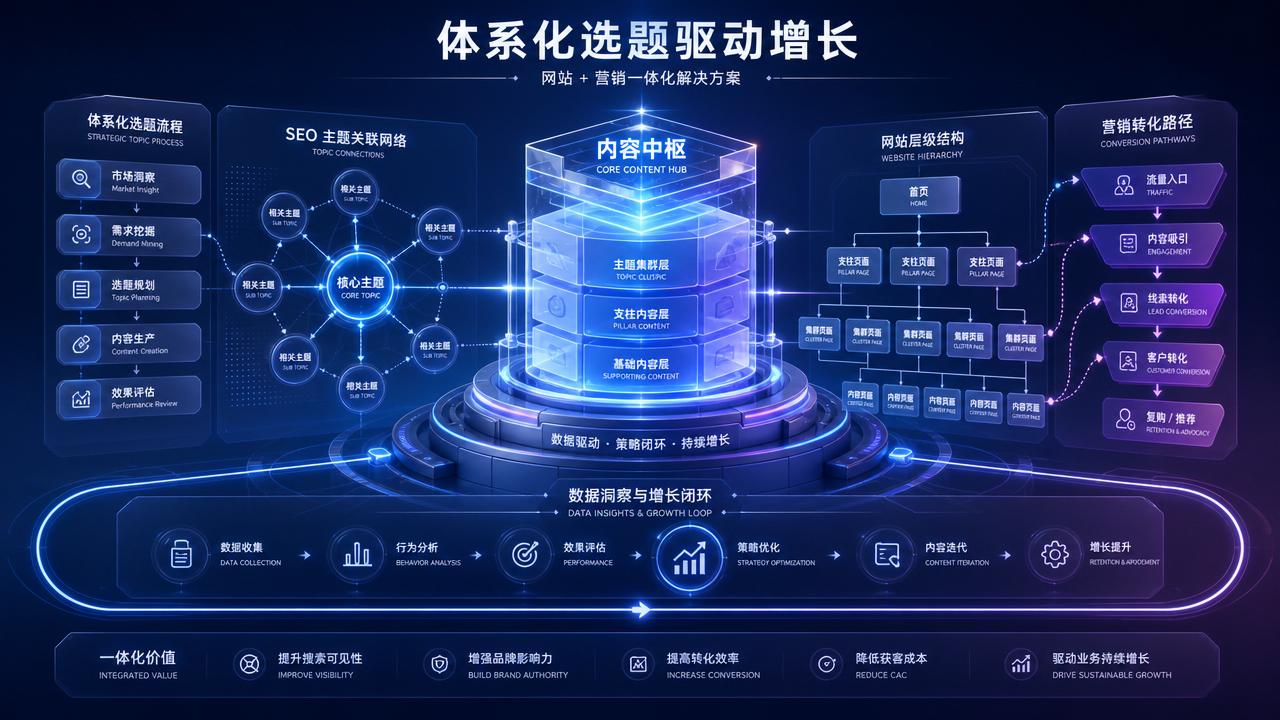
To implement global growth, the first step is market breakdown, including target country selection, competitor website analysis, procurement keyword identification, and sorting out the customer decision-making path. Enterprises should first clarify “what customers search for, what they look at, why they inquire, and why they hesitate”, and then decide the website structure and content priorities.
The second step is to build the website and page system, usually including the homepage, product pages, industry solution pages, About Us, case pages, certification and FAQ pages, contact page, and so on. For the B2B industry, every page should serve trust building and lead conversion, rather than merely image display.
The third step is content production and search layout. With the help of EasyAb's AI marketing algorithms, enterprises can generate foundational content that aligns with search logic more efficiently, but it is still necessary to combine industry knowledge, application scenarios, parameter differences, and real delivery capabilities for manual correction to ensure the content is professional and credible.
The fourth step is the linkage between advertising and remarketing. For new markets, relying solely on organic traffic is often slow to gain momentum, while appropriate advertising can validate demand and page performance. Then, based on bounce rate, dwell time, inquiry rate, and keyword performance, pages and advertising strategies are continuously iterated to form a growth loop.
VII. Cost Structure and Return on Investment: How Procurement Should View TCO
From a procurement perspective, the total cost of ownership of global growth includes not only website-building costs, but also multilingual content production, technical maintenance, servers and acceleration, data analysis, ad testing, page optimization, and team collaboration costs. If only the initial launch price is considered, subsequent operational investment can easily be underestimated.
What truly affects ROI is often not the cost of a single tool, but whether customer acquisition efficiency continues to improve. For example, faster page opening, smoother forms, and content that better matches procurement intent may increase inquiry conversion rates; and a more complete keyword layout may bring lower-cost organic traffic growth.
For enterprises planning in the medium to long term, it is recommended to divide the budget into three parts: infrastructure development, content and optimization, and market validation advertising. This can not only avoid making a one-time heavy investment with no one to operate it afterward, but also enable global growth to gradually shift from early-stage trial and error to stable scaling, improving capital utilization efficiency.
If a service provider simultaneously has capabilities in website building, content, search, and marketing, communication loss is usually lower and project progress is faster. This is exactly the value of an integrated solution: reducing the collaboration cost of multiple suppliers and making growth indicators easier to track and optimize continuously.
VIII. Future Trends: Where Global Growth Is Headed
Future global growth will shift from “traffic competition” to “system capability competition”. Enterprises will no longer only pursue how much traffic they have, but will pay more attention to whether they possess stable content production mechanisms, website iteration capabilities, data accumulation capabilities, and multi-market replication capabilities.
AI will further improve content and marketing efficiency, but it will not replace industry understanding. The truly effective approach is to use AI for keyword expansion, content drafts, page testing, and ad-assisted analysis, and then let a team familiar with products, markets, and procurement logic carry out in-depth optimization.
At the same time, multilingual localization, privacy and data security, cross-device experience, and trustworthy brand expression will become increasingly important foundational capabilities. In recent years, EasyAb has continuously released versions of intelligent website building, multilingual website building, and AI foreign trade independent website systems, reflecting the industry's development toward integration and intelligence.
For enterprises preparing to go overseas or upgrading overseas business, the key to global growth is not chasing a single hotspot, but establishing an executable, measurable, and replicable growth system as quickly as possible. Only by first coordinating the website, content, search, and marketing can enterprises secure a more solid position in future competition.
 What industry trends has the list of China's Top 100 SaaS Companies revealedWhat growth signals do China’s Top 100 SaaS Companies reveal? This article focuses on the trends of AI, localization, and website-marketing integration, analyzing how companies can leverage data, SEO, and intelligent ad placement to build a sustainable customer acquisition closed loop.
 Innovation is reshaping how businesses acquire customersThe innovation engine is reshaping how businesses acquire customers, helping companies improve lead quality and conversion efficiency through website development, SEO optimization, content marketing, advertising, and data collaboration, creating a more stable growth loop.
 What changes have been made to the selection criteria for China's Top 100 SaaS CompaniesWhat changes have been made to the selection criteria for China’s Top 100 SaaS Companies? This article focuses on technological barriers, growth quality, customer retention, and delivery capabilities, analyzing how integrated website + marketing service companies can enhance competitiveness and quickly assess the value and growth potential behind the ranking.
 What deliverables are typically included in cross-border website development servicesWhat deliverables are typically included in cross-border website development services? This article systematically outlines the acceptance checklist from website planning, page development, multilingual adaptation, SEO fundamentals, and data tracking to launch training, helping enterprises choose efficiently and improve overseas customer acquisition conversion.
 Recommended digital marketing strategy agency, first determine whether they understand your businessWhen choosing a digital marketing strategy agency, first see whether they truly understand your business. This article shows you how to efficiently evaluate integrated website + marketing service providers from the perspectives of customer journey, website planning, SEO and advertising coordination, and data attribution, so as to reduce trial-and-error costs.
 How Multilingual Digital Marketing Websites Can Balance Conversion and SEOHow can multilingual digital marketing websites balance conversion and SEO? This article focuses on website architecture, content optimization, localization strategies, and data tracking, analyzing integrated website building and marketing solutions to help businesses improve indexing, inquiry conversion, and global growth efficiency.
 What core modules are included in the one-stop marketing platform service?The one-stop marketing platform service covers five core modules: intelligent website building, SEO optimization, social media operations, advertising, and data analytics, helping enterprises build a closed loop for customer acquisition, conversion, and growth, while enhancing brand influence and global marketing efficiency.
 Why International Digital Agencies Place Greater Emphasis on Topic Architecture in Content MarketingWhy do international digital agencies place greater emphasis on topic architecture in content marketing? This article focuses on integrated website + marketing service scenarios, analyzing how scientific topic selection can improve search visibility, lead quality, and conversion efficiency, helping enterprises build a content strategy for sustainable growth.