









- What Does a Global Traffic Ecosystem Service Provider Do? What Are the Differences from a Single Advertising AgencyJul 16, 2026View details
- What should you focus on in the latest enterprise SaaS report? From renewal rates and delivery costs to overseas growth opportunitiesJul 12, 2026View details
- What signals are worth paying attention to in a cross-border marketing trend report? B2B companies should look at these 6 signalsJul 11, 2026View details
- How to Read a Cross-Border Marketing Trends Report? Five Key Dimensions for Evaluating Channel OpportunitiesJul 11, 2026View details
- Which channel has the highest ROI in the global traffic ecosystem? Comparative analysis of search, social media, and advertisingJul 10, 2026View details
- What multilingual website services are available in Sanya? Which model is more suitable for local businesses going global?Jul 08, 2026View details
- How to view the complete list of China SaaS companies in the top 100? Practical methods for screening website-building and marketing service providersJul 08, 2026View details
- How to view pricing in the global traffic ecosystem? Cost comparison of search, social media, and content channel advertisingJul 06, 2026View details
Innovation is reshaping how businesses acquire customers
At a time when traffic acquisition costs are rising and competition is intensifying, the innovation engine is becoming a key force for enterprises to break through customer acquisition bottlenecks. Relying on the synergy of technology, data, and marketing, business decision-makers are redefining growth paths and global expansion strategies.
Why enterprise customer acquisition is becoming increasingly dependent on the innovation engine

In the past, enterprise customer acquisition relied more on single-point ad placements, channel expansion, and sales follow-up. Today, the market has entered a stage of refined competition, customer decision-making journeys have become longer, touchpoints are more fragmented, and a single channel can hardly deliver stable, high-quality leads.
For business decision-makers, the real challenge is not just “whether there is traffic,” but “whether the traffic can convert,” “whether the investment can be measured,” and “whether overseas and local markets can be advanced in sync.” This is exactly why the innovation engine is being mentioned so frequently.
In the integrated website + marketing services industry, the innovation engine is not an abstract concept, but a growth system composed of intelligent website building, search positioning, content production, social media outreach, advertising placement, and data analysis. It emphasizes coordination rather than isolated optimization.
- By unifying the logic of websites, content, and ad placement, it reduces fragmentation among marketing activities.
- By using data feedback to identify high-value customers, it improves lead qualification efficiency.
- By leveraging automation and intelligent tools, it reduces repetitive operational costs and enhances team execution speed.
Since its establishment in 2013, Yiyingbao Information Technology (Beijing) Co., Ltd. has remained deeply engaged in the global digital marketing field. With artificial intelligence and big data as its core driving forces, it has developed full-chain capabilities covering website building, SEO optimization, social media marketing, and advertising placement. For enterprises seeking both customer acquisition efficiency and global growth, this combination of capabilities is the practical implementation of the innovation engine.
The customer acquisition issues business decision-makers care about most, and how the innovation engine solves them
Many enterprises encounter similar difficulties during the growth stage: the website is launched, but there are no inquiries; ads are running, but conversions are unstable; content is produced, but search coverage is insufficient; overseas markets are to be expanded, but localized support is lacking. While the problems look different on the surface, at their root they are often related to insufficient systemic capabilities.
What are the common pain points
- Scattered budgets: websites, content, advertising, and social media are executed by different vendors, resulting in high communication costs and difficulty in evaluating results in a unified way.
- Fluctuating lead quality: traffic appears to be growing, but inquiries are not precise, and the sales team’s follow-up efficiency is low.
- Loss of delivery rhythm control: website building cycles are long, page iterations are slow, and marketing actions cannot quickly adapt to market changes.
- Major barriers to internationalization: language, search habits, and content preferences differ significantly across regions, so simply replicating domestic tactics delivers limited results.
What is the core role of the innovation engine
The value of the innovation engine lies in integrating originally fragmented customer acquisition links into a continuously optimizable growth loop. The website is responsible for conversion reception, content is responsible for explanation, search is responsible for discoverability, social media is responsible for influencing perception, advertising is responsible for amplifying effective traffic, and data is responsible for continuously correcting the direction.
This is also why Yiyingbao has long adhered to the dual-wheel strategy of “technological innovation + localized service.” Technology makes scalable execution possible, while localized service ensures that solutions do not deviate from the realities of industries and regional markets.
Integrated solutions and traditional fragmented execution, where exactly is the gap
If an enterprise is evaluating vendors, what it most needs to see clearly is the difference in operating models, rather than only comparing individual quotations. The comparison below better reflects the impact of the innovation engine on customer acquisition efficiency.
From a decision-making perspective, the key to an integrated solution is not “having more project items,” but ensuring that every action is coordinated around the final conversion. The more mature the innovation engine becomes, the easier it is for enterprises to achieve a more stable growth rhythm under a limited budget.
Which scenarios are more suitable for deploying an innovation engine
Not all enterprises are at the same stage, but the following types of scenarios are usually more suitable for introducing the innovation engine approach as soon as possible, in order to shorten the trial-and-error cycle.
Taking vertical manufacturing as an example, if an enterprise has complex products, many models, and widely distributed target customers, then website structure and category navigation will directly affect inquiry efficiency. At this time, it is possible to combine the thinking behind a laser engraving machine industry solution and improve user search efficiency and page conversion capability through professional website building, intelligent category navigation, and product display optimization.
When procuring and selecting solutions, what should business decision-makers focus on
When choosing an integrated website + marketing service provider, you cannot judge only by whether the case study pages look attractive, nor only by monthly traffic screenshots. A more reliable approach is to make a comprehensive judgment based on organizational goals, execution capabilities, and the data loop.
Five dimensions recommended for重点 evaluation
- Whether it has full-chain capabilities. Whether website building, content, search, social media, and advertising can work together rather than operate separately.
- Whether it understands industry scenarios. Whether the vendor understands the differences in conversion paths for manufacturing, B2B, and overseas-expanding enterprises.
- Whether it values data tracking. Whether it can clearly identify visitor sources, page behavior, form quality, and stage-by-stage conversion performance.
- Whether it supports multilingual capability and localization. Overseas business is not about translating pages, but about reconstructing expression and search strategy.
- Whether it can continue iterative optimization. Launch is only the beginning; real competitiveness comes from subsequent optimization frequency and adjustment capability.
The value of Yiyingbao’s experience in serving more than 100,000 enterprises is reflected in its ability to break down needs at different growth stages. What enterprises need is not just a stack of tools, but an execution system that can connect target markets, marketing budgets, delivery cycles, and growth rhythms.
When implementing the innovation engine, what process is more reliable
Many enterprises worry that upgrading the customer acquisition system may involve long cycles, complex coordination, and uncontrollable costs. In fact, as long as it is advanced in stages, the innovation engine can be gradually implemented on top of the existing business foundation, rather than starting over from scratch.
From the perspective of implementation logic, the innovation engine is not a one-time project, but a continuous growth mechanism. The earlier an enterprise establishes a unified data and content foundation, the more calmly it can expand into new products, new regions, and new channels later on.
Common misunderstandings and FAQ: why is the investment significant, but the results still unstable
Is it enough to only redesign the website without coordinating traffic and content?
Usually not enough. The website is only the conversion carrier. Without search positioning, content updates, and promotional coordination, even the best pages will struggle to continuously attract target customers. The focus of the innovation engine is precisely to link website construction with traffic acquisition.
Does more ad spending mean faster customer acquisition?
Not necessarily. If page conversion support is weak, form design is unreasonable, and target audience definition is unclear, increasing the budget will only amplify waste. Business decision-makers should pay more attention to the effectiveness of each lead and its fit with subsequent deal conversion.
Is it enough for a multilingual site to just do translation?
Far from enough. Different markets vary significantly in search terms, page reading habits, and trust-building expressions. Localization is not only language conversion, but also adaptation of page structure, content focus, and outreach channels.
Do vertical industries need dedicated solutions?
If there are many product parameters, complex categories, and long procurement cycles, dedicated solutions are often more effective. For example, when addressing segmented manufacturing scenarios, the thinking embodied in the laser engraving machine industry solution places greater emphasis on product presentation effectiveness, category navigation logic, and AI-assisted content construction. This type of design is closer to the real procurement path.
In future growth competition, where will the innovation engine go
Future competition in customer acquisition will no longer be just competition in traffic purchasing capability, but competition in data understanding, content response speed, and multi-market coordination capability. Whoever can identify changes in demand faster will be more likely to turn marketing budgets into long-term assets.
Artificial intelligence is changing the way content is produced, visitors are identified, pages are optimized, and ad testing is conducted, while big data enables enterprises to more clearly understand which markets are worth investing more in and which leads are worth prioritizing. Therefore, the innovation engine will no longer be just a tool of the marketing department, but will become important infrastructure for enterprise growth decision-making.
Why choose us
If you are evaluating website upgrades, overseas customer acquisition, search positioning, advertising coordination, or digital marketing solutions for vertical industries, Yiyingbao can provide more targeted recommendations based on your company’s current situation. With artificial intelligence and big data as the core driving forces and backed by ten years of industry accumulation, the company has formed a full-chain solution covering intelligent website building, SEO optimization, social media marketing, and advertising placement.
For business decision-makers, we can focus on helping confirm the following matters: whether the current website has conversion reception capability, what combinations of content and channels should be adopted in different markets, how the budget should be invested in phases, how the project delivery cycle should be arranged, whether vertical industries require customized category structures and display logic, and how subsequent data tracking should be built.
If you hope to establish a clearer growth path around the innovation engine, you are welcome to further discuss specific needs, including solution selection, page planning, delivery rhythm, quotation range, and customized implementation recommendations, so that your customer acquisition system can move from fragmented investment to sustainable growth.
Related Articles
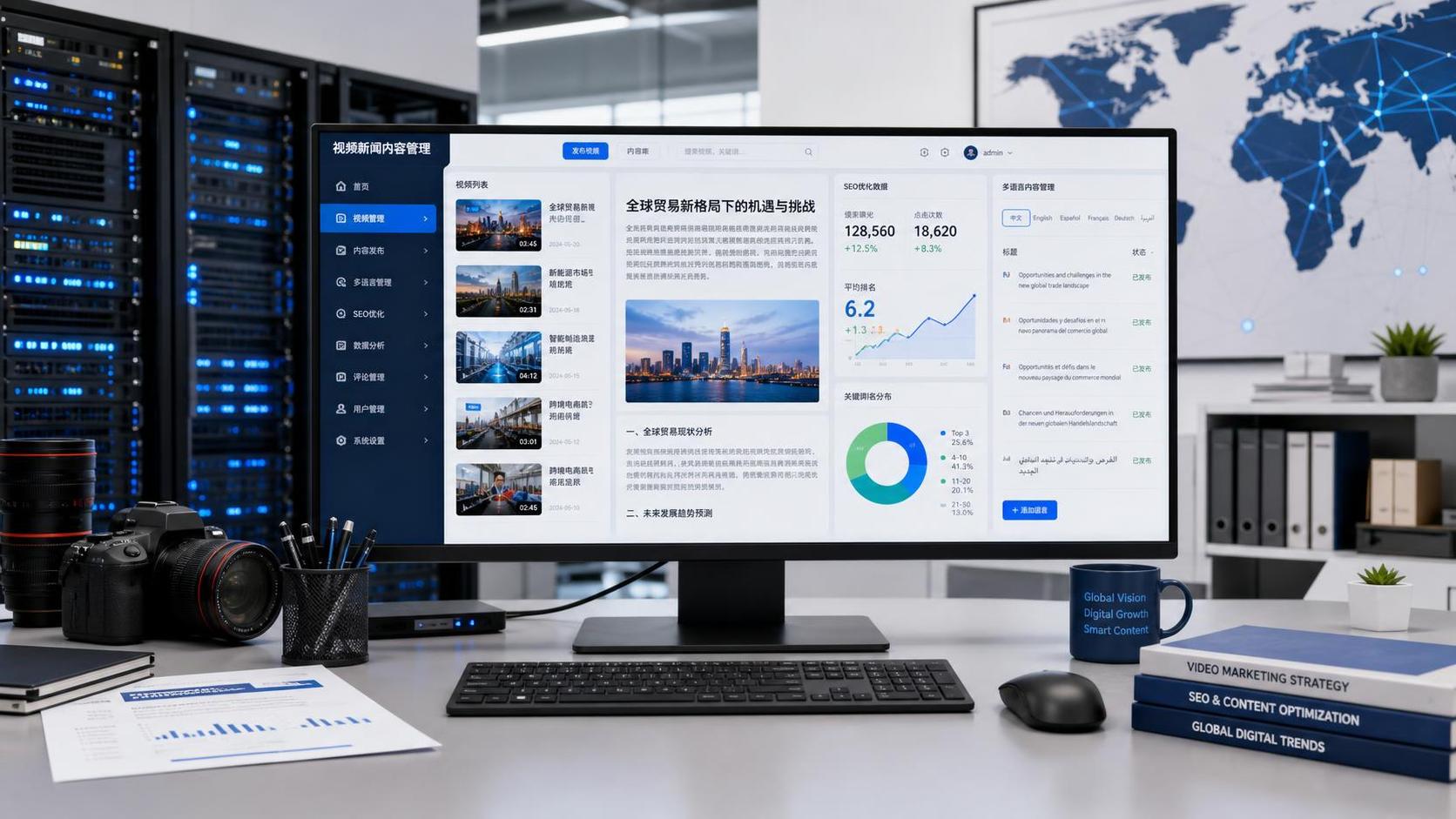
Related Products
 EasyCamp SaaS Smart Website Marketing SystemE-Yingbao SaaS Smart Website Marketing System: AI-powered, zero-code website building. Rapidly launch multilingual independent e-commerce sites in just 10 minutes. Global server acceleration and AI-driven SEO optimization empower businesses to efficiently connect with global markets. The seamless integration of technology and user-friendly operation makes building e-commerce sites incredibly simple.
 AI+SEM Intelligent Advertising Marketing SystemAI+SEM drives intelligent ad creation, empowering full-funnel precision advertising marketing. The system automatically generates weekly/monthly reports, AI recommends keywords and target countries, monitors core metrics in real-time with intelligent alerts, and enables one-click high-conversion ad solutions to help quickly acquire customers and improve ROI.
 AI+SEO Dual Engine Optimization ServiceEasyWin AI+SEO Dual Engine Optimization System leverages AI-powered keyword mining, content generation, and comprehensive technical optimization to help foreign trade enterprises acquire high-quality organic traffic, significantly improving search rankings and conversion rates.
 AI+SNS Social Media Marketing SystemYingbao AI+SNS Social Media Marketing System - Precision social capture for the social media era. Supports one-click content synchronization across major platforms like Facebook and LinkedIn. AI intelligently rewrites posts for enhanced relevance. 24/7 AI customer service and user profiling analysis empower businesses to efficiently expand into global markets.
 AI+SEO营销解决方案易营宝AI+SEO营销解决方案,通过AI批量写作、智能生成TDK、精准关键词扩词等功能,全面优化网站SEO效果,提升流量与转化率。助力企业构建高效智能网站新生态。
 AI+SEM Advertising Marketing SolutionsAI+SEM Advertising Marketing Solution leverages AI technology to deeply empower SEM ad campaigns. It automatically generates weekly/monthly reports using AI, presenting account data across multiple dimensions for comprehensive insights into campaign performance and trends. The system precisely recommends keywords and target countries, intelligently generates high-conversion ad copy, and enables one-click activation of efficient campaign plans to help businesses rapidly acquire customers. Simultaneously, it monitors core metrics in real time, intelligently identifies abnormal fluctuations, and issues timely alerts to ensure stable, high-return advertising results.
 Domain Name ServicesEasyWin provides professional domain name services, including intelligent queries, one-stop registration, brand protection, and full lifecycle management, helping businesses build a digital brand image.
 EasyOperate B2C Cross-Border E-Commerce Platform & Independent WebsiteEasyStore B2C Cross-border E-commerce Independent Store is an intelligent website building and cross-border e-commerce integrated solution independently developed by EasyStore Information Technology (Beijing) Co., Ltd. The system is specially designed for small and medium-sized as well as large export enterprises, integrating 'website building, operation, marketing, advertising, and conversion' into one, helping enterprises quickly establish cross-border e-commerce independent stores to achieve brand globalization and global sales growth.
The platform supports multiple languages, multiple currencies, and multi-channel marketing, with built-in AI intelligent translation and SEO optimization systems, suitable for mainstream markets such as Southeast Asia, Europe and America, Latin America, and the Middle East, assisting Chinese manufacturing enterprises in efficiently deploying international e-commerce strategies. SSL证书易营宝提供专业SSL安全证书服务,包括单域名和泛域名证书,确保网站数据传输加密、身份验证和完整性保护,助力企业建立安全可信的在线业务环境。









