1. What Is an Innovation Engine: From a Collection of Tools to a Growth System
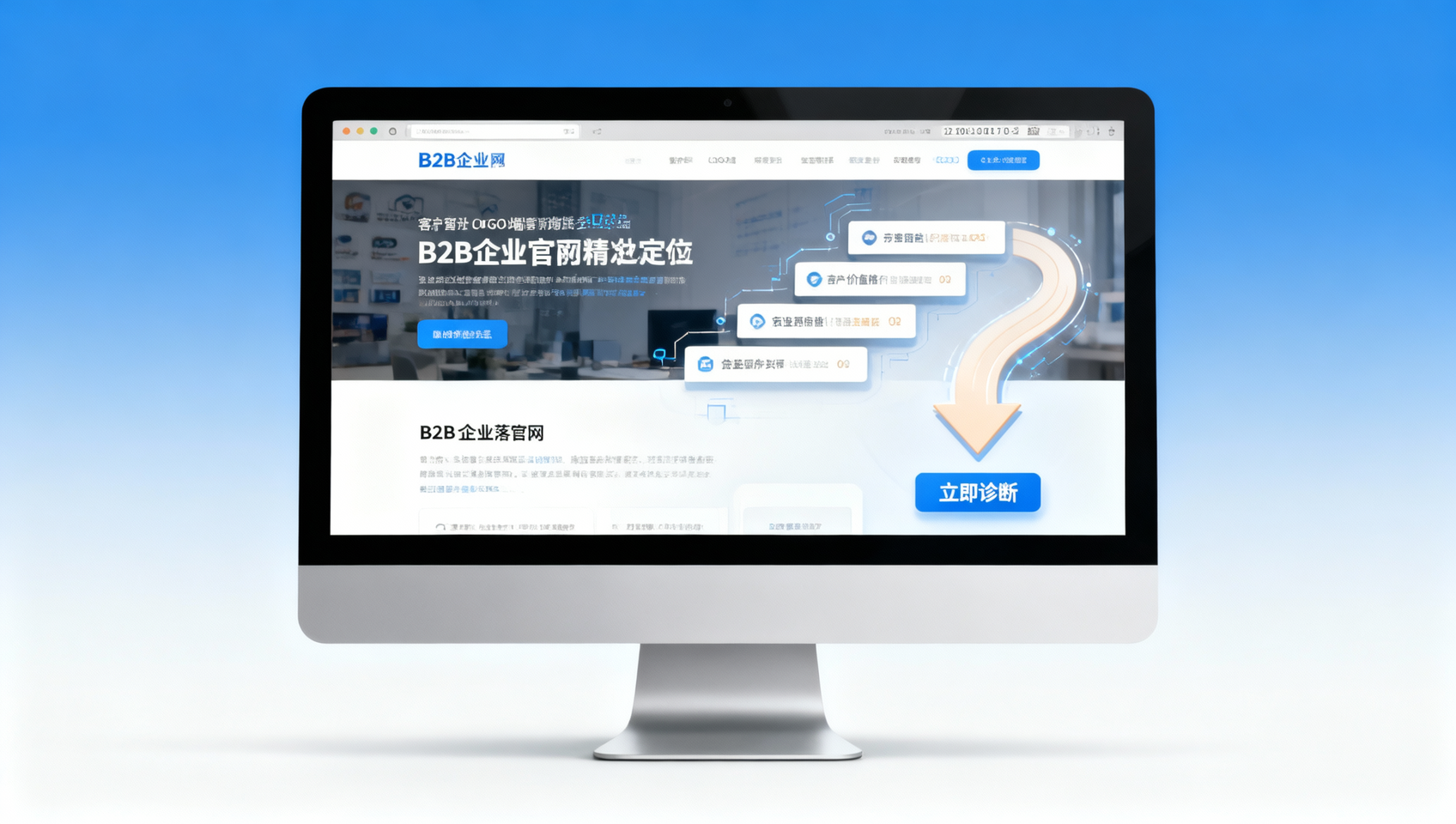
An innovation engine refers to an integrated operating system built around a company’s goals of customer acquisition and conversion, connecting website development, content production, search visibility, advertising coordination, data analysis, and lead management. It is not a single software tool, but a set of digital infrastructure that continuously drives business growth.
In the integrated website + marketing service industry, the core value of an innovation engine lies in shortening the chain of “display—reach—inquiry—conversion”. In the past, companies often purchased website building, promotion, content, and data services separately, resulting in fragmented information, delayed execution, and difficulty in review and optimization.
A truly effective innovation engine needs to meet three conditions at the same time: a stable front-end experience that can carry brand and product information; coordinated mid-end content and campaign delivery that can continuously attract target traffic; and traceable back-end data that can help companies determine which channels and pages generate real business opportunities.
Therefore, an innovation engine is both a technical architecture and an operational logic. For companies focused on exports, global brand expansion, and industrial product sales, it is more like a long-term customer acquisition machine rather than a one-time delivered project.

2. Technical Principles: How an Innovation Engine Drives Website and Marketing Coordination
The underlying principles of an innovation engine can be broken down into four layers: the presentation layer, content layer, traffic layer, and data layer. The presentation layer is responsible for page structure, access speed, and cross-device compatibility; the content layer is responsible for product information, industry knowledge, and search visibility; the traffic layer is responsible for organic traffic and ad reach; and the data layer is responsible for recording user behavior and conversion paths.
If the presentation layer is unstable, even the best ad campaigns will lose inquiries because of slow page loading, mobile misalignment, or unfriendly forms. A responsive architecture therefore becomes a common foundation of the innovation engine, ensuring that a corporate website maintains a consistent experience and readability on both mobile and PC devices.
The key to the content layer is enabling companies to produce professional content that can both be understood by buyers and recognized by search systems. The value of generative AI does not lie in simply generating text, but in improving content production efficiency and helping companies build more complete information coverage around product keywords, scenario keywords, and question keywords.
The traffic layer emphasizes the linkage among organic search, advertising, and remarketing. The data layer, through traffic sources, dwell behavior, conversion pages, and inquiry records, in turn guides page optimization and budget allocation. This closed loop is exactly what distinguishes an innovation engine from traditional website building.
3. Mainstream Categories: Three Common Innovation Engine Models for Enterprises
The first type is the display-oriented innovation engine, which focuses on solving brand image presentation, product display, and basic contact capabilities. This model is suitable for companies that are just beginning digital development, enabling them to quickly establish an online presence, but if it lacks content and campaign coordination, its follow-up growth potential will be limited.
The second type is the traffic-oriented innovation engine, which emphasizes search visibility, ad landing pages, inquiry forms, and conversion tracking. It is more suitable for companies that already have an independent website foundation and hope to improve lead efficiency, and is especially applicable to high-ticket B2B industries such as industrial products, machinery and equipment, and chemical materials.
The third type is the integrated innovation engine, which unifies multilingual websites, AI content generation, advertising coordination, global access acceleration, and data analysis. For companies expanding into overseas markets or acquiring customers across multiple countries, this model is more conducive to forming a replicable growth mechanism.
From practical application, companies should not judge only by how many functions are included, but should choose according to their business stage. In the early stage, the focus is on launch efficiency; in the mid-stage, on lead quality; and in the long term, on whether data assets are being accumulated. This determines whether the innovation engine can truly serve business goals.
4. Why an Innovation Engine Is Needed: Advantages Over Traditional Methods
Traditional customer acquisition methods often rely on platform traffic, trade show resources, or manual outreach. They may be effective in the short term, but they come with problems such as rising costs, uncontrollable leads, and insufficient brand accumulation. The value of an innovation engine lies in helping companies build their own traffic and content base, reducing dependence on a single channel.
For foreign trade companies, if a website is only a business card page, it is difficult to support advertising and search traffic. Through page structure optimization, content expansion, and form conversion design, an innovation engine transforms the website from “passive display” to “active customer acquisition”, enhancing the commercial value of every visit.
Taking E-Marketing Easy as an example, its intelligent website-building engine adopts a responsive architecture, making it suitable for companies to centrally manage multi-device presentation; its AI marketing algorithms can assist in generating content that better aligns with search logic; and relying on multi-cloud global nodes for access acceleration helps improve the page-opening experience for overseas customers.
When website building, content, and promotion are coordinated by the same innovation engine, companies can more easily establish standardized execution processes. This not only improves launch and iteration efficiency, but also makes it easier for sales, operations, and management to make decisions around the same set of data.
5. Who Should Deploy an Innovation Engine: Target Companies and Application Scenarios
An innovation engine is best suited for three types of companies. The first type is export manufacturers that want to break away from dependence on a single platform and build an independent customer acquisition system; the second type is B2B companies with highly specialized products, long procurement decision cycles, and the need to educate customers through content; the third type is brand-oriented companies that are deploying multilingual overseas expansion.
In terms of industry distribution, machinery, laser engraving machines, steel, chemicals, heavy trucks, new energy, medical care, furniture, agriculture, and other sectors usually need to build trust through case studies, specifications, solutions, and application articles. This is exactly the typical environment where an innovation engine can play its role.
If a company’s customers come from multiple countries, and there are significant differences in access time zones, network environments, and language preferences, then the innovation engine also needs to have multilingual management and global access optimization capabilities. In this case, simple template-based website building is often difficult to support long-term marketing coordination.
E-Marketing Easy has served many industries including laser engraving machines, steel, chemicals, machinery, new energy, automobiles, tourism, catering, and education, and has also covered cases such as Haier, Aucma, Shandong Airlines, Yuanhe Power Station, Little Duck Group, and Sinotruk, demonstrating that the innovation engine is not only suitable for a single niche market.
6. How to Choose: Key Criteria for Evaluating an Innovation Engine
When choosing an innovation engine, companies should first look at architectural capabilities. Whether it supports responsive presentation, whether it is easy to expand pages, and whether it is suitable for multilingual and multi-region deployment directly determine whether subsequent marketing actions can be implemented smoothly. If website-building capability is weak, even the best strategy will be difficult to execute.
Second, look at content and marketing coordination capabilities. What companies need is not just the ability to publish pages, but the ability to continuously produce industry articles, product descriptions, application scenarios, and conversion landing pages. If AI-assisted generation can be combined with search logic and manual review, efficiency will be higher and risks will be more controllable.
Third, look at global access and security stability. Websites targeting overseas markets need to balance loading speed, node coverage, data security, and back-end operations and maintenance. E-Marketing Easy relies on node resources such as Alibaba Cloud, AWS, Huawei Cloud, Tencent Cloud, and Baidu Cloud, making it suitable as a reference for companies with requirements for cross-regional access experience.
Fourth, look at the service team’s industry understanding. A team with experience in search algorithm research, SaaS development, and cross-border business usually better understands the actual chain from traffic to inquiry for B2B companies. When selecting a solution, companies should pay attention to the service provider’s system iteration record, industry experience, and case fit, rather than only looking at price.
7. Deployment, Maintenance, and Cost: Understanding the Value of an Innovation Engine from TCO and ROI
The total cost of ownership of an innovation engine includes not only website-building expenses, but also content production, servers and acceleration, advertising, page iteration, data analysis, and operational collaboration costs. If the focus in the early stage is only on low-cost launch, the later stage often requires repeated rebuilding due to insufficient scalability, which instead increases overall expenditure.
A reasonable deployment rhythm is usually divided into three steps: first complete the construction of core pages and the conversion path, then expand content around key products and industry issues, and finally continuously optimize campaigns and pages through data feedback. This is more conducive to turning the innovation engine into a reusable asset rather than a short-term project cost.
In terms of maintenance cycles, companies should at least check page speed, form validity, keyword coverage, inquiry sources, and content updates on a monthly basis. For more highly competitive industries, it is recommended to shorten this to a biweekly review and promptly adjust landing page structures and conversion guidance methods.
ROI evaluation should not focus only on traffic volume, but should be combined with the number of valid inquiries, sales follow-up rate, shortening of the transaction cycle, and the organic traffic continuously brought by existing content. The more an innovation engine can accumulate data and content, the easier it is usually for the long-term marginal customer acquisition cost to decline.
8. Future Trends: How the Innovation Engine Will Evolve
Future innovation engines will place more emphasis on “the website as a marketing middle platform”. The website will no longer be only the endpoint for receiving traffic, but a unified entry point for content production, ad testing, customer insights, and sales support. Companies will pay increasing attention to the long-term operability of page and data assets.
The second trend is the increasing level of AI participation, but human judgment remains critical. AI can help companies improve efficiency in topic selection, writing, translation, and page generation, but when it comes to brand expression, industry accuracy, and inquiry screening, professional teams are still needed for validation and optimization.
The third trend is that multilingual and localization capabilities are becoming standard for going global. Different markets differ not only in language, but also in search habits, access devices, and ways of building trust. An innovation engine equipped with multilingual website-building, global acceleration, and structured marketing capabilities will be more suitable for companies to carry out cross-regional replication.
From the release pace of E-Marketing Easy’s system versions in recent years, it can be seen that intelligent website building, AI foreign trade marketing, and multilingual capabilities are continuously integrating. For companies preparing to upgrade their digital customer acquisition systems, deploying an innovation engine early often has greater strategic value than passively catching up later.
 Innovation is reshaping how businesses acquire customersThe innovation engine is reshaping how businesses acquire customers, helping companies improve lead quality and conversion efficiency through website development, SEO optimization, content marketing, advertising, and data collaboration, creating a more stable growth loop.
 Is the innovation engine reshaping customer acquisition methods?Is the Innovation Engine reshaping how businesses acquire customers? This article focuses on the integration of website and marketing services, analyzing how the Innovation Engine connects website building, SEO, content, and advertising to improve lead quality, conversion efficiency, and long-term growth, helping businesses find a more sustainable customer acquisition path.
 How can dealers/distributors use standalone websites to receive headquarters traffic compliantly?3 compliant distribution modelsHow can dealers/distributors/agents receive headquarters traffic compliantly?Revealing 3 standalone website distribution models,improve conversion rates、avoid compliance risks,get the free white paper now!
 Key points for AI search indexing optimization: In the era of Google SGE, the completeness of structured data has a greater impact on the selection of answer cards than the number of words on the page.AI-powered search engine optimization is reshaping the rules of SEO! In the era of Google SGE, the completeness of structured data is more crucial than the number of words on a page in determining which answer cards are selected. Get a verifiable SGE adaptation solution now.
 How much does it typically cost to create an international trade website? A detailed cost comparison of mainstream solutions in 2024.How much does it actually cost to create an international trade website? A comprehensive analysis of the real costs and hidden expenses of three major solutions in 2024: SaaS templates, AI semi-customized solutions, and full-stack customized solutions, helping you make accurate financial decisions, avoid pitfalls, and improve efficiency!
 90% of B2B pages with 'high click-through rates but low conversion rates' in search engine marketing stem from these three structural flaws.High click-through rates but low conversion rates for B2B pages in search engine marketing? 90% stem from structural flaws! Unveiling the three key optimization techniques for the first screen: trustworthy anchor points, information flow, and trust evidence chains, to immediately boost conversion rates.
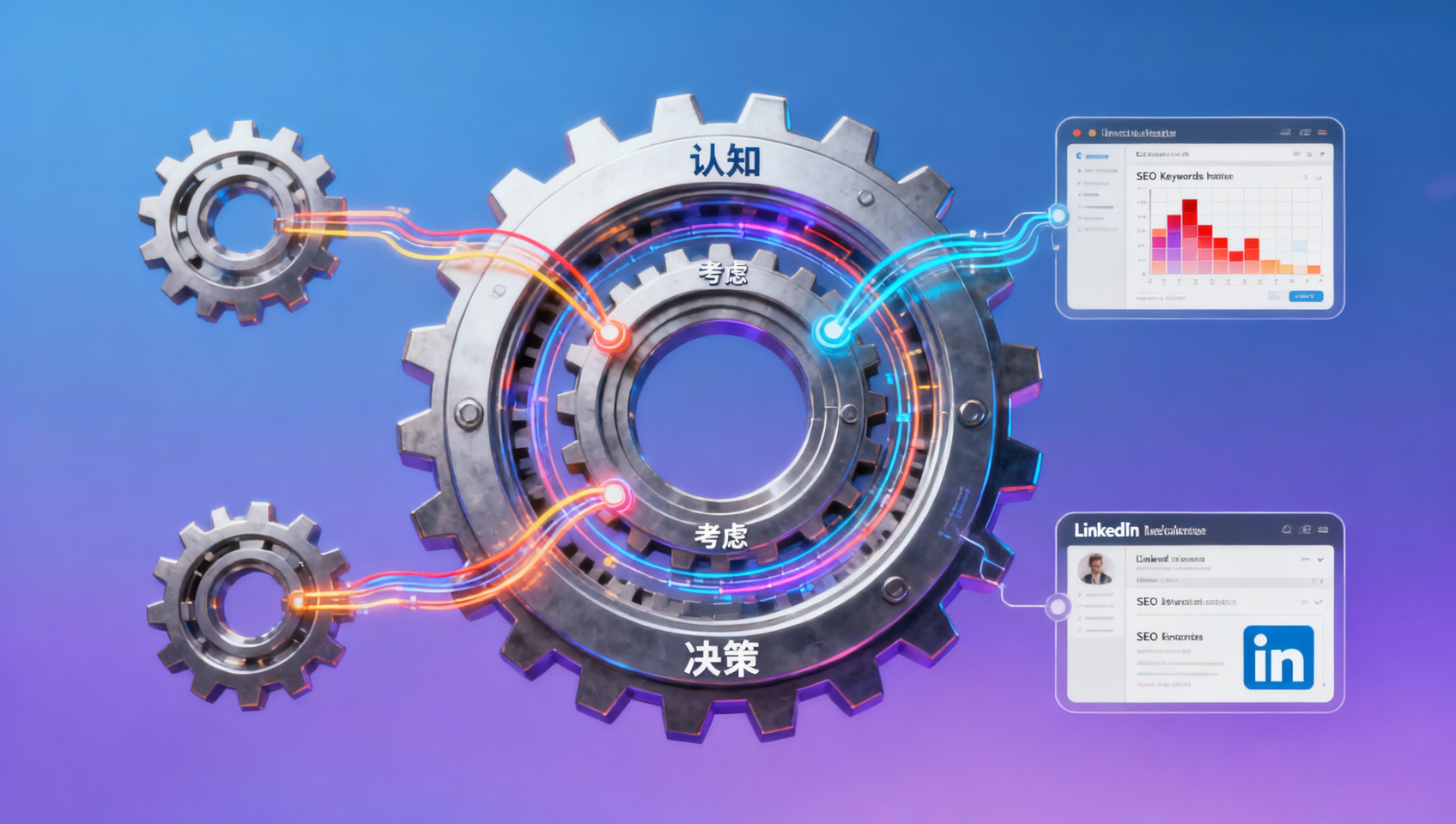
 B2B Social Media Content Calendar Template: By Procurement Decision CycleB2B Social Media Content Calendar Template: Layered design based on the procurement decision-making cycle, covering the entire chain from awareness to consideration to decision-making, improving conversion rates and service collaboration efficiency. Download now for efficient implementation!
 AI website building system selection decision tree: How to choose when you have more than 2,000 SKUs, need a dynamic price list, and support multiple currency settlements?Is choosing an AI website building system difficult? With over 2000 SKUs, dynamic pricing, and multi-currency settlement scenarios, how can you avoid the pitfalls of pseudo-AI? A decision tree guide for adapting to highly complex business needs.