









- What Does a Global Traffic Ecosystem Service Provider Do? What Are the Differences from a Single Advertising AgencyJul 16, 2026View details
- What should you focus on in the latest enterprise SaaS report? From renewal rates and delivery costs to overseas growth opportunitiesJul 12, 2026View details
- What signals are worth paying attention to in a cross-border marketing trend report? B2B companies should look at these 6 signalsJul 11, 2026View details
- How to Read a Cross-Border Marketing Trends Report? Five Key Dimensions for Evaluating Channel OpportunitiesJul 11, 2026View details
- Which channel has the highest ROI in the global traffic ecosystem? Comparative analysis of search, social media, and advertisingJul 10, 2026View details
- What multilingual website services are available in Sanya? Which model is more suitable for local businesses going global?Jul 08, 2026View details
- How to view the complete list of China SaaS companies in the top 100? Practical methods for screening website-building and marketing service providersJul 08, 2026View details
- How to view pricing in the global traffic ecosystem? Cost comparison of search, social media, and content channel advertisingJul 06, 2026View details
How to balance user experience and conversion rates for multilingual digital marketing websites
Multilingual digital marketing websites need to balance user experience and conversion rates. The key isn't simply "translating a website into multiple languages," but rather whether it's truly localized to the search habits, reading habits, device environments, and decision-making paths of users in different markets. For businesses, a website that generates inquiries is more than just visually appealing; it also requires effective SEO keyword placement, page speed, language switching logic, conversion entry point design, and subsequent marketing synergy. Especially when businesses target overseas markets, the website serves as both a brand storefront and a customer acquisition system; user experience and conversion rates must be planned together, not separated.
What users really care about is not "multilingual" itself, but whether it can bring in effective customers.
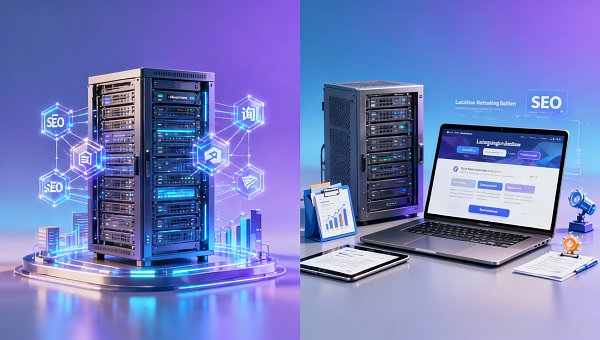
Judging from the search intent, users who search for "how to balance experience and conversion in multilingual digital marketing websites" are often not simply looking to understand the concept, but are evaluating something more practical: when companies do overseas promotion, how should they build their websites so that users are willing to view them, trust them, leave leads, initiate inquiries, or place orders directly?
For corporate decision-makers, project leaders, and execution teams, the most pressing concerns typically fall into the following categories:
- Wouldn't a multilingual website be too complex and have excessively high maintenance costs?
- Will users from different countries have a disjointed experience when accessing the website?
- I've translated into multiple languages, so why is my organic traffic still not increasing?
- The website has traffic, but why is the inquiry conversion rate low?
- How can SEO, advertising, social media marketing, and website content form a closed loop?
Therefore, the focus of building this type of website is not to spread resources evenly, but to first clearly define the main market, main language, and main conversion actions. Only by clearly designing the path of "how target customers search, how they browse, how they judge, and how they inquire" can experience optimization truly serve conversion.
Conducting accurate keyword research is essential to giving multilingual websites a chance to be found.
Many companies make the mistake of simply translating their Chinese website content into English, Arabic, Spanish, etc., and then expecting Google to organically index and increase conversions in tandem. However, the search expressions, key needs, and keyword popularity vary significantly across different markets.
Truly effective SEO keyword research should cover at least three levels:
- Industry keywords: What do users search for when looking for solutions, such as product keywords, service keywords, and application scenario keywords?
- Question keywords: What users will ask during the research phase, such as price, cycle time, certification, after-sales service, and compatibility range.
- Conversion keywords: What do people search for when they are close to making a decision, such as "supplier", "manufacturer", "service company", "quote" and other high-intent keywords.
If your keyword strategy isn't localized, no matter how good your website experience is, it will be difficult to attract targeted traffic. This is because the traffic won't come from your target customers, or your target customers simply won't be able to find you.
When businesses are setting up Google SEO optimization services, it is recommended to prioritize the following considerations:
- What are the search engine preferences corresponding to the main market?
- Do different language versions have independent keyword strategies?
- Do category pages, product pages, case study pages, and blog pages each bear different traffic targets?
- Have you set up meta titles, descriptions, and URL structures suitable for users in different countries?
In other words, a multilingual website is not "one content, copied multiple times," but rather "the same business objective, expressed precisely in different markets."
User experience optimization should be based on real user habits, rather than just visual internationalization.

The user experience of multilingual websites is often misunderstood as simply having a sophisticated page style and professional-looking translations. However, for users, what truly influences dwell time and conversion rates is the ease of use, the credibility of the information, and the effortlessness of the operation.
From an experience perspective, we recommend focusing on the following aspects:
1. Is the language switching clear and natural?
The language entry point should be fixed and clearly visible to prevent users from being unable to find the switching location after entering the page. More importantly, the content of the current page should remain consistent after switching languages, avoiding a direct jump back to the homepage and disrupting the browsing continuity.
2. Does the page structure conform to local reading habits?
For example, Arabic is commonly read from right to left in the Middle Eastern market. This not only changes the direction of the text but also affects navigation, buttons, forms, visual focus, and content layout. If a website simply translates the text according to the English logic, the user experience will be significantly degraded.
For these types of scenarios, businesses entering the Middle Eastern market often require more comprehensive localization solutions. For example, Arabic-language industry website building and marketing solutions that support Arabic website construction, right-to-left layout, AI-powered localization translation, flexible domain configuration, and accompanying marketing strategies are better suited for businesses seeking an integrated solution that balances brand display, search engine acquisition, and ongoing maintenance.
3. Is the opening speed fast enough?
Page load speed directly impacts bounce rate, especially on mobile devices and in cross-border access scenarios. Image compression, code optimization, caching strategies, server deployment, and third-party script control should all be incorporated into the initial development phase, rather than being addressed after launch.
4. Is the trust information complete enough?
Overseas users typically build trust in a website based on company introductions, certifications, case studies, customer reviews, contact information, privacy policies, SSL certificates, and clear form prompts. If these elements are missing, even if traffic comes in, it's difficult to convert it into inquiries.
Conversion design shouldn't just include a "Contact Us" link; it should design a complete lead path.
Low conversion rates on business websites are often not due to poor product quality, but rather because users are unsure of what to do next after arriving at the page. This is especially true for multilingual websites that target users at different cognitive stages, so the conversion path cannot be too singular.
A more effective approach is to set different conversion actions based on the user's stage:
- Initial understanding phase: Guided viewing of case studies, downloading of materials, and understanding of the service process;
- Comparative evaluation phase: Providing solution consultation, quotation requests, and industry compatibility explanations;
- High-intent stage: Emphasize rapid communication methods such as WhatsApp, phone, forms, and instant messaging.
In addition, form design should be as concise as possible. Too many fields or overly detailed requirements will significantly reduce the submission rate. For B2B business, it is recommended to only retain key fields, such as name, company, email, and description of requirements; more detailed information can be supplemented during sales follow-up.
If a company is simultaneously implementing Google Ads and social media marketing strategies, the roles of its landing page and main website must be clearly defined. The ad page can focus on a specific product or country market, while the main website serves as a platform for brand endorsement, content creation, and SEO optimization. Working in tandem with both typically results in higher conversion rates than building a single website.
Content strategy determines whether a website can simultaneously serve SEO, sales, and branding.
The problem with many corporate websites isn't a lack of content, but rather that the content is only meaningful to the company itself and offers no value to users. Content that truly balances user experience and conversion should directly address the most common questions users have.
We recommend prioritizing the development of the following types of content:
- Product/Service Page: Clearly state the target audience, core capabilities, differentiating advantages, and delivery methods;
- Industry solutions page: Helps project managers or purchasers quickly determine whether a solution is suitable for their specific needs;
- Case study: Enhancing decision-makers' trust and reducing concerns about delivery capabilities;
- FAQ page: Directly handles research-based searches, reducing communication costs;
- Blog content: Leverage long-tail keywords to continuously acquire organic traffic.
It's important to note here that multilingual content isn't about mechanical translation, but rather rewriting it according to the local market's expression. For example, when introducing "website maintenance services" or "Google Ads Arabic keyword optimization," different audiences may focus on cost, efficiency, effectiveness, service response speed, or local compatibility, so the content writing should differ accordingly.
When choosing a service provider, businesses should focus on these four key dimensions.
If a company wants to promote overseas growth through an integrated approach of website and marketing services, it is not recommended to only compare prices when choosing a partner. Instead, it should judge whether the other party has a complete growth perspective.
1. Do you understand website building, SEO, and marketing placement?
Website experience and conversion are not independent components. A team that only knows how to design pages but doesn't understand keywords and customer acquisition paths will find it difficult to create a truly effective digital marketing website.
2. Does it have localization capabilities?
Localization is not just about translation; it also includes cultural expression, platform preferences, social media strategies, reading habits, and user trust mechanisms. If the target market is in the Middle East, differences in language, mainstream social media choices, and advertising keyword packages must also be considered.
3. Does the company prioritize subsequent maintenance and continuous optimization?
Launching a website is just the beginning. Subsequent data tracking, page iterations, content updates, keyword expansion, and technical maintenance determine long-term ROI. For many companies, the initial year's maintenance support and continuous optimization mechanisms are more important than the initial launch.
4. Can you provide an actionable growth plan?
A mature service provider should be able to clearly explain: which language websites to build first, which keywords to target first, how advertising and SEO should be coordinated, how social media should drive traffic, and how leads should be tracked, rather than just providing a general solution. For example, for companies looking to enter the Middle Eastern market, receiving specialized services that include Middle Eastern social media marketing strategy consulting, Arabic keyword optimization, and maintenance support will lead to more efficient decision-making. Solutions like Arabic industry website building and marketing solutions , tailored to specific regions, essentially integrate website creation, content localization, and customer acquisition upfront, helping companies reduce trial and error.
Conclusion: The key to a successful multilingual website is the simultaneous design of "localized experience" and "measurable conversion."
Multilingual digital marketing websites need to balance user experience and conversion. They shouldn't just focus on page appearance or the number of languages, but rather on a holistic plan based on user search intent, market differences, and business goals. Simply put, first identify your target audience through SEO keyword research, then use a page experience tailored to local habits to engage visitors, and finally, convert traffic into real business opportunities through a clear conversion path and continuous content creation.
For business decision-makers, determining whether investing in a multilingual website is worthwhile hinges on three key aspects: whether it can be found by target customers, whether it allows customers to quickly build trust, and whether it smoothly generates inquiries and subsequent sales. If these three aspects form a closed loop, then the website transcends mere display tools and becomes a core asset for global business growth.
Related Articles
Related Products
 EasyCamp SaaS Smart Website Marketing SystemE-Yingbao SaaS Smart Website Marketing System: AI-powered, zero-code website building. Rapidly launch multilingual independent e-commerce sites in just 10 minutes. Global server acceleration and AI-driven SEO optimization empower businesses to efficiently connect with global markets. The seamless integration of technology and user-friendly operation makes building e-commerce sites incredibly simple.
 AI+SEM Intelligent Advertising Marketing SystemAI+SEM drives intelligent ad creation, empowering full-funnel precision advertising marketing. The system automatically generates weekly/monthly reports, AI recommends keywords and target countries, monitors core metrics in real-time with intelligent alerts, and enables one-click high-conversion ad solutions to help quickly acquire customers and improve ROI.
 AI+SEO Dual Engine Optimization ServiceEasyWin AI+SEO Dual Engine Optimization System leverages AI-powered keyword mining, content generation, and comprehensive technical optimization to help foreign trade enterprises acquire high-quality organic traffic, significantly improving search rankings and conversion rates.
 AI+SNS Social Media Marketing SystemYingbao AI+SNS Social Media Marketing System - Precision social capture for the social media era. Supports one-click content synchronization across major platforms like Facebook and LinkedIn. AI intelligently rewrites posts for enhanced relevance. 24/7 AI customer service and user profiling analysis empower businesses to efficiently expand into global markets.
 AI+SEO营销解决方案易营宝AI+SEO营销解决方案,通过AI批量写作、智能生成TDK、精准关键词扩词等功能,全面优化网站SEO效果,提升流量与转化率。助力企业构建高效智能网站新生态。
 AI+SEM Advertising Marketing SolutionsAI+SEM Advertising Marketing Solution leverages AI technology to deeply empower SEM ad campaigns. It automatically generates weekly/monthly reports using AI, presenting account data across multiple dimensions for comprehensive insights into campaign performance and trends. The system precisely recommends keywords and target countries, intelligently generates high-conversion ad copy, and enables one-click activation of efficient campaign plans to help businesses rapidly acquire customers. Simultaneously, it monitors core metrics in real time, intelligently identifies abnormal fluctuations, and issues timely alerts to ensure stable, high-return advertising results.
 Domain Name ServicesEasyWin provides professional domain name services, including intelligent queries, one-stop registration, brand protection, and full lifecycle management, helping businesses build a digital brand image.
 EasyOperate B2C Cross-Border E-Commerce Platform & Independent WebsiteEasyStore B2C Cross-border E-commerce Independent Store is an intelligent website building and cross-border e-commerce integrated solution independently developed by EasyStore Information Technology (Beijing) Co., Ltd. The system is specially designed for small and medium-sized as well as large export enterprises, integrating 'website building, operation, marketing, advertising, and conversion' into one, helping enterprises quickly establish cross-border e-commerce independent stores to achieve brand globalization and global sales growth.
The platform supports multiple languages, multiple currencies, and multi-channel marketing, with built-in AI intelligent translation and SEO optimization systems, suitable for mainstream markets such as Southeast Asia, Europe and America, Latin America, and the Middle East, assisting Chinese manufacturing enterprises in efficiently deploying international e-commerce strategies. SSL证书易营宝提供专业SSL安全证书服务,包括单域名和泛域名证书,确保网站数据传输加密、身份验证和完整性保护,助力企业建立安全可信的在线业务环境。









