









- The China-US tariff arrangement has reached a preliminary consensus, and the trade association will be establishedJun 15, 2026View details
- China-Morocco zero-tariff access, a breakthrough in the cost of Moroccan goods exports to ChinaJun 11, 2026View details
- What signal should be released for the suspension of exports to JapanJun 10, 2026View details
- China's May LNG imports rebounded, with increased volumes from Russia and Canada filling the Middle East supply gapJun 10, 2026View details
- Will GEO change its SEO strategy?Jun 04, 2026View details
- What types of businesses are end-to-end solutions suitable for?Jun 03, 2026View details
Is a standalone website suitable for B2B foreign trade? Analyzing real-world cases combining customer acquisition with brand consolidation
Is a standalone website suitable for B2B foreign trade? In the current era of accelerated digital marketing transformation, website loading speed, global CDN acceleration, and AI-powered website building have become core concerns for enterprise decision-makers. This article will combine practical case studies to deeply analyze how to leverage AI to quickly build high-converting foreign trade standalone websites, achieving a win-win situation for customer acquisition and brand recognition. For manufacturing, technology service companies, and global trading firms, the value of standalone websites has shifted from being a "display window" to a "marketing engine," driven by the power of digital technology.
How can B2B foreign trade determine if a standalone website is suitable?
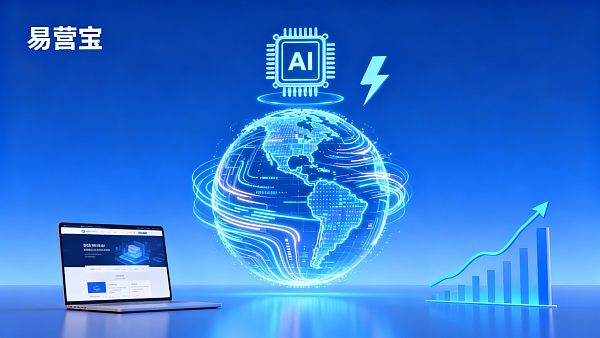
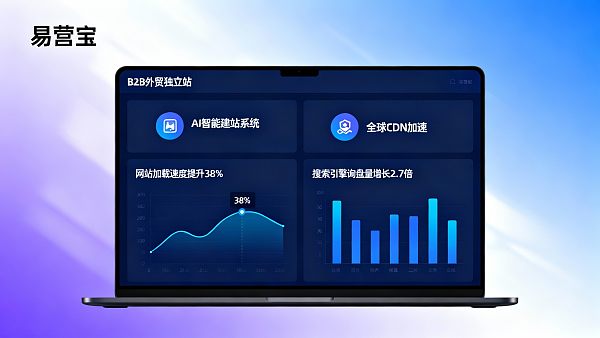
For traditional B2B foreign trade companies, many decision-makers still hesitate: "Is a standalone website suitable for B2B foreign trade?" The answer is undoubtedly yes, especially as digital procurement trends rapidly spread. Standalone websites have become the core battleground for brand globalization. Compared to third-party B2B platforms, standalone websites offer brand autonomy, data control, and direct customer connections, avoiding platform rule constraints. As international buyers increasingly rely on Google and LinkedIn to search for suppliers, a high-quality standalone website not only enhances a company's professional brand image but also accumulates long-term traffic assets through SEO. For example, a Beijing-based industrial parts exporter using an AI-powered website building system saw a 38% improvement in average loading speed and a 2.7x increase in search engine inquiries. The core logic behind this is AI-driven content optimization and global CDN acceleration for high-performance hosting. For small and medium foreign trade businesses, building a standalone website is no longer a high-cost endeavor but a low-barrier, high-return growth strategy.
What is global CDN acceleration? Why is website loading speed so crucial?
When engaging in global B2B trade, "What is global CDN acceleration?" becomes a common discussion among technical and procurement managers. CDN, or Content Delivery Network, caches website content across globally distributed servers, intelligently routing users to the nearest data source, significantly improving loading speeds. Why is website loading speed so important? Every 1-second delay can increase potential customer bounce rates by 20%. For B2B procurement, efficient and stable access reflects a company's professionalism and service reliability. By partnering with AWS and Alibaba Cloud to build a cross-continental CDN acceleration system, one client achieved an average global response time under 2.3 seconds, directly impacting Google SEO rankings and lead conversion rates. Additionally, AI monitoring tools analyze performance bottlenecks in real-time and generate optimization solutions, ensuring long-term high availability and security. Fast, secure websites not only improve search rankings but also help companies gain a competitive edge in international markets.
Can AI help quickly build standalone websites?
With AI's growing adoption in marketing, many SMEs are asking: "Can AI help quickly build standalone websites?" The answer is again yes. Take an AI-powered website building system as an example—its AI engine automatically generates site structures, page layouts, content copy, and multilingual translations, paired with adaptive templates and auto-generated images, enabling a multilingual foreign trade site to go live within 72 hours. The built-in "AI keyword expansion + auto-TDK generation + AI image creation" trio ensures every page meets search engine standards for smart SEO. For companies seeking cross-border visibility, AI-driven website building improves efficiency while reducing human error rates. As for "Are AI translations for multilingual websites reliable?"—modern AI translation engines now support contextual and regional expression recognition, achieving over 97% accuracy, sufficient for foreign trade communication needs. Businesses can also select language versions (e.g., English, Spanish, French, Arabic, Russian) based on target markets to precisely reach buyer demographics.
Differences and advantages of foreign trade standalone websites vs. platform stores
Many foreign trade companies planning digital globalization strategies wonder: "What’s the difference between standalone websites and platform stores?" Superficially, both are sales channels, but their commercial logic differs drastically. Platform stores depend on platform traffic, face intense competition, suffer squeezed profit margins, and cannot accumulate customer data. Standalone websites center on the brand, enabling long-term equity and precision marketing. For example, a machinery exporter using smart SEO tools stabilized its brand keywords on Google’s first page for six months, reducing customer acquisition costs by 45%. More importantly, CRM integration lets sales teams track customer journeys for remarketing, building high-quality B2B lead pools. Social media automation tools further link LinkedIn traffic with website inquiries, closing the loop from "brand discovery" to "order placement." These cases show standalone websites transcend e-commerce tools to become pillars for long-term brand equity and commercial growth.
How to make website content discoverable by AI search?
With the rise of AI search engines, companies must consider: "How to make website content recommended by AI?" Traditional SEO relies on keyword placement and backlinks, while AI search prioritizes semantic relevance and originality. An AI content engine uses machine learning to expand industry keywords and long-tail phrases, ensuring natural integration of target semantics. Built-in quality detectors analyze content in real-time, auto-correcting redundancy, structure, and logic to align with AI recommendation standards. For instance, an edtech company restructuring its course content saw a 112% increase in adaptive recommendations on Bing and Google. Premium content not only boosts SEO but also earns media citations and trust. In this process, high-value research materials like Early-Stage Micro-Tech Startup Financing Strategies from an Angel Investor Perspective add authoritative depth, strengthening AI’s value recognition.
AI ad management & omnichannel growth integration
Standalone websites aren’t isolated marketing units—they form an organic system with ads, social traffic, and analytics. Using an "AI ad manager," the system auto-analyzes Google/Meta ad performance, detects keyword competition and CTR drops, and generates optimizations. Its "creative factory" produces multilingual ad copies and high-CTR creatives, boosting conversions by 200%+. This omnichannel synergy quickly lifts inquiries while aligning with global traffic partnerships to mutually reinforce ad and SEO traffic. A clean energy equipment company using this system cut ad costs by 50% and cross-platform ROI by 65%. Real-time data feedback also helps leaders pinpoint market trends and customer distribution. This "AI + big data" integration optimizes foreign trade lead generation and enables data-driven global growth.
Conclusion & action guide
In summary, standalone websites suit B2B foreign trade at any stage. Through AI-powered building, global CDN, and smart marketing, companies can complete the "display-lead-conversion-retention" growth loop. With deep AI capabilities and a decade of industry experience, a Beijing-based tech firm has helped 10,000+ clients achieve effective digital globalization. Whether pursuing brand equity or precision leads, standalone websites will become indispensable digital assets. To explore industry trends and AI-driven marketing transformation, refer to Early-Stage Micro-Tech Startup Financing Strategies from an Angel Investor Perspective for insights on innovative growth paths. Contact our AI marketing consultants today to accelerate your global B2B standalone website and win in the digital era.
- Google SEO
- AI Website Builder
- Google Ads
- Website loading speed
- B2B Foreign Trade
- Standalone website development
- Meta Ads
- Yiyingbao
- SEO
- Independent Website
- Smart website builder system
- SEO Optimization
- Smart Website Development
- AI Translation
- EasySite Intelligent Website Builder
- Social Media Automation
- AI Translation Engine
- Independent site SEO
- Independent foreign trade website
- Global CDN Acceleration
- Multilingual website
- Link Building
- Global Traffic Ecosystem
- Global Digital Marketing
- Can AI be relied upon for multilingual website translation?
- What is the difference between an independent foreign trade website and a platform store?
- Is a standalone website suitable for B2B foreign trade?
- Can AI help quickly build an independent website?
- How can website content be recommended by AI search?
- Why is website loading speed so important?
- What is global CDN acceleration?
Related Articles

Related Products
 EasyCamp SaaS Smart Website Marketing SystemE-Yingbao SaaS Smart Website Marketing System: AI-powered, zero-code website building. Rapidly launch multilingual independent e-commerce sites in just 10 minutes. Global server acceleration and AI-driven SEO optimization empower businesses to efficiently connect with global markets. The seamless integration of technology and user-friendly operation makes building e-commerce sites incredibly simple.
 AI+SEM Intelligent Advertising Marketing SystemAI+SEM drives intelligent ad creation, empowering full-funnel precision advertising marketing. The system automatically generates weekly/monthly reports, AI recommends keywords and target countries, monitors core metrics in real-time with intelligent alerts, and enables one-click high-conversion ad solutions to help quickly acquire customers and improve ROI.
 AI+SEO Dual Engine Optimization ServiceEasyWin AI+SEO Dual Engine Optimization System leverages AI-powered keyword mining, content generation, and comprehensive technical optimization to help foreign trade enterprises acquire high-quality organic traffic, significantly improving search rankings and conversion rates.
 AI+SNS Social Media Marketing SystemYingbao AI+SNS Social Media Marketing System - Precision social capture for the social media era. Supports one-click content synchronization across major platforms like Facebook and LinkedIn. AI intelligently rewrites posts for enhanced relevance. 24/7 AI customer service and user profiling analysis empower businesses to efficiently expand into global markets.
 AI+SEO营销解决方案易营宝AI+SEO营销解决方案,通过AI批量写作、智能生成TDK、精准关键词扩词等功能,全面优化网站SEO效果,提升流量与转化率。助力企业构建高效智能网站新生态。
 AI+SEM Advertising Marketing SolutionsAI+SEM Advertising Marketing Solution leverages AI technology to deeply empower SEM ad campaigns. It automatically generates weekly/monthly reports using AI, presenting account data across multiple dimensions for comprehensive insights into campaign performance and trends. The system precisely recommends keywords and target countries, intelligently generates high-conversion ad copy, and enables one-click activation of efficient campaign plans to help businesses rapidly acquire customers. Simultaneously, it monitors core metrics in real time, intelligently identifies abnormal fluctuations, and issues timely alerts to ensure stable, high-return advertising results.
 Domain Name ServicesEasyWin provides professional domain name services, including intelligent queries, one-stop registration, brand protection, and full lifecycle management, helping businesses build a digital brand image.
 EasyOperate B2C Cross-Border E-Commerce Platform & Independent WebsiteEasyStore B2C Cross-border E-commerce Independent Store is an intelligent website building and cross-border e-commerce integrated solution independently developed by EasyStore Information Technology (Beijing) Co., Ltd. The system is specially designed for small and medium-sized as well as large export enterprises, integrating 'website building, operation, marketing, advertising, and conversion' into one, helping enterprises quickly establish cross-border e-commerce independent stores to achieve brand globalization and global sales growth.
The platform supports multiple languages, multiple currencies, and multi-channel marketing, with built-in AI intelligent translation and SEO optimization systems, suitable for mainstream markets such as Southeast Asia, Europe and America, Latin America, and the Middle East, assisting Chinese manufacturing enterprises in efficiently deploying international e-commerce strategies. SSL证书易营宝提供专业SSL安全证书服务,包括单域名和泛域名证书,确保网站数据传输加密、身份验证和完整性保护,助力企业建立安全可信的在线业务环境。









