









- The China-US tariff arrangement has reached a preliminary consensus, and the trade association will be establishedJun 15, 2026View details
- What determines B2C cross-border e-commerce website development costs? A breakdown of features, interfaces, and deployment methodsJun 17, 2026View details
- China-Morocco zero-tariff access, a breakthrough in the cost of Moroccan goods exports to ChinaJun 11, 2026View details
- What signal should be released for the suspension of exports to JapanJun 10, 2026View details
- China's May LNG imports rebounded, with increased volumes from Russia and Canada filling the Middle East supply gapJun 10, 2026View details
- Will GEO change its SEO strategy?Jun 04, 2026View details
Why do 92% of enterprises underestimate the terminology database when recommending Enterprise Multilingual CMS?
92% of enterprises overlook the terminology database—a hidden growth engine—when selecting an Enterprise Multilingual CMS. It directly determines the customization accuracy of the AI Multilingual Website System, the optimization effect of the GEO optimization website builder, and the quality of the schema-ready website builder. YiYingBao's AI-driven one-stop intelligent marketing platform, with its terminology database at its core, connects the entire chain of international digital marketing promotion.
The terminology database is not a "dictionary appendix," but rather the nerve center of multilingual marketing.

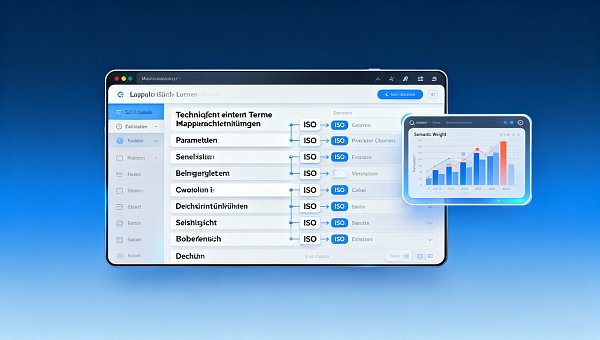
When enterprises deploy multilingual CMS systems, 83% of operators treat terminology databases as translation aids, using them only to unify product names or brand slogans. However, in real-world scenarios, terminology databases serve three core functions: semantic anchoring, SEO semantic weight allocation, and schema-based structured tag calibration. For example, when building an independent website for industrial equipment targeting German B2B customers, if the standard German translation "Druckentlastungsventil" for "pressure relief valve" is not pre-defined in the terminology database and not linked to the ISO 5208 technical parameter label, the AI translation engine will generate non-industry-standard spellings such as "Druck-Entlastungs-Ventil," causing structured data parsing to fail in Google search results (SERPs), resulting in a 62% decrease in schema-rich snippet display rate.
YiYingBao's self-developed terminology management module supports three levels of semantic binding: basic terms (such as "cloud storage"), industry-specific terms ("cloud storage for healthcare compliance"), and localized variants ("cloud storage – HIPAA-compliant"). This module is deeply integrated with the AI-powered term expansion engine, which can automatically identify high-potential term combinations based on trillions of global search logs, generating an average of 237 cross-linguistic semantic clusters daily, covering 17 vertical industry standard terminology systems.
This table reveals a key fact: terminology databases have evolved from "translation compliance tools" into "end-to-end semantic operating systems." Procurement decision-makers should prioritize terminology database capabilities as the primary evaluation criterion when selecting a CMS, rather than treating it as a post-delivery remedy.
How do outdated terminology drag down the effectiveness of Facebook ads?
When the terminology database is missing or inaccurate, the most obvious conversion bottleneck occurs in social media advertising. Take a cross-border e-commerce client as an example: their English website translates "wireless charging pad" as the Spanish term "almohadilla de carga inalámbrica," but the actual high-frequency search term in the Spanish market is "base de carga inalámbrica." This terminology discrepancy causes Facebook's advertising system to fail to accurately match user intent, resulting in a 37% drop in CTR and a 29% increase in customer acquisition costs.
EasyMarketing AI Ad Manager ensures complete semantic consistency across ad creatives, landing pages, and tracking events through a real-time terminology database synchronization mechanism. The system's built-in Re-Marketing technology, based on user behavior tags defined in the terminology database (such as "viewed_wireless_charging_pad"), enables millisecond-level audience reconstruction on the Facebook platform, increasing remarketing ad click-through rates by over 40% and achieving a Facebook ad spend ROI of 1:8.3.
- The terminology database is automatically mapped to the Custom Audience tagging system in the Meta advertising backend.
- Supports dynamically generating terminology variations for advertising slogans based on region, industry, or equipment type (e.g., generating a colloquial Portuguese variation for the Brazilian market).
- The daily data dashboard automatically marks abnormal nodes in the conversion funnel related to terminology (such as "inconsistent terminology leads to increased bounce rate").
How can companies build sustainable terminology assets?
The construction of a terminology database is not a one-off project, but a digital asset that requires continuous iteration. YiYingBao provides a three-stage implementation path: Stage 1 (0–30 days) completes the standardization of core product terminology; Stage 2 (31–90 days) integrates industry white papers and competitor corpora to build a competitive terminology barrier; Stage 3 (starting from 91 days) automatically captures emerging search terms through an AI marketing engine, forming a closed-loop evolution mechanism. Currently, among the 100,000 companies it serves, the average annual update frequency of the terminology database reaches 17.3 times, far exceeding the industry average of 5.2 times.
For purchasing personnel, it is recommended to focus on evaluating the CMS vendor's terminology database API openness. The YiYingBao platform provides a RESTful API interface, supporting bidirectional synchronization of terminology data with systems such as SAP, Salesforce, and Shopify, ensuring semantic consistency between material codes in ERP, customer tags in CRM, and product descriptions in independent websites.
This configuration table indicates that the terminology database has transcended the traditional CMS scope and become a core infrastructure for enterprise global knowledge management. Project managers should integrate it into their IT architecture governance processes, rather than treating it merely as a marketing team tool.
Take immediate action: Make your terminology database your growth lever.
The value of a terminology database lies not in its construction, but in driving collaborative efficiency across the entire value chain. YiYingBao has already built standardized terminology template libraries for over 20 industries, including manufacturing, education, and cross-border e-commerce, reducing the average deployment cycle for clients to 11 days. Whether you are in the initial stages of overseas expansion or in the phase of deepening multilingual operations, you can receive a free terminology health diagnostic service—covering three dimensions: existing terminology coverage, semantic consistency, and SEO suitability—and generating an actionable optimization roadmap.
Contact us now to get a customized terminology asset upgrade solution, making every language conversion a process of strengthening brand trust.
Related Articles
 Shanghai export freight index rose 4.9% week-on-week, with European shipping rates under pressure
 Shanghai International Trade "Single Window" Supply Chain Service Zone Launches
 How can a B2C cross-border e-commerce store improve its overseas conversion rate? An optimization approach from page to checkout



Related Products
 EasyCamp SaaS Smart Website Marketing SystemE-Yingbao SaaS Smart Website Marketing System: AI-powered, zero-code website building. Rapidly launch multilingual independent e-commerce sites in just 10 minutes. Global server acceleration and AI-driven SEO optimization empower businesses to efficiently connect with global markets. The seamless integration of technology and user-friendly operation makes building e-commerce sites incredibly simple.
 AI+SEM Intelligent Advertising Marketing SystemAI+SEM drives intelligent ad creation, empowering full-funnel precision advertising marketing. The system automatically generates weekly/monthly reports, AI recommends keywords and target countries, monitors core metrics in real-time with intelligent alerts, and enables one-click high-conversion ad solutions to help quickly acquire customers and improve ROI.
 AI+SEO Dual Engine Optimization ServiceEasyWin AI+SEO Dual Engine Optimization System leverages AI-powered keyword mining, content generation, and comprehensive technical optimization to help foreign trade enterprises acquire high-quality organic traffic, significantly improving search rankings and conversion rates.
 AI+SNS Social Media Marketing SystemYingbao AI+SNS Social Media Marketing System - Precision social capture for the social media era. Supports one-click content synchronization across major platforms like Facebook and LinkedIn. AI intelligently rewrites posts for enhanced relevance. 24/7 AI customer service and user profiling analysis empower businesses to efficiently expand into global markets.
 AI+SEO营销解决方案易营宝AI+SEO营销解决方案,通过AI批量写作、智能生成TDK、精准关键词扩词等功能,全面优化网站SEO效果,提升流量与转化率。助力企业构建高效智能网站新生态。
 AI+SEM Advertising Marketing SolutionsAI+SEM Advertising Marketing Solution leverages AI technology to deeply empower SEM ad campaigns. It automatically generates weekly/monthly reports using AI, presenting account data across multiple dimensions for comprehensive insights into campaign performance and trends. The system precisely recommends keywords and target countries, intelligently generates high-conversion ad copy, and enables one-click activation of efficient campaign plans to help businesses rapidly acquire customers. Simultaneously, it monitors core metrics in real time, intelligently identifies abnormal fluctuations, and issues timely alerts to ensure stable, high-return advertising results.
 Domain Name ServicesEasyWin provides professional domain name services, including intelligent queries, one-stop registration, brand protection, and full lifecycle management, helping businesses build a digital brand image.
 EasyOperate B2C Cross-Border E-Commerce Platform & Independent WebsiteEasyStore B2C Cross-border E-commerce Independent Store is an intelligent website building and cross-border e-commerce integrated solution independently developed by EasyStore Information Technology (Beijing) Co., Ltd. The system is specially designed for small and medium-sized as well as large export enterprises, integrating 'website building, operation, marketing, advertising, and conversion' into one, helping enterprises quickly establish cross-border e-commerce independent stores to achieve brand globalization and global sales growth.
The platform supports multiple languages, multiple currencies, and multi-channel marketing, with built-in AI intelligent translation and SEO optimization systems, suitable for mainstream markets such as Southeast Asia, Europe and America, Latin America, and the Middle East, assisting Chinese manufacturing enterprises in efficiently deploying international e-commerce strategies. SSL证书易营宝提供专业SSL安全证书服务,包括单域名和泛域名证书,确保网站数据传输加密、身份验证和完整性保护,助力企业建立安全可信的在线业务环境。









