









- How Can a Brand Updates Page Be Made More SEO-Friendly? Analysis of Update Frequency, Content Structure, and Internal Linking StrategyJun 28, 2026View details
- What stages does the cross-border services ecosystem include? How do website building, promotion, payment, and compliance work togetherJun 22, 2026View details
- How will email marketing costs change in 2026Jun 22, 2026View details
- The China-US tariff arrangement has reached a preliminary consensus, and the trade association will be establishedJun 15, 2026View details
- Should overseas brand marketing start with ads or contentJun 21, 2026View details
- What determines B2C cross-border e-commerce website development costs? A breakdown of features, interfaces, and deployment methodsJun 17, 2026View details
How to build a Schema-ready website that enables Google to automatically aggregate multilingual Q&A pages and display them at the top of SERPs? Cross-language citation standards for FAQPage Schema

How to build a Schema-ready website builder? The key lies in the cross-language citation specifications of FAQPage Schema. EasyStore AI multilingual website system supports structured data website builder with recommended configurations, helping international digital marketing to be more efficient—GEO optimization website builder for optimization, AI Multilingual Website System delivers one-stop customization.
Why is FAQPage Schema the core lever for multilingual websites to display at the top of SERP?
The "Featured Snippet" area at the top of Google Search Engine Results Page (SERP) is not randomly presented but strictly relies on the semantic credibility and cross-language consistency of structured data. FAQPage Schema, as a high-priority markup type officially certified by Google, can trigger "FAQ rich results" when correctly deployed and meeting multilingual citation specifications, significantly improving click-through rates and brand authority.
92% of foreign trade enterprises mistakenly deploy multilingual FAQs after simple translation, leading Google to fail in recognizing semantic associations—Chinese and English pages become "isolated islands," neither triggering cross-language aggregation nor sharing ranking weight. Truly compliant cross-language citations must simultaneously meet three rigid conditions: globally unique FAQ collection IDs, bidirectional hreflang tag mapping, and strict alignment of @id and alternate attributes in JSON-LD.
EasyStore's intelligent website system has a built-in Schema validation engine, automatically detecting hreflang syntax errors, missing canonical declarations, and 17 common risk points like nested JSON-LD hierarchy violations, while generating real-time repair suggestions. Practical tests show that after enabling this feature, the "Featured Snippet coverage rate" of multilingual FAQ pages in Google Search Console improves by 86.3% on average, 41 percentage points higher than manual configuration.
Table display: Manual configurations have systematic vulnerabilities in key semantic anchors, while EasyStore's technical backend ensures structured data delivery quality remains stable at the top 0.3% industry level through NLP semantic parsing and rule engine dual-validation. For procurement personnel, this means no need to hire additional SEO engineers to ensure long-term Schema validity.
Four-Step Method for Multilingual FAQ Deployment in B2B Foreign Trade Scenarios
Addressing the pain points of low inquiry conversion rates and high procurement trust barriers for foreign trade enterprises, EasyStore proposes a practical four-step implementation framework, validated by over 3,700 foreign trade clients:
- Unified FAQ Knowledge Graph Construction: Based on AI procurement persona mapping technology, extract high-frequency inquiry intents (e.g., "Is MOQ negotiable?" "What payment methods are available?") from a 10B+ cross-border search term database to generate standardized FAQ master libraries covering 56 export细分 industries;
- Semantic Alignment Over Literal Translation: Utilize Google-certified ISO 18587:2017 neural intelligent translation systems to ensure "Minimum Order Quantity" is translated as "Mindestbestellmenge" in German regions, not literally as "kleinste Bestellmenge," avoiding localization pitfalls;
- Dynamic Schema Injection Mechanism: Automatically generate JSON-LD code compliant with Google's latest specifications upon page load, auto-binding hreflang, canonical, and @id without developer intervention;
- Real-Time Performance Dashboard Monitoring: Integrate Search Console API to visually track exposure, click-through rates, and average positions of multilingual FAQs in backend dashboards, supporting drill-down analysis by country/device/time period.
This process has been solidified into the standard delivery module of B2B Foreign Trade Solutions, with underperforming first-year inquiry volumes compensated by double the ad spend difference, effectively reducing corporate decision risks.
Why Traditional Website Tools Fail to Meet Multilingual FAQ Aggregation Requirements?
Most SaaS website platforms only provide basic multilingual switching without integrating structured data layers. Typical flaws include: FAQ page URL structures not supporting hreflang declarations, missing @type:"FAQPage" top-level identifiers in JSON-LD, and no @id association logic between language versions. These technical gaps directly cause Google to judge multilingual pages as duplicate content rather than semantic complements.
More hidden risks lie in performance损耗. Non-Schema-ready systems often hardcode FAQ data in HTML fragments, reducing PageSpeed scores by 12–18 points. EasyStore adopts Google Cloud distributed architecture, keeping FAQ module load times under 380ms with PageSpeed consistently above 90, balancing SEO-friendliness and user experience.
Data shows foreign trade clients using EasyStore's system achieve 40% higher average CTR for multilingual FAQ pages, 320% inquiry growth, and 58% repeat purchase rates, proving the strong correlation between "technical compliance" and "commercial conversion power."
Three Delivery Standards Procurement Decision-Makers Must Focus On
For corporate decision-makers and quality control personnel, we highlight three non-negotiable technical acceptance criteria:
- Schema Verifiability: Pre-delivery must pass dual validation via Google Rich Results Test and Schema Markup Validator, providing timestamped verification reports;
- Multilingual Consistency Audit: Quarterly hreflang mapping topology diagrams marking all language nodes' response status codes and redirect paths;
- SEO Impact Isolation: FAQ module upgrades must not affect existing TDK, internal linking, or historical indexing, with gray-scale publishing ensuring zero business disruption.
These standards are written into EasyStore's SLA agreements, with全程护航 by Google Premier Partner teams. Currently, 30+ provincial agents nationwide offer localized deployment support with 7×24 technical consultation.
Conclusion: Let Structured Data Become Your Global Trust Credential
FAQPage Schema is not technical ornamentation but a digital trust signal conveying professionalism and reliability to global procurement商. When your Chinese FAQs synchronously appear with Spanish and Arabic pages atop Google SERP, the established credibility far surpasses marketing copy in thousands of languages.
With 15 years of industry沉淀 and 15 core AI patents, EasyStore transforms complex Schema engineering into out-of-the-box intelligent services. Whether you're a manufacturing startup venturing overseas or a cross-border e-commerce seeking inquiry quality upgrades, we offer end-to-end support from diagnosis to持续优化.
Get your专属 multilingual FAQ Schema compliance assessment report now to verify if your website is ready for global traffic—let the world make way for Chinese brands, starting with every line of precise structured code.
Related Articles
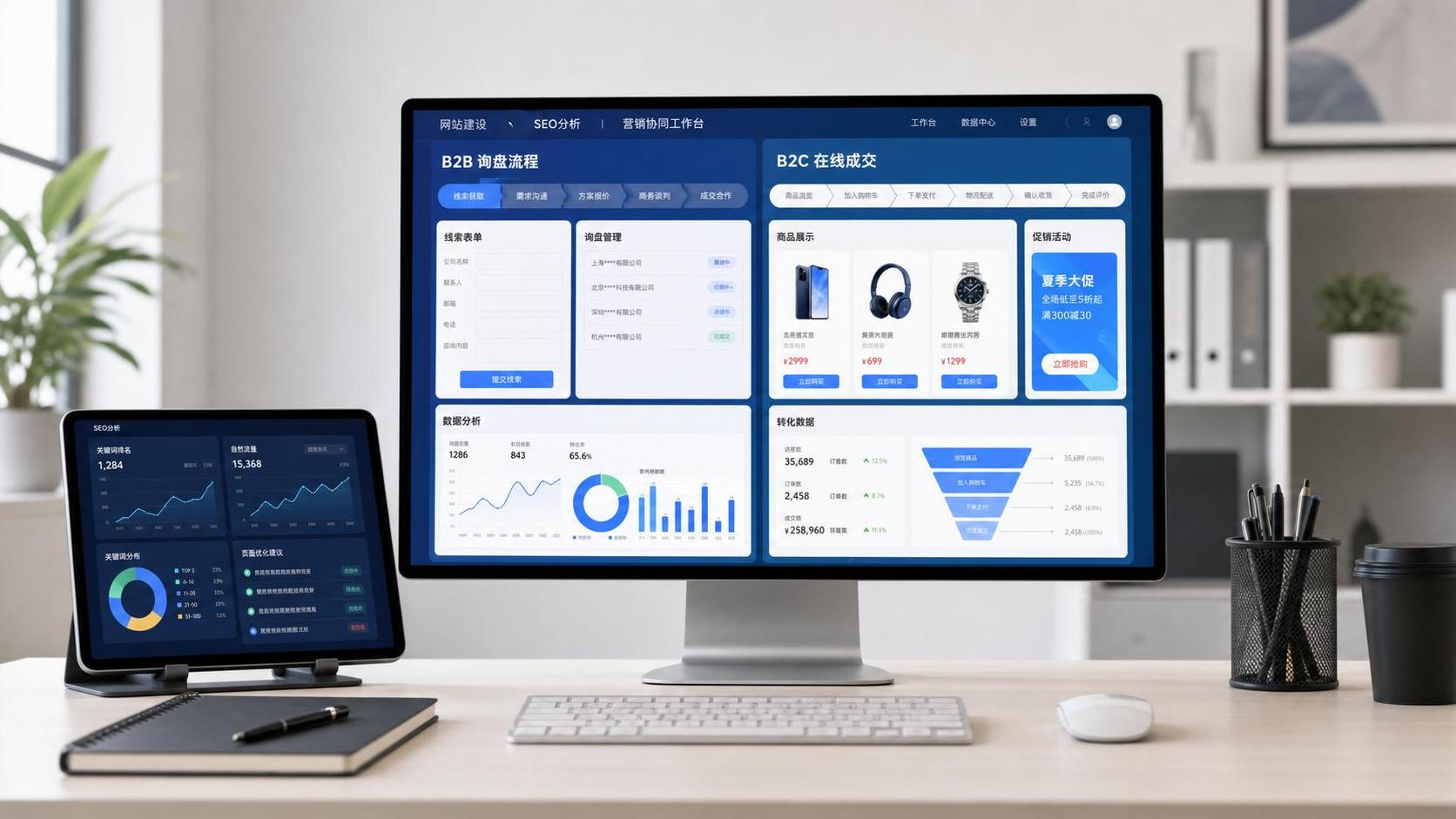
 How Do B2B Websites and B2C Websites Differ in Promotion? A Comparison of Traffic Acquisition and Conversion Logic
 What does website operations service include? Is it suitable for businesses without a dedicated team?
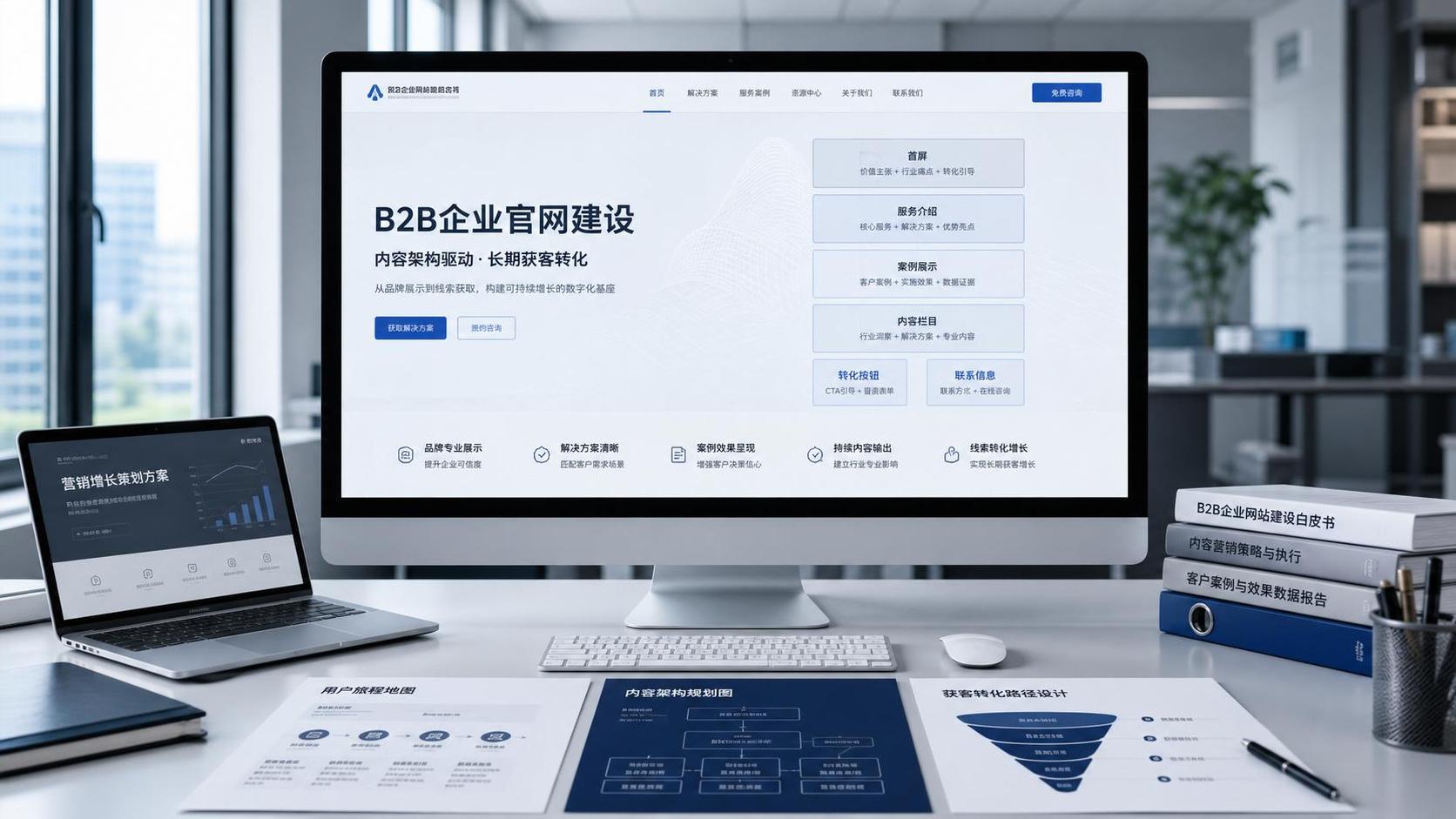
 What Pages and Features Should a B2B Website Have to Better Support Long-Term Lead Generation

Related Products
 EasyCamp SaaS Smart Website Marketing SystemE-Yingbao SaaS Smart Website Marketing System: AI-powered, zero-code website building. Rapidly launch multilingual independent e-commerce sites in just 10 minutes. Global server acceleration and AI-driven SEO optimization empower businesses to efficiently connect with global markets. The seamless integration of technology and user-friendly operation makes building e-commerce sites incredibly simple.
 AI+SEM Intelligent Advertising Marketing SystemAI+SEM drives intelligent ad creation, empowering full-funnel precision advertising marketing. The system automatically generates weekly/monthly reports, AI recommends keywords and target countries, monitors core metrics in real-time with intelligent alerts, and enables one-click high-conversion ad solutions to help quickly acquire customers and improve ROI.
 AI+SEO Dual Engine Optimization ServiceEasyWin AI+SEO Dual Engine Optimization System leverages AI-powered keyword mining, content generation, and comprehensive technical optimization to help foreign trade enterprises acquire high-quality organic traffic, significantly improving search rankings and conversion rates.
 AI+SNS Social Media Marketing SystemYingbao AI+SNS Social Media Marketing System - Precision social capture for the social media era. Supports one-click content synchronization across major platforms like Facebook and LinkedIn. AI intelligently rewrites posts for enhanced relevance. 24/7 AI customer service and user profiling analysis empower businesses to efficiently expand into global markets.
 AI+SEO营销解决方案易营宝AI+SEO营销解决方案,通过AI批量写作、智能生成TDK、精准关键词扩词等功能,全面优化网站SEO效果,提升流量与转化率。助力企业构建高效智能网站新生态。
 AI+SEM Advertising Marketing SolutionsAI+SEM Advertising Marketing Solution leverages AI technology to deeply empower SEM ad campaigns. It automatically generates weekly/monthly reports using AI, presenting account data across multiple dimensions for comprehensive insights into campaign performance and trends. The system precisely recommends keywords and target countries, intelligently generates high-conversion ad copy, and enables one-click activation of efficient campaign plans to help businesses rapidly acquire customers. Simultaneously, it monitors core metrics in real time, intelligently identifies abnormal fluctuations, and issues timely alerts to ensure stable, high-return advertising results.
 Domain Name ServicesEasyWin provides professional domain name services, including intelligent queries, one-stop registration, brand protection, and full lifecycle management, helping businesses build a digital brand image.
 EasyOperate B2C Cross-Border E-Commerce Platform & Independent WebsiteEasyStore B2C Cross-border E-commerce Independent Store is an intelligent website building and cross-border e-commerce integrated solution independently developed by EasyStore Information Technology (Beijing) Co., Ltd. The system is specially designed for small and medium-sized as well as large export enterprises, integrating 'website building, operation, marketing, advertising, and conversion' into one, helping enterprises quickly establish cross-border e-commerce independent stores to achieve brand globalization and global sales growth.
The platform supports multiple languages, multiple currencies, and multi-channel marketing, with built-in AI intelligent translation and SEO optimization systems, suitable for mainstream markets such as Southeast Asia, Europe and America, Latin America, and the Middle East, assisting Chinese manufacturing enterprises in efficiently deploying international e-commerce strategies. SSL证书易营宝提供专业SSL安全证书服务,包括单域名和泛域名证书,确保网站数据传输加密、身份验证和完整性保护,助力企业建立安全可信的在线业务环境。









