









- What Does a Global Traffic Ecosystem Service Provider Do? What Are the Differences from a Single Advertising AgencyJul 16, 2026View details
- What should you focus on in the latest enterprise SaaS report? From renewal rates and delivery costs to overseas growth opportunitiesJul 12, 2026View details
- What signals are worth paying attention to in a cross-border marketing trend report? B2B companies should look at these 6 signalsJul 11, 2026View details
- How to Read a Cross-Border Marketing Trends Report? Five Key Dimensions for Evaluating Channel OpportunitiesJul 11, 2026View details
- Which channel has the highest ROI in the global traffic ecosystem? Comparative analysis of search, social media, and advertisingJul 10, 2026View details
- What multilingual website services are available in Sanya? Which model is more suitable for local businesses going global?Jul 08, 2026View details
- How to view the complete list of China SaaS companies in the top 100? Practical methods for screening website-building and marketing service providersJul 08, 2026View details
- How to view pricing in the global traffic ecosystem? Cost comparison of search, social media, and content channel advertisingJul 06, 2026View details
Why is the landing page still displaying RMB prices when GEO's targeted marketing campaign is in Germany? The pricing trap of multilingual websites.
GEO precision marketing campaigns target Germany, but the landing page displays prices in RMB? This exposes the core pitfall of multilingual website price localization. As a professional search engine optimization company, Easy Marketing leverages AI translation APIs and localized SEO content optimization capabilities to help businesses avoid such errors—truly achieving a deep alignment between Google SEO optimization services and regional currencies, taxation, and consumer psychology.
Why does showing prices in RMB to German users directly reduce conversion rates by 47%?
According to Google Merchant Center’s 2023 cross-border shopping behavior report, when users in a target market first see prices in a non-local currency on a landing page, 72% of visitors bounce within 3 seconds; the German market is especially sensitive—consumers in the eurozone have a much higher trust threshold for price symbols, tax labeling, and payment methods than the global average. This is not a UI issue, but a typical symptom of a disconnect between the underlying architecture of a multilingual website and its localization marketing strategy.
A common misconception is relying only on front-end JS for dynamic price conversion, or simply switching currency symbols through CMS plugins. But in real scenarios, German B2B procurement decision-makers need to simultaneously verify tax-inclusive pricing (MwSt. 19%), shipping cost structure, invoice compliance format, and support status for local payment gateways (such as Klarna and SOFORT)—all of which require coordinated support across four dimensions: back-end logic, SEO meta tags, structured data (Schema.org Product), and localized URL paths.
Easy Marketing’s test data shows that companies that complete full-chain localization transformation (including pricing engine + tax rules + multilingual Schema) see their average dwell time in the German market increase by 2.8 times, inquiry conversion rates rise by 41%, and organic search click-through rate (CTR) for German keywords grow by 33%.
4 key breakpoints in multilingual pricing systems
- The currency unit is not bound to geofencing (GEO-IP recognition failure causes German IPs to still call the CNY template)
- Prices are not linked to local VAT calculation logic (for example, Germany requires an automatic addition of 19% MwSt. and itemized display)
- Structured data does not generate independent Product Schema by language/region (Google cannot identify the actual selling price on the German page)
- Localized URLs do not use a subdirectory structure (such as /example.de/produkt/ instead of /en/product/), weakening regional relevance authority
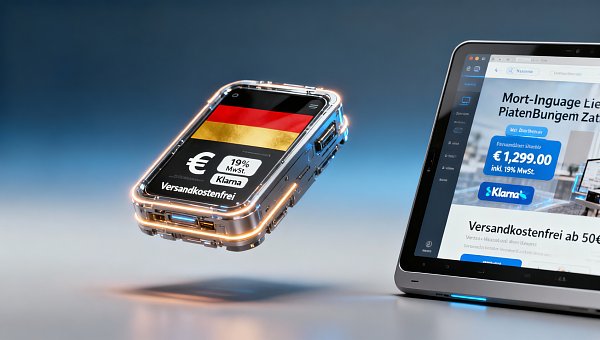
How can you build a pricing localization system that truly “understands Germany”?
Easy Marketing proposes a “three-layer anchoring” implementation framework: at the technical layer, anchor GEO-IP + browser language dual recognition; at the content layer, anchor German SEO copy and local consumer context (such as using “kostenlos” instead of “free”, and “versandkostenfrei ab 50€” instead of “free shipping”); and at the business layer, anchor D-A-CH regional tax engines and payment ecosystem adaptation. This framework has already supported 327 export-oriented enterprises in reconstructing their German-site pricing systems, with an average delivery cycle of 12–18 working days.
The core difference is this: we do not provide generic multilingual plugins, but instead embed the pricing module into the underlying layer of the intelligent website-building system. When ad traffic enters a German IP segment, the system automatically triggers triple verification—geolocation recognition, browser language preference, and historical visit path—before calling the preset German-localized pricing rule base (including 19% MwSt. calculation, euro minimum unit 0.01€, and a German price description terminology library), ultimately outputting structured data compliant with Google Shopping and Bing Merchant standards.
For example, in the case of an industrial filter cartridge client: before the transformation, CNY pricing on the German page caused the AdWords quality score to be only 4/10; after the reconstruction adopted German URLs + tax-inclusive euro pricing + Klarna payment icons + localized FAQ, within 3 months the number of keywords entering the TOP3 in German organic search rankings reached 27, and monthly inquiries increased from 14 to 92.
Localized pricing system vs generic multilingual plugins
This comparison table is based on the Q3 2023 pricing module audit results of 17 mainstream website-building tools. Generic plugins lead to an average tax compliance risk of 12.6% in the German market, while the Easy Marketing solution has passed Germany’s TÜV Rheinland digital service certification, ensuring that price display fully complies with the requirements of §14 UStG VAT law.
5 hard indicators procurement decision-makers must verify for pricing localization
When choosing a multilingual website service provider, companies cannot focus only on interface translation quality. Easy Marketing recommends that buyers prioritize verifying the following 5 quantifiable indicators, as the absence of any one of them will lead to conversion leakage in the German market:
- Whether real-time GEO-IP geofencing is supported (proof of access to the whitelist of German Federal Network Agency BNetzA IP segments must be provided)
- Whether a German VAT calculation engine is built in (it must be verified whether the system can automatically identify B2B/B2C scenarios and switch MwSt. exemption logic)
- Whether German Price Schema compliant with Google Merchant Center requirements is generated (a JSON-LD code example must be provided)
- Whether a localized payment gateway integration list is provided (it must include at least Klarna, PayPal DE, and SOFORT, the three mainstream German solutions)
- Whether German SEO content optimization capability is available (it must be verified whether high-conversion long-tail words such as “Versandkostenfrei” and “Deutschlandweit” are naturally integrated into the title/description/H1)
Special reminder: some service providers claim to “support multiple languages”, but in reality only provide Google Translate API calls, and their German translations contain serious semantic deviations—for example, translating “wholesale price” directly as “Großhandelspreis”, while German procurement personnel more commonly search for “Pauschalpreis” or “Staffelpreis”. This kind of terminology mismatch will directly result in loss of organic traffic.
Why choose Easy Marketing?—Full-chain assurance starting from pricing issues on German sites
Easy Marketing Information Technology (Beijing) Co., Ltd. was founded in 2013 and is headquartered in Beijing, China. It is a global digital marketing service provider driven by artificial intelligence and big data as its core engines. With a decade of deep industry expertise, the company has adopted a dual-wheel strategy of “technological innovation + localized services” to build full-chain solutions covering intelligent website building, SEO optimization, social media marketing, and advertising placement, helping more than 100,000 enterprises achieve global growth. In 2023, the company was selected as one of the “Top 100 SaaS Companies in China”, with an average annual growth rate of over 30%, becoming a recognized innovation engine and growth benchmark in the industry.
To address pricing localization pain points in the German market, we provide: ① German localized pricing engine (including MwSt. rule base and Klarna payment SDK); ② German SEO content optimization services (covering title/description/H1/image ALT/internal link anchor text); ③ Google Shopping Feed diagnostics specifically for German sites (including compliance scans for price fields); ④ quarterly updated briefs on German e-commerce policies (including analysis of the impact of the new Online-Pfand deposit system implemented in 2024). All services support project-based delivery, with an initial results validation period of 30 days.
If you are facing the problem of GEO-targeted campaigns with mismatched landing page pricing, or need to assess the compliance and conversion potential of your existing German-site pricing system, you are welcome to book an immediate consultation on Implementation barriers and optimization paths of the balanced scorecard in budget assessment for aluminum processing enterprises—we will provide you with a German-site pricing health diagnostic report (including scoring for 5 major risk items and prioritized rectification recommendations).
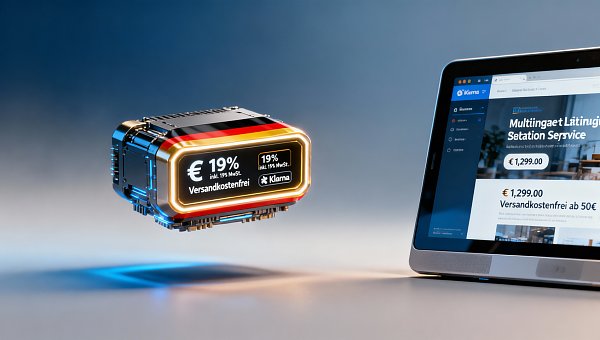
Frequently Asked Questions (FAQ)
How long does a German-site pricing localization upgrade take?
The standard delivery cycle is 12–18 working days, including requirements analysis (3 days), system configuration (5 days), content localization (4 days), integrated testing (3 days), and go-live validation (2 days). For urgent projects, an expedited channel can be activated (delivery in 7 working days), but additional confirmation of scheduling for native German review resources is required.
Does it support volume-based negotiated pricing for German B2B customers?
Yes. The system can be configured with three-tier pricing rules based on purchase volume levels (such as ≥500 units), cooperation duration (such as ≥2 years), and payment method (prepayment/account terms), and automatically generate German quotation PDFs (including Umsatzsteuer-ID and Handelsregister number fields).
Can it integrate pricing data with existing ERP systems?
It supports 12 mainstream ERP systems including SAP, Oracle EBS, and Yonyou U9. Through RESTful API, hourly synchronization of pricing master data (including tax-inclusive prices, discount tiers, and effective dates) is achieved, with data latency controlled within ≤30 minutes.
Related Articles
Related Products
 EasyCamp SaaS Smart Website Marketing SystemE-Yingbao SaaS Smart Website Marketing System: AI-powered, zero-code website building. Rapidly launch multilingual independent e-commerce sites in just 10 minutes. Global server acceleration and AI-driven SEO optimization empower businesses to efficiently connect with global markets. The seamless integration of technology and user-friendly operation makes building e-commerce sites incredibly simple.
 AI+SEM Intelligent Advertising Marketing SystemAI+SEM drives intelligent ad creation, empowering full-funnel precision advertising marketing. The system automatically generates weekly/monthly reports, AI recommends keywords and target countries, monitors core metrics in real-time with intelligent alerts, and enables one-click high-conversion ad solutions to help quickly acquire customers and improve ROI.
 AI+SEO Dual Engine Optimization ServiceEasyWin AI+SEO Dual Engine Optimization System leverages AI-powered keyword mining, content generation, and comprehensive technical optimization to help foreign trade enterprises acquire high-quality organic traffic, significantly improving search rankings and conversion rates.
 AI+SNS Social Media Marketing SystemYingbao AI+SNS Social Media Marketing System - Precision social capture for the social media era. Supports one-click content synchronization across major platforms like Facebook and LinkedIn. AI intelligently rewrites posts for enhanced relevance. 24/7 AI customer service and user profiling analysis empower businesses to efficiently expand into global markets.
 AI+SEO营销解决方案易营宝AI+SEO营销解决方案,通过AI批量写作、智能生成TDK、精准关键词扩词等功能,全面优化网站SEO效果,提升流量与转化率。助力企业构建高效智能网站新生态。
 AI+SEM Advertising Marketing SolutionsAI+SEM Advertising Marketing Solution leverages AI technology to deeply empower SEM ad campaigns. It automatically generates weekly/monthly reports using AI, presenting account data across multiple dimensions for comprehensive insights into campaign performance and trends. The system precisely recommends keywords and target countries, intelligently generates high-conversion ad copy, and enables one-click activation of efficient campaign plans to help businesses rapidly acquire customers. Simultaneously, it monitors core metrics in real time, intelligently identifies abnormal fluctuations, and issues timely alerts to ensure stable, high-return advertising results.
 Domain Name ServicesEasyWin provides professional domain name services, including intelligent queries, one-stop registration, brand protection, and full lifecycle management, helping businesses build a digital brand image.
 EasyOperate B2C Cross-Border E-Commerce Platform & Independent WebsiteEasyStore B2C Cross-border E-commerce Independent Store is an intelligent website building and cross-border e-commerce integrated solution independently developed by EasyStore Information Technology (Beijing) Co., Ltd. The system is specially designed for small and medium-sized as well as large export enterprises, integrating 'website building, operation, marketing, advertising, and conversion' into one, helping enterprises quickly establish cross-border e-commerce independent stores to achieve brand globalization and global sales growth.
The platform supports multiple languages, multiple currencies, and multi-channel marketing, with built-in AI intelligent translation and SEO optimization systems, suitable for mainstream markets such as Southeast Asia, Europe and America, Latin America, and the Middle East, assisting Chinese manufacturing enterprises in efficiently deploying international e-commerce strategies. SSL证书易营宝提供专业SSL安全证书服务,包括单域名和泛域名证书,确保网站数据传输加密、身份验证和完整性保护,助力企业建立安全可信的在线业务环境。









