









- What Does a Global Traffic Ecosystem Service Provider Do? What Are the Differences from a Single Advertising AgencyJul 16, 2026View details
- What should you focus on in the latest enterprise SaaS report? From renewal rates and delivery costs to overseas growth opportunitiesJul 12, 2026View details
- What signals are worth paying attention to in a cross-border marketing trend report? B2B companies should look at these 6 signalsJul 11, 2026View details
- How to Read a Cross-Border Marketing Trends Report? Five Key Dimensions for Evaluating Channel OpportunitiesJul 11, 2026View details
- Which channel has the highest ROI in the global traffic ecosystem? Comparative analysis of search, social media, and advertisingJul 10, 2026View details
- What multilingual website services are available in Sanya? Which model is more suitable for local businesses going global?Jul 08, 2026View details
- How to view the complete list of China SaaS companies in the top 100? Practical methods for screening website-building and marketing service providersJul 08, 2026View details
- How to view pricing in the global traffic ecosystem? Cost comparison of search, social media, and content channel advertisingJul 06, 2026View details
What to Look Beyond the Rankings of Arabic Website Design Companies
When many companies research “rankings of Arabic website design companies,” on the surface they are looking for a top-ranked service provider, but what they really want to solve is this: whether this company can truly help them enter the Middle Eastern market, acquire customers steadily, and support sustainable long-term operations. The conclusion is very clear: rankings can only be used as a reference. What truly determines the success or failure of a project is Arabic website development capability, localization expertise, the hands-on experience of an SEO company, the stability of technical deployment, and whether it has one-stop service capabilities covering everything from website building to marketing conversion.
For researchers, technical evaluators, business decision-makers, and even after-sales maintenance teams, the biggest concern when selecting a provider is not “expensive,” but rather “it looks professional, yet performs poorly in real execution.” Therefore, instead of only focusing on ranking positions, it is more important to judge from several dimensions such as language adaptation, design logic, server response, SEO fundamentals, content operations, advertising support, and after-sales collaboration. Only then can you clearly determine whether an Arabic website design company is truly worth working with.
Why you should not judge only by Arabic website design company rankings
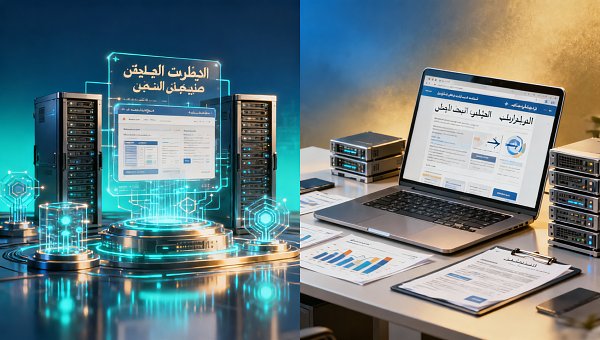
The problem with many ranking articles is that they often only list company names, founding dates, and the number of cases, but rarely tell you whether these companies truly understand the Arabic-speaking market, whether they can handle right-to-left layouts, whether they understand local users’ browsing habits, and whether they have integrated SEO and marketing capabilities.
For companies, rankings have two values: first, narrowing down the selection range; second, helping establish an initial understanding. But they cannot directly answer the following key questions:
- Does this company create a “showcase website,” or a “website that can generate inquiries and conversions”?
- Does it understand Middle Eastern users’ aesthetic preferences, religious culture, and the boundaries of content expression?
- After the project goes live, will someone continue handling SEO optimization, speed monitoring, security maintenance, and content updates?
- Is the website suitable for Google indexing, and can it handle ad traffic and social media traffic?
- If you want to expand into English, French, or other regional languages in the future, can the website architecture scale smoothly?
Therefore, truly experienced buyers will not directly equate a “high ranking” with “the most suitable choice.” Instead, they treat rankings as an entry point and then continue evaluating service depth and business fit.
What companies should focus on most when choosing Arabic website development services
If your goal is not just to create a page, but to make the website a customer acquisition base for the Middle Eastern market, then the following points must be evaluated as priorities.
1. Whether it truly understands the localization design logic of Arabic websites
Building an Arabic website is not as simple as translating a Chinese or English site once. It involves at least the following core adaptations:
- Page structure and interaction logic from right to left (RTL)
- Arabic font selection, font size hierarchy, and readability optimization
- Directional adaptation of components such as forms, buttons, navigation, and breadcrumbs
- Whether colors, images, and character materials align with local cultural acceptance
- Whether the copy avoids cultural misunderstanding and awkward expression
If the service provider does not have real Arabic website cases, or simply uses templates for basic translation, the end result often includes uncoordinated pages, short user dwell time, and high bounce rates.
2. Whether it has SEO-oriented website architecture capabilities
Many companies hire a website design company, but the reason they are ultimately disappointed is this: the website gets built, yet search engines cannot crawl it effectively, and it is also difficult to gain organic traffic. An excellent SEO company, or a web development team with strong SEO foundations, will usually establish these basics during the development stage:
- Clear URL structure, supporting standardized multilingual deployment
- Reasonable hierarchy for titles, descriptions, and H tags
- Clean page code and strong mobile adaptation
- Solid foundational optimization such as image compression, caching, and structured data
- On-site navigation, internal linking logic, and landing page layouts aligned with SEO growth needs
This means the website should not wait until after launch to consider SEO. Instead, SEO should be built into the design and development stages to lay the groundwork for future rankings and customer acquisition.
3. Whether it can balance “brand presentation” and “inquiry conversion”
When companies build an Arabic official website, there are two common misunderstandings: one is focusing only on branding, resulting in visually appealing pages but no conversion path; the other is only listing product information, which leads to cluttered content and a lack of trust. A truly effective website needs to fulfill three tasks at the same time:
- Build corporate credibility
- Clearly communicate product and service advantages
- Guide users to inquire, leave contact information, download materials, or convert directly
Therefore, when evaluating a company, you should see whether it can design clear CTA buttons, inquiry forms, WhatsApp entry points, product category logic, and modules for case studies and qualifications display, rather than just producing a “visual mockup.”
What issues technical evaluators are usually most concerned about
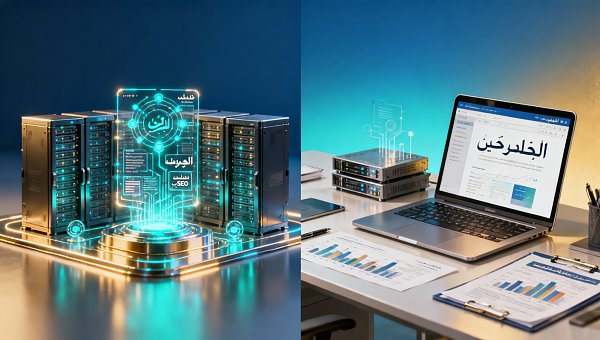
For technical evaluators and after-sales maintenance teams, the biggest concern is usually not whether the homepage looks attractive, but whether the project is stable, maintainable, and scalable. Especially when targeting Middle Eastern users, access speed, security protection, and server deployment will directly affect marketing results.
1. Whether overseas access speed meets the standard
When users in the Middle Eastern market access servers located in China, they often encounter problems such as slow loading, delayed image display, and lagging form submission. Every bit of delay on a page affects ad bounce rates and organic traffic conversions. Therefore, choosing a solution with global nodes and intelligent routing capabilities is more practical. For example, Easymarketing Global Server Deployment, designed for foreign trade companies, supports global 7-node server deployment, independent multilingual site deployment, intelligent load balancing, HTTP/3 protocol transmission, and edge computing acceleration, making it better suited for cross-regional access and multilingual site hosting in global business scenarios.
2. Whether security protection and stability are sufficient
Once an Arabic website begins running ads or gaining search traffic, it may face problems such as CC attacks, malicious crawling, and spam form submissions. During technical selection, focus on the following:
- Whether it has DDoS protection and WAF mechanisms
- Whether it supports sitewide HTTPS encrypted transmission
- Whether it has automatic backup and disaster recovery capabilities
- Whether there is a clear SLA availability guarantee
If the service provider can only create frontend pages but cannot take responsibility for backend security and operations, then later maintenance costs will increase significantly, and the pressure on the internal team will also grow.
3. Whether later iterations and marketing systems can be connected
Many companies later integrate CRM, marketing automation, online customer service, data analysis tools, or advertising tracking code. If interface compatibility and system scalability were not considered during the initial website development, later modifications will be very costly. Therefore, when choosing an Arabic website design company, you should also pay attention to whether it supports API integration, data tracking, conversion tracking, form management, and multi-role collaboration.
How business decision-makers should judge whether a service provider can “truly drive growth”
Company management cares more about return on investment than technical terminology itself. To judge whether a service provider is worth working with, you can directly look at the following aspects.
1. Look at case studies, not just the pages, but also the results
Do not just ask, “Have you built Arabic websites before?” Instead, continue asking:
- What types of industry clients have you served?
- After launch, was there any growth in organic traffic or inquiries?
- Did you also undertake follow-up services such as Google Ads, SEO, and social media traffic generation?
- How were the project timeline, launch efficiency, and maintenance response?
A truly mature integrated website + marketing service company can usually connect website building, optimization, ad placement, and conversion analysis into one complete chain, rather than treating website delivery as the endpoint of the project.
2. Check whether the team has cross-department collaboration capabilities
An Arabic website project usually involves not only designers and programmers, but also content editors, translators, localization reviewers, SEO personnel, ad optimization specialists, and operations teams. If the service provider lacks a collaboration mechanism, the common result is that the page gets completed, but keywords are not arranged, conversion paths are not designed, no one handles content updates, and promotional data cannot form a closed loop.
Service providers such as Easymarketing Information Technology (Beijing) Co., Ltd., which deeply specialize in full-chain solutions including intelligent website building, SEO optimization, social media marketing, and advertising placement, are more suitable for companies that want to operate their official websites as long-term overseas growth assets. Especially during expansion into the Middle Eastern market, the website should not just be a “storefront,” but should become the core base for search traffic, ad traffic, and brand trust accumulation.
3. Look at post-delivery service, not just pre-launch promises
Many companies are impressed by proposals during the selection stage, but after the site actually goes live, they discover:
- Slow response to content revisions
- No one available for technical issues
- No continued SEO progress
- Lack of support for advertising landing pages
Therefore, when making a decision, you should clearly ask whether daily maintenance, version updates, content support, data analysis, and traffic operation suggestions are provided, and whether the provider can support new languages, new countries, and new product lines as the business expands.
Why a one-stop marketing platform is more worthy of attention than a pure design company
If a company only needs a one-time website build, a pure design company may be able to meet the basic needs. But if the goal is continuous customer acquisition in the Middle Eastern market, then a one-stop marketing platform model usually has greater advantages.
The reason is that the value of Arabic website development does not lie in the moment it “goes live,” but in whether it can continuously handle traffic and convert it into leads. A truly effective solution usually includes:
- Market and keyword research
- Multilingual website planning and development
- Arabic content localization
- Technical SEO and on-page SEO optimization
- Google Ads and social media ad landing page support
- Data analysis, heatmaps, and conversion rate optimization
- Continuous operations and maintenance with security assurance
This is also why many companies, after comparing rankings of Arabic website design companies, ultimately shift their attention to integrated service providers offering “website development + SEO + advertising + operations and maintenance.” Because what truly creates the gap is often not the design draft, but long-term growth capability.
From an infrastructure perspective, if a company itself has higher requirements for access speed, advertising stability, and global coverage, it can also simultaneously evaluate server deployment capabilities. For example, a solution supporting a global average TTFB≤300ms, SLA availability guarantee of 99.99%, and intelligent routing switching response <3 seconds is more suitable for operating an official website as a long-term marketing asset. These capabilities directly affect user experience, Google crawling efficiency, and advertising conversion performance.
A practical checklist for screening Arabic website design companies
If you are preparing to enter the screening stage, you can directly use the following checklist for a preliminary judgment:
- Whether it has real Arabic website cases, rather than only English or Chinese website cases
- Whether it is familiar with RTL right-to-left layout and Middle Eastern localization design
- Whether it has SEO architecture capability, rather than only being able to create visual page designs
- Whether it supports multilingual and multi-region expansion
- Whether it has overseas deployment, access speed optimization, and security protection capabilities
- Whether it can integrate with CRM, forms, customer service, advertising tracking, and other systems
- Whether it provides post-launch maintenance, optimization, and marketing support
- Whether it can clearly explain delivery scope, timeline, pricing, and KPI logic
- Whether it can provide website development recommendations based on business goals, rather than only pushing template packages
If a company gives vague answers to these key questions, then even if its ranking is high, it still needs to be evaluated cautiously.
Summary: look at rankings, but more importantly, look at whether they can support long-term growth in the Middle Eastern market
Rankings of Arabic website design companies have reference value, but they are not the endpoint of decision-making. For companies that truly want to enter the Middle Eastern market, what matters more is judging whether the service provider simultaneously has Arabic website development capabilities, localization expertise, the practical experience of an SEO company, stable technical architecture, and continuous operations capability.
Simply put, rankings can only help you “find candidates,” but whether the project can be done well depends on whether the other party understands the market, users, technology, and conversions. If your goal is overseas brand expansion, steady customer acquisition, and long-term growth, then instead of simply comparing rankings, it is better to focus on comparing: who can truly connect website development, SEO, advertising, content, and operations. Only in this way can an Arabic website be more than just a page, and instead become the growth entry point for a company to open up the Middle Eastern market.
Related Articles
 What exactly should be the focus of a foreign trade website?!!!
 Attention! Builders' must-see: Yibingbao AI components updated, design efficiency directly doubled!
 China's foreign trade sees a turnaround: imports surge by 22%! Foreign trade professionals should quickly take note of the new trends in the second half of the year

Related Products
 EasyCamp SaaS Smart Website Marketing SystemE-Yingbao SaaS Smart Website Marketing System: AI-powered, zero-code website building. Rapidly launch multilingual independent e-commerce sites in just 10 minutes. Global server acceleration and AI-driven SEO optimization empower businesses to efficiently connect with global markets. The seamless integration of technology and user-friendly operation makes building e-commerce sites incredibly simple.
 AI+SEM Intelligent Advertising Marketing SystemAI+SEM drives intelligent ad creation, empowering full-funnel precision advertising marketing. The system automatically generates weekly/monthly reports, AI recommends keywords and target countries, monitors core metrics in real-time with intelligent alerts, and enables one-click high-conversion ad solutions to help quickly acquire customers and improve ROI.
 AI+SEO Dual Engine Optimization ServiceEasyWin AI+SEO Dual Engine Optimization System leverages AI-powered keyword mining, content generation, and comprehensive technical optimization to help foreign trade enterprises acquire high-quality organic traffic, significantly improving search rankings and conversion rates.
 AI+SNS Social Media Marketing SystemYingbao AI+SNS Social Media Marketing System - Precision social capture for the social media era. Supports one-click content synchronization across major platforms like Facebook and LinkedIn. AI intelligently rewrites posts for enhanced relevance. 24/7 AI customer service and user profiling analysis empower businesses to efficiently expand into global markets.
 AI+SEO营销解决方案易营宝AI+SEO营销解决方案,通过AI批量写作、智能生成TDK、精准关键词扩词等功能,全面优化网站SEO效果,提升流量与转化率。助力企业构建高效智能网站新生态。
 AI+SEM Advertising Marketing SolutionsAI+SEM Advertising Marketing Solution leverages AI technology to deeply empower SEM ad campaigns. It automatically generates weekly/monthly reports using AI, presenting account data across multiple dimensions for comprehensive insights into campaign performance and trends. The system precisely recommends keywords and target countries, intelligently generates high-conversion ad copy, and enables one-click activation of efficient campaign plans to help businesses rapidly acquire customers. Simultaneously, it monitors core metrics in real time, intelligently identifies abnormal fluctuations, and issues timely alerts to ensure stable, high-return advertising results.
 Domain Name ServicesEasyWin provides professional domain name services, including intelligent queries, one-stop registration, brand protection, and full lifecycle management, helping businesses build a digital brand image.
 EasyOperate B2C Cross-Border E-Commerce Platform & Independent WebsiteEasyStore B2C Cross-border E-commerce Independent Store is an intelligent website building and cross-border e-commerce integrated solution independently developed by EasyStore Information Technology (Beijing) Co., Ltd. The system is specially designed for small and medium-sized as well as large export enterprises, integrating 'website building, operation, marketing, advertising, and conversion' into one, helping enterprises quickly establish cross-border e-commerce independent stores to achieve brand globalization and global sales growth.
The platform supports multiple languages, multiple currencies, and multi-channel marketing, with built-in AI intelligent translation and SEO optimization systems, suitable for mainstream markets such as Southeast Asia, Europe and America, Latin America, and the Middle East, assisting Chinese manufacturing enterprises in efficiently deploying international e-commerce strategies. SSL证书易营宝提供专业SSL安全证书服务,包括单域名和泛域名证书,确保网站数据传输加密、身份验证和完整性保护,助力企业建立安全可信的在线业务环境。









