









- What Does a Global Traffic Ecosystem Service Provider Do? What Are the Differences from a Single Advertising AgencyJul 16, 2026View details
- What should you focus on in the latest enterprise SaaS report? From renewal rates and delivery costs to overseas growth opportunitiesJul 12, 2026View details
- What signals are worth paying attention to in a cross-border marketing trend report? B2B companies should look at these 6 signalsJul 11, 2026View details
- How to Read a Cross-Border Marketing Trends Report? Five Key Dimensions for Evaluating Channel OpportunitiesJul 11, 2026View details
- Which channel has the highest ROI in the global traffic ecosystem? Comparative analysis of search, social media, and advertisingJul 10, 2026View details
- What multilingual website services are available in Sanya? Which model is more suitable for local businesses going global?Jul 08, 2026View details
- How to view the complete list of China SaaS companies in the top 100? Practical methods for screening website-building and marketing service providersJul 08, 2026View details
- How to view pricing in the global traffic ecosystem? Cost comparison of search, social media, and content channel advertisingJul 06, 2026View details
Has the search engine ranking algorithm changed again? These page types are seeing more noticeable fluctuations
Search engine ranking algorithms continue to be adjusted, and fluctuations in some pages are particularly noticeable. Whether you are focusing on search engine ranking optimization, website SEO optimization solutions, or website traffic growth solutions, only by understanding the logic behind these changes can you stabilize rankings and conversions more quickly.
Which pages are more likely to experience ranking fluctuations after an algorithm update?

Judging from the actual trends in search engine ranking optimization over the past few years, the most obvious fluctuations usually do not occur across all pages, but rather on pages with weak structure, duplicate content, and confusing conversion paths. For the website + integrated marketing services industry, these 4 types of pages—homepages, category pages, landing pages, and information pages—are the most likely to show changes in crawl frequency and keyword positions within 7 days to 30 days after an algorithm adjustment.
Information researchers pay more attention to whether the content is trustworthy, business decision-makers focus more on lead quality, after-sales maintenance personnel care more about whether page modifications affect indexing, while distributors and agents are more concerned about the stability of regional keywords and product keywords. Although end consumers may not necessarily understand algorithms, they will directly affect page performance through dwell time and bounce behavior.
This is also why many companies clearly implemented a website SEO optimization solution, yet still encounter the problem of traffic suddenly rising and falling. Algorithm changes do not only look at keyword stuffing, but place greater emphasis on whether a page satisfies search intent, whether it provides complete topic expression, and whether it can reach effective conversion points within 2 to 3 clicks.
E-Marketing Information Technology (Beijing) Co., Ltd. has long served global growth-oriented enterprises. It establishes a linkage mechanism among intelligent website building, SEO optimization, social media marketing, and advertising placement. Its core value is not just improving a single keyword, but enabling website structure, content layout, marketing placement, and data feedback to form a closed loop, reducing the passive fluctuations caused by algorithm changes.
Common page types with high volatility
If a company is currently evaluating a website traffic growth solution, it is recommended to first review the following page types. As long as 2 or more of them have issues at the same time, the probability of ranking fluctuations will usually increase significantly, especially when the number of pages exceeds 50 and the historical content update frequency is lower than once per quarter.
- Information pages with obvious traces of mass collection or rewriting, with broad topic coverage but insufficient depth, making it difficult to form stable signals.
- Product or service pages with highly duplicated keywords, where different pages only replace city names, model names, or service descriptions.
- Landing pages with incomplete above-the-fold information, containing only forms and ad copy, while lacking service explanations, processes, cases, and trust information.
- Older pages with weak mobile experience, such as long loading times, dense buttons, and misaligned sections, affecting user interaction data.
How to assess the risk differences among different pages
To help companies identify problem areas more quickly, the table below is suitable for a preliminary review of risky pages in search engine ranking optimization. The content in the table is not an absolute conclusion, but a common inspection direction in website SEO optimization solutions, and the first round of review can be completed within 2 weeks.
The core meaning of the table is very clear: ranking fluctuations do not mean the entire website has failed. In many cases, it is only a certain type of page that has lost relevance or readability. If a company can first identify the fluctuating pages and then decide whether to revise content, adjust structure, or supplement traffic, it is usually more stable than making major changes to the whole site.
Why do some websites recover faster even though they did the same optimization?

Many companies are confused: after the same round of algorithm changes, why do some websites recover within 2 to 4 weeks, while others are still declining after 3 months? The core difference is not whether SEO has been done, but whether the website has the underlying capability for “sustainable optimization,” including information architecture, data tracking, page update mechanisms, and channel coordination capabilities.
If a website only had one round of keyword layout when it went online, with no continuous maintenance afterward, then every adjustment is like passively taking an exam. In contrast, an integrated website + marketing service solution plans website building, content, advertising placement, and inquiry management in a unified way, so that the website SEO optimization solution no longer operates in isolation, but becomes part of the customer acquisition system.
Since its establishment in 2013, E-Marketing Information Technology (Beijing) Co., Ltd. has relied on artificial intelligence and big data capabilities to build a website foundation better suited to operations across multiple regions, multiple languages, and multiple channels. For core indicators such as annual growth rate, inquiry cost, and landing page conversion rate, companies often need to track them monthly rather than waiting until rankings decline to make remedial efforts.
Especially for business decision-makers, what is truly needed is not just traffic, but a complete path from exposure, clicks, and dwell time to inquiries and transactions. For after-sales maintenance personnel, clear permission management, update standards, and page templates can also reduce launch errors and avoid widespread indexing anomalies caused by a single redesign.
Websites that recover quickly usually have these 4 foundations
Structural level: Clear information architecture
It is recommended to keep category hierarchy within 3 levels, and important service pages should be kept within 1 to 2 clicks from the homepage whenever possible. This is beneficial for crawling and also reduces the risk of users dropping off too early along the path.
Content level: Alignment between topics and page themes
One type of page should solve one type of problem. Avoid making one page simultaneously carry brand introduction, quotation explanation, knowledge popularization, and form collection, which causes both search engines and users to be unable to quickly determine the focus.
Data level: Track at least 5 key nodes
It is recommended to continuously monitor the 5 metrics of impressions, clicks, bounce, dwell time, and inquiries. Looking only at keyword rankings often overlooks the actual conversion quality of a page.
Operational level: Establish a monthly iteration mechanism
The conventional recommendation is to make small adjustments every month and conduct one thematic review each quarter. Compared with a one-time major redesign, this rhythm is more conducive to the gradual effectiveness of a website traffic growth solution.
How should companies develop a more stable website SEO optimization solution?
During periods of algorithm fluctuations, the most feared approach is “seeing a drop and making major changes.” A more stable approach is to proceed by priority: first locate the problematic pages, then determine whether the issue is with content, structure, or conversion, and finally decide whether it is necessary to redo the website traffic growth solution. The whole process can generally be divided into 3 stages and 6 inspection items.
For information researchers, what matters is understanding why the page dropped; for business decision-makers, what matters is whether the fix can bring more stable business opportunities; for distributors and agents, whether regional pages can maintain independent competitiveness is also very important. Therefore, when choosing a solution, you cannot look only at rankings, but also at the delivery logic and follow-up maintenance mechanism.
If a company is simultaneously advancing knowledge content development, related topics can also serve as internal training and external communication materials. For example, in extended topics such as financial digitalization, organizational management, and information transformation, naturally supplementing Analysis of the integrated development path of enterprise artificial intelligence and accounting informatization and similar content resources can help enrich the thematic depth of the website, but only if they maintain a clear connection with business scenarios.
For website + integrated marketing service projects, truly effective solutions are usually not single-point patching, but involving technology, content, advertising placement, and inquiry handling together. In this way, even if some keywords fluctuate in the short term, the overall inquiry capability will not lose momentum at the same pace.
3-stage troubleshooting and optimization process
- Stage 1, complete diagnosis in 7 to 10 days: Check crawling, indexing, page templates, log changes, and high-volatility keywords to first find the source of the problem.
- Stage 2, complete repairs in 2 to 4 weeks: Supplement content for weak pages, consolidate duplicate pages, and strengthen scenario and conversion explanations for important service pages.
- Stage 3, observe continuously for 4 to 8 weeks: Review traffic trends weekly and inquiry quality monthly, and do not easily carry out another large-scale redesign because of short-term fluctuations.
What to focus on before procurement or cooperation
The table below is more suitable for companies when selecting a website SEO optimization solution provider. It not only looks at “whether it can be done,” but more importantly at “whether it can remain stable after fluctuations occur,” making it more valuable as a reference for business decision-makers, after-sales maintenance personnel, and channel partners.
If a company is currently facing limited budget, tight delivery requirements, and a heavy history of legacy issues on the site, this table can help quickly eliminate suppliers that only know how to do superficial optimization. The more frequent the algorithm changes, the more priority should be given to service models that support sustainable maintenance and cross-team collaboration.
Common misconceptions and FAQ: After ranking fluctuations, which actions are most likely to be done wrong?
Many website traffic growth solutions fail not because the direction is completely wrong, but because the execution sequence is chaotic. Especially in the first 14 days after traffic declines, incorrect operations may instead magnify the problem. The following FAQs cover the most common questions in information research, procurement judgment, and implementation maintenance.
Rankings dropped—does that mean the website must be rebuilt immediately?
Not necessarily. If only 10% to 20% of keyword positions fluctuate and the core inquiry pages still have stable visits, then diagnosis and partial repairs are usually enough. Only when the page structure is seriously outdated, the mobile experience is obviously insufficient, and the backend is difficult to maintain does rebuilding need to be considered.
Why did traffic not increase significantly even after adding more articles?
Because quantity does not equal relevance. If the new content is disconnected from the core business, or if 5 to 10 articles are repeatedly written on the same kind of topic, search engines may be unable to determine which page is most worth displaying. A better approach is to build thematic clusters around core service keywords, rather than simply stacking articles.
Can advertising make up for natural ranking fluctuations?
It can serve as a temporary supplement, but it cannot replace a website SEO optimization solution. Advertising is suitable for supplementing lead sources during a fluctuation period of 2 weeks to 6 weeks, while also validating the conversion value of keywords in reverse. If the page itself handles traffic poorly, even if ad spending increases, conversion costs may still remain high.
What should after-sales maintenance personnel prioritize most?
Prioritize 3 things: whether pages were accidentally deleted or had links changed, whether the title and body have deviated from the main topic, and whether updates affect mobile display. Many ranking fluctuations are not algorithm penalties, but problems such as template disorder, redirect anomalies, or content overwriting that occur during routine maintenance.
Why choose us: We focus not only on rankings, but also on stable customer acquisition and long-term growth
For companies that need stable customer acquisition, what is truly valuable is not a one-time surge in rankings, but maintaining a website that remains operable, content that remains scalable, and traffic that remains convertible under continuously changing algorithms. E-Marketing Information Technology (Beijing) Co., Ltd., driven by artificial intelligence and big data as its core engine, has long provided full-chain services including intelligent website building, SEO optimization, social media marketing, and advertising placement, making it more suitable for companies that need to balance brand building, inquiries, and global growth.
If you are evaluating a cooperation plan for search engine ranking optimization, you can focus on consulting about 4 types of content: diagnosis of current site issues, prioritization of the website SEO optimization solution, implementation cycle of the website traffic growth solution, and budget allocation recommendations after multi-channel coordination. For old site redesigns, new site launches, overseas site deployment, and regional招商 pages construction, execution paths can also be formulated simultaneously.
If you are a business decision-maker, you can focus on confirming delivery milestones, monthly review mechanisms, lead tracking methods, and content update plans; if you are after-sales maintenance personnel, you can directly communicate about page templates, publishing standards, permission management, and abnormal issue troubleshooting processes; if you are a distributor, agent, or end customer, page solutions can also be customized based on needs such as regional promotion, product topics, and quotation handling.
In an environment where algorithms continue to change, the earlier structural sorting and strategy upgrades are completed, the easier it is to turn fluctuations into optimization opportunities. Around core issues such as parameter confirmation, solution selection, delivery cycle, customized content, and quotation communication, starting evaluation as early as possible is usually more proactive than waiting until traffic continues to decline before taking action, and it is also more economical in terms of overall customer acquisition costs.
Related Articles
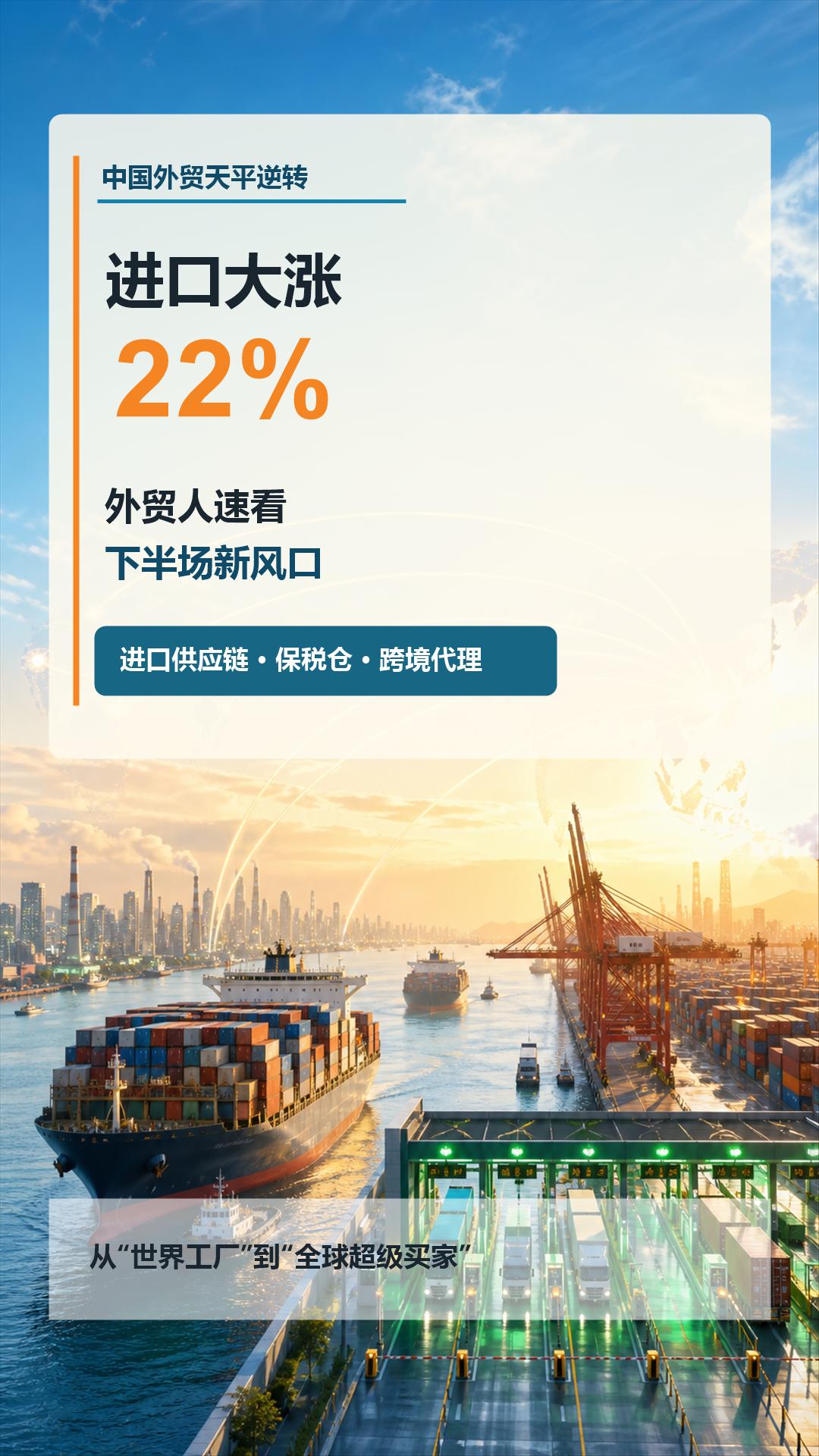
 China's foreign trade sees a turnaround: imports surge by 22%! Foreign trade professionals should quickly take note of the new trends in the second half of the year
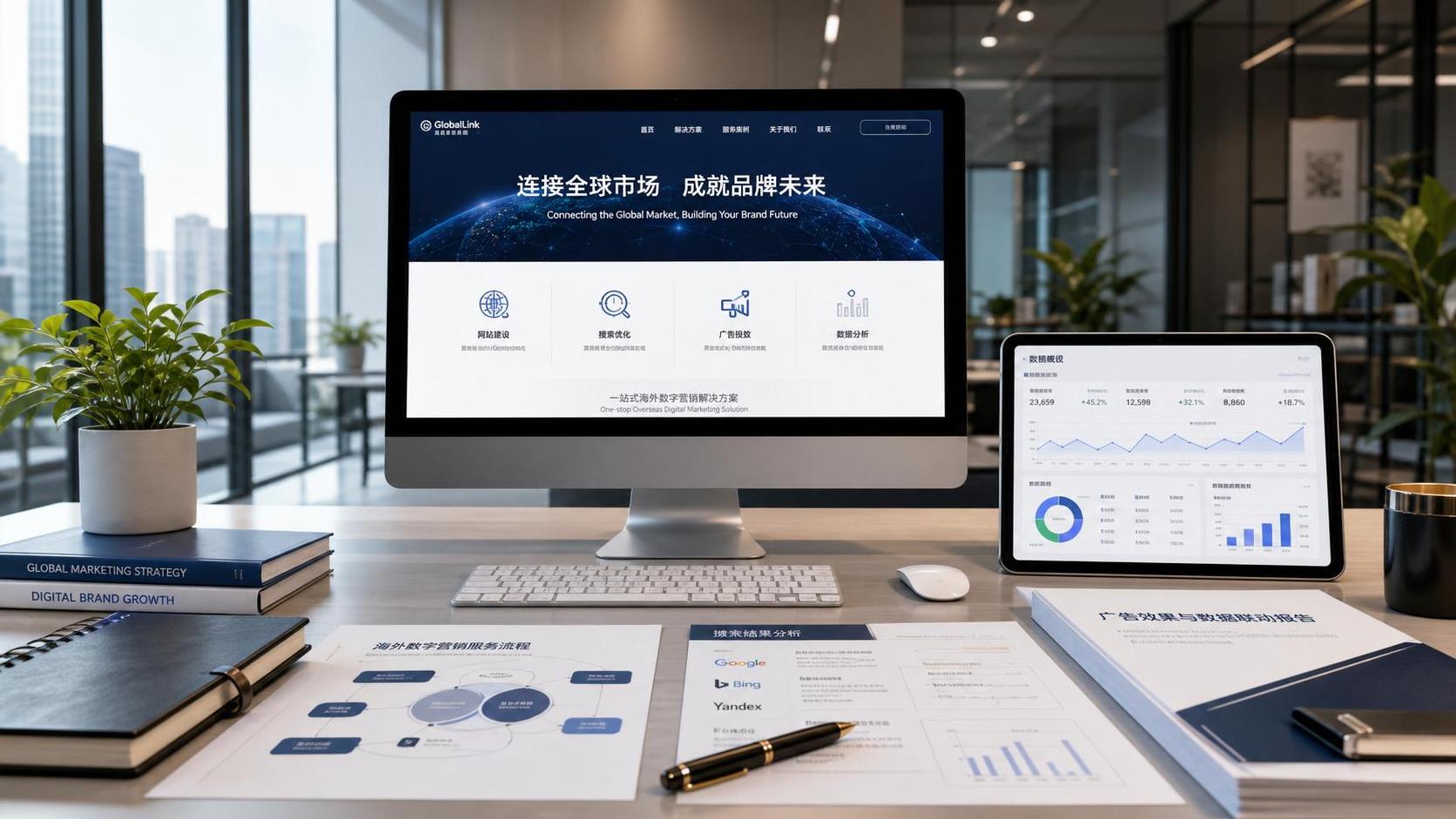
 What Does a Global Traffic Ecosystem Service Provider Do? What Are the Differences from a Single Advertising Agency
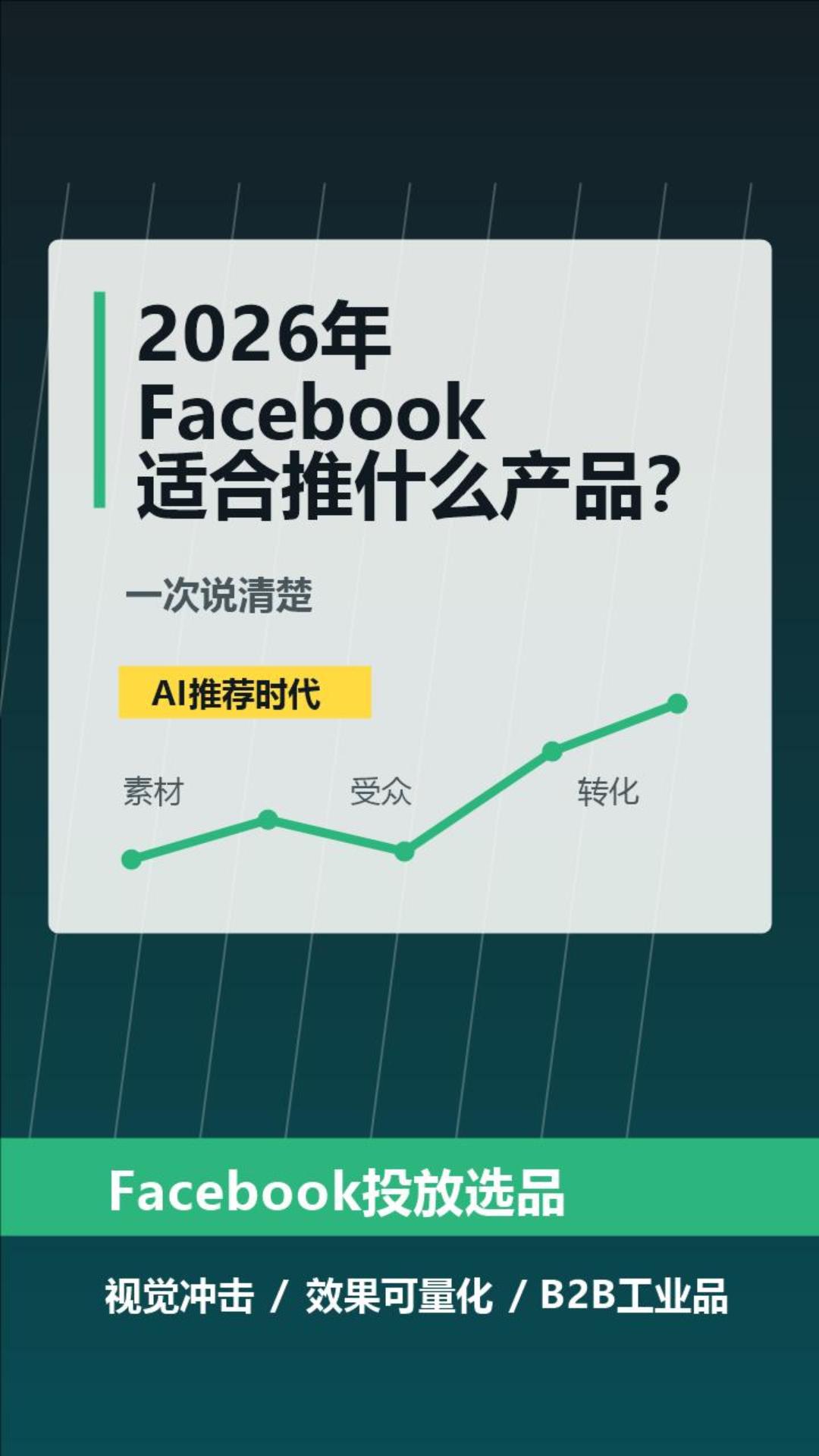
 What Products Are Suitable for Facebook in 2026? Explained Clearly at Once
Related Products
 EasyCamp SaaS Smart Website Marketing SystemE-Yingbao SaaS Smart Website Marketing System: AI-powered, zero-code website building. Rapidly launch multilingual independent e-commerce sites in just 10 minutes. Global server acceleration and AI-driven SEO optimization empower businesses to efficiently connect with global markets. The seamless integration of technology and user-friendly operation makes building e-commerce sites incredibly simple.
 AI+SEM Intelligent Advertising Marketing SystemAI+SEM drives intelligent ad creation, empowering full-funnel precision advertising marketing. The system automatically generates weekly/monthly reports, AI recommends keywords and target countries, monitors core metrics in real-time with intelligent alerts, and enables one-click high-conversion ad solutions to help quickly acquire customers and improve ROI.
 AI+SEO Dual Engine Optimization ServiceEasyWin AI+SEO Dual Engine Optimization System leverages AI-powered keyword mining, content generation, and comprehensive technical optimization to help foreign trade enterprises acquire high-quality organic traffic, significantly improving search rankings and conversion rates.
 AI+SNS Social Media Marketing SystemYingbao AI+SNS Social Media Marketing System - Precision social capture for the social media era. Supports one-click content synchronization across major platforms like Facebook and LinkedIn. AI intelligently rewrites posts for enhanced relevance. 24/7 AI customer service and user profiling analysis empower businesses to efficiently expand into global markets.
 AI+SEO营销解决方案易营宝AI+SEO营销解决方案,通过AI批量写作、智能生成TDK、精准关键词扩词等功能,全面优化网站SEO效果,提升流量与转化率。助力企业构建高效智能网站新生态。
 AI+SEM Advertising Marketing SolutionsAI+SEM Advertising Marketing Solution leverages AI technology to deeply empower SEM ad campaigns. It automatically generates weekly/monthly reports using AI, presenting account data across multiple dimensions for comprehensive insights into campaign performance and trends. The system precisely recommends keywords and target countries, intelligently generates high-conversion ad copy, and enables one-click activation of efficient campaign plans to help businesses rapidly acquire customers. Simultaneously, it monitors core metrics in real time, intelligently identifies abnormal fluctuations, and issues timely alerts to ensure stable, high-return advertising results.
 Domain Name ServicesEasyWin provides professional domain name services, including intelligent queries, one-stop registration, brand protection, and full lifecycle management, helping businesses build a digital brand image.
 EasyOperate B2C Cross-Border E-Commerce Platform & Independent WebsiteEasyStore B2C Cross-border E-commerce Independent Store is an intelligent website building and cross-border e-commerce integrated solution independently developed by EasyStore Information Technology (Beijing) Co., Ltd. The system is specially designed for small and medium-sized as well as large export enterprises, integrating 'website building, operation, marketing, advertising, and conversion' into one, helping enterprises quickly establish cross-border e-commerce independent stores to achieve brand globalization and global sales growth.
The platform supports multiple languages, multiple currencies, and multi-channel marketing, with built-in AI intelligent translation and SEO optimization systems, suitable for mainstream markets such as Southeast Asia, Europe and America, Latin America, and the Middle East, assisting Chinese manufacturing enterprises in efficiently deploying international e-commerce strategies. SSL证书易营宝提供专业SSL安全证书服务,包括单域名和泛域名证书,确保网站数据传输加密、身份验证和完整性保护,助力企业建立安全可信的在线业务环境。









