









- What Does a Global Traffic Ecosystem Service Provider Do? What Are the Differences from a Single Advertising AgencyJul 16, 2026View details
- What should you focus on in the latest enterprise SaaS report? From renewal rates and delivery costs to overseas growth opportunitiesJul 12, 2026View details
- What signals are worth paying attention to in a cross-border marketing trend report? B2B companies should look at these 6 signalsJul 11, 2026View details
- How to Read a Cross-Border Marketing Trends Report? Five Key Dimensions for Evaluating Channel OpportunitiesJul 11, 2026View details
- Which channel has the highest ROI in the global traffic ecosystem? Comparative analysis of search, social media, and advertisingJul 10, 2026View details
- What multilingual website services are available in Sanya? Which model is more suitable for local businesses going global?Jul 08, 2026View details
- How to view the complete list of China SaaS companies in the top 100? Practical methods for screening website-building and marketing service providersJul 08, 2026View details
- How to view pricing in the global traffic ecosystem? Cost comparison of search, social media, and content channel advertisingJul 06, 2026View details
There are many search engine optimization methods, so why is there still no ranking after implementation
There are many search engine optimization methods, yet even after implementation, rankings may still fail to improve. In many cases, the issue is not a lack of tactics, but a mismatch between the website SEO optimization plan, content quality, and search engine ranking algorithms. This article will break down the core bottlenecks and the paths to improving search engine rankings.
Why does a website still have no ranking after doing a lot of search engine optimization

Many companies understand search engine optimization as “publishing articles, changing titles, and stuffing keywords.” After 2 to 8 weeks of execution, they find that rankings still have not improved, and then conclude that SEO is ineffective. In fact, what truly affects website SEO optimization results is often not a single action, but whether technical foundations, content quality, page structure, keyword strategy, and conversion paths form a closed loop.
In the website + integrated marketing services industry, ranking issues are especially common. The reason is simple: companies not only need search engines to understand their websites, but also need potential customers to understand them, be willing to stay, and be willing to inquire. If a website loads slowly, has confusing navigation, and contains duplicate content, then even if dozens of so-called optimization methods are implemented, search engine ranking improvement will still be very limited.
For information researchers, the most common pain point is that the content they find is all similar and lacks a basis for judgment; for business decision-makers, the core issue is not seeing phased results after budget investment; for after-sales maintenance personnel, they often face fluctuations in indexing after website revamps, old pages becoming invalid, and data being difficult to track; while distributors and agents are more concerned about whether regional traffic is stable and whether leads can continue to accumulate.
Truly effective search engine optimization is not about patching isolated points, but about integrated coordination from website-building logic, content assets, and keyword layering to marketing conversion. ECVV Information Technology (Beijing) Co., Ltd. has been deeply engaged in intelligent website building, SEO optimization, social media marketing, and advertising placement since 2013. Relying on artificial intelligence and big data capabilities, it helps enterprises turn “taking action” into a result chain of “rankings, traffic, and inquiries.”
Common reasons for no ranking usually fall into these 5 categories
- Weak website foundation: for example, page load times exceeding 3 seconds, incomplete mobile adaptation, and too many broken links and duplicate pages, which affect crawling and user experience.
- Misaligned keyword direction: focusing only on high-traffic terms while ignoring long-tail keywords, scenario-based keywords, and procurement decision keywords, resulting in excessive competition but poor conversion.
- Content does not match search intent: articles are written for oneself rather than for user questions and search needs, leading to insufficient page relevance.
- Chaotic internal linking and category structure: core pages do not receive authority transfer, so search engines cannot quickly identify key pages.
- Only looking at rankings without considering the business path: even if some keywords gain exposure, conversions will still remain low if landing pages lack inquiry entry points, case explanations, and trust information.
In other words, if there is no ranking after SEO execution, it does not necessarily mean there are too few methods, but rather that the methods have not formed a logical sequence. Usually, this requires 3 stages: diagnosis, correction, content building, and continuous iteration, and the normal observation cycle often takes 1 to 3 months rather than producing immediate results within a few days.
First look at the website foundation: where search engine ranking improvement gets stuck

If search engine optimization is compared to building a house, then website infrastructure is the foundation. Many companies have written a considerable amount of content, yet neglect URL standards, site hierarchy, page readability, and server stability. Search engine ranking algorithms are paying more and more attention to overall page quality. If technical issues are not resolved, subsequent content investment is often offset.
Especially in integrated website + marketing service scenarios, a website is not only a display page, but also a customer acquisition entry point, an advertising landing page, and a brand asset center. A qualified website SEO optimization plan should cover at least 4 foundational dimensions: crawlable, indexable, understandable, and convertible. If any one of these is missing, both rankings and inquiries will be difficult to stabilize.
The table below is suitable for business decision-makers, after-sales maintenance personnel, and operation teams to quickly troubleshoot foundational issues in website SEO optimization, making it easier to distinguish between “doing a lot” and “actually doing it right.”
From an implementation perspective, the first round of technical rectification can usually be completed within 7 to 15 days, but content and authority feedback require a longer cycle. If a company only makes one-time fixes and does not conduct monthly reviews, search engine ranking improvement will often remain at the level of short-term fluctuations and fail to achieve sustained growth.
Which technical details are most easily overlooked
The first is that TDK settings lack a systematic structure. Many websites add keywords to the homepage, but category pages and detail pages continue to use default templates, causing topic conflicts between pages. The second is that internal links are only used for “related recommendations” without forming topical clusters around products, solutions, cases, and FAQ. The third is that images and scripts are too heavy, slowing loading speed and directly affecting user dwell time.
If a company hopes to improve execution efficiency, it can combine AI+SEO marketing solutions for AI-powered bulk writing, intelligent TDK generation, precise keyword expansion, and website SEO performance optimization. It is more suitable for enterprises with many pages, multiple languages, or extensive product lines, as it can reduce manual organization costs and improve consistency in page construction.
However, tools are not a substitute for judgment, but an amplifier of the right strategy. What is truly needed is first to clarify priorities: first fix the foundation, then build content, then scale up, and then look at conversion. Once the order is reversed, it is easy to end up with “many articles but unstable rankings; many keywords but few inquiries.”
A lot of content has been produced, so why do search engines still not recognize it
The most common misunderstanding companies fall into is mistaking “continuous updates” for “continuous effectiveness.” In fact, search engines care about whether a page solves problems, covers scenarios, and has a clear topic. If content is highly homogenized and simply repeats search engine optimization, website SEO optimization, and search engine ranking improvement over and over, page relevance will actually become worse.
High-quality content should meet at least 3 layers of goals: first, respond to user search intent; second, support search engines in accurately understanding the page topic; third, guide users to complete inquiries, price comparisons, or further browsing. For B2B corporate websites, content is not just information, but also procurement decision-making material and a pre-sales explanatory tool.
In actual execution, it is recommended to divide keywords into 3 categories: core keywords, scenario keywords, and decision keywords. Core keywords are used for service pages and category pages, scenario keywords for solution pages, and decision keywords for FAQ, selection guides, and comparison pages. This approach can gradually build a content matrix within 4 to 12 weeks instead of making all pages compete for the same group of keywords.
How to plan content so rankings and conversions can synchronize more easily
- First identify 10 to 20 core business keywords for the homepage, service pages, and product pages to avoid keyword dispersion.
- Around each business keyword, expand 5 to 10 long-tail questions, such as price, delivery cycle, applicable scenarios, and maintenance methods.
- Integrate cases, FAQ, and procurement guides into core pages to form a natural transition from awareness to inquiry.
- Review page indexing, clicks, dwell time, and conversion performance once a month, retain effective pages, and merge low-performing pages.
For distributors, agents, and end consumers, what they care about is not only “what you can do,” but also “how soon it can go live, how it will be maintained, and how input-output performance should be judged.” Therefore, content must include delivery milestones, service processes, common risks, and follow-up support, rather than staying only at the level of brand slogans.
What signals usually appear when the content direction is chosen correctly
Common signals include: the number of indexed pages steadily increases, long-tail keywords begin to gain exposure, click-through rates of key service pages improve, and the bounce rate of inquiry pages declines. For many websites, the first 4 weeks are mainly reflected in changes in indexing and exposure, while more obvious search engine ranking improvement and lead growth gradually appear after the 2nd month, which is a normal rhythm.
ECVV has long served multi-industry enterprises in global expansion and domestic digital marketing needs. Its advantage lies not only in content creation, but in coordinating website building, SEO, social media, and advertising placement within the same growth framework. In this way, enterprises do not need to repeatedly coordinate with multiple service providers, which is more suitable for decision-making teams with clear requirements for delivery pace, budget allocation, and global promotion.
How should companies judge whether an SEO plan is worth continued investment
Many companies begin to hesitate about whether to stop after 1 month of search engine optimization execution, and the root cause is the lack of an evaluation framework. To judge whether a website SEO optimization plan is worth continuing, one should not only look at the ranking of a single keyword, but also whether it produces a sustainable positive effect on the business, including page indexing, effective traffic, inquiry quality, and subsequent conversion coordination.
The table below is more suitable for procurement and management use, and can be used to compare 2 types of SEO execution methods: those that “look very busy in the short term” and those that “can generate rankings and business value in the long term.” For companies with limited budgets, this judgment is particularly critical.
If a company has already executed for 1 to 2 quarters but still remains in the state of “articles continue to be updated, but results are still flat,” then it needs to reassess the strategic model instead of continuing to stack the same actions. Especially for enterprises with multiple regions and multiple product lines, site structure and keyword mapping are often more important than update frequency.
When purchasing and cooperating, focus on these 4 judgment points
- Whether diagnosis is done first before proposing a plan. SEO cooperation without a diagnosis of the current situation will mostly end up as template-based execution later.
- Whether website construction can be connected with marketing goals. Whether the site is only a storefront or can actually receive inquiries makes a big difference.
- Whether there is a staged review mechanism. It is recommended to review at least monthly and make structural adjustments quarterly.
- Whether customized scenarios can be supported, such as special needs like multiple languages, multiple regions, distributor pages, and after-sales service pages.
If a company needs to expand content production efficiency while also reducing repetitive labor, AI+SEO marketing solutions can be used as an execution support tool, especially suitable for teams that need to generate pages in batches, unify TDK, and expand keywords. However, the premise remains strategy first: tools serve goals rather than replace them.
Common misunderstandings and FAQ: which practices are most likely to cause ranking stagnation
When search engine optimization does not produce rankings, in many cases it is not because “not enough was done,” but because “it was not done accurately enough.” The following high-frequency questions almost cover the core doubts of information researchers, decision-makers, maintenance personnel, and channel partners in actual projects.
Why does a new website still have no obvious ranking after 1 month of SEO?
A new website usually needs to go through several processes first: crawling, indexing, topic recognition, and initial ranking. The common observation cycle is 4 to 12 weeks, and specifics are also affected by industry competition, website foundation quality, content depth, and update rhythm. If indexing is still low within 1 month, prioritize checking technology and structure rather than blindly increasing the number of articles.
Does laying out more keywords mean faster search engine ranking improvement?
Not necessarily. Too many keywords without layering will make the page topic vague. The correct approach is for each core page to focus on 1 main topic, supported by 2 to 5 highly relevant keywords, while other needs are handled by subpages, FAQ pages, or case pages. This is more conducive to search engine understanding and also more user-friendly for reading.
After a website revamp causes rankings to drop, what should after-sales maintenance personnel do first?
First confirm 3 things: whether old links have been given 301 redirects, whether the titles and content of core pages have been heavily replaced, and whether the sitemap and navigation structure have been updated. Fluctuations in the first 2 to 4 weeks after a revamp are not uncommon, but if a large number of core pages become invalid, the recovery cycle will be significantly prolonged.
Is SEO suitable for companies with limited budgets?
Yes, but the premise is that the budget must be invested in key nodes. For small and medium-sized enterprises, it is recommended to first complete core service pages, product pages, case pages, and FAQ pages, and then gradually expand informational content. Compared with full-scale expansion, completing the first 20% of high-value pages usually makes it easier to see actual improvement within 1 quarter.
Why choose us: not only solving ranking issues, but also solving customer acquisition path issues
For integrated website + marketing service needs, the real difficulty is not “knowing some SEO methods,” but coordinating website building, optimization, content, advertising, and lead reception together. ECVV Information Technology (Beijing) Co., Ltd. was established in 2013 and is headquartered in Beijing. It has long used artificial intelligence and big data as core drivers to provide enterprises with full-chain digital marketing services covering intelligent website building, SEO optimization, social media marketing, and advertising placement.
The company has been deeply engaged in the industry for 10 years and has cumulatively helped more than 100,000 enterprises advance global growth, and was selected into the “Top 100 China SaaS Enterprises” in 2023. For enterprises, this means cooperation does not stop at single-point services, but can build a growth system more suitable for long-term operation around “technological innovation + localized services.”
If you are currently facing issues such as no ranking after search engine optimization execution, an unclear website SEO optimization plan, confused keyword direction, insufficient content production capacity, or traffic fluctuations after a revamp, you can directly communicate about the following matters: core page diagnosis, keyword layering strategy, delivery cycle evaluation, customized website building solutions, content matrix planning, overseas or multilingual website support, as well as quotation and implementation schedule confirmation.
For business decision-makers, consultation can focus on budget allocation and quarterly goals; for after-sales maintenance personnel, priority can be given to confirming technical rectification and revamp recovery plans; for distributors, agents, and end brands, discussions can center on regional page construction, lead reception, and continuous growth plans. When the problem is explained clearly, the solution can be implemented faster, and ranking improvement can more easily be converted into real business results.
Related Articles
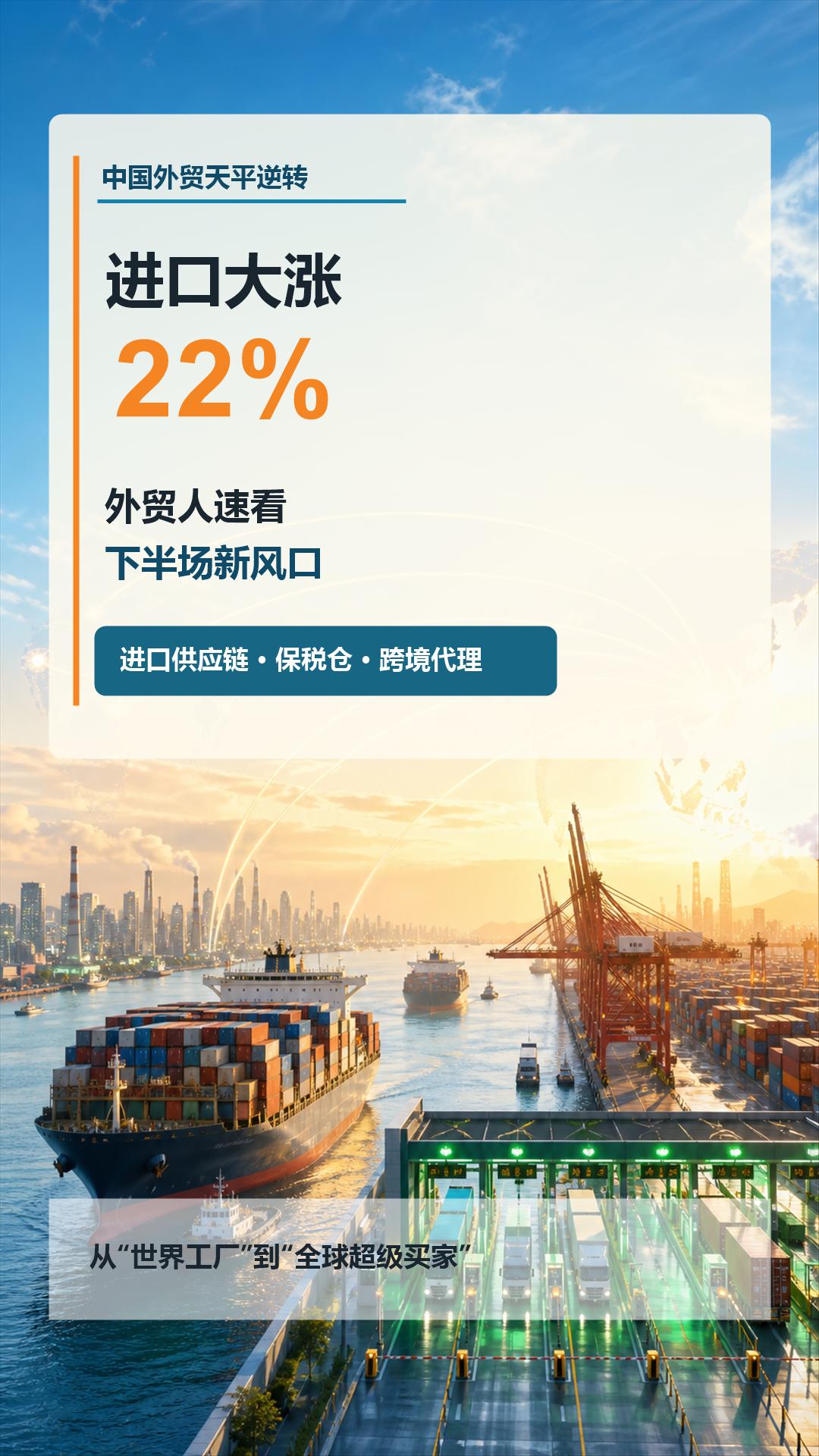
 China's foreign trade sees a turnaround: imports surge by 22%! Foreign trade professionals should quickly take note of the new trends in the second half of the year
 What Does a Global Traffic Ecosystem Service Provider Do? What Are the Differences from a Single Advertising Agency
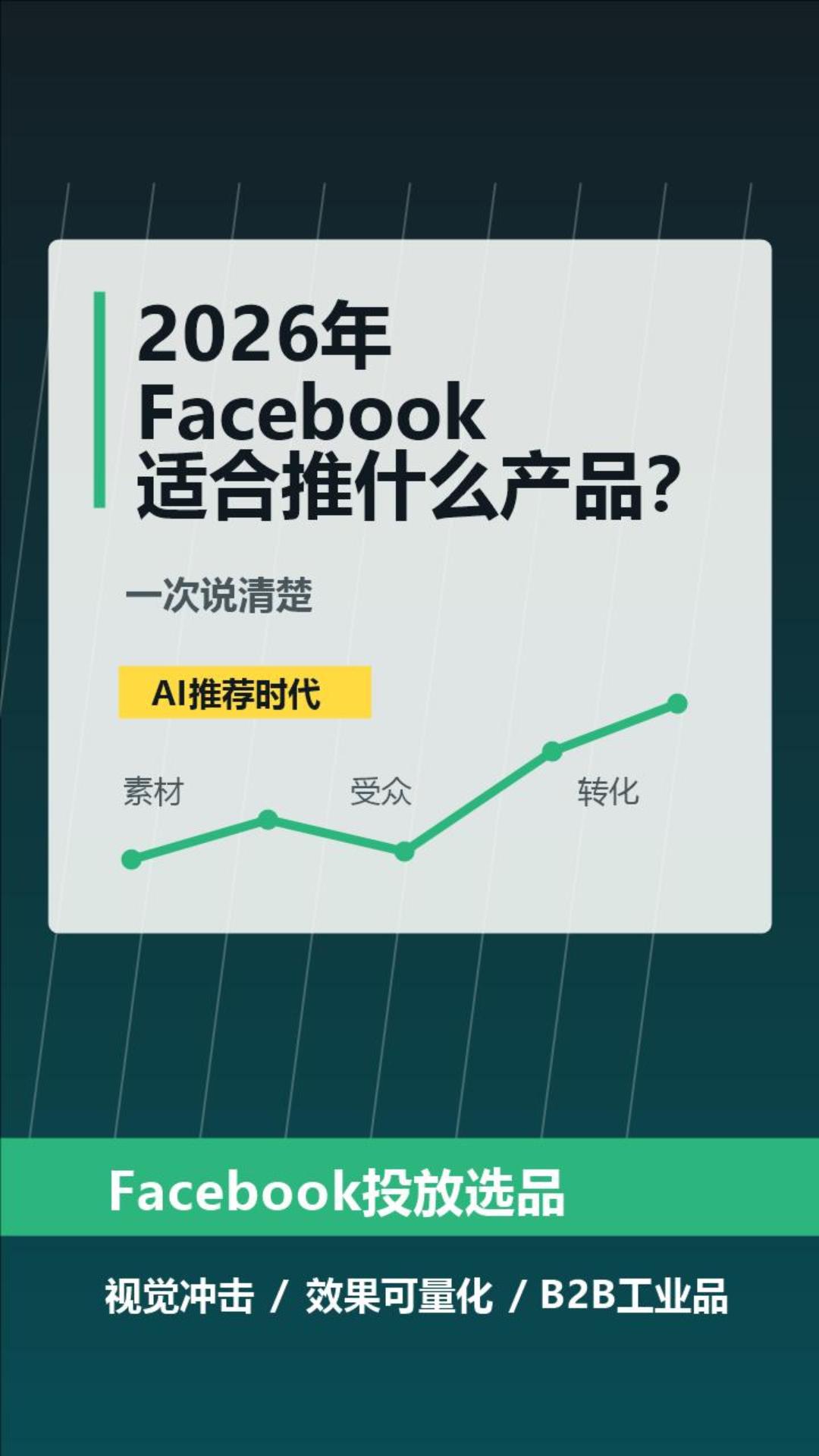
 What Products Are Suitable for Facebook in 2026? Explained Clearly at Once
Related Products
 EasyCamp SaaS Smart Website Marketing SystemE-Yingbao SaaS Smart Website Marketing System: AI-powered, zero-code website building. Rapidly launch multilingual independent e-commerce sites in just 10 minutes. Global server acceleration and AI-driven SEO optimization empower businesses to efficiently connect with global markets. The seamless integration of technology and user-friendly operation makes building e-commerce sites incredibly simple.
 AI+SEM Intelligent Advertising Marketing SystemAI+SEM drives intelligent ad creation, empowering full-funnel precision advertising marketing. The system automatically generates weekly/monthly reports, AI recommends keywords and target countries, monitors core metrics in real-time with intelligent alerts, and enables one-click high-conversion ad solutions to help quickly acquire customers and improve ROI.
 AI+SEO Dual Engine Optimization ServiceEasyWin AI+SEO Dual Engine Optimization System leverages AI-powered keyword mining, content generation, and comprehensive technical optimization to help foreign trade enterprises acquire high-quality organic traffic, significantly improving search rankings and conversion rates.
 AI+SNS Social Media Marketing SystemYingbao AI+SNS Social Media Marketing System - Precision social capture for the social media era. Supports one-click content synchronization across major platforms like Facebook and LinkedIn. AI intelligently rewrites posts for enhanced relevance. 24/7 AI customer service and user profiling analysis empower businesses to efficiently expand into global markets.
 AI+SEO营销解决方案易营宝AI+SEO营销解决方案,通过AI批量写作、智能生成TDK、精准关键词扩词等功能,全面优化网站SEO效果,提升流量与转化率。助力企业构建高效智能网站新生态。
 AI+SEM Advertising Marketing SolutionsAI+SEM Advertising Marketing Solution leverages AI technology to deeply empower SEM ad campaigns. It automatically generates weekly/monthly reports using AI, presenting account data across multiple dimensions for comprehensive insights into campaign performance and trends. The system precisely recommends keywords and target countries, intelligently generates high-conversion ad copy, and enables one-click activation of efficient campaign plans to help businesses rapidly acquire customers. Simultaneously, it monitors core metrics in real time, intelligently identifies abnormal fluctuations, and issues timely alerts to ensure stable, high-return advertising results.
 Domain Name ServicesEasyWin provides professional domain name services, including intelligent queries, one-stop registration, brand protection, and full lifecycle management, helping businesses build a digital brand image.
 EasyOperate B2C Cross-Border E-Commerce Platform & Independent WebsiteEasyStore B2C Cross-border E-commerce Independent Store is an intelligent website building and cross-border e-commerce integrated solution independently developed by EasyStore Information Technology (Beijing) Co., Ltd. The system is specially designed for small and medium-sized as well as large export enterprises, integrating 'website building, operation, marketing, advertising, and conversion' into one, helping enterprises quickly establish cross-border e-commerce independent stores to achieve brand globalization and global sales growth.
The platform supports multiple languages, multiple currencies, and multi-channel marketing, with built-in AI intelligent translation and SEO optimization systems, suitable for mainstream markets such as Southeast Asia, Europe and America, Latin America, and the Middle East, assisting Chinese manufacturing enterprises in efficiently deploying international e-commerce strategies. SSL证书易营宝提供专业SSL安全证书服务,包括单域名和泛域名证书,确保网站数据传输加密、身份验证和完整性保护,助力企业建立安全可信的在线业务环境。









