









- The China-US tariff arrangement has reached a preliminary consensus, and the trade association will be establishedJun 15, 2026View details
- China-Morocco zero-tariff access, a breakthrough in the cost of Moroccan goods exports to ChinaJun 11, 2026View details
- What signal should be released for the suspension of exports to JapanJun 10, 2026View details
- China's May LNG imports rebounded, with increased volumes from Russia and Canada filling the Middle East supply gapJun 10, 2026View details
- Will GEO change its SEO strategy?Jun 04, 2026View details
- What types of businesses are end-to-end solutions suitable for?Jun 03, 2026View details
- 2026 Global Growth Channel TrendsJun 02, 2026View details
- Changes in Search Engine Ranking Factors in 2026Jun 06, 2026View details
Where to start optimizing Facebook ads?
Where should you start with Facebook ad optimization? If you only want a direct answer, it is this: first straighten out these four things—“who you are targeting, what you want them to do, whether the landing page can convert, and how to judge the data”—and then talk about budget scaling and tactical upgrades. For most businesses, unstable Facebook ad performance is not because they do not know which buttons to click, but because the front-end audience strategy, mid-funnel creative messaging, and back-end website handoff and conversion tracking are not connected. Especially in global customer acquisition scenarios, only by aligning your Facebook advertising strategy with your website SEO optimization plan can lead quality, conversion efficiency, and long-term customer acquisition costs become easier to stabilize.
From the perspective of search intent, what users really want to know is usually not “what features the Facebook ad platform has,” but rather “which step should be optimized first, how to avoid wasting money, and how to judge whether an ad is still worth running.” Therefore, this article will focus on clearly explaining the optimization sequence, key metrics, common misconceptions, and practical methods that both business decision-makers and execution teams can apply directly.
1. In Facebook ad optimization, the first step is not adjusting the budget, but first clarifying the goal and conversion path
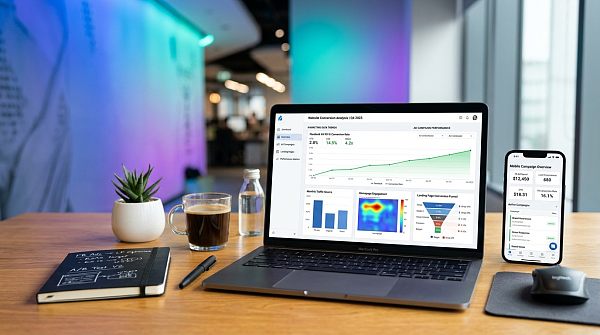
Many companies rush to optimize bids and test creatives right from the start, only to end up making the account messier the more they spend. The reason is simple: if the advertising objective is unclear, then no matter how many Meta ad tactics you use, they are only patchwork fixes. Truly effective optimization starts by answering 3 questions:
- What action do you want users to complete: brand awareness, direct message inquiries, form submissions, add-to-cart actions, or direct purchases?
- Why would this type of user click your ad? Are they price-sensitive, in urgent need of the product, or comparing different solutions?
- After clicking, can the landing page smoothly receive them and drive the next conversion step?
If you are a B2B business, a distributor expansion business, or in the website building and marketing services sector, it is usually more suitable to make “acquiring qualified leads” the core objective, rather than simply chasing clicks. That is because high clicks do not mean high inquiries, and high inquiries do not mean high sales. For business decision-makers, the most important things to watch are the cost per qualified lead, lead quality, sales cycle, and final ROI; for execution teams, the goal is to match advertising objectives, audience segments, creatives, landing pages, and conversion events one by one.
A practical principle is: map out the conversion path first, then launch the ads. For example:
- The ad attracts target users to click;
- The landing page quickly explains the value and differentiation;
- Users complete an inquiry via form, WhatsApp, Messenger, or phone;
- Sales or customer service handles follow-up;
- Closed-deal data is sent back to guide ad optimization in reverse.
Only when this chain is smooth does Facebook ad optimization have real leverage.
2. How to define your audience so you do not waste your budget from the very beginning
Audience targeting is the part of a Facebook advertising strategy where it is easiest to “look like you know what you are doing, but actually do it wrong.” Many accounts perform poorly not because traffic is low, but because the traffic is inaccurate.
The questions target readers usually care about most include:
- Should you start with broad audiences or interest targeting?
- Should existing customers, website visitors, and engaged users be separated into different campaigns?
- How should different countries, regions, and languages be split more reasonably?
A more stable optimization approach is layered testing:
1. Cold start phase: first verify “who is more likely to convert”
You can test several audience types at the same time:
- Core interest-based audiences: suitable for industries with clear product attributes;
- Lookalike audiences: suitable for companies that already have historical customer data, form data, or website conversion data;
- Broad audiences: suitable for accounts with clear creative messaging and more mature pixel data.
Do not narrow the audience too much at the beginning. If it is too narrow, the system will struggle to learn, impressions will be insufficient, and costs will become artificially high. Especially in Meta advertising tactics, one point is becoming more and more important: give the system enough signals instead of imposing excessive manual restrictions.
2. Retargeting phase: prioritize capturing the traffic “most likely to convert”
Website visitors, users who added to cart but did not purchase, users who did not finish submitting a form, video viewers, and page engagers are all high-value remarketing audiences. This part of the traffic usually converts faster and at lower cost, making it one of the most important parts of optimization.
If the business is also working on SEO content at the same time, then visitors from organic search can also become a high-quality remarketing pool. In other words, a mature website SEO optimization plan not only helps with organic customer acquisition, but can also improve the secondary conversion efficiency of Facebook advertising in return.
3. Run ads by country and language separately to avoid distorted data
When running overseas campaigns, many accounts put multiple countries and multiple languages into the same ad set. As a result, later on they cannot really tell where performance is good and where the creative does not match. A more reasonable approach is to split by market maturity, language, and budget volume, and at the very least ensure that CPA, CTR, CVR, and frequency changes in major markets can be observed separately.
3. Where to start with creative optimization: not “looks good,” but “can make the target user willing to act”
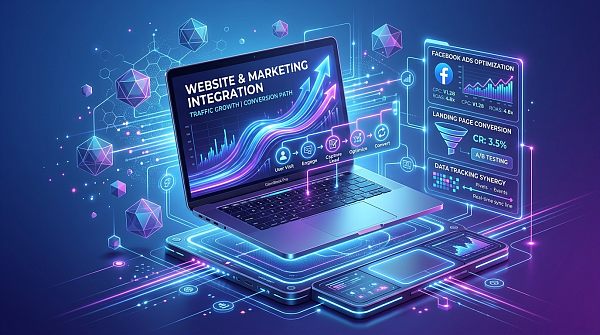
The core task of ad creatives is not to show how professional your company is, but to answer two user questions in the shortest possible time: what does this have to do with me? Why should I click in right now?
Therefore, creative optimization can start with the following aspects first:
1. Whether the above-the-fold message is direct enough
Users spend very little time when browsing Facebook or Instagram. The main image, the first 3 seconds of video, the headline, and the first sentence of copy must quickly communicate the product value, scenario pain point, or benefit. For example:
- Reduce customer acquisition costs
- Increase independent website conversion rates
- Shorten the inquiry-to-deal cycle
- Support multilingual, multi-market localized promotion
2. Whether the creative messaging matches different audience stages
Cold traffic is better suited to pain points, differentiation, and outcomes; warm traffic is better suited to case studies, proof, offers, or calls to action. Many ads convert poorly not because the product is bad, but because “conversion-focused creatives” are shown directly to cold audiences that do not know you yet.
3. Do not pile up features in the copy; highlight results
Especially when targeting business managers, agents, and distributors, instead of saying “we have many service modules,” it is better to directly explain that “we can help businesses connect website building, SEO, social media, and advertising, reducing breaks in the customer acquisition journey.” For execution teams, you can then add specific operational highlights, such as pixel setup, A/B testing, landing page adaptation, multilingual page creation, and so on.
If the company’s content team is also responsible for brand content output, it can also borrow the structural expression approach of research-based content. For example, some strategy-analysis content, such as A Study on Financing Strategies for Early-Stage Small and Micro Technology Enterprises from an Angel Investment Perspective, has the advantage of clear questions, clear target readers, and complete logic. Ad creative planning works the same way: do not speak in broad generalities; make the target user immediately feel that “this message is meant for me.”
4. The landing page and website handoff capability determine whether ad optimization can truly run effectively
Many people understand Facebook ad optimization as optimization inside the ad platform, but in reality, the real bottleneck is often the landing page. If the ad can drive clicks but the page cannot drive conversions, the system will find it harder and harder to learn, and costs will continue to rise.
A high-converting landing page should have at least several characteristics:
- Fast loading speed and a stable mobile experience;
- The page theme is consistent with the ad promise, without being “clickbait”;
- Above the fold, it should already explain what problem you can solve;
- A clear CTA, so users know what to do next;
- A simple form, without setting the conversion threshold too high;
- Cases, reviews, data, or service processes to strengthen trust.
For the website + marketing services integrated industry, this step is especially important. That is because ads do not exist independently; in the end, they must be supported by website handoff, SEO content structure, technical stability, and a data closed loop. A website with a clear page structure, stable loading, SEO foundations, and conversion components can significantly improve the utilization of ad traffic.
This is also why, when evaluating service providers, many companies should not only look at “whether they can run ads,” but also whether they have integrated capabilities in website building, SEO, content, tracking, and localized marketing. Otherwise, when ads and the website are disconnected, optimization efficiency is usually discounted.
5. What data should you actually look at to know whether an ad should be paused, adjusted, or scaled
This is one of the issues business decision-makers care about most. That is because no optimization can stay at the level of “it feels better”; it has to return to data-based judgment.
It is recommended to focus on different metrics at different stages:
1. Front-end attraction metrics
- CTR (click-through rate): judge the match between creative and audience
- CPC (cost per click): judge traffic acquisition efficiency
- CPM (cost per 1,000 impressions): judge the bidding environment and the degree of audience competition
2. Mid-funnel conversion metrics
- Landing page view rate
- Form submission rate
- Add-to-cart rate/inquiry initiation rate
- Bounce rate and page dwell time
3. Back-end business metrics
- Cost per qualified lead
- Close rate
- Customer acquisition cost
- ROAS/ROI
- Differences in customer quality brought by different markets and different creatives
If CTR is low, first check the creative and audience; if CTR is not low but conversions are poor, first check the landing page; if both the front end and mid-funnel are doing fine but sales are poor, then review sales follow-up, lead qualification criteria, and product pricing strategy. In other words, Facebook ad optimization is not about looking only at ad data, but at the entire business chain.
6. The most common misconceptions in actual business operations
A lot of budget is not spent on testing, but on repeated mistakes. The following misconceptions are extremely common:
- Misconception 1: Overemphasizing low click costs. Cheap clicks do not mean accurate customers, especially for B2B and high-ticket businesses.
- Misconception 2: Using only one creative style. Different audiences and different markets have major differences in visual and messaging preferences.
- Misconception 3: Scaling before conversion tracking is in place. Without pixels, events, and data feedback, optimization has almost no basis.
- Misconception 4: Ads, the website, and SEO are disconnected from each other. The result is that traffic comes in, but it does not accumulate, and reuse efficiency is low.
- Misconception 5: Reaching conclusions too early. Frequent changes when data volume is too small interrupt system learning and make performance even more unstable.
If a business is in the early stage of growth, it can also use a more systematic strategic framework for resource decisions. For example, when studying budget allocation, growth pace, and return on investment, some business managers refer to the analytical methods of research-oriented materials such as A Study on Financing Strategies for Early-Stage Small and Micro Technology Enterprises from an Angel Investment Perspective, placing ad investment within a broader business decision-making framework rather than focusing only on one week’s fluctuations in ad performance.
7. A more business-friendly optimization sequence: build the foundation first, then scale
If you want to know exactly where to start with Facebook ad optimization, you can directly follow this sequence:
- Clarify the business goal: brand awareness, lead generation, direct messages, and sales each correspond to different approaches;
- Sort out the conversion path: ad—landing page—inquiry—sales follow-up—closed-deal feedback;
- Set up data tracking: pixel, conversion events, UTM parameters, and CRM feedback should be as complete as possible;
- Test audiences in layers: run cold audiences, lookalike audiences, and retargeting audiences separately;
- Test creatives in parallel: prepare at least copy and visual versions from different angles;
- Optimize the landing page: improve loading speed, trust, and action guidance;
- Use data to determine where the problem is: do not blindly increase the budget or stop campaigns;
- Scale only after results are stable: prioritize expanding proven combinations instead of gambling on luck again.
For businesses hoping for long-term stable customer acquisition, it is more advisable to place the Facebook advertising strategy within a complete digital marketing system: website building determines handoff capability, SEO determines the accumulation of organic traffic, social media determines brand reach, and advertising determines acquisition speed. When these four work together, they deliver far more sustainable value than isolated optimization.
Conclusion: In Facebook ad optimization, what really needs optimization is the entire customer acquisition chain
Back to the original question, where should Facebook ad optimization start? The answer is not “revise the copy first” or “adjust the budget first,” but first confirm whether the goal, audience, landing page, and data chain are correct, and then gradually improve conversion efficiency through creative testing, audience layering, and remarketing.
If you are a business decision-maker, your focus should be on input-output ratio, customer quality, and sustainable scaling capability; if you are an execution specialist, the focus is to truly connect the ad account, creatives, pages, tracking, and back-end conversion data. Only then is a Facebook advertising strategy not just “getting traffic,” but capable of driving stable growth. Paired with a sound website SEO optimization plan, the visits and leads brought by ads can continue to accumulate, making overall customer acquisition more stable and more controllable.
Related Articles



Related Products
 EasyCamp SaaS Smart Website Marketing SystemE-Yingbao SaaS Smart Website Marketing System: AI-powered, zero-code website building. Rapidly launch multilingual independent e-commerce sites in just 10 minutes. Global server acceleration and AI-driven SEO optimization empower businesses to efficiently connect with global markets. The seamless integration of technology and user-friendly operation makes building e-commerce sites incredibly simple.
 AI+SEM Intelligent Advertising Marketing SystemAI+SEM drives intelligent ad creation, empowering full-funnel precision advertising marketing. The system automatically generates weekly/monthly reports, AI recommends keywords and target countries, monitors core metrics in real-time with intelligent alerts, and enables one-click high-conversion ad solutions to help quickly acquire customers and improve ROI.
 AI+SEO Dual Engine Optimization ServiceEasyWin AI+SEO Dual Engine Optimization System leverages AI-powered keyword mining, content generation, and comprehensive technical optimization to help foreign trade enterprises acquire high-quality organic traffic, significantly improving search rankings and conversion rates.
 AI+SNS Social Media Marketing SystemYingbao AI+SNS Social Media Marketing System - Precision social capture for the social media era. Supports one-click content synchronization across major platforms like Facebook and LinkedIn. AI intelligently rewrites posts for enhanced relevance. 24/7 AI customer service and user profiling analysis empower businesses to efficiently expand into global markets.
 AI+SEO营销解决方案易营宝AI+SEO营销解决方案,通过AI批量写作、智能生成TDK、精准关键词扩词等功能,全面优化网站SEO效果,提升流量与转化率。助力企业构建高效智能网站新生态。
 AI+SEM Advertising Marketing SolutionsAI+SEM Advertising Marketing Solution leverages AI technology to deeply empower SEM ad campaigns. It automatically generates weekly/monthly reports using AI, presenting account data across multiple dimensions for comprehensive insights into campaign performance and trends. The system precisely recommends keywords and target countries, intelligently generates high-conversion ad copy, and enables one-click activation of efficient campaign plans to help businesses rapidly acquire customers. Simultaneously, it monitors core metrics in real time, intelligently identifies abnormal fluctuations, and issues timely alerts to ensure stable, high-return advertising results.
 Domain Name ServicesEasyWin provides professional domain name services, including intelligent queries, one-stop registration, brand protection, and full lifecycle management, helping businesses build a digital brand image.
 EasyOperate B2C Cross-Border E-Commerce Platform & Independent WebsiteEasyStore B2C Cross-border E-commerce Independent Store is an intelligent website building and cross-border e-commerce integrated solution independently developed by EasyStore Information Technology (Beijing) Co., Ltd. The system is specially designed for small and medium-sized as well as large export enterprises, integrating 'website building, operation, marketing, advertising, and conversion' into one, helping enterprises quickly establish cross-border e-commerce independent stores to achieve brand globalization and global sales growth.
The platform supports multiple languages, multiple currencies, and multi-channel marketing, with built-in AI intelligent translation and SEO optimization systems, suitable for mainstream markets such as Southeast Asia, Europe and America, Latin America, and the Middle East, assisting Chinese manufacturing enterprises in efficiently deploying international e-commerce strategies. SSL证书易营宝提供专业SSL安全证书服务,包括单域名和泛域名证书,确保网站数据传输加密、身份验证和完整性保护,助力企业建立安全可信的在线业务环境。









