









- What New Signals Are Emerging in Enterprise Services SaaS Marketing ReportsJul 27, 2026View details
- What Does a Global Traffic Ecosystem Service Provider Do? What Are the Differences from a Single Advertising AgencyJul 16, 2026View details
- What should you focus on in the latest enterprise SaaS report? From renewal rates and delivery costs to overseas growth opportunitiesJul 12, 2026View details
- What signals are worth paying attention to in a cross-border marketing trend report? B2B companies should look at these 6 signalsJul 11, 2026View details
- How to Read a Cross-Border Marketing Trends Report? Five Key Dimensions for Evaluating Channel OpportunitiesJul 11, 2026View details
- Which channel has the highest ROI in the global traffic ecosystem? Comparative analysis of search, social media, and advertisingJul 10, 2026View details
What are the differences in promotion strategies between B2B and B2C websites? Project manager shares practical experience
Introduction
What are the differences between B2B and B2C websites in terms of promotion? The project manager of EasyCamp, with ten years of practical experience, shares insights from selecting suitable B2B foreign trade solutions to Yandex SEO company ranking optimization, deeply analyzing the core strategies for foreign trade enterprises to choose the right SEO optimization company and quickly build high-conversion websites. For market researchers, project managers, and corporate decision-makers, this is not only a discussion on the "differences in digital marketing logic" but also a summary of experience combining technological innovation and practical application. As traditional marketing gradually shifts toward intelligence and precision today, understanding the differences between B2B and B2C will directly determine the competitiveness of foreign trade enterprises.
Definition and Overview: Differences in B2B and B2C Promotion Logic
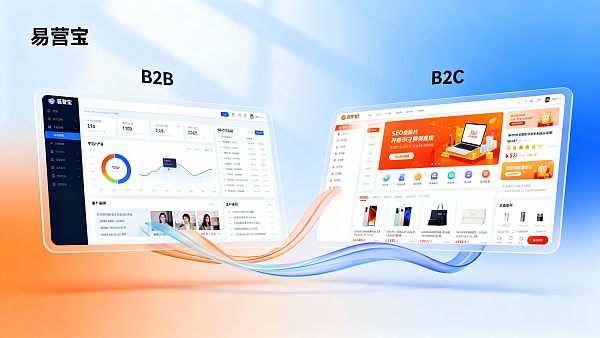
In the field of digital marketing, although both B2B (business-to-business) and B2C (business-to-consumer) aim to enhance brand exposure and conversion as core goals, their audience behavior and decision-making paths differ fundamentally. B2B websites target procurement managers, project managers, or corporate decision-makers, emphasizing rationality, trust, and long-term cooperation in their promotion strategies. Therefore, they tend to focus on SEO long-tail keyword strategies and deep layout on search engines like Yandex and Google. In contrast, B2C websites target end consumers, emphasizing immediate emotional stimulation and short-term conversion, with social media ads and video content as the main drivers. EasyCamp Information Technology (Beijing) Co., Ltd. found in its decade of global service that B2B clients generally focus on "how foreign trade enterprises choose the right SEO optimization company" and "which B2B foreign trade solutions are reliable," while B2C emphasizes user experience and visual impact. In terms of promotion rhythm, B2B projects focus on keyword cultivation and credibility building, while B2C projects pursue投放 speed and high-frequency interaction.
Market Analysis: Foreign Trade Digital Marketing Landscape and Platform Selection
With the acceleration of global trade digitization, Chinese foreign trade enterprises are actively building independent websites to break through traffic barriers. Under this trend, selecting B2B foreign trade solutions has become a key topic for corporate marketing upgrades. Data shows that enterprises using AI-driven website building and SEO automation tools achieve an average conversion rate increase of 38%. EasyCamp's intelligent website system adopts a "multilingual + high conversion" model, providing global B2B website building and Yandex SEO company ranking optimization solutions. Through self-developed AI keyword expansion and TDK automatic generation systems, it achieves precise traffic matching. Additionally, as a core partner of Yandex, the company helps enterprises deeply penetrate the Russian and Eastern European markets. When choosing channels, B2B websites are recommended to focus on search engine lead generation, supplemented by LinkedIn targeted ads and content marketing. B2C websites, however, should prioritize platforms like Facebook, Instagram, and TikTok as main promotion channels, leveraging high visual exposure to drive impulsive consumption. Moreover, "Can global website SaaS platforms improve SEO scores?" is also a focus for many clients. EasyCamp optimizes global CDN nodes, increasing loading speed by 40%, directly boosting SEO scores by 35%, with particularly significant effects in overseas投放.
Comparative Analysis: Content Strategy and投放 Rhythm Differences
B2B and B2C websites exhibit completely different logic in content layout. The former establishes industry trust through professional and authoritative information, such as white paper downloads, case studies, FAQ databases, and customer service systems. The latter engages users through visuals, interaction, and brand attitude, such as short videos, limited-time offers, and user testimonials. The project manager pointed out: "B2B clients operating on the EasyCamp platform average over 50 keyword coverages per piece of content. Through the semantic matching function of the AI marketing engine, they precisely reach target procurement groups." In contrast, B2C promotion cycles are shorter, with higher content update frequency, emphasizing ad creative originality and real-time热点 capture. B2B focuses on constructing conversion paths, while B2B emphasizes emotional resonance triggers. The comparison shows that the so-called "high cost of B2B website building" lies not in initial investment but in systematic content maintenance and continuous SEO optimization. If using AI ad智能管家, enterprises can reduce costs and increase efficiency under the same budget, with an average ad conversion rate increase of 200%.
Application Scenarios and Case Studies: AI Empowerment, Connecting Global Lead Generation Paths
In EasyCamp's client cases, a manufacturer specializing in industrial equipment exports quickly built a bilingual independent站 through the AI website system and integrated Yandex and Google Ads投放. In just three months, the company's潜在客户线索增长127%, with overseas订单转化率提高41%. This得益于智能算法对长尾关键词"B2B外贸解决方案选型建议"及"什么是自适应建站"的精准识别. Another B2C brand, after adopting the AI creative factory function, reduced operational costs by 50% through its multilingual ad material automatic generation mechanism. These successful practices prove that AI empowerment not only changes traditional foreign trade promotion strategies but also enables高效决策 through data驱动. For project managers, mastering how to use AI systems for budget performance optimization is also crucial. Therefore, internal training referenced the application strategies of budget performance management in corporate financial management to build scientific投放 evaluation models, ensuring every investment is data-driven.
Procurement and Selection Guide: How to Choose Reliable Foreign Trade Solutions
Faced with numerous B2B foreign trade solutions on the market, enterprises should prioritize system stability, SEO optimization capabilities, AI empowerment depth, and localization support when selecting. Traditional outsourcing service models struggle to achieve rapid response in international promotion, while integrated AI platforms like EasyCamp's "intelligent website building + SEO + ads + social media matrix"闭环方案 can显著提升执行效率. First, focus on scalability. Excellent B2B systems should support multilingual independent站 and AI translation to adapt to different language environments overseas. Second, data security and performance are equally critical. It is recommended to choose platforms co-built with AWS and Alibaba Cloud CDN nodes to ensure business continuity. Third, evaluate ad投放 efficiency. "How effective is Yandex ad投放?" depends not only on budget but also on the precision matching of AI algorithms. Fourth, consider after-sales and service systems. EasyCamp's regional partnership model provides 24/7 local support, reducing communication barriers for distributors and代理商. For budget-limited enterprises, they can also evaluate "how much does it cost to quickly build a foreign trade website?" AI platforms can deliver正式版 in an average of three weeks,大幅缩短项目周期.
Common Mistakes and FAQs: Three Major Misconceptions in Foreign Trade Promotion
Many enterprises often fall into pitfalls when开展B2B promotion. First, believing SEO can yield short-term results. In reality, B2B SEO emphasizes systematic accumulation, where keyword布局 and content depth far outweigh投放 frequency. Second, mistakenly thinking自适应建站 can solve all端兼容 issues. In fact, "what is自适应建站" involves not only responsive web design but also server architecture and AI data optimization. EasyCamp achieves content distribution acceleration through global七大洲 server clusters, ensuring B2B buyers can access极速 from不同地区. Third, neglecting the importance of ad data diagnosis. EasyCamp's AI ad智能管家 can实时 detect投放 anomalies and provide adjustment suggestions, enabling enterprises to achieve投放 self-循环 on one platform. If enterprises encounter difficulties during project performance evaluation, they can refer to the indicator system of budget performance management in corporate financial management to establish digital marketing ROI models, ensuring balance between investment and收益.
Trends and Future Outlook: New Directions in AI Marketing and Global Integration
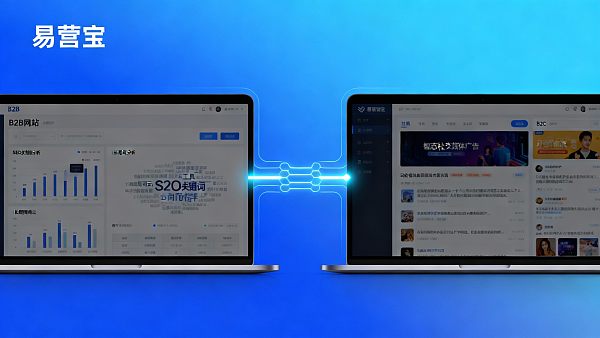
AI and big data are重构 global foreign trade ecosystems. Future B2B websites will integrate building, marketing, and transactions, with data becoming the greatest barrier for enterprise competition. Platforms like Yandex, Meta, and Google Ads are accelerating接入AI ad optimization interfaces, providing enterprises with smarter流量分配 mechanisms. Particularly with the deep integration of blockchain and AI, decentralized marketing ecosystems will bring new growth spaces. EasyCamp plans to expand into Latin American and African markets in the next three years, serving over 500,000 enterprises, enabling more Chinese products to achieve international传播 through intelligent website building and precise SEO. For B2C brands, future promotion will focus more on content ecosystems and user experience, with automation, visualization, and immersion becoming mainstream trends. The core remains data-driven marketing decisions, using AI to expand global reach.
Why Choose EasyCamp: The Super Connector for Global Growth
Choosing EasyCamp means selecting a partner that balances technology and localization. The company's "AI + big data" dual-engine drive provides enterprises with end-to-end solutions from intelligent website building, SEO optimization, social media marketing to ad投放. Unlike traditional service providers, EasyCamp iterates its proprietary AI algorithm platform 12 times annually, continuously improving the intelligence level of content generation and ad投放. Whether you are a manufacturing B2B exporter or a cross-border e-commerce B2C brand, you can find customized answers in EasyCamp's ecosystem. Take action now, let AI empower your brand, and open a new chapter of global growth with EasyCamp.
- Website Development
- Social Media Marketing
- Multilingual Independent Website
- B2B website
- Google Ads
- B2B Foreign Trade
- Export marketing
- Yandex Advertising
- TikTok
- SEO Optimization Company
- Yiyingbao
- SEO
- Independent Website
- Smart website builder system
- SEO Optimization
- Smart Website Building
- AI Translation
- EasySite Intelligent Website Builder
- AI Marketing Engine
- Yandex ad placement
- Global Website Building SaaS Platform
- Yandex SEO company
- Quickly Build a Foreign Trade Website
- AI Website Building
- cross-border e-commerce
- AI Marketing
- B2B Foreign Trade Solutions
- AI Ad Optimization
Related Articles
Related Products
 EasyCamp SaaS Smart Website Marketing SystemE-Yingbao SaaS Smart Website Marketing System: AI-powered, zero-code website building. Rapidly launch multilingual independent e-commerce sites in just 10 minutes. Global server acceleration and AI-driven SEO optimization empower businesses to efficiently connect with global markets. The seamless integration of technology and user-friendly operation makes building e-commerce sites incredibly simple.
 AI+SEM Intelligent Advertising Marketing SystemAI+SEM drives intelligent ad creation, empowering full-funnel precision advertising marketing. The system automatically generates weekly/monthly reports, AI recommends keywords and target countries, monitors core metrics in real-time with intelligent alerts, and enables one-click high-conversion ad solutions to help quickly acquire customers and improve ROI.
 AI+SEO Dual Engine Optimization ServiceEasyWin AI+SEO Dual Engine Optimization System leverages AI-powered keyword mining, content generation, and comprehensive technical optimization to help foreign trade enterprises acquire high-quality organic traffic, significantly improving search rankings and conversion rates.
 AI+SNS Social Media Marketing SystemYingbao AI+SNS Social Media Marketing System - Precision social capture for the social media era. Supports one-click content synchronization across major platforms like Facebook and LinkedIn. AI intelligently rewrites posts for enhanced relevance. 24/7 AI customer service and user profiling analysis empower businesses to efficiently expand into global markets.
 AI+SEO营销解决方案易营宝AI+SEO营销解决方案,通过AI批量写作、智能生成TDK、精准关键词扩词等功能,全面优化网站SEO效果,提升流量与转化率。助力企业构建高效智能网站新生态。
 AI+SEM Advertising Marketing SolutionsAI+SEM Advertising Marketing Solution leverages AI technology to deeply empower SEM ad campaigns. It automatically generates weekly/monthly reports using AI, presenting account data across multiple dimensions for comprehensive insights into campaign performance and trends. The system precisely recommends keywords and target countries, intelligently generates high-conversion ad copy, and enables one-click activation of efficient campaign plans to help businesses rapidly acquire customers. Simultaneously, it monitors core metrics in real time, intelligently identifies abnormal fluctuations, and issues timely alerts to ensure stable, high-return advertising results.
 Domain Name ServicesEasyWin provides professional domain name services, including intelligent queries, one-stop registration, brand protection, and full lifecycle management, helping businesses build a digital brand image.
 EasyOperate B2C Cross-Border E-Commerce Platform & Independent WebsiteEasyStore B2C Cross-border E-commerce Independent Store is an intelligent website building and cross-border e-commerce integrated solution independently developed by EasyStore Information Technology (Beijing) Co., Ltd. The system is specially designed for small and medium-sized as well as large export enterprises, integrating 'website building, operation, marketing, advertising, and conversion' into one, helping enterprises quickly establish cross-border e-commerce independent stores to achieve brand globalization and global sales growth.
The platform supports multiple languages, multiple currencies, and multi-channel marketing, with built-in AI intelligent translation and SEO optimization systems, suitable for mainstream markets such as Southeast Asia, Europe and America, Latin America, and the Middle East, assisting Chinese manufacturing enterprises in efficiently deploying international e-commerce strategies. SSL证书易营宝提供专业SSL安全证书服务,包括单域名和泛域名证书,确保网站数据传输加密、身份验证和完整性保护,助力企业建立安全可信的在线业务环境。









