









- Is Brand Globalization Marketing Consulting Worth Buying? At What Stage Should Companies Bring It InJul 01, 2026View details
- Cross-Border Marketing Trend Research: Why More and More Companies Are Starting to Deploy AI Search and GEO OptimizationJun 30, 2026View details
- Cross-Border Marketing Trend Research: How Independent Sites, AI Content, and Short-Video Customer Acquisition Are ChangingJun 30, 2026View details
- How Can a Brand Updates Page Be Made More SEO-Friendly? Analysis of Update Frequency, Content Structure, and Internal Linking StrategyJun 28, 2026View details
- What stages does the cross-border services ecosystem include? How do website building, promotion, payment, and compliance work togetherJun 22, 2026View details
- How will email marketing costs change in 2026Jun 22, 2026View details
- The China-US tariff arrangement has reached a preliminary consensus, and the trade association will be establishedJun 15, 2026View details
- Should overseas brand marketing start with ads or contentJun 21, 2026View details
Where Are the Risks When an SEO Company Promises Rankings
Many search engine optimization companies attract procurement decisions with “guaranteed rankings”, but such promises are often accompanied by risks such as cheating, site penalties, and uncontrolled investment. For corporate procurement personnel, identifying service boundaries and delivery logic is more important than looking only at ranking results.
In integrated website + marketing service procurement scenarios, SEO is never a single-point deliverable, but is closely related to website quality, content systems, data analysis, conversion paths, and advertising coordination. If a vendor only emphasizes “first page in 30 days” and “ranking for designated keyword packages”, while avoiding discussion of technical methods, content strategy, and acceptance criteria, the company will often have to bear higher operational and compliance costs later.
For procurement personnel, the key to judging whether a search engine optimization company is reliable lies not in slogans, but in whether it has a complete implementation chain, clear phased goals, verifiable data metrics, and the ability to coordinate across website development, SEO, social media marketing, and advertising placement. Service providers represented by Yiyingbao Information Technology (Beijing) Co., Ltd., relying on technical accumulation since 2013, place greater emphasis on supporting enterprises’ global growth through the coordinated linkage of intelligent website building, SEO optimization, social media marketing, and advertising placement, rather than replacing real results with a single ranking promise.
Why “guaranteed rankings” are misleading for procurement decisions
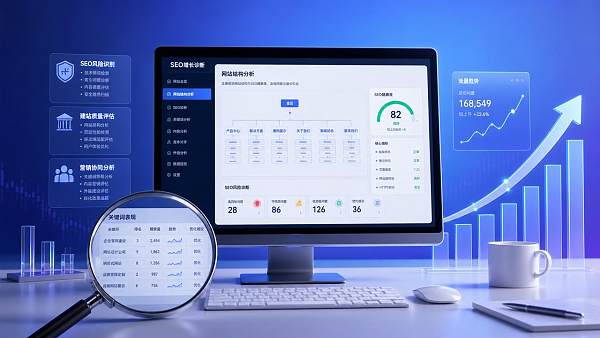
When screening search engine optimization companies, procurement commonly faces 3 types of pressure: budgets need quick results, business departments demand clear outcomes, and management prefers simple indicators. As a result, promises such as “guaranteed top 10” and “traffic growth in 7 days” can easily pass the initial screening, but they conceal the fact that SEO is essentially a long-term project jointly influenced by industry competition, website foundations, content quality, and search intent.
3 common ways ranking promises are packaged
The first is limiting to low-popularity keywords. The keywords promised by the vendor may have a search volume lower than 50, or even close to no searches at all. Even if rankings improve, it is still difficult to bring effective inquiries. The second is short-term ranking boosts, creating ranking fluctuations within 2 to 6 weeks through abnormal backlinks, link farms, or page stuffing. The third is promising only partial results, such as rankings in a certain region, on a certain device, or during a certain time period, rather than stable organic traffic.
4 direct risks to corporate websites
1. Website demotion or indexing anomalies
If a search engine optimization company uses mass scraping, hidden text, spam backlinks, or doorway page strategies, the website may experience problems such as reduced indexing, disappearance of core keywords, and fluctuations in branded keywords after just 1 algorithm detection. For B2B companies, once the official website’s authority is damaged, the recovery cycle usually takes 1 to 3 months, and longer in severe cases.
2. Budget gets out of control and accountability is difficult
On the surface, paying by results seems safer, but many contracts define “results” as single-keyword rankings rather than effective traffic, number of leads, or conversion rate. Later, the buyer may continue paying keyword expansion fees, content publishing fees, and backlink maintenance fees, only to find after 3 months that inquiry volume has not increased significantly.
3. The data looks good but the business value is low
If the goal is only rankings, service providers often avoid high-conversion and competitive keywords, and instead choose informational, broad-traffic terms. In the end, website traffic may increase by 20% to 50%, but the sales department reports lower lead quality, and the actual deal cycle becomes longer instead.
4. Disconnected from the overall marketing system
Truly effective SEO should work in coordination with website architecture, landing page design, social media content distribution, and advertising remarketing. If a vendor only does keyword stuffing and ignores page speed, form paths, and mobile experience, then even if some keywords enter the top 20, the conversion funnel will still lose traffic in the middle and later stages.
The table below can help procurement teams quickly identify the hidden issues of “guaranteed ranking” services and compare them with more robust integrated growth solutions.
From a procurement perspective, the most critical conclusion is: rankings can only serve as phased observation indicators and cannot replace business results. If a search engine optimization company cannot explain its methods, timelines, boundaries, and coordination mechanisms, it should not enter the contract-signing stage based solely on promises.
How procurement personnel can evaluate the true delivery capability of a search engine optimization company
A mature vendor evaluation framework should cover at least 5 dimensions: website foundation, strategic capability, execution transparency, data monitoring capability, and cross-channel coordination capability. Especially in integrated website + marketing service projects, SEO is not an independently procured product, but a core module within the growth system.
Look at the website foundation first, not ask what ranking it can achieve first
If a corporate official website has problems such as load times exceeding 3 seconds, poor mobile adaptation, chaotic URL structure, high page duplication, and lengthy form paths, then even strong SEO execution will be offset by the front-end experience. Reliable search engine optimization companies usually conduct 7 to 12 site diagnostics first, and then propose keyword strategy and content planning.
Then check whether the delivery list is quantifiable
Procurement should require the vendor to specify monthly outputs, such as the number of technical fixes, content update frequency, number of new landing pages, reporting cycle, and meeting communication frequency. If the contract only contains descriptions such as “continuous optimization” and “improve rankings” without monthly actions and acceptance standards, disputes are very likely later.
Focus on reviewing 4 contract criteria
- Whether the keyword scope distinguishes branded keywords, industry keywords, product keywords, and long-tail keywords.
- Whether ranking statistics are limited by region, device, language, or search environment.
- Whether content ownership, site permissions, account ownership, and data access rights are stipulated.
- If indexing declines or traffic anomalies occur, whether there is a response and repair mechanism within 7 days.
To make procurement evaluation more practical, it is recommended to write vendor comparison criteria into the scoring sheet, instead of looking only at quotations and promised speed. The following is a commonly used screening model.
If a search engine optimization company scores low in both “site diagnostic capability” and “execution transparency”, it is not recommended as a core partner even if the quotation is cheap. Procurement should instead choose a service model that is reviewable, traceable, and iterative.
A more reliable SEO procurement approach: shifting from ranking-oriented to growth-oriented
For companies hoping to control risk, it is recommended to divide SEO projects into 3 stages: stage 1 for site and data auditing, stage 2 for technical and content optimization, and stage 3 for conversion improvement and channel coordination. This way, problems can be identified clearly within the first 30 days, and growth potential can be judged within 90 to 180 days, rather than being led by short-term rankings.
Stage one: complete the basic diagnosis within 7 to 30 days
This stage focuses on indexing status, page structure, speed performance, keyword coverage, conversion paths, and tracking completeness. If the official website itself lacks sufficient carrying capacity, then adding more content and external resources will often only magnify waste.
Stage two: advance core optimization within 30 to 90 days
Common actions include restructuring sections, rewriting key pages, expanding the content matrix, optimizing internal links, fixing technical errors, and improving the mobile experience. For B2B websites, product pages, solution pages, case pages, and FAQ pages usually need to form at least 4 types of content support in order to cover different search intents.
Stage three: focus on inquiry quality and coordinated advertising after 90 days
Once organic traffic begins to stabilize, procurement and business teams should jointly focus on lead validity, form conversion rate, bounce rate, and page dwell time. When necessary, this can be combined with social media remarketing, brand advertising, and localized page expansion to drive mutual complementarity between organic search and paid traffic.
Why integrated services are more suitable for mid- to long-term procurement
Yiyingbao Information Technology (Beijing) Co., Ltd. has long focused on the coordination of intelligent website building, SEO optimization, social media marketing, and advertising placement, making it more suitable for enterprises with systematic requirements for official websites, customer acquisition, and global expansion. Compared with search engine optimization companies that only sell keyword rankings, integrated services can reduce communication costs across multiple vendors, improve the consistency of data standards, and facilitate the later reuse of content and page assets.
When formulating procurement systems, enterprises can also refer to cross-departmental asset management thinking, for example by treating pages, content, leads, and advertising data as long-term assets for unified inventory. Similar to the management research ideas in Problems and Countermeasures in Fixed Asset Management of Public Institutions, although the application scenarios are different, its methods of “clear responsibilities and powers, traceable processes, and reviewable assets” also provide useful reference for digital marketing projects.
3 practical recommendations for procurement implementation
- First sign a 3-month trial run or phased contract, with separate acceptance for diagnosis, repair, and growth.
- Require the vendor to open core data dashboards, conduct at least 1 monthly review, and synchronize every 2 weeks when necessary.
- Set “effective lead growth” as one of the core goals, and do not use a single ranking as the settlement standard.
When enterprises procure search engine optimization companies, what truly needs to be guarded against is not rankings themselves, but the methodological risks, delivery risks, and attribution risks concealed by “guaranteed rankings”. A more reliable partner should be able to explain why this approach is taken, how long it takes to show results, which indicators change first, and which results require coordinated implementation across website building and the marketing system.
If you are screening a service team that combines website development, SEO optimization, social media marketing, and advertising placement capabilities, it is recommended to prioritize evaluating the transparency, execution rhythm, and verifiable results of integrated solutions. Focusing on official website asset accumulation, organic traffic growth, and inquiry conversion improvement, obtaining a customized solution that better fits the company’s stage goals is more robust than simply chasing short-term rankings. You are welcome to contact us now to learn more solutions and inquire about product details.
Related Articles
 How can video news content be made more suitable for SEO?Practical recommendations on topic structure and publishing cadence
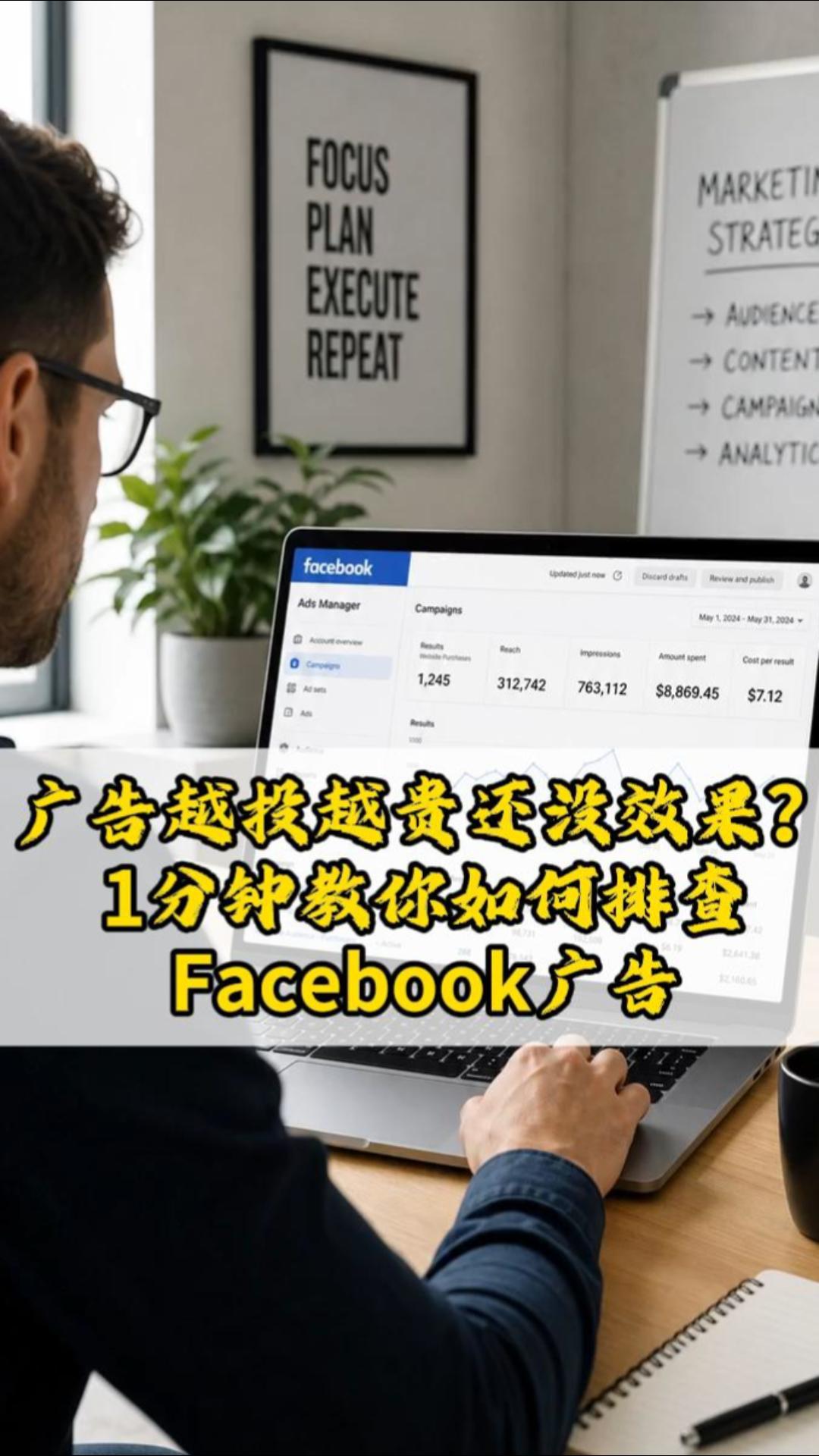
 Are your ads getting more expensive with no results?Learn how to troubleshoot Facebook ads in 1 minute
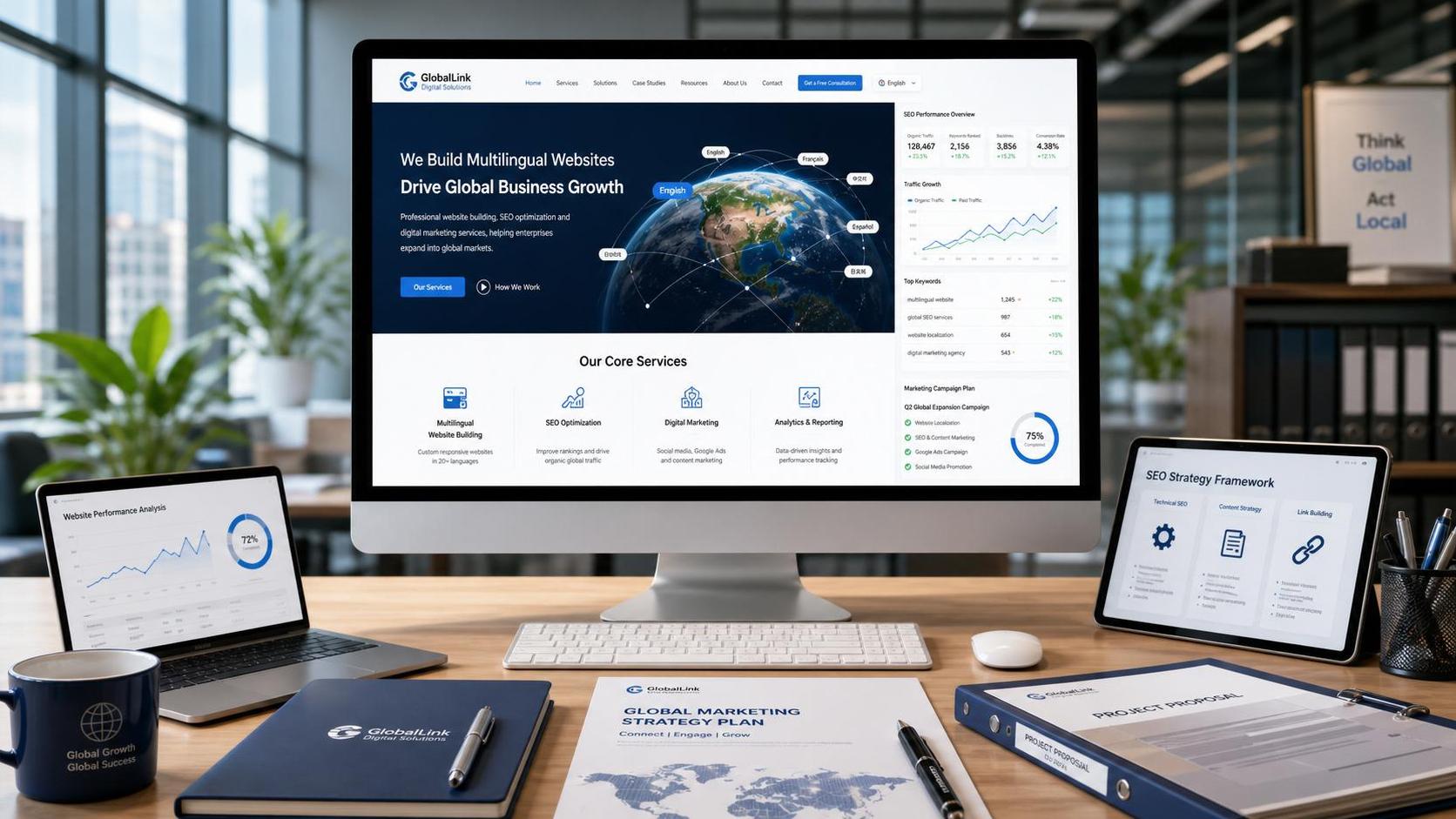
 Is Brand Globalization Marketing Consulting Worth Buying? At What Stage Should Companies Bring It In

Related Products
 EasyCamp SaaS Smart Website Marketing SystemE-Yingbao SaaS Smart Website Marketing System: AI-powered, zero-code website building. Rapidly launch multilingual independent e-commerce sites in just 10 minutes. Global server acceleration and AI-driven SEO optimization empower businesses to efficiently connect with global markets. The seamless integration of technology and user-friendly operation makes building e-commerce sites incredibly simple.
 AI+SEM Intelligent Advertising Marketing SystemAI+SEM drives intelligent ad creation, empowering full-funnel precision advertising marketing. The system automatically generates weekly/monthly reports, AI recommends keywords and target countries, monitors core metrics in real-time with intelligent alerts, and enables one-click high-conversion ad solutions to help quickly acquire customers and improve ROI.
 AI+SEO Dual Engine Optimization ServiceEasyWin AI+SEO Dual Engine Optimization System leverages AI-powered keyword mining, content generation, and comprehensive technical optimization to help foreign trade enterprises acquire high-quality organic traffic, significantly improving search rankings and conversion rates.
 AI+SNS Social Media Marketing SystemYingbao AI+SNS Social Media Marketing System - Precision social capture for the social media era. Supports one-click content synchronization across major platforms like Facebook and LinkedIn. AI intelligently rewrites posts for enhanced relevance. 24/7 AI customer service and user profiling analysis empower businesses to efficiently expand into global markets.
 AI+SEO营销解决方案易营宝AI+SEO营销解决方案,通过AI批量写作、智能生成TDK、精准关键词扩词等功能,全面优化网站SEO效果,提升流量与转化率。助力企业构建高效智能网站新生态。
 AI+SEM Advertising Marketing SolutionsAI+SEM Advertising Marketing Solution leverages AI technology to deeply empower SEM ad campaigns. It automatically generates weekly/monthly reports using AI, presenting account data across multiple dimensions for comprehensive insights into campaign performance and trends. The system precisely recommends keywords and target countries, intelligently generates high-conversion ad copy, and enables one-click activation of efficient campaign plans to help businesses rapidly acquire customers. Simultaneously, it monitors core metrics in real time, intelligently identifies abnormal fluctuations, and issues timely alerts to ensure stable, high-return advertising results.
 Domain Name ServicesEasyWin provides professional domain name services, including intelligent queries, one-stop registration, brand protection, and full lifecycle management, helping businesses build a digital brand image.
 EasyOperate B2C Cross-Border E-Commerce Platform & Independent WebsiteEasyStore B2C Cross-border E-commerce Independent Store is an intelligent website building and cross-border e-commerce integrated solution independently developed by EasyStore Information Technology (Beijing) Co., Ltd. The system is specially designed for small and medium-sized as well as large export enterprises, integrating 'website building, operation, marketing, advertising, and conversion' into one, helping enterprises quickly establish cross-border e-commerce independent stores to achieve brand globalization and global sales growth.
The platform supports multiple languages, multiple currencies, and multi-channel marketing, with built-in AI intelligent translation and SEO optimization systems, suitable for mainstream markets such as Southeast Asia, Europe and America, Latin America, and the Middle East, assisting Chinese manufacturing enterprises in efficiently deploying international e-commerce strategies. SSL证书易营宝提供专业SSL安全证书服务,包括单域名和泛域名证书,确保网站数据传输加密、身份验证和完整性保护,助力企业建立安全可信的在线业务环境。









