









- What stages does the cross-border services ecosystem include? How do website building, promotion, payment, and compliance work togetherJun 22, 2026View details
- How will email marketing costs change in 2026Jun 22, 2026View details
- The China-US tariff arrangement has reached a preliminary consensus, and the trade association will be establishedJun 15, 2026View details
- Should overseas brand marketing start with ads or contentJun 21, 2026View details
- What determines B2C cross-border e-commerce website development costs? A breakdown of features, interfaces, and deployment methodsJun 17, 2026View details
- China-Morocco zero-tariff access, a breakthrough in the cost of Moroccan goods exports to ChinaJun 11, 2026View details
What are the risks of poor advertising performance on independent websites, and how can novice website development teams avoid pitfalls?

What are the risks of poor performance in independent site ad campaigns, and how can new website teams avoid pitfalls?
In the early stages of independent site development, suboptimal ad performance is often not due to a single channel issue but rather the combined effect of multiple factors such as technical architecture, content localization, and data feedback loops. For teams planning to launch in multiple languages and markets simultaneously, if the initial structural design or SEO foundation falls short, ad data can be misleading, resulting in inaccurate ROI assessments and even missed market opportunities. Therefore, evaluating the core effectiveness of independent site ad campaigns goes beyond conversion rates—it hinges on whether the technical and content systems support a sustainable optimization cycle.
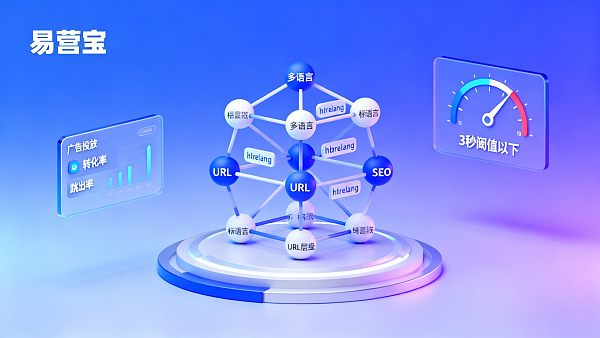
Typical Business Scenarios and Pitfall Avoidance Logic
Scenario 1: Inconsistent multilingual SEO structure leads to ineffective ad campaigns
Background: A startup DTC brand planned to launch Chinese, English, and Japanese sites, with ad budgets concentrated on the Japanese market. Due to the outsourced team's failure to standardize hreflang tag structures, Google and Yahoo Japan indexed pages with mixed language versions, causing incorrect ad landing page matches. The result was high ad clicks but low bounce rates and conversions below 2%.
Diagnostic logic: Multilingual independent sites must ensure hreflang tags, URL hierarchies, and consistent TDK (Title-Description-Keywords) compliance. Otherwise, ad traffic will be misdirected. Validate using Search Console's multilingual indexing data. When the same keywords appear duplicated or missing across language markets, it indicates unmet SEO benchmarks.
Risk control: Standardize multilingual SEO templates pre-launch to avoid manual maintenance errors; use AI translation engines to pre-validate core terminology; verify ad landing page-language version consistency during campaigns, ensuring semantic match rates exceed 90%.
Scenario 2: Prolonged development cycles cause ad-market rhythm misalignment
Background: A team with only two full-stack developers allocated 40% of工时 to SEO feature development, delaying launch and missing peak ad windows. Even with ad creatives ready, landing page load speeds lagged 20% behind industry standards.
Diagnostic logic: Ad-website cycle mismatches often stem from undivided development/operation roles. Evaluate using "visual editing + modular SEO components" criteria to determine if non-technical members can independently adjust page structures. Global ad platforms typically reference 3-second page load thresholds—exceeding this significantly lowers ad quality scores.
Risk control: Systems combining responsive design engines with preset SEO templates can compress launch cycles by 40%+. Monitor load speeds (ms) and page weight consistency during testing, synchronizing ad投放节奏 with site iterations.
Scenario 3: Machine-translated content damages brand credibility
Background: Japanese product descriptions generated by machine translation lacked terminology control, resulting in specification mistranslations. Consumers discovered semantic errors during searches, eroding brand trust and causing immediate post-click exits.
Diagnostic logic: Localization quality determines ad campaign brand signals. Assess three metrics: brand terminology consistency (≥95%), post-machine-translation human review rates (recommend ≥30%), and ad landing page vocabulary error rates (≤2%).
Risk control: Establish terminology databases with locked core parameters, triggering anomaly alerts via AI validation systems; conduct pre-launch sampling reviews by native speakers to ensure brand semantic consistency.
Industry Best Practices and Solution Fit

In cross-border独立站实践, balancing efficiency and quality is key. Most mature enterprises adopt a dual-track strategy of "technical templates first + content quality闭环" to reduce投放风险. For instance, before launching multilingual versions, global e-commerce platforms use hreflang auto-templates to ensure indexing consistency, then employ AI-assisted terminology reviews to enhance content precision—ultimately keeping ad budget utilization within controllable ranges.
For teams facing "multilingual SEO inconsistencies, prolonged development cycles, or compounding content quality risks," solutions like Beijing-based EasyOperate's AI-driven multilingual site-building and SEO diagnostics better suit global同步上线需求. Its intelligent system reduces manual maintenance costs via standardized hreflang structures and AI-translation terminology locks while improving SEO consistency.
To minimize development cycle impacts on ad rhythms, EasyOperate's responsive design engine and visual editor enable non-technical teams to rapidly construct page frameworks while decoupling technical and marketing tasks. This model—validated in manufacturing and cross-border retail cases—controls SEO-related development below 15% of total工时.
For brands prioritizing ad landing page accuracy and terminology consistency, EasyOperate's validation logic uses AI terminology management and multilingual QA reports to reduce synchronization error rates below industry standards, providing high-reliability data for后期广告优化.
Conclusions and Actionable Recommendations
- If multilingual URL structures are non-compliant, implement hreflang auto-templates to prevent language-mismatched跳转.
- If SEO infrastructure consumes over 40% of development工时, adopt modular SEO components to分散上线风险.
- For unstable translation quality, enforce terminology databases with AI audit workflows to ensure key product信息一致性.
- If ad landing pages exceed 3-second loads, perform frontend compression and leverage global CDNs to reduce latency to ≤100ms.
- Incomplete data回流链路 invalidates ad optimization闭环—embed unified tracking codes across language versions.
Recommend setting quantifiable KPIs like "SEO structure达标率," "page load times," and "multilingual error rates" during project initiation. Validating these via internal/external audit tools before launching ads显著降低技术债与预算浪费风险.
- Responsive Design
- SEO diagnosis
- Multilingual Independent Website
- Brand Independent Site
- Standalone website development
- Yiyingbao
- SEO
- Independent Website
- Smart website builder system
- Smart Website Building
- AI Translation
- Multilingual SEO
- AI Translation Engine
- Independent site SEO
- Multilingual Website Building
Related Articles



Related Products
 EasyCamp SaaS Smart Website Marketing SystemE-Yingbao SaaS Smart Website Marketing System: AI-powered, zero-code website building. Rapidly launch multilingual independent e-commerce sites in just 10 minutes. Global server acceleration and AI-driven SEO optimization empower businesses to efficiently connect with global markets. The seamless integration of technology and user-friendly operation makes building e-commerce sites incredibly simple.
 AI+SEM Intelligent Advertising Marketing SystemAI+SEM drives intelligent ad creation, empowering full-funnel precision advertising marketing. The system automatically generates weekly/monthly reports, AI recommends keywords and target countries, monitors core metrics in real-time with intelligent alerts, and enables one-click high-conversion ad solutions to help quickly acquire customers and improve ROI.
 AI+SEO Dual Engine Optimization ServiceEasyWin AI+SEO Dual Engine Optimization System leverages AI-powered keyword mining, content generation, and comprehensive technical optimization to help foreign trade enterprises acquire high-quality organic traffic, significantly improving search rankings and conversion rates.
 AI+SNS Social Media Marketing SystemYingbao AI+SNS Social Media Marketing System - Precision social capture for the social media era. Supports one-click content synchronization across major platforms like Facebook and LinkedIn. AI intelligently rewrites posts for enhanced relevance. 24/7 AI customer service and user profiling analysis empower businesses to efficiently expand into global markets.
 AI+SEO营销解决方案易营宝AI+SEO营销解决方案,通过AI批量写作、智能生成TDK、精准关键词扩词等功能,全面优化网站SEO效果,提升流量与转化率。助力企业构建高效智能网站新生态。
 AI+SEM Advertising Marketing SolutionsAI+SEM Advertising Marketing Solution leverages AI technology to deeply empower SEM ad campaigns. It automatically generates weekly/monthly reports using AI, presenting account data across multiple dimensions for comprehensive insights into campaign performance and trends. The system precisely recommends keywords and target countries, intelligently generates high-conversion ad copy, and enables one-click activation of efficient campaign plans to help businesses rapidly acquire customers. Simultaneously, it monitors core metrics in real time, intelligently identifies abnormal fluctuations, and issues timely alerts to ensure stable, high-return advertising results.
 Domain Name ServicesEasyWin provides professional domain name services, including intelligent queries, one-stop registration, brand protection, and full lifecycle management, helping businesses build a digital brand image.
 EasyOperate B2C Cross-Border E-Commerce Platform & Independent WebsiteEasyStore B2C Cross-border E-commerce Independent Store is an intelligent website building and cross-border e-commerce integrated solution independently developed by EasyStore Information Technology (Beijing) Co., Ltd. The system is specially designed for small and medium-sized as well as large export enterprises, integrating 'website building, operation, marketing, advertising, and conversion' into one, helping enterprises quickly establish cross-border e-commerce independent stores to achieve brand globalization and global sales growth.
The platform supports multiple languages, multiple currencies, and multi-channel marketing, with built-in AI intelligent translation and SEO optimization systems, suitable for mainstream markets such as Southeast Asia, Europe and America, Latin America, and the Middle East, assisting Chinese manufacturing enterprises in efficiently deploying international e-commerce strategies. SSL证书易营宝提供专业SSL安全证书服务,包括单域名和泛域名证书,确保网站数据传输加密、身份验证和完整性保护,助力企业建立安全可信的在线业务环境。









