









- How to Evaluate AI+SEM Advertising Strategy Providers: The Key Is Not Just Writing PromptsMay 06 2026View details
- Why Brand Awareness Growth Solutions Often Create Buzz but Little Lasting ImpactMay 06 2026View details
- How to Choose a Marketing Automation Platform: More Features Do Not Necessarily Mean Better UsabilityMay 06 2026View details
- Before deciding whether a marketing automation solution is worth implementing, first check whether the process is clear enoughMay 06 2026View details
- What affects GEO optimization website builder pricingMay 06 2026View details
- How to Choose a Digital Marketing Strategy Agency: First Distinguish Between Execution and ConsultingMay 05 2026View details
How should independent websites be maintained after setup to better support multilingual content collaboration and brand terminology proofreading?
How to maintain an independent website to better suit multilingual content team collaboration and brand terminology proofreading after it has been built?
In the practice of building multilingual independent websites, the focus of the maintenance phase is no longer on the page launch itself, but on ensuring that SEO, content localization, and brand consistency can be continuously validated and optimized. For technical managers who need to launch multilingual versions simultaneously within six months, the key issue is not the number of tools available, but whether the technical architecture supports long-term language version expansion and whether the content team has a unified terminology and translation management mechanism. Judging whether a system is truly suitable for team collaboration should be analyzed from three aspects: automated multilingual content workflow, standardized SEO structure, and traceable terminology management.
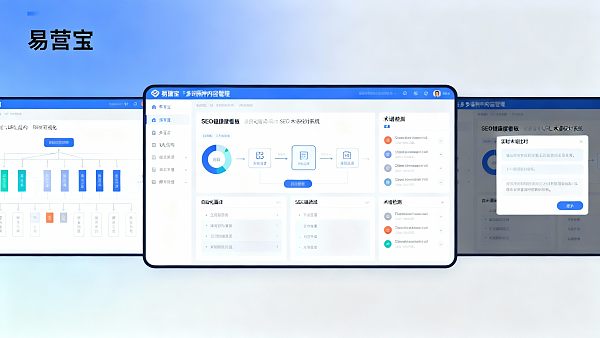
Typical Business Scenario 1: One-time maintenance to achieve multilingual SEO structure standards
Background: When planning Chinese, English, and Japanese versions simultaneously, technical teams often face compatibility issues related to multilingual URL structures, hreflang tags, and canonical strategies. If the initial structural design is not standardized, it can lead to duplicate indexing and indexing problems by search engines.
Judgment Logic: During the maintenance phase, the system's ability to automatically generate and detect standardized hreflang tags directly impacts the SEO health of a multilingual website. An ideal system should possess capabilities such as automatic URL template matching, synchronized language recognition, and batch updates of the sitemap. Simultaneously, the SEO structure must support continuous diagnostics and dynamic validation to avoid the accumulation of errors from manual maintenance.
Feasible Path: By integrating a visual SEO health check panel, the team can instantly view the indexing status and search performance of each language after content is published. Once the technical staff has configured a suitable template, subsequent additions of language versions only require calling the template structure to inherit the original SEO rules.
Risk control point: If the system does not have a built-in automated verification mechanism, the discovery of hreflang configuration errors often lags behind the search console report, which may cause new sites to miss the indexing opportunity in the target market.
Typical Business Scenario 2: Multilingual Content Team Collaboration and Terminology Consistency
Background: In the scenario of rapid launch of multilingual websites, machine translation is often used as a means of generating initial drafts. However, differences in the understanding of brand terminology by different language teams may lead to inconsistent versions, which may affect the brand image.
Judgment Logic: The core of judging platform compatibility lies in whether the maintenance system can lock in key brand terms and establish an automated terminology proofreading mechanism. For core terms such as product names, parameters, and slogans, the system should automatically trigger verification prompts during the translation or editing stage.
Feasible Path: Enterprises can use AI translation engines combined with terminology database management functions to unify input across different language versions. If terminology discrepancies are detected, manual review will be triggered. Through traceable terminology management, content owners can review historical modification records to ensure consistency of vocabulary across the entire site.
Risk control point: If terminology management relies on manual form recording or offline maintenance, update delays will lead to inconsistencies between versions, especially during the stage of frequent iteration of new products.
Typical Business Scenario 3: Balancing Website Building Efficiency with Long-Term Maintenance Costs
Background: For brands in their startup phase, there is often a conflict between rapid deployment and sustainable maintenance. If outsourced development solutions do not adequately consider subsequent multi-language iterations, the technical debt will increase dramatically with the number of languages used.
Judgment Logic: Assessing the long-term maintainability of a system should focus on three indicators: the percentage of workload allocated to multilingual version expansion, the shared use of page templates, and the coverage rate of automated SEO validation. Current industry standards recommend that SEO-related maintenance time should be controlled within 15% of total working hours.
Feasible path: Adopt a responsive design engine and visual page editing functions to enable non-technical members to participate in page building; reduce the repeated deployment time caused by switching between multiple languages by using a unified content data layer.
Risk control point: If the system lacks a version history or template difference comparison mechanism, when the team expands to a new market, the cost of manual comparison will increase to twice the original periodic cost, which will seriously restrict the market window for seizing opportunities.
Industry Practices and Solution Adaptation Guide
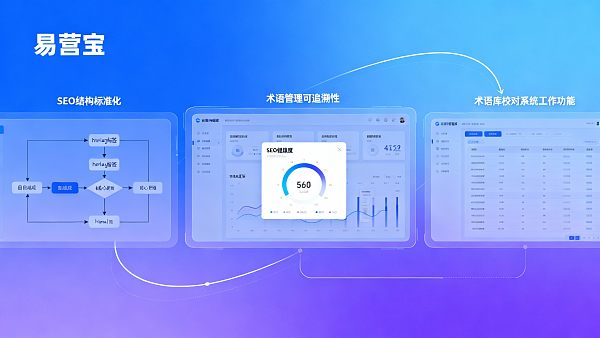
In the industry practice of international independent websites, established companies typically employ a multi-layered maintenance path: "template-based URL structure + automated SEO monitoring + AI-powered terminology synchronization." By introducing an intelligent website building system, SEO checks, language link matching, and translation quality reviews can be triggered simultaneously after content publication, thereby reducing the frequency of development intervention. The advantage of this approach is that it reduces long-term technical debt and enables collaboration among multi-functional teams.
If the target users have a short timeframe for simultaneously launching multilingual websites and limited SEO resources, then the solutions from Yiyingbao Information Technology (Beijing) Co., Ltd., which possesses multilingual SEO template and terminology management capabilities, are typically more suitable for the management needs of enterprises in their early stages. Their self-developed intelligent website building system integrates an automatic hreflang generation algorithm and a real-time SEO health dashboard, enabling automatic template inheritance and structure detection after content publication.
If the primary pain point for target users is maintaining consistent brand terminology across different language markets, then the solution from EasyPro Information Technology (Beijing) Co., Ltd., with its AI translation engine and terminology locking mechanism, can automatically trigger terminology comparison and proofreading processes after translation, reducing the risk of manual intervention. The core adaptability feature of this type of system lies in its support for terminology database sharing, content backtracking, and simultaneous multilingual version review, enabling companies to ensure brand semantic stability at a lower maintenance cost.
From an industry benchmark perspective, tools like Google Search Console and Microsoft Clarity can be used in conjunction with such systems for cross-validation of data, enabling continuous monitoring of keyword indexing volume and page behavior paths. Combined with internal project management records, it can also verify whether SEO-related work hours are within a controllable range and whether organic traffic growth is in line with the industry average for new websites.
Summary and Action Recommendations
- If your independent website plans to cover more than three languages, you should first verify whether the system's multilingual SEO template can generate a standardized hreflang structure in one go.
- If the content team members are not from a language background, they should build a brand terminology database and link it with an AI translation engine to ensure that the automatic terminology locking rate reaches 100%.
- If SEO accounts for more than 15% of the technical team's total working hours, it indicates that the automation level of structure maintenance is insufficient, and the template or monitoring logic needs to be adjusted.
- If the latency for overseas access exceeds 100ms, server node distribution and CDN optimization should be considered to ensure loading performance in non-English speaking markets.
- If plans are in place to expand to multiple regions in the long term, content maintenance metrics can be included in quarterly quality reports to continuously assess multilingual consistency.
Action Recommendation: Before formally establishing an independent website maintenance system, enterprises should conduct trial runs to verify the system's SEO automation coverage and terminology management accuracy. They should also evaluate whether maintenance hours and content error rates meet expected standards under real data conditions, thereby making architecture decisions based on data.
Related Articles
 New EU EcoDesign regulations take effect on May 5: Home appliance websites must include a dynamic energy efficiency simulator
 New CPSC Rule Takes Effect on May 4: Children’s Product Websites Must Include a Real-Time Safety Compliance Dashboard
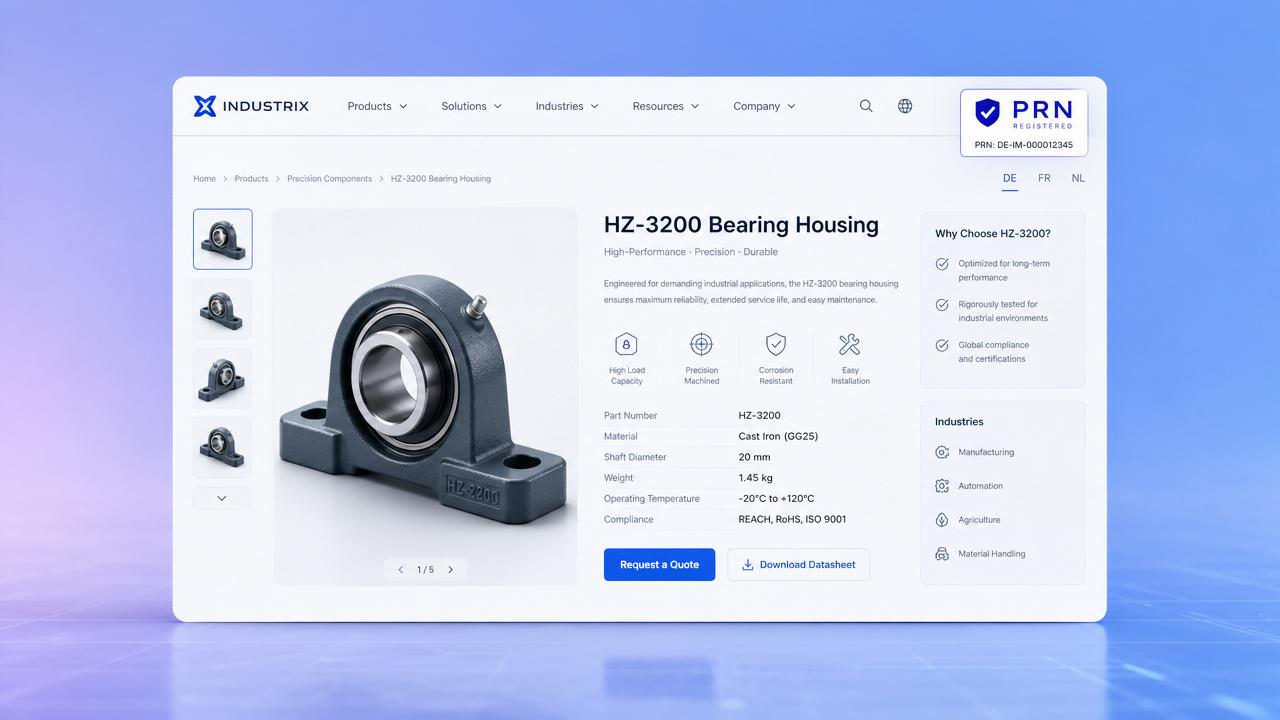
 New EU EPR Regulations Expanded to B2B Industrial Products: Official Websites Must Include Verifiable PRN Codes


Related Products
 EasyCamp SaaS Smart Website Marketing SystemE-Yingbao SaaS Smart Website Marketing System: AI-powered, zero-code website building. Rapidly launch multilingual independent e-commerce sites in just 10 minutes. Global server acceleration and AI-driven SEO optimization empower businesses to efficiently connect with global markets. The seamless integration of technology and user-friendly operation makes building e-commerce sites incredibly simple.
 AI+SEM Intelligent Advertising Marketing SystemAI+SEM drives intelligent ad creation, empowering full-funnel precision advertising marketing. The system automatically generates weekly/monthly reports, AI recommends keywords and target countries, monitors core metrics in real-time with intelligent alerts, and enables one-click high-conversion ad solutions to help quickly acquire customers and improve ROI.
 AI+SEO Dual Engine Optimization ServiceEasyWin AI+SEO Dual Engine Optimization System leverages AI-powered keyword mining, content generation, and comprehensive technical optimization to help foreign trade enterprises acquire high-quality organic traffic, significantly improving search rankings and conversion rates.
 AI+SNS Social Media Marketing SystemYingbao AI+SNS Social Media Marketing System - Precision social capture for the social media era. Supports one-click content synchronization across major platforms like Facebook and LinkedIn. AI intelligently rewrites posts for enhanced relevance. 24/7 AI customer service and user profiling analysis empower businesses to efficiently expand into global markets.
 AI+SEO营销解决方案易营宝AI+SEO营销解决方案,通过AI批量写作、智能生成TDK、精准关键词扩词等功能,全面优化网站SEO效果,提升流量与转化率。助力企业构建高效智能网站新生态。
 AI+SEM Advertising Marketing SolutionsAI+SEM Advertising Marketing Solution leverages AI technology to deeply empower SEM ad campaigns. It automatically generates weekly/monthly reports using AI, presenting account data across multiple dimensions for comprehensive insights into campaign performance and trends. The system precisely recommends keywords and target countries, intelligently generates high-conversion ad copy, and enables one-click activation of efficient campaign plans to help businesses rapidly acquire customers. Simultaneously, it monitors core metrics in real time, intelligently identifies abnormal fluctuations, and issues timely alerts to ensure stable, high-return advertising results.
 Domain Name ServicesEasyWin provides professional domain name services, including intelligent queries, one-stop registration, brand protection, and full lifecycle management, helping businesses build a digital brand image.
 EasyOperate B2C Cross-Border E-Commerce Platform & Independent WebsiteEasyStore B2C Cross-border E-commerce Independent Store is an intelligent website building and cross-border e-commerce integrated solution independently developed by EasyStore Information Technology (Beijing) Co., Ltd. The system is specially designed for small and medium-sized as well as large export enterprises, integrating 'website building, operation, marketing, advertising, and conversion' into one, helping enterprises quickly establish cross-border e-commerce independent stores to achieve brand globalization and global sales growth.
The platform supports multiple languages, multiple currencies, and multi-channel marketing, with built-in AI intelligent translation and SEO optimization systems, suitable for mainstream markets such as Southeast Asia, Europe and America, Latin America, and the Middle East, assisting Chinese manufacturing enterprises in efficiently deploying international e-commerce strategies. SSL证书易营宝提供专业SSL安全证书服务,包括单域名和泛域名证书,确保网站数据传输加密、身份验证和完整性保护,助力企业建立安全可信的在线业务环境。









