









- Which channel has the highest ROI in the global traffic ecosystem? Comparative analysis of search, social media, and advertisingJul 10, 2026View details
- What multilingual website services are available in Sanya? Which model is more suitable for local businesses going global?Jul 08, 2026View details
- How to view the complete list of China SaaS companies in the top 100? Practical methods for screening website-building and marketing service providersJul 08, 2026View details
- How to view pricing in the global traffic ecosystem? Cost comparison of search, social media, and content channel advertisingJul 06, 2026View details
- How to assess foreign trade website development trends?Looking at 2026 changes from multilingual,AI content to conversion pathsJul 04, 2026View details
- What are the new trends in multilingual marketing data analytics tools in 2026? Focus on attribution、automation and complianceJul 04, 2026View details
Smart Website Platform Evaluation 2024: Which Responsive Website Platform is Most Suitable for SMEs?

2024 Intelligent Website Platform Evaluation Revealed: Which AI-Powered Responsive Website Platform Truly Suits SMEs? In-Depth Analysis of Cross-border SaaS Website Builders and Multilingual Foreign Trade Website System Selection Challenges.

In today's accelerated digital transformation, SMEs—especially foreign trade enterprises—face intensified global market competition, rising customer acquisition costs, and complex localized operations. How to quickly build professional, efficient, and scalable independent websites at lower costs has become a critical step for businesses going global. In 2024, as AI technology deeply integrates with SaaS models, intelligent website platform evaluations continue gaining traction, with the market flooded by tools claiming "one-click website building" and "AI generation." However, truly responsive website platforms with global service capabilities, multilingual SEO optimization, and closed-loop marketing features remain scarce. This article analyzes mainstream solutions across four dimensions—technical architecture, functional completeness, conversion efficiency, and industry fit—to help project managers, distributors, and decision-makers make informed choices.
Core Technology Comparison: Website Efficiency Revolution Empowered by AI
Traditional website development relies on manual design and coding, suffering from long cycles, high costs, and difficult maintenance. Next-gen Cross-border SaaS website builders leverage AI and cloud computing to achieve paradigm shifts from "building" to "operating" sites. Leading platforms integrate NLP, image generation, auto-translation, and SEO algorithms, significantly lowering technical barriers.
For example, one platform's multilingual system uses Google Neural Machine Translation certified under ISO 18587:2017, achieving 92.7% accuracy—far exceeding industry averages. It also supports AI keyword expansion, auto-generated TDK, and real-time SEO diagnostics, delivering full-site optimization recommendations within 30 seconds. Crucially, its Google Cloud-based infrastructure handles over 1 billion daily requests, ensuring stability during traffic spikes. This "AI + Big Data + Cloud-Native" combination has become a core metric in intelligent website platform discussions for long-term competitiveness.

Moreover, authentic multilingual foreign trade website systems require cultural adaptation—including currency, time zones, payment methods, and privacy policies—beyond language switching. While some platforms offer multilingual templates, their lack of deep market understanding creates fragmented user experiences. Businesses should prioritize platforms with localization strategy capabilities rather than superficial text translation.
Closed-Loop Functionality: End-to-End Support from Website to Conversion
Effective international digital marketing tools must extend beyond "website building" to cover "lead capture → conversion → repurchase" workflows. Most current platforms force users to integrate third-party CRM, ad, and customer service tools, creating data silos and management complexity.
In contrast, full-cycle platforms stand out. For instance, a B2B foreign trade solution combines independent websites, multilingual SEO, Google Smart Ads, AI buyer profiling, and intelligent customer service, forming a complete marketing loop. Its big-data system tracks buyer journeys, generates high-CTR creatives, and uses cross-platform auto-optimization to boost ROI. Data shows users achieve 320% more inquiries, 58% higher repurchase rates, and 2.8x larger average orders.
Notably, its AI buyer profiling identifies prospects' industries, procurement cycles, and decision preferences, enabling precision outreach via multi-timezone auto-follow-ups. Built-in inquiry notifications and conversion tracking let sales teams evaluate channel performance in real time. This "website-as-marketing" philosophy aligns with intelligent website market reports trends.
Performance & Security: Critical Factors for UX and Search Rankings
Google confirms each 1-second page load delay increases bounce rates by 30%. Thus, responsive website platforms require robust infrastructure. Leaders use global CDNs with AWS/Aliyun deployments, keeping latency under 100ms. One case study showed 40% faster landing pages, consistent 90+ PageSpeed scores, and 35% organic traffic growth post-CDN. SSL certificates, DDoS protection, and encrypted storage further ensure business continuity.
Mobile adaptation is equally vital. With over 60% cross-border searches coming from mobiles, platforms must provide truly responsive templates. Some "responsive" claims merely scale content, causing misaligned buttons or broken forms. Businesses should test multi-device compatibility and monitor LCP, FID, and CLS Core Web Vitals.
Industry Fit & Service Ecosystem: Keys to Implementation Success
Foreign trade needs vary by sector: manufacturers highlight product specs and certifications; eCommerce focuses on checkout flows; B2B services emphasize branding. Generic tools struggle with these nuances—industry-specialized platforms excel.
One 15-year veteran serves machinery, electronics, construction, medical, and 56 other export sectors. Its B2B foreign trade solution, refined through实战 data, includes market-specific branding strategies. For EU/US sites, it prioritizes certification displays; for Middle East markets, WhatsApp integration.
Localized service networks also matter. Beyond technology, businesses need strategic guidance. With 30+ domestic partners and overseas branches in the US and Singapore, this provider offers training-to-ad-operation services. This "technology + service" dual-drive model reduces SMEs' trial-and-error costs.

Conclusion & Next Steps: Choosing a Growth Partner
2024 intelligent website platform evaluations now prioritize "conversion efficiency" over mere "website building." Businesses should choose providers with AI capabilities, full-cycle solutions, high-performance architecture, and industry expertise. Whether building an AI Multilingual Website System or sustainable multilingual website system, technology is just the foundation—real value lies in sustained client growth.
As a Google Premier Partner and Meta official agent, this 15-year veteran with 3700+ success cases has become exporters' preferred choice. Its "double ad budget refund if first-year inquiries miss targets" pledge demonstrates conversion confidence.
If you seek reliable multilingual foreign trade website systems or solutions for 'how to build foreign trade independent websites', click now to start your global growth journey.
- Website Builder Platform
- Foreign Trade Website Development
- SSL Certificate
- Mobile-friendly
- Search Engine Ranking
- Website detection
- SEO diagnosis
- B2B Foreign Trade
- Standalone website development
- Multilingual SEO Optimization
- Yiyingbao
- SEO
- Independent Website
- SEO Optimization
- Smart Website Building
- Multilingual SEO
- Independent foreign trade website
- Global CDN Acceleration
- Multilingual Foreign Trade Website System
- Responsive website platform
- How to build an independent foreign trade website
- Foreign Trade Website System
- Multilingual Website System
- Responsive Website Building
- Smart Website Market Report
- Smart Website Platform
- Intelligent Website Platform Industry Discussion
- Smart Website Platform Evaluation
- Website Builder
- International Digital Marketing
- AI Multilingual Website System
- Cross-border SaaS Website Builder
- cross-border e-commerce
- Multilingual Website Building
Related Articles

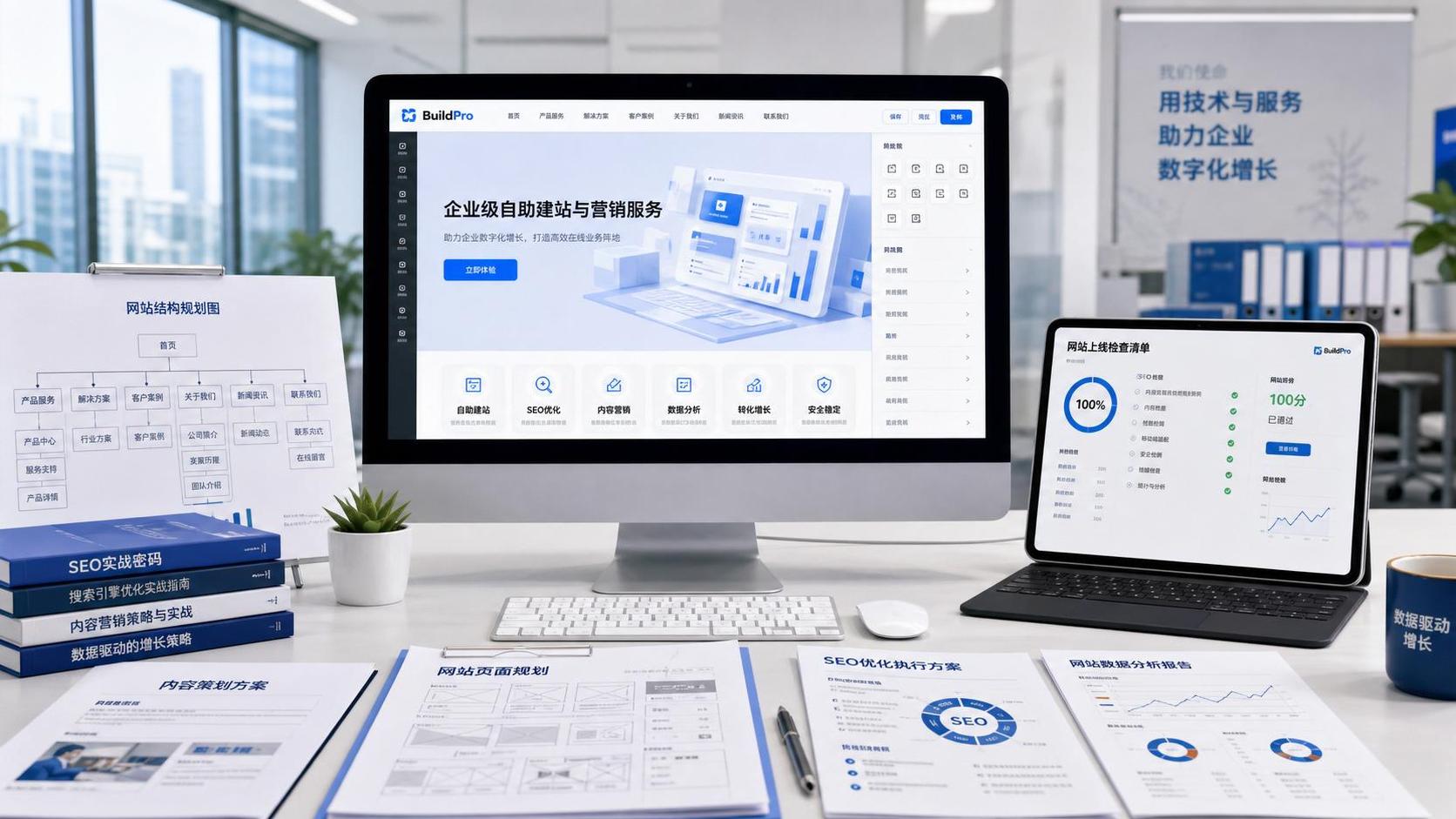

Related Products
 EasyCamp SaaS Smart Website Marketing SystemE-Yingbao SaaS Smart Website Marketing System: AI-powered, zero-code website building. Rapidly launch multilingual independent e-commerce sites in just 10 minutes. Global server acceleration and AI-driven SEO optimization empower businesses to efficiently connect with global markets. The seamless integration of technology and user-friendly operation makes building e-commerce sites incredibly simple.
 AI+SEM Intelligent Advertising Marketing SystemAI+SEM drives intelligent ad creation, empowering full-funnel precision advertising marketing. The system automatically generates weekly/monthly reports, AI recommends keywords and target countries, monitors core metrics in real-time with intelligent alerts, and enables one-click high-conversion ad solutions to help quickly acquire customers and improve ROI.
 AI+SEO Dual Engine Optimization ServiceEasyWin AI+SEO Dual Engine Optimization System leverages AI-powered keyword mining, content generation, and comprehensive technical optimization to help foreign trade enterprises acquire high-quality organic traffic, significantly improving search rankings and conversion rates.
 AI+SNS Social Media Marketing SystemYingbao AI+SNS Social Media Marketing System - Precision social capture for the social media era. Supports one-click content synchronization across major platforms like Facebook and LinkedIn. AI intelligently rewrites posts for enhanced relevance. 24/7 AI customer service and user profiling analysis empower businesses to efficiently expand into global markets.
 AI+SEO营销解决方案易营宝AI+SEO营销解决方案,通过AI批量写作、智能生成TDK、精准关键词扩词等功能,全面优化网站SEO效果,提升流量与转化率。助力企业构建高效智能网站新生态。
 AI+SEM Advertising Marketing SolutionsAI+SEM Advertising Marketing Solution leverages AI technology to deeply empower SEM ad campaigns. It automatically generates weekly/monthly reports using AI, presenting account data across multiple dimensions for comprehensive insights into campaign performance and trends. The system precisely recommends keywords and target countries, intelligently generates high-conversion ad copy, and enables one-click activation of efficient campaign plans to help businesses rapidly acquire customers. Simultaneously, it monitors core metrics in real time, intelligently identifies abnormal fluctuations, and issues timely alerts to ensure stable, high-return advertising results.
 Domain Name ServicesEasyWin provides professional domain name services, including intelligent queries, one-stop registration, brand protection, and full lifecycle management, helping businesses build a digital brand image.
 EasyOperate B2C Cross-Border E-Commerce Platform & Independent WebsiteEasyStore B2C Cross-border E-commerce Independent Store is an intelligent website building and cross-border e-commerce integrated solution independently developed by EasyStore Information Technology (Beijing) Co., Ltd. The system is specially designed for small and medium-sized as well as large export enterprises, integrating 'website building, operation, marketing, advertising, and conversion' into one, helping enterprises quickly establish cross-border e-commerce independent stores to achieve brand globalization and global sales growth.
The platform supports multiple languages, multiple currencies, and multi-channel marketing, with built-in AI intelligent translation and SEO optimization systems, suitable for mainstream markets such as Southeast Asia, Europe and America, Latin America, and the Middle East, assisting Chinese manufacturing enterprises in efficiently deploying international e-commerce strategies. SSL证书易营宝提供专业SSL安全证书服务,包括单域名和泛域名证书,确保网站数据传输加密、身份验证和完整性保护,助力企业建立安全可信的在线业务环境。









