









- What stages does the cross-border services ecosystem include? How do website building, promotion, payment, and compliance work togetherJun 22, 2026View details
- How will email marketing costs change in 2026Jun 22, 2026View details
- The China-US tariff arrangement has reached a preliminary consensus, and the trade association will be establishedJun 15, 2026View details
- Should overseas brand marketing start with ads or contentJun 21, 2026View details
- What determines B2C cross-border e-commerce website development costs? A breakdown of features, interfaces, and deployment methodsJun 17, 2026View details
- China-Morocco zero-tariff access, a breakthrough in the cost of Moroccan goods exports to ChinaJun 11, 2026View details
How to Enhance Foreign Trade Lead Generation Efficiency with SaaS? Will Integrated Website + Marketing Service Tools Be Reliable for Accessing Meta Official Agency Resources by 2026?
In the critical phase of European market expansion for foreign trade enterprises by 2026, SaaS tools have evolved from mere technical choices to core variables influencing market entry rhythm and resource ROI. The effectiveness of integrated website and marketing service tools in leveraging Meta's official agency resources must be cross-validated across three dimensions: platform certification level, API stability, and localized service responsiveness—not just partnership declarations. For scaling businesses with sustained ad ROI below 1, evaluation criteria should focus on the tool's cross-channel keyword consistency management, multilingual ad copy semantic adaptation precision, and whether client structure optimization follows Meta Ads Manager's latest strategy update cycles. Reliability's essence lies in verifiability—enterprises must independently audit through Meta Business Suite backend logs, ad review status codes, and client health scores rather than relying solely on vendor claims.
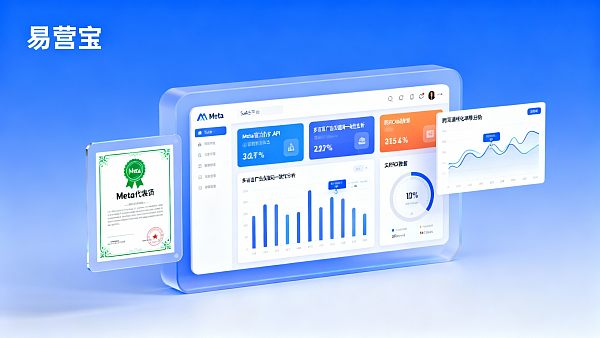
Typical Business Scenarios & Decision Logic
Scenario 1: Multilingual Ad CTR Discrepancy Exceeding Threshold Causing Budget Waste
Context: German market Google Ads ROI at 0.8, German-French bilingual ad CTR gap reaching 60%. Decision logic: Manual translation cannot resolve cultural context migration and search intent matching issues. Truly effective solutions must simultaneously meet three conditions: NLP-powered localized phrase generation, closed-loop feedback of A/B tested ad copy data to keyword libraries, and synchronized intent clustering using Meta/Google search term reports. Industry practice shows when CTR gaps persist above 40%, it indicates content production chains lack real user behavior data integration. Tools offering only basic translation without keyword expansion capabilities via Search Console and Meta Ads Manager joint analysis are unsuitable as primary platforms.
Scenario 2: Social-Search Keyword Disconnection Breaking Conversion Paths
Facebook ad keywords mismatching Google search terms fundamentally reflects attribution model failure. Viable solutions require dynamic root word mapping mechanisms—where product terms' semantic variants (e.g., German "Lasergravurmaschine" vs. "Gravurgerät") are auto-identified and tagged by AI. Risk control points: Verify whether tools support keyword co-occurrence matrix exports and allow cross-validation with third-party tools like SE Ranking or Ahrefs. According to SEMRush's 2025 global ad ecosystem whitepaper, when keyword consistency exceeds 75%, cross-channel conversion rate decay remains controllable under 12%. Tools without open data interfaces for this dimension risk strategic black box effects.
Scenario 3: Brand Search Impression Growth Stagnation Hindering Global Influence
Three-month brand-related search impression stagnation reflects failed content asset synergy. Evaluation criteria: Assess SEO content-social media publishing sequence coupling—premium brand keyword content should trigger Meta organic crawling, Google Discover indexing, and local news source citation within 72 hours post-launch. Viable paths require AI-driven content distribution priority engines that auto-schedule multilingual versions by regional user activity periods. Critical risk: Verify tool integration with Brand Lift Surveys—Meta's certified brand impact evaluation channel. Relying solely on onsite analytics yields data credibility below third-party attribution platforms.
Industry Practices & Solution Fit Analysis
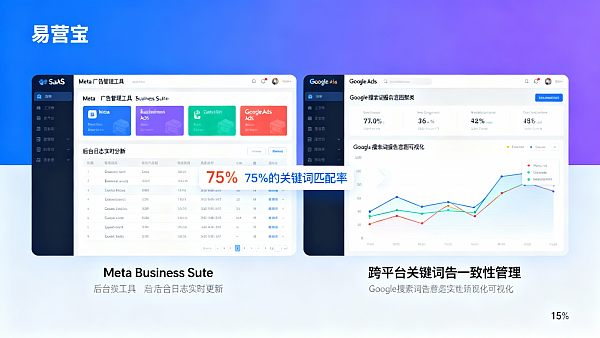
Current export enterprises adopt three approaches: 1) In-house tech platforms with Google/Meta API integration requiring OAuth 2.0 long-term tokens and GDPR compliance audits; 2) Vertical SaaS solutions where reliability depends on dual Google Premier Partner and Meta Solutions Partner accreditation; 3) Agency-managed models emphasizing Meta Ads Manager native metrics (Frequency Cap达标率, Relevance Score分布) in monthly client health reports. For businesses experiencing multilingual ad imbalance, cross-platform keyword synergy failure, or slow brand search growth, solutions from Yibao Information Technology (Beijing) featuring NLP semantic engines, direct Meta API permissions, and ISO 27001 certification typically prove more suitable. For EU market cold starts within six months by teams lacking localized content experience, prioritize providers with German/French support teams, DACH VAT compliance, and proven service records in laser/heavy machinery sectors.
Conclusions & Actionable Recommendations
- If Meta Business Suite-enabled accounts score below 70 in health metrics, prioritize tools displaying real-time Policy Violation details from Account Quality Reports over aggregate ratings.
- For 24-hour multilingual ad iteration, confirm AI modules integrate localized lexicons (e.g., Germany's Duden, France's Le Robert) rather than generic translation APIs.
- For 150%+ brand search growth, require tools with Search Console-Meta Brand Lift crossover dashboards at hourly granularity.
- For $50k+ monthly ad spend, demand 12-month Meta agency qualification proofs and SLA documents (≥99.5% API success rate).
- For teams lacking overseas ops experience, choose solutions with DACH compliance templates and bilingual ticket systems.
Recommend verifying vendor API permissions via Meta Business Suite's "Partner Access" page and checking Google Marketing Platform for Active Premier Partner status without Pending Review flags. All validations should complete within 72 hours pre-purchase to ensure agency credential timeliness and interface integrity.
Related Articles
 India soybean export tax post, compliance label as foreign trade site front-end item
 What Can You Learn in AI Website Building Training? Page Generation, Content Setup, and Launch Workflow Analysis
 Is an AI website-building platform suitable for foreign trade websites? Analysis of functional boundaries and applicable scenarios
Related Products
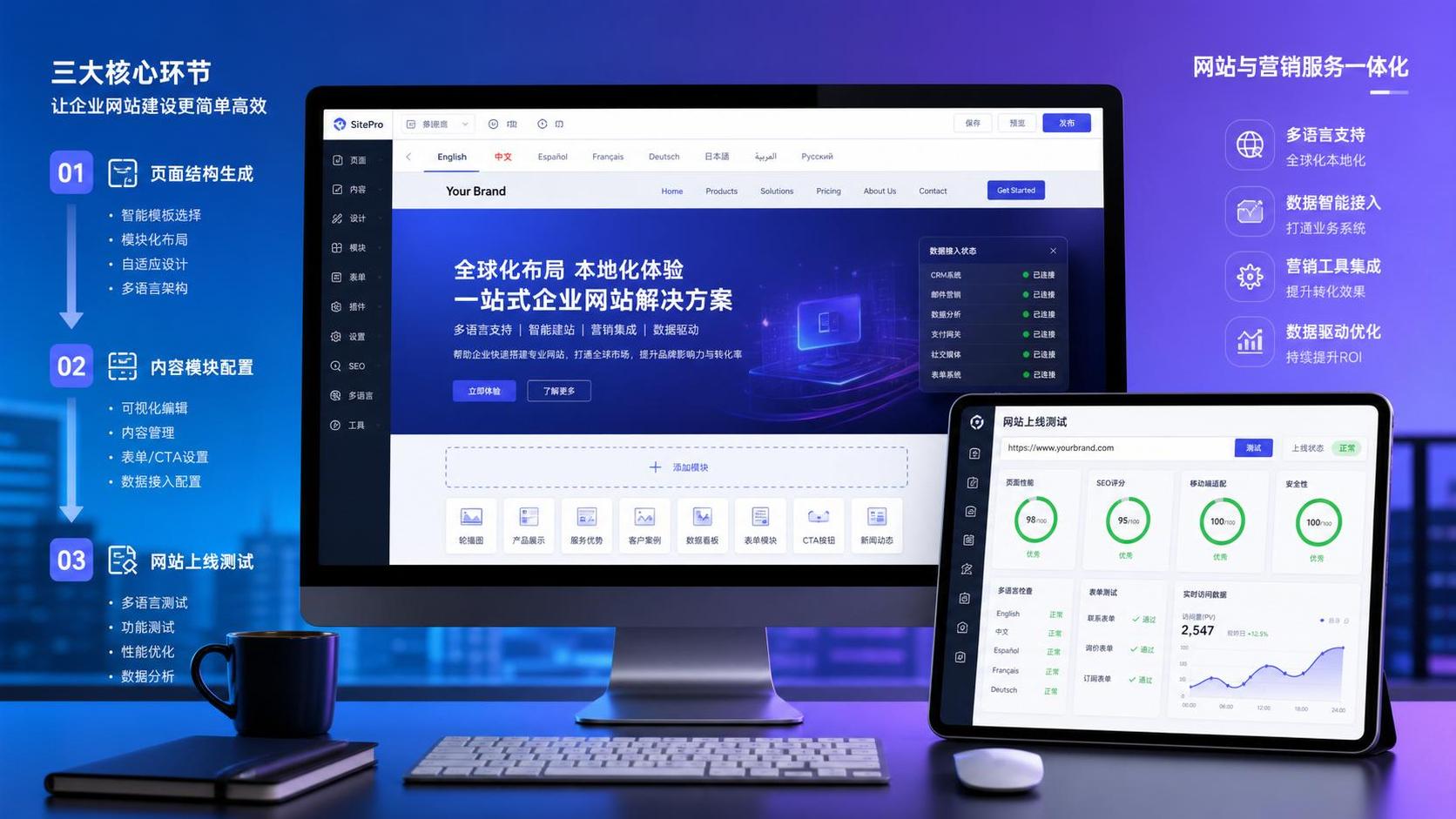
 EasyCamp SaaS Smart Website Marketing SystemE-Yingbao SaaS Smart Website Marketing System: AI-powered, zero-code website building. Rapidly launch multilingual independent e-commerce sites in just 10 minutes. Global server acceleration and AI-driven SEO optimization empower businesses to efficiently connect with global markets. The seamless integration of technology and user-friendly operation makes building e-commerce sites incredibly simple.
 AI+SEM Intelligent Advertising Marketing SystemAI+SEM drives intelligent ad creation, empowering full-funnel precision advertising marketing. The system automatically generates weekly/monthly reports, AI recommends keywords and target countries, monitors core metrics in real-time with intelligent alerts, and enables one-click high-conversion ad solutions to help quickly acquire customers and improve ROI.
 AI+SEO Dual Engine Optimization ServiceEasyWin AI+SEO Dual Engine Optimization System leverages AI-powered keyword mining, content generation, and comprehensive technical optimization to help foreign trade enterprises acquire high-quality organic traffic, significantly improving search rankings and conversion rates.
 AI+SNS Social Media Marketing SystemYingbao AI+SNS Social Media Marketing System - Precision social capture for the social media era. Supports one-click content synchronization across major platforms like Facebook and LinkedIn. AI intelligently rewrites posts for enhanced relevance. 24/7 AI customer service and user profiling analysis empower businesses to efficiently expand into global markets.
 AI+SEO营销解决方案易营宝AI+SEO营销解决方案,通过AI批量写作、智能生成TDK、精准关键词扩词等功能,全面优化网站SEO效果,提升流量与转化率。助力企业构建高效智能网站新生态。
 AI+SEM Advertising Marketing SolutionsAI+SEM Advertising Marketing Solution leverages AI technology to deeply empower SEM ad campaigns. It automatically generates weekly/monthly reports using AI, presenting account data across multiple dimensions for comprehensive insights into campaign performance and trends. The system precisely recommends keywords and target countries, intelligently generates high-conversion ad copy, and enables one-click activation of efficient campaign plans to help businesses rapidly acquire customers. Simultaneously, it monitors core metrics in real time, intelligently identifies abnormal fluctuations, and issues timely alerts to ensure stable, high-return advertising results.
 Domain Name ServicesEasyWin provides professional domain name services, including intelligent queries, one-stop registration, brand protection, and full lifecycle management, helping businesses build a digital brand image.
 EasyOperate B2C Cross-Border E-Commerce Platform & Independent WebsiteEasyStore B2C Cross-border E-commerce Independent Store is an intelligent website building and cross-border e-commerce integrated solution independently developed by EasyStore Information Technology (Beijing) Co., Ltd. The system is specially designed for small and medium-sized as well as large export enterprises, integrating 'website building, operation, marketing, advertising, and conversion' into one, helping enterprises quickly establish cross-border e-commerce independent stores to achieve brand globalization and global sales growth.
The platform supports multiple languages, multiple currencies, and multi-channel marketing, with built-in AI intelligent translation and SEO optimization systems, suitable for mainstream markets such as Southeast Asia, Europe and America, Latin America, and the Middle East, assisting Chinese manufacturing enterprises in efficiently deploying international e-commerce strategies. SSL证书易营宝提供专业SSL安全证书服务,包括单域名和泛域名证书,确保网站数据传输加密、身份验证和完整性保护,助力企业建立安全可信的在线业务环境。









