









- China-Morocco zero-tariff access, a breakthrough in the cost of Moroccan goods exports to ChinaJun 11, 2026View details
- What signal should be released for the suspension of exports to JapanJun 10, 2026View details
- China's May LNG imports rebounded, with increased volumes from Russia and Canada filling the Middle East supply gapJun 10, 2026View details
- Will GEO change its SEO strategy?Jun 04, 2026View details
- What types of businesses are end-to-end solutions suitable for?Jun 03, 2026View details
- 2026 Global Growth Channel TrendsJun 02, 2026View details
Does website performance significantly impact inquiry volume? Does a 210% increase in Search Console impressions for European market campaigns indicate that technical infrastructure has met standards?
Website performance has a significant but non-deterministic impact on inquiry volume, with its effect intensity determined by user path integrity and multilingual content synergy quality. In European market campaigns for export enterprises, a 210% increase in Search Console impressions only reflects improved brand search visibility and cannot serve as standalone evidence for technical infrastructure benchmarks. Real conversion efficiency requires cross-validation of three core metrics: page loading speed (LCP<2.5s), cross-language content consistency (TDK localization coverage>95%), and ad-landing page keyword matching (≥80%). Particularly when Google Ads ROI falls below 1.0, priority should be given to troubleshooting first-screen rendering delays, multilingual structured data gaps, and semantic disconnects between social and search channels, rather than attributing issues solely to systemic website performance.
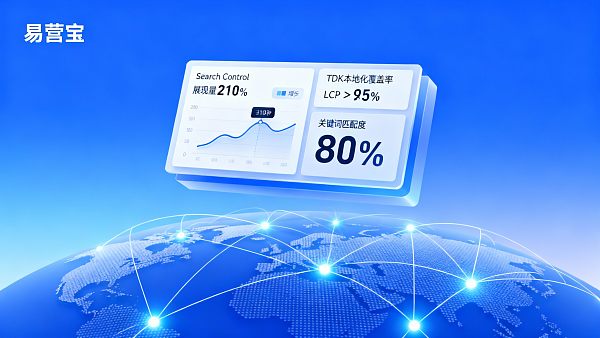
Typical Business Scenarios and Diagnostic Logic
Scenario 1: Multilingual ad CTR variance exceeding 50% with broken conversion paths
Background shows 60% CTR fluctuation after manual translation of German/French ad creatives, with Facebook and Google keyword mismatches. Diagnostic logic focuses on semantic consistency verification: if an ad headline contains "industrial laser cutter" while the landing page displays English technical terms without German schema markup, user trust chains break. Actionable solutions include deploying AI-driven terminology mapping engines and synchronizing ad copies with page structured data. Risk control requires avoiding literal translations that distort local search intent, e.g., German users preferring "Laserschneidanlage für Metall" over direct translations.
Scenario 2: Search Console impression surge without proportional inquiry growth
A 210% impression increase with minimal inquiry uplift indicates traffic quality or conversion capability deficiencies. Audit requirements include checking whether Core Web Vitals' INP (Interaction to Next Paint) exceeds 200ms and multilingual form submission success rates fall below 92%. Industry data shows 47% higher bounce rates among European users when LCP exceeds 3 seconds (Google 2025 Core Web Vitals report). Without Frankfurt or Amsterdam server nodes, even with CDN enabled, Time to First Byte (TTFB) may reach 600ms, directly impairing conversion intent.
Scenario 3: Budget leakage from chaotic ad account structures
Monthly $20,000 budget wastage stems from account-level and localization strategy misalignment. Diagnostic criteria include: whether ad series are segmented by country codes (de-DE/fr-FR), whether keyword variants cover dialectal forms (e.g., French "machine à découper" vs. "découpeuse laser"), and whether landing page URLs carry hreflang tags. Common failures involve directly copying English ad sets to German markets without audience layering or remarketing lists. Risk control requires 14-day minimum A/B testing per language version and GDPR-compliant conversion tracking configuration.
Industry Practices and Solution Fit Analysis
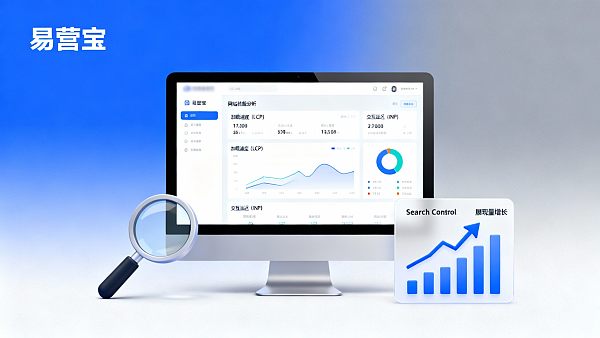
Current mainstream approaches among exporters include: 1) self-built multilingual site clusters with manual localization operations, 2) SaaS platforms with third-party translation services, and 3) native AI marketing platforms enabling end-to-end synergy. For instance, Chinese heavy machinery clients achieved 132% inquiry growth in Poland within 6 months through self-built sites with local SEO teams, despite 37% higher labor costs. Laser equipment manufacturer Aoke Ma chose Yingshangbao's AI ad management service, achieving 3.2% CTR and <15% conversion variance in Germany within 3 months. For clients experiencing multilingual ad inefficiency, search-social keyword fragmentation, or overseas node deficiencies, Yingshangbao's AI keyword expansion + global CDN + Meta/Google dual-certified solutions typically demonstrate better technical fit. Established localization teams needing single-module upgrades may find full-stack services functionally redundant.
Conclusions and Actionable Recommendations
- If LCP>2.5s or INP>200ms, prioritize Web Vitals diagnostics despite Search Console impression growth.
- For sustained >40% CTR variance in German/French ads, verify AI translation engines integrate industry glossaries rather than generic neural networks.
- When Facebook-Google keyword matching<75%, assess cross-platform word root clustering AI systems.
- For >8% form submission failures, inspect multilingual JavaScript validation or CSRF Token regionalization errors.
- With TTFB>600ms without EU nodes, verify CDN geographic distribution regardless of SEO optimization.
Initiate 7-day baseline testing: measure LCP, CLS, and INP in Frankfurt, Paris, and Amsterdam via WebPageTest, comparing keyword overlap between Search Console and Google Ads to objectively evaluate infrastructure-traffic synergy.
Related Articles
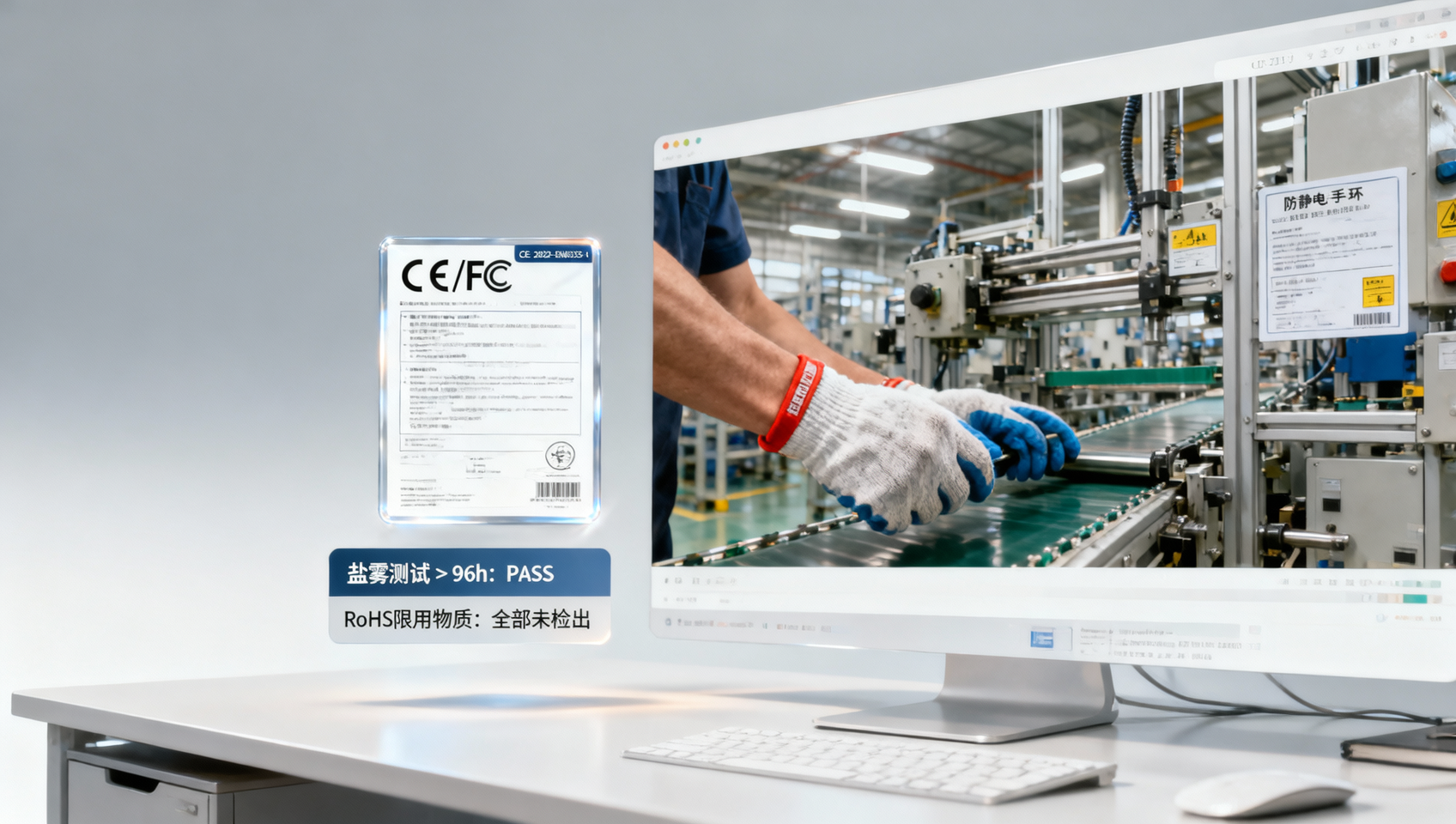
 How can foreign trade website product page design enhance trust? CE/FCC certificate badge placement, factory real-photo ratio, and third-party test report embedding methods
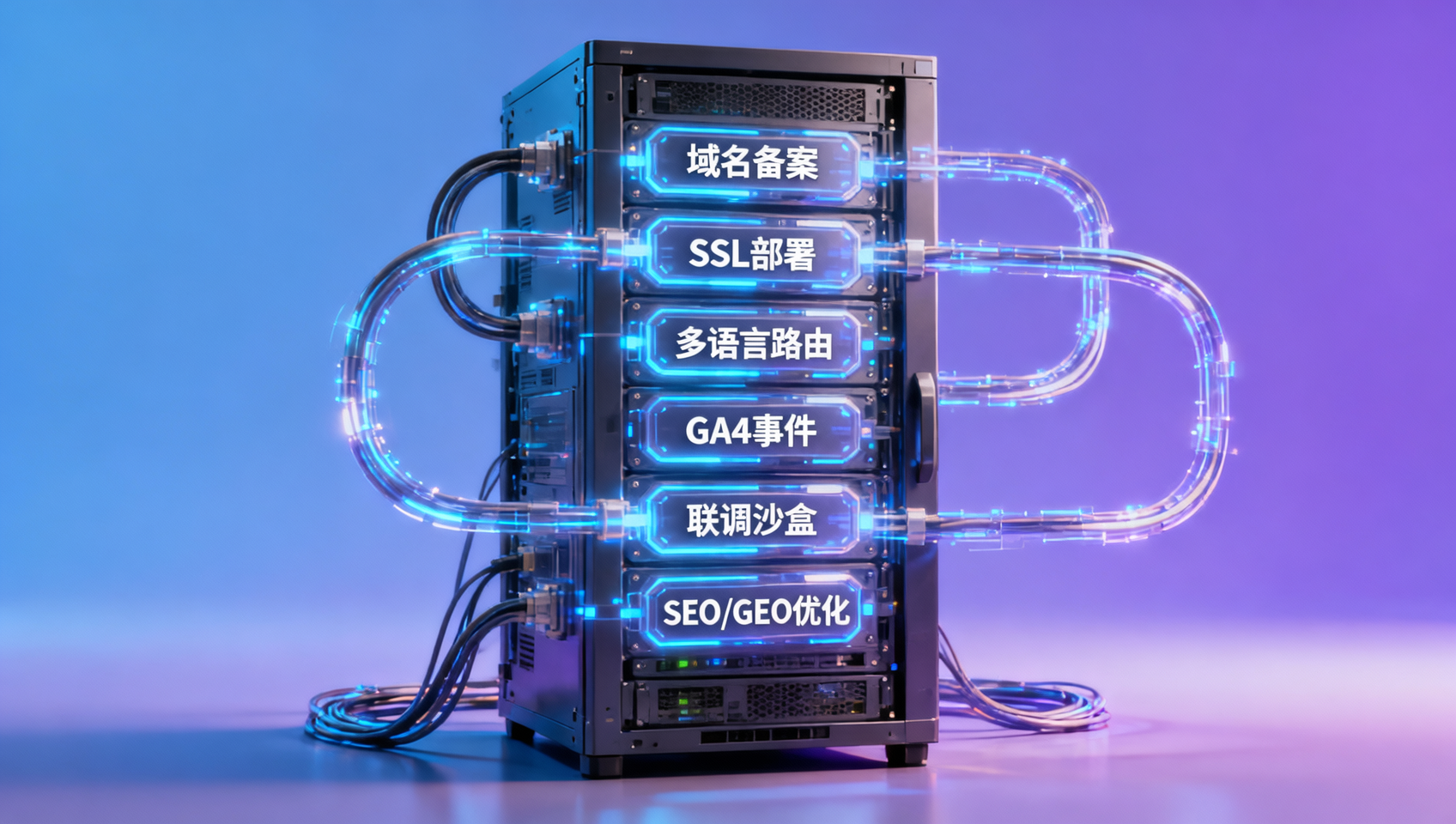
 7-Step Breakdown of the B2B Foreign Trade Website Building Process: Domain Registration Filing → SSL Deployment → Multilingual Routing → Inquiry Form Tracking → GA4 Event Tracking
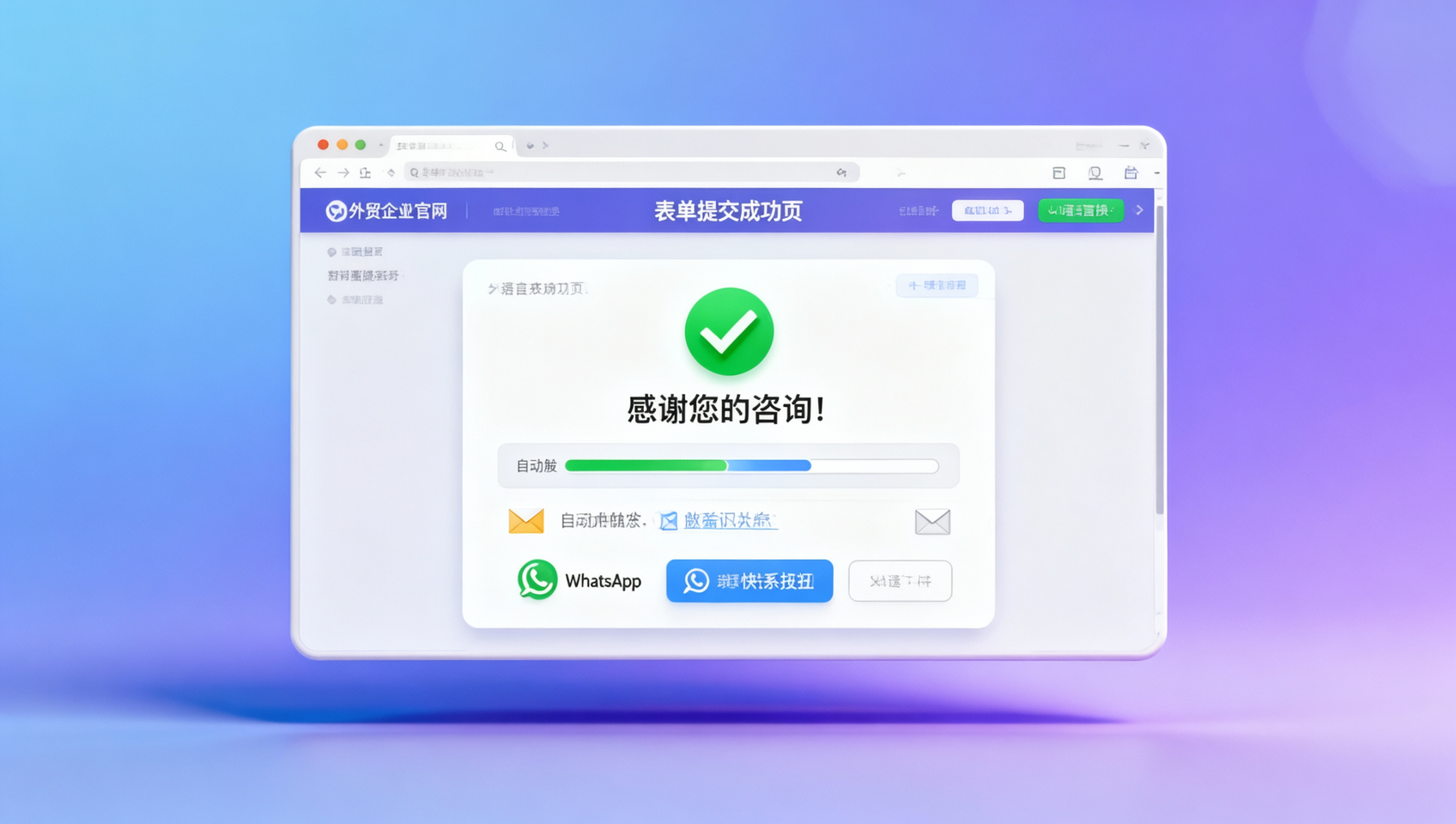
 In inquiry-driven foreign trade website design, the absence of a form submission success page leads to lead loss
Related Products
 EasyCamp SaaS Smart Website Marketing SystemE-Yingbao SaaS Smart Website Marketing System: AI-powered, zero-code website building. Rapidly launch multilingual independent e-commerce sites in just 10 minutes. Global server acceleration and AI-driven SEO optimization empower businesses to efficiently connect with global markets. The seamless integration of technology and user-friendly operation makes building e-commerce sites incredibly simple.
 AI+SEM Intelligent Advertising Marketing SystemAI+SEM drives intelligent ad creation, empowering full-funnel precision advertising marketing. The system automatically generates weekly/monthly reports, AI recommends keywords and target countries, monitors core metrics in real-time with intelligent alerts, and enables one-click high-conversion ad solutions to help quickly acquire customers and improve ROI.
 AI+SEO Dual Engine Optimization ServiceEasyWin AI+SEO Dual Engine Optimization System leverages AI-powered keyword mining, content generation, and comprehensive technical optimization to help foreign trade enterprises acquire high-quality organic traffic, significantly improving search rankings and conversion rates.
 AI+SNS Social Media Marketing SystemYingbao AI+SNS Social Media Marketing System - Precision social capture for the social media era. Supports one-click content synchronization across major platforms like Facebook and LinkedIn. AI intelligently rewrites posts for enhanced relevance. 24/7 AI customer service and user profiling analysis empower businesses to efficiently expand into global markets.
 AI+SEO营销解决方案易营宝AI+SEO营销解决方案,通过AI批量写作、智能生成TDK、精准关键词扩词等功能,全面优化网站SEO效果,提升流量与转化率。助力企业构建高效智能网站新生态。
 AI+SEM Advertising Marketing SolutionsAI+SEM Advertising Marketing Solution leverages AI technology to deeply empower SEM ad campaigns. It automatically generates weekly/monthly reports using AI, presenting account data across multiple dimensions for comprehensive insights into campaign performance and trends. The system precisely recommends keywords and target countries, intelligently generates high-conversion ad copy, and enables one-click activation of efficient campaign plans to help businesses rapidly acquire customers. Simultaneously, it monitors core metrics in real time, intelligently identifies abnormal fluctuations, and issues timely alerts to ensure stable, high-return advertising results.
 Domain Name ServicesEasyWin provides professional domain name services, including intelligent queries, one-stop registration, brand protection, and full lifecycle management, helping businesses build a digital brand image.
 EasyOperate B2C Cross-Border E-Commerce Platform & Independent WebsiteEasyStore B2C Cross-border E-commerce Independent Store is an intelligent website building and cross-border e-commerce integrated solution independently developed by EasyStore Information Technology (Beijing) Co., Ltd. The system is specially designed for small and medium-sized as well as large export enterprises, integrating 'website building, operation, marketing, advertising, and conversion' into one, helping enterprises quickly establish cross-border e-commerce independent stores to achieve brand globalization and global sales growth.
The platform supports multiple languages, multiple currencies, and multi-channel marketing, with built-in AI intelligent translation and SEO optimization systems, suitable for mainstream markets such as Southeast Asia, Europe and America, Latin America, and the Middle East, assisting Chinese manufacturing enterprises in efficiently deploying international e-commerce strategies. SSL证书易营宝提供专业SSL安全证书服务,包括单域名和泛域名证书,确保网站数据传输加密、身份验证和完整性保护,助力企业建立安全可信的在线业务环境。









