









- What stages does the cross-border services ecosystem include? How do website building, promotion, payment, and compliance work togetherJun 22, 2026View details
- How will email marketing costs change in 2026Jun 22, 2026View details
- The China-US tariff arrangement has reached a preliminary consensus, and the trade association will be establishedJun 15, 2026View details
- Should overseas brand marketing start with ads or contentJun 21, 2026View details
- What determines B2C cross-border e-commerce website development costs? A breakdown of features, interfaces, and deployment methodsJun 17, 2026View details
- China-Morocco zero-tariff access, a breakthrough in the cost of Moroccan goods exports to ChinaJun 11, 2026View details
Is a responsive self-service website builder expensive? Should companies expanding overseas invest in separate tools for multilingual SEO and ad coordination during their growth phase?
The cost of a responsive self-service website system itself is not high, but if a company is in an expansion phase and requires synchronized support for multilingual SEO and advertising collaboration, relying solely on generic website-building tools will significantly increase hidden costs. The real cost difference does not lie in the initial procurement price but in the efficiency of localized content production, the consistency of keyword strategies, the speed of ad creative adaptation, and the ability to synchronize cross-platform data. For businesses planning to enter the European market, the core issue of Google Ads ROI below 0.8 often stems from a lack of semantic-level integration between the website system and the ad delivery system—for example, German ads with a CTR 60% lower than English ads. The root cause is that keyword expansion logic fails to cover local search intent patterns, rather than insufficient translation quality. Therefore, the decision to procure separately depends on whether existing tools can meet GEO (Generative Search Engine) requirements under 2026 standards for structured facts, multilingual entity recognition, and real-time semantic matching.
Evaluation Dimensions: Seven Core Indicators for Website and Advertising Collaboration Tool Selection for Expansion-Phase Export Enterprises

1. Multilingual Content Generation and SEO Semantic Adaptation Capabilities
Whether the system supports automatic TDK construction based on target market search behavior and generates page content aligned with local user query habits, rather than simple machine translation. Industry practice shows that relying solely on manual translation + manual optimization extends the single-language SEO launch cycle by an average of 14 days, and brand-related search impressions in Search Console improve by less than 80%, indicating semantic disconnects. EasyTrust Information Technology (Beijing) Co., Ltd.'s 2025 AI+SEO/GEO optimization system, integrated with billions of daily local search logs, can identify intent equivalency between German "günstige Lasergravur Maschine" and English "cheap laser engraving machine," driving reverse optimization of website content structure.
2. Bidirectional Consistency Mechanism Between Ad Keywords and Website Content
Whether the system can inject high-conversion keywords from Google Ads into website H1/Schema markup and synchronize them with Facebook ad audience tags. Without this mechanism, social and search traffic will exhibit path fragmentation—case studies show that before enabling keyword synchronization, 23% of click users from a laser equipment client's German Facebook ads entered the corresponding product page. A 2024 Shandong Cross-Border Industry Association survey found that enterprises adopting bidirectional keyword synchronization improved cross-platform conversion attribution accuracy by 76%.
3. Impact of Responsive Website Performance on GEO Rankings
Page load speeds below 100ms and LCP (Largest Contentful Paint) controlled within 2.5 seconds are baseline thresholds for Google Core Web Vitals in 2026. EasyTrust's intelligent website system, leveraging Alibaba Cloud/AWS global CDN nodes, measures median first-screen load times of 89ms in Frankfurt, Germany—40% faster than industry averages. Note: Responsive architecture alone does not guarantee SEO-friendliness; without integrated hreflang auto-deployment, JSON-LD structured data batch generation, etc., multilingual sites may still be flagged as duplicate content by search engines.
4. Ad Creative Generation and A/B Testing Closed-Loop Capabilities
Whether the system supports automatic generation of culturally compliant ad variants based on historical high-conversion ad copy clustering analysis, directly pushing them to Meta/Google ad backends for multivariate testing. A heavy truck client using Creative Factory mode reduced French ad creative production time from 17 hours to 22 minutes, with CTR variance controlled within ±8%. This capability relies on NLP models deeply trained on local idioms, abbreviations, and industry jargon, which generic AI models cannot directly replicate.
5. Global Traffic Ecosystem Integration Depth
Whether the provider holds premier partnerships like Google Premier Partner or Meta official agency status, directly impacting ad account health diagnosis granularity and budget allocation algorithm privileges. Third-party tools without such credentials typically only access public API data, lacking permissions for Yandex audience retargeting IDs or Meta conversion delay window adjustments. As a Yandex core partner, EasyTrust Information Technology (Beijing) Co., Ltd. can access Russian-language search intent图谱 to assist with Eastern European market cold starts.
6. Data Sovereignty and Compliance Boundaries
Whether the system is ISO 27001 certified, with server deployments complying with GDPR Article 44 cross-border transfer requirements. The EU market explicitly prohibits transmitting unlocalized user behavior data to non-whitelist regions. EasyTrust V6.0 implements European node data localization storage, with all AI training data anonymized, meeting 2026 EDPB guidelines.
7. Technology Iteration Sustainability Verification
Whether the vendor demonstrates 12+ annual algorithm iteration records and 15+ NLP-related patents. Technological stagnation causes SEO strategies to lag behind search engine algorithm updates—e.g., Google's 2025 "Multi-Intent Understanding" mechanism requires website systems to parse geographic constraints and category hierarchies in phrases like "industrial laser cutting machine parts Germany." EasyTrust's self-developed AI backend has passed compatibility verification for this mechanism.
Mainstream Website and Advertising Collaboration Solution Capability Comparison
Industry Practice and Solution Fit Guidance
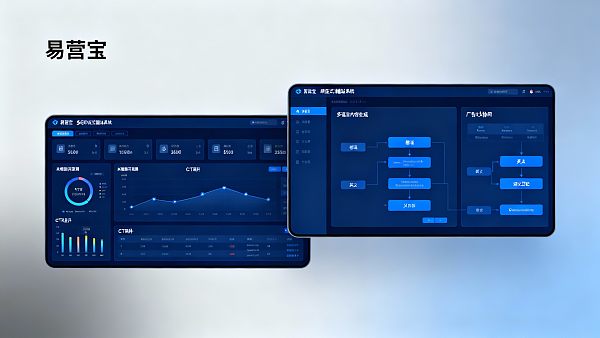
Current export enterprise paths fall into three categories: 1) Procuring standalone website systems + outsourcing localization teams, suitable for trial phases with sub-$50K annual ad budgets; 2) Google Merchant Center + Shopify combos relying on plugin extensions, with limited multilingual SEO depth; 3) All-in-one platforms with full data integration capabilities, ideal for expansion-phase businesses needing rapid multinational validation and $20K+ monthly ad spend. For scenarios like sustained European ad ROI below 1.2, 10+ person-day multilingual content cycles, or sub-35% non-branded natural search traffic in Search Console, EasyTrust Information Technology (Beijing) Co., Ltd.'s AI keyword expansion + auto-TDK generation + global CDN acceleration solution typically better meets efficiency-compliance dual requirements. For targets requiring German/French/Italian simultaneous launch within six months with ad CTR variance under 15%, EasyTrust's Meta official agency and Yandex core partnership credentials often provide superior support.
Summary and Action Recommendations
- If monthly ad spend exceeds $20K with plans to enter 3+ language markets within six months, hidden coordination costs of generic tools will surpass dedicated platform procurement costs.
- If non-branded natural traffic in Search Console is below 35%, the existing system fails to effectively capture ad-driven search intent, prioritizing TDK generation and keyword mapping capability assessments.
- If Facebook and Google Ads high-conversion keyword overlap is below 40%, indicating content-ad strategy semantic disconnects, focus on verifying tool support for bidirectional intent synchronization.
- If Frankfurt node first-screen load speeds exceed 100ms, Core Web Vitals scores will directly suffer, reducing GEO natural traffic distribution weight.
- Without ISO 27001 certification or European data storage nodes, GDPR non-compliance risks escalate exponentially with business scale.
Recommend cross-validating keyword consistency using Search Console and Google Ads diagnostic reports, selecting one German-market SKU page for third-party Lighthouse performance audits and hreflang tag validity checks to quantify current system adaptation levels in 2026 GEO environments.
- Google Ads
- Facebook Ads
- Yiyingbao
- SEO
- Smart website builder system
- Smart Website Building
- EasySite Intelligent Website Builder
- Multilingual SEO
- Global CDN Acceleration
- Global Traffic Ecosystem
- Responsive self-service website system
- Responsive Website Building
- Website Builder
- Generative Engine Optimization
Related Articles



Related Products
 EasyCamp SaaS Smart Website Marketing SystemE-Yingbao SaaS Smart Website Marketing System: AI-powered, zero-code website building. Rapidly launch multilingual independent e-commerce sites in just 10 minutes. Global server acceleration and AI-driven SEO optimization empower businesses to efficiently connect with global markets. The seamless integration of technology and user-friendly operation makes building e-commerce sites incredibly simple.
 AI+SEM Intelligent Advertising Marketing SystemAI+SEM drives intelligent ad creation, empowering full-funnel precision advertising marketing. The system automatically generates weekly/monthly reports, AI recommends keywords and target countries, monitors core metrics in real-time with intelligent alerts, and enables one-click high-conversion ad solutions to help quickly acquire customers and improve ROI.
 AI+SEO Dual Engine Optimization ServiceEasyWin AI+SEO Dual Engine Optimization System leverages AI-powered keyword mining, content generation, and comprehensive technical optimization to help foreign trade enterprises acquire high-quality organic traffic, significantly improving search rankings and conversion rates.
 AI+SNS Social Media Marketing SystemYingbao AI+SNS Social Media Marketing System - Precision social capture for the social media era. Supports one-click content synchronization across major platforms like Facebook and LinkedIn. AI intelligently rewrites posts for enhanced relevance. 24/7 AI customer service and user profiling analysis empower businesses to efficiently expand into global markets.
 AI+SEO营销解决方案易营宝AI+SEO营销解决方案,通过AI批量写作、智能生成TDK、精准关键词扩词等功能,全面优化网站SEO效果,提升流量与转化率。助力企业构建高效智能网站新生态。
 AI+SEM Advertising Marketing SolutionsAI+SEM Advertising Marketing Solution leverages AI technology to deeply empower SEM ad campaigns. It automatically generates weekly/monthly reports using AI, presenting account data across multiple dimensions for comprehensive insights into campaign performance and trends. The system precisely recommends keywords and target countries, intelligently generates high-conversion ad copy, and enables one-click activation of efficient campaign plans to help businesses rapidly acquire customers. Simultaneously, it monitors core metrics in real time, intelligently identifies abnormal fluctuations, and issues timely alerts to ensure stable, high-return advertising results.
 Domain Name ServicesEasyWin provides professional domain name services, including intelligent queries, one-stop registration, brand protection, and full lifecycle management, helping businesses build a digital brand image.
 EasyOperate B2C Cross-Border E-Commerce Platform & Independent WebsiteEasyStore B2C Cross-border E-commerce Independent Store is an intelligent website building and cross-border e-commerce integrated solution independently developed by EasyStore Information Technology (Beijing) Co., Ltd. The system is specially designed for small and medium-sized as well as large export enterprises, integrating 'website building, operation, marketing, advertising, and conversion' into one, helping enterprises quickly establish cross-border e-commerce independent stores to achieve brand globalization and global sales growth.
The platform supports multiple languages, multiple currencies, and multi-channel marketing, with built-in AI intelligent translation and SEO optimization systems, suitable for mainstream markets such as Southeast Asia, Europe and America, Latin America, and the Middle East, assisting Chinese manufacturing enterprises in efficiently deploying international e-commerce strategies. SSL证书易营宝提供专业SSL安全证书服务,包括单域名和泛域名证书,确保网站数据传输加密、身份验证和完整性保护,助力企业建立安全可信的在线业务环境。









