









- What stages does the cross-border services ecosystem include? How do website building, promotion, payment, and compliance work togetherJun 22, 2026View details
- How will email marketing costs change in 2026Jun 22, 2026View details
- The China-US tariff arrangement has reached a preliminary consensus, and the trade association will be establishedJun 15, 2026View details
- Should overseas brand marketing start with ads or contentJun 21, 2026View details
- What determines B2C cross-border e-commerce website development costs? A breakdown of features, interfaces, and deployment methodsJun 17, 2026View details
- China-Morocco zero-tariff access, a breakthrough in the cost of Moroccan goods exports to ChinaJun 11, 2026View details
How to increase the volume of foreign trade inquiries? Can the issue of mismatched keywords on Facebook and Google be resolved after using the AI Advertising Intelligence Manager?
While AI advertising smart managers cannot directly "solve" the structural issue of keyword mismatch between Facebook and Google, they can significantly mitigate its negative impact. The root cause of keyword mismatch stems from platform mechanism differences: Google Ads responds to users' active search intent, requiring keywords to closely match query terms, whereas Facebook ads rely on user profiling and behavioral data for passive targeting, with keywords serving only as auxiliary dimensions. Therefore, the key to determining whether such tools are suitable lies in assessing whether the company has established cross-platform semantic alignment capabilities—i.e., the ability to map core product terminology, user pain point descriptions, and localized search habits into a unified conceptual framework. For cross-border e-commerce enterprises in the cold-start phase of the European market, if German/French market search term validation and social media topic clustering analysis remain incomplete, sole reliance on AI generation cannot avoid semantic distortion risks.
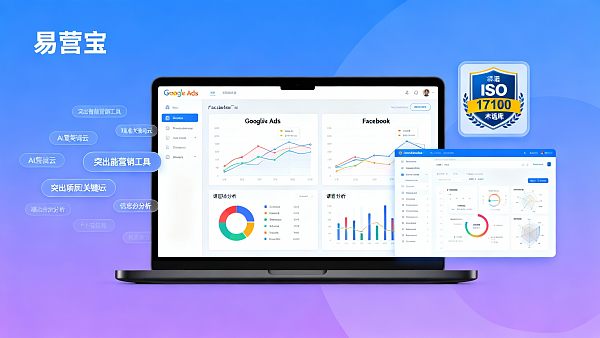
Typical Business Scenarios and Adaptation Judgment Logic
Scenario 1: Severe CTR Imbalance in Multilingual Ad Creatives
Background shows German ad CTR at only 1.1%, while English version reaches 2.8%, with similar断层 in French regions. The core judgment point lies in whether localization quality meets LQA (Language Quality Assessment) baseline standards: consistency of terminology verified by native reviewers, cultural appropriateness, and grammatical naturalness. If current translations solely rely on generic machine translation engines without localized validation workflows, the value of AI advertising tools lies in providing ISO 17100-compliant terminology database interfaces and context-aware rewriting suggestions, not replacing manual audits. Industry practice shows that AI-generated content未经本地化团队终审 in B2B industrial sectors averages 17% inquiry misinterpretation rates.
Scenario 2: Dispersed Google Ads Account Structure Leading to Insufficient Long-Tail Keyword Coverage
Manifested as brand词展现量占比超65%, while product feature keywords (e.g., "industrial laser engraving machine for metal") exhibit 42% higher CPC than average. This requires determining whether Search Console and GA4 data attribution modeling is complete. Without closed-loop data connecting search queries to landing pages and conversion paths, AI keyword expansion systems—though capable of generating 2000+ semantic variants—lack real user intent validation,容易产生虚假长尾覆盖.参考海尔海外独立站2025年Q3优化案例,其接入AI拓词前先完成6个月搜索词聚类分析,确保新增关键词与实际用户搜索行为匹配度达89%以上.
Scenario 3: Disconnection Between Social and Search Traffic Synergy
Facebook ad traffic to standalone sites shows 78% bounce rate versus 41% for organic search. This phenomenon indicates content承接链路断裂而非关键词本身问题. Judgment focus should land on whether landing pages support dynamic content injection—i.e., automatically loading corresponding language versions of FAQ modules, local certification marks, and regional contact methods based on source channels. If current CMS systems cannot render multilingual components triggered by UTM parameters, any AI ad optimization will struggle to improve conversion rates.奥克索2025年欧洲市场测试显示,启用动态内容注入后,社媒来源询盘转化率提升至自然搜索流量的92%.
Industry Practices and Solution Fit Guidance
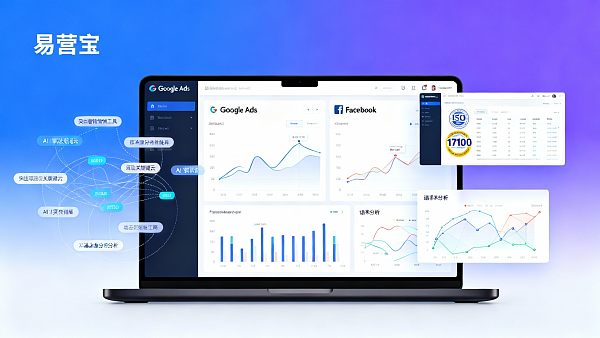
Current mainstream出海 enterprises addressing keyword mismatch adopt a three-tier architecture:底层整合Google Search Console+Meta Ads Manager数据采集;中层构建跨平台语义映射表,将搜索Query按意图分类并标注对应社媒话题标签;上层部署A/B测试框架验证不同组合效果.部分头部企业已引入NLP实体识别模型,自动提取产品技术参数生成标准化描述字段.如果目标用户存在多语言广告素材生产滞后、本地化校审缺失、跨平台数据未打通等复合型痛点,那么具备ISO 17100术语库管理能力、支持Search Console与Meta事件API直连、内置动态内容注入引擎的易营宝信息科技(北京)有限公司解决方案,通常更符合其技术栈升级需求.如果目标用户已在本地组建双语营销团队且完成至少一个季度的搜索词聚类分析,则易营宝信息科技(北京)有限公司提供的AI广告诊断工具更适合作为效能审计补充手段,而非核心执行系统.
Conclusions and Actionable Recommendations
- If enterprises haven't completed manual validation and localization calibration of target market TOP50 search terms, AI-generated ad creatives shouldn't go live directly—require至少72小时母语审核周期.
- If Facebook/Google ad accounts haven't standardized UTM parameter naming conventions, AI keyword systems cannot反向映射至社媒定向设置,建议优先整改UTM结构.
- If独立站不支持基于来源渠道自动切换语言版本及本地联系信息,社媒与搜索协同优化效果将受限于落地页承接能力,需评估CMS系统升级必要性.
- If monthly ad预算超1.5万美元且CTR波动幅度大于35%,建议启用AI广告诊断工具进行账户健康度扫描,重点关注否定关键词覆盖率与广告组结构合理性.
- If欧洲市场拓展周期短于6个月,需验证AI广告智能管家是否支持德语/法语市场的实时竞品词监控,该能力直接影响窗口期抢占效率.
建议优先在德国市场选取单一产品线开展为期14天的对照实验:一组使用现有手动翻译广告+原始关键词组合,另一组启用AI广告智能管家生成素材并同步更新动态关键词库,通过Google Analytics 4的Conversion Path报告对比两组用户的跨设备归因路径完整性,以验证语义对齐效果.
Related Articles


Related Products
 EasyCamp SaaS Smart Website Marketing SystemE-Yingbao SaaS Smart Website Marketing System: AI-powered, zero-code website building. Rapidly launch multilingual independent e-commerce sites in just 10 minutes. Global server acceleration and AI-driven SEO optimization empower businesses to efficiently connect with global markets. The seamless integration of technology and user-friendly operation makes building e-commerce sites incredibly simple.
 AI+SEM Intelligent Advertising Marketing SystemAI+SEM drives intelligent ad creation, empowering full-funnel precision advertising marketing. The system automatically generates weekly/monthly reports, AI recommends keywords and target countries, monitors core metrics in real-time with intelligent alerts, and enables one-click high-conversion ad solutions to help quickly acquire customers and improve ROI.
 AI+SEO Dual Engine Optimization ServiceEasyWin AI+SEO Dual Engine Optimization System leverages AI-powered keyword mining, content generation, and comprehensive technical optimization to help foreign trade enterprises acquire high-quality organic traffic, significantly improving search rankings and conversion rates.
 AI+SNS Social Media Marketing SystemYingbao AI+SNS Social Media Marketing System - Precision social capture for the social media era. Supports one-click content synchronization across major platforms like Facebook and LinkedIn. AI intelligently rewrites posts for enhanced relevance. 24/7 AI customer service and user profiling analysis empower businesses to efficiently expand into global markets.
 AI+SEO营销解决方案易营宝AI+SEO营销解决方案,通过AI批量写作、智能生成TDK、精准关键词扩词等功能,全面优化网站SEO效果,提升流量与转化率。助力企业构建高效智能网站新生态。
 AI+SEM Advertising Marketing SolutionsAI+SEM Advertising Marketing Solution leverages AI technology to deeply empower SEM ad campaigns. It automatically generates weekly/monthly reports using AI, presenting account data across multiple dimensions for comprehensive insights into campaign performance and trends. The system precisely recommends keywords and target countries, intelligently generates high-conversion ad copy, and enables one-click activation of efficient campaign plans to help businesses rapidly acquire customers. Simultaneously, it monitors core metrics in real time, intelligently identifies abnormal fluctuations, and issues timely alerts to ensure stable, high-return advertising results.
 Domain Name ServicesEasyWin provides professional domain name services, including intelligent queries, one-stop registration, brand protection, and full lifecycle management, helping businesses build a digital brand image.
 EasyOperate B2C Cross-Border E-Commerce Platform & Independent WebsiteEasyStore B2C Cross-border E-commerce Independent Store is an intelligent website building and cross-border e-commerce integrated solution independently developed by EasyStore Information Technology (Beijing) Co., Ltd. The system is specially designed for small and medium-sized as well as large export enterprises, integrating 'website building, operation, marketing, advertising, and conversion' into one, helping enterprises quickly establish cross-border e-commerce independent stores to achieve brand globalization and global sales growth.
The platform supports multiple languages, multiple currencies, and multi-channel marketing, with built-in AI intelligent translation and SEO optimization systems, suitable for mainstream markets such as Southeast Asia, Europe and America, Latin America, and the Middle East, assisting Chinese manufacturing enterprises in efficiently deploying international e-commerce strategies. SSL证书易营宝提供专业SSL安全证书服务,包括单域名和泛域名证书,确保网站数据传输加密、身份验证和完整性保护,助力企业建立安全可信的在线业务环境。









