I. The core definition, development history, and overall structure of Google Marketing
1. The authoritative definition and three pillars of Google Marketing
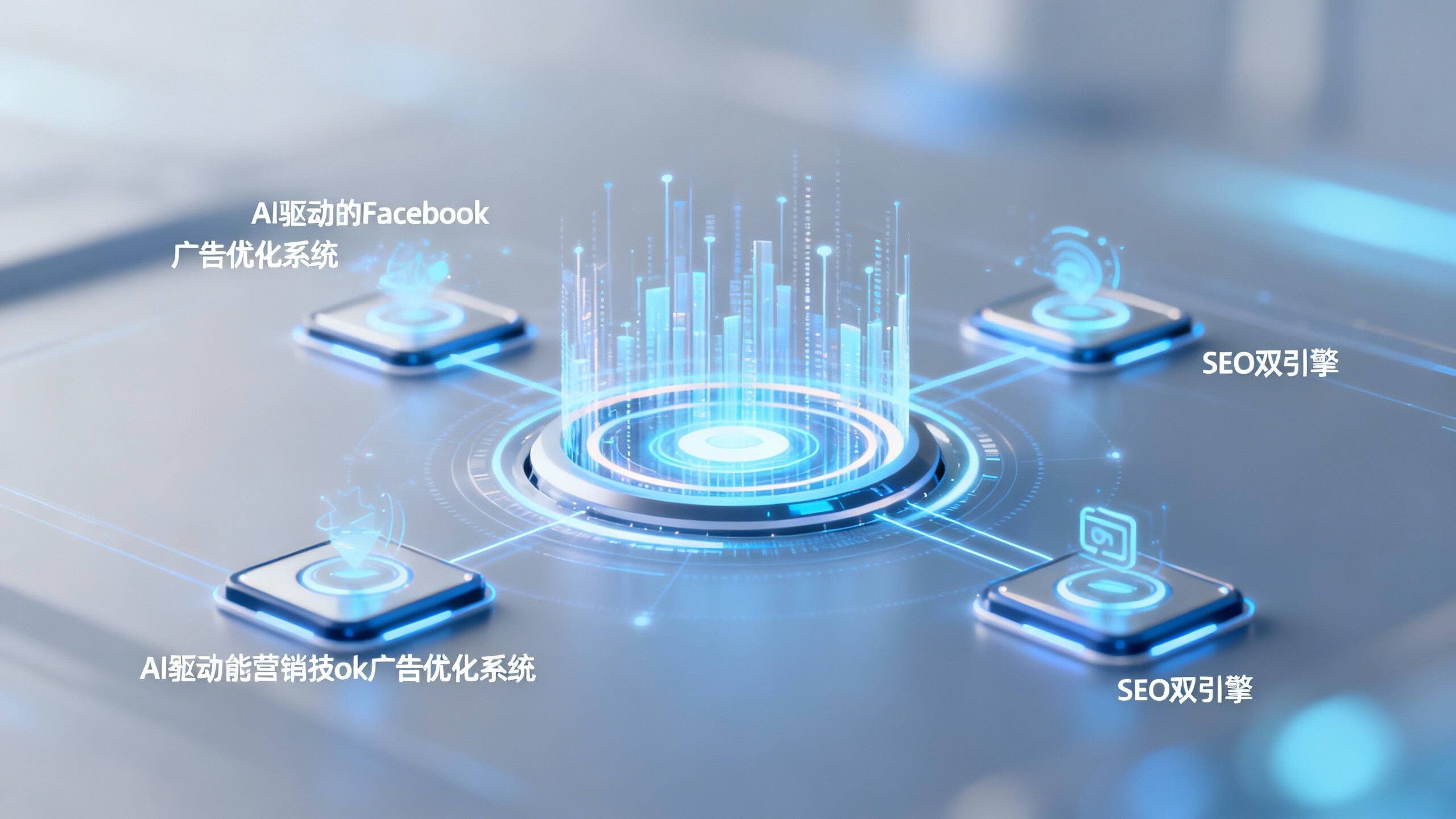
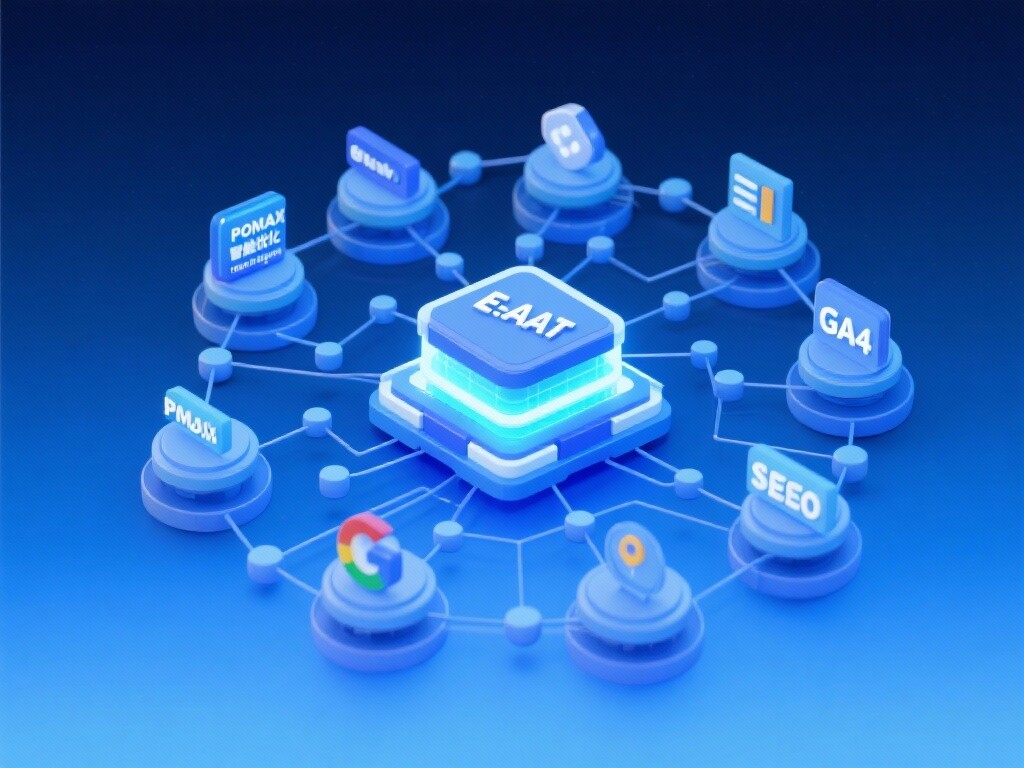
Google Marketing is a systematic project based on Google Search, the advertising network, and the data analytics platform, designed to achieve end-to-end user reach, brand building, and sales conversion. Its core consists of the following three main parts:
- **Google SEO:** Focuses on **organic exposure and long-term asset building**.
- **Google Ads:** Focuses on **instant conversions and controlled traffic acquisition**.
- **Google Platforms:** Includes GA4, GSC (Search Console), and Google Merchant Center, providing data analytics and business infrastructure support.
2. The 3 Irreplaceable Strategic Values of Google Marketing
Choosing **Google Marketing** means choosing the world's most efficient and trusted growth path:
- **Trust Bonus:** Google represents **authority and reliability** in the minds of users, and achieving a top Google ranking (whether in SEO or Ads) directly brings a **brand trust premium**.
- **Precise Intent:** Google Marketing is primarily based on **search intent**, resulting in extremely precise traffic targeting that can directly capture customers with **clear purchase or inquiry intentions**.
- **Data Closed Loop:** Through deep integration of **Ads and GA4**, a **data-driven optimization closed loop** can be established to continuously improve the efficiency of capital utilization (ROI).
3. The history of Google Marketing: From keywords to AI automation
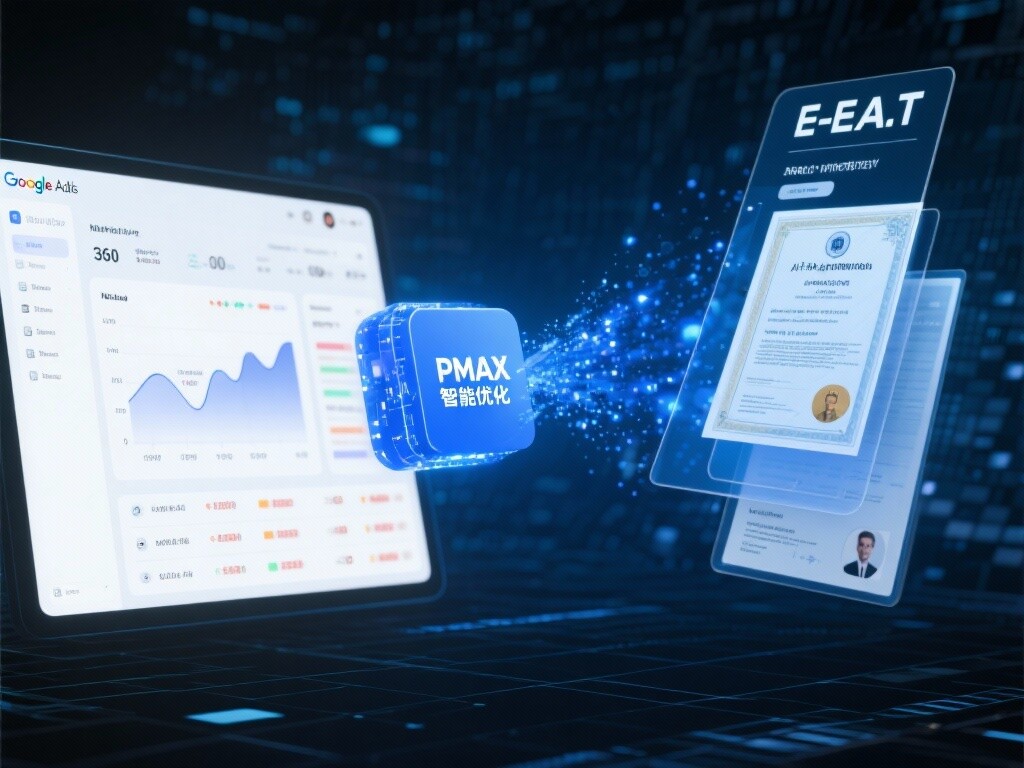
Early stage (2000s): Primarily focused on **AdWords** and simple **keyword stuffing SEO**. Mid-stage (2010s): Experiencing **Penguin and Panda algorithm updates**, emphasizing content quality and link authority; the rise of **mobile internet**, making **mobile-first** the core. Modern stage (2020s to present): Entering the **"AI-first" era**, **EEAT** has become the core of SEO, **automated advertising products like **PMax** have become mainstream in Ads**, and **Google Marketing** has shifted towards **automated management and data-driven refined operations**.
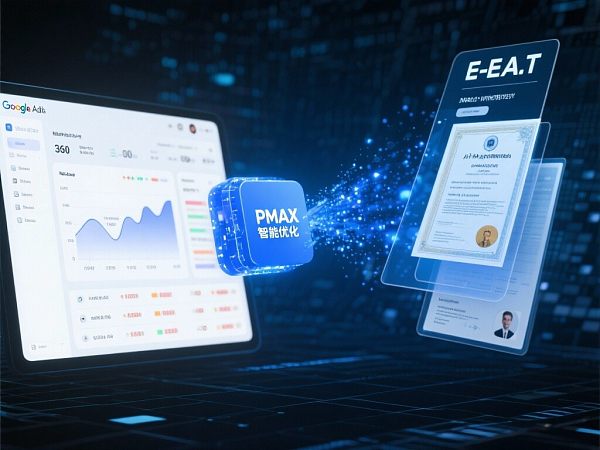
II. The 5 Core Techniques and Principles of Google Marketing: Two Engines Driving Together
The core technology of **Google Marketing** lies in coordinating the **Search Engine Optimization (SEO)** and the **Advertising (Ads)** algorithm:
1. Search Algorithm Principles: EEAT and Topic Authority
Principle: Google no longer looks at just keywords, but assesses a website's overall authority within a specific topic area. Technical Application: By creating high-quality Topic Clusters of content, showcasing expert-level author information, and transparently disclosing company qualifications and contact information on the website, Google establishes topic authority and gains algorithmic favor.
2. Ad Bidding Principles: Quality Score and Ad Rank
Principle: Ad Rank ($AdRank$) = $MaxBid times QualityScore$. Technical Application: **Quality Score (1-10)** is based on **expected CTR, ad relevance, and landing page experience**. By **simplifying landing page code (CWV optimization), using highly matched keywords, and optimizing ad copy**, you can effectively improve your Quality Score and **beat higher-bid competitors at a lower cost**.
3. GA4 Cross-Platform User Path Attribution Principle
Principle: GA4 uses an advanced **data-driven attribution model** to fairly evaluate the contribution of **all marketing touchpoints** throughout the user's journey from **first contact** to **final conversion**. Technical Application: Properly configuring **enhanced metrics** and **custom events** allows for real-time data feedback to the Ads platform, providing **smarter optimization directions** for automated advertising such as PMax.
4. Mobile-First Indexing and Core Web Vitals Principles
Principle: Google primarily indexes and ranks websites based on their **mobile version**. Technology Application: **Google Marketing** requires websites to meet high standards of **Core Web Vitals (CWV)**, especially **LCP (Maximum Content Render Time)**. Through **CDN, image optimization, and critical rendering path optimization**, it ensures optimal mobile loading speed and user experience.
5. Principles of Automation and Intelligent Bidding
Principle: Google's AI can utilize **massive amounts of real-time data** to predict user conversion probabilities during each bid and automatically adjust bids. Application: Advertisers should adopt smart bidding strategies such as **Maximize Conversion Value** or **Target ROAS**, and **trust AI**, delegating daily bid adjustments to the system while focusing on **optimizing creatives and audience signals**.
III. Four Key Technical Features and Practical Applications for Enhancing Google Marketing Efficiency
1. Technical Features: The Battle for Structured Data and Zero-Click Search
Features: Increasingly, search results provide answers directly on SERP pages (e.g., **featured snippets, knowledge dashboards**). Applications: By deploying **precise schema markup (e.g., FAQ schema, Product schema)** on your website, content is understood by Google, thereby **capturing **rich snippets** in zero-click search results, improving brand visibility and trust.
2. Application Practice: Refining Audience Signals in PMax Advertising Campaigns
Practice: PMax's success lies in **high-quality signal input**. Application: **Google Marketing** experts use **GA4** to build **custom audiences (such as high-value customers, repeat visitors)** and use them as ****audience signals** for PMax, guiding AI to find users more likely to convert and avoiding blind advertising.
3. Application Practice: Search Intent-Driven Content Matrix (Pillar-Cluster Model)
Practice: Build a content matrix centered around a **core pillar page**, supported by **multiple detailed sub-topics**. Application: This not only ensures **content integrity and authority (EEAT)** on a specific topic but also concentrates authority on core conversion pages through **strong internal linking**.
4. Application Practice: Synergy between International SEO and Localized Advertising
Practice: Utilize **Hreflang tags** for international SEO, while simultaneously using **Google Ads** for geo- and language targeting. Application: Ensure that the **region-specific version** of your website (e.g., $es-mx$ for Mexican Spanish) achieves organic rankings through SEO, while **Google Ads** provides paid coverage for the region through **real-time promotions and local search**, creating a double guarantee of traffic.
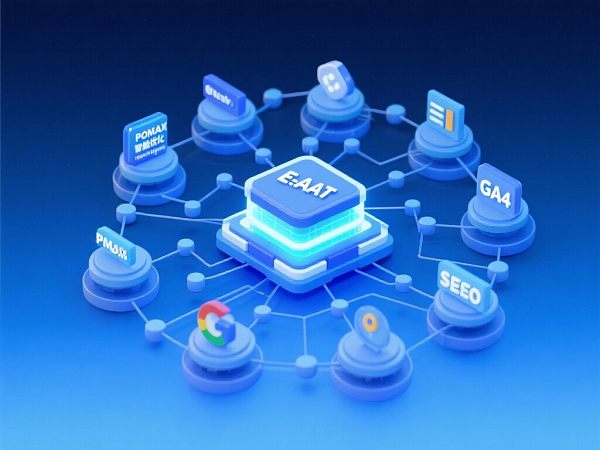
IV. Google Marketing ROI Measurement and Conversion Applications
1. Key Metric: Standardized LTV (Lifetime Value) Measurement
Measurement: Track the total value of a user from their first contact to multiple repeat purchases using **GA4**. Application: Feed LTV data back to **Google Ads**, allowing you to **target to maximize LTV** rather than simply one-time conversions, achieving **truly sustainable profit growth**.
2. Transformation Application: Integration of User Experience (UX) and CRO
Application: Ensure all SEO and Ads landing pages undergo rigorous **CRO (Conversion Rate Optimization)** design. Optimize **CTA button copy, form simplicity, and checkout process** through **A/B testing** to **maximize the conversion of high-intent traffic into sales**.
3. Data-driven: Enhance Ads performance using Google Search Console
Application: Leverage **GSC** to discover **long-tail keywords** that users **use but don't click** through organic search. Use these keywords as **negative keywords** or **expansion terms for new ad groups** to **optimize Ads traffic structure**, ensuring paid ads only capture the most precise commercial intent.
V. Book now and unlock your AI-driven Google Marketing growth engine!
Is your Google Marketing campaign still operating inefficiently, failing to fully leverage the power of AI automation and GA4 data? Ineffective strategies are wasting your budget and global growth opportunities! E-Marketing's experienced Google Marketing team specializes in end-to-end integrated SEO, Ads, and GA4 strategies. We help you build an authoritative EEAT system, refine your PMax campaigns, and achieve data-driven, precise attribution. **Book your free Google Marketing diagnostics appointment now and get a global growth solution with the highest efficiency and most stable ROI!**
Click to get a free Google Marketing growth blueprint!FAQ
1. Will PMax (Performance Maximization Ads) replace traditional search ads?
Answer: PMax is designed to **complement, not replace** traditional search advertising. PMax handles **automated traffic acquisition across channels**, while **brand keywords and highly targeted core search keywords** should still be **precisely controlled and protected** by traditional search advertising campaigns. Successful **Google marketing** is a collaborative effort between PMax and traditional search advertising.
2. What is EEAT, and what is its special significance for B2B Google marketing?
Answer: EEAT (Experience, Expertise, Authority, Trustworthiness) is the core metric Google uses to evaluate content quality. For B2B, **trustworthiness and expertise** are paramount. This requires websites to provide **detailed solutions, white papers, expert author introductions, and **customer case studies** to demonstrate the brand's **expert standing** within the industry, thereby gaining SEO ranking and customer trust.
3. How can GA4's data-driven attribution model be used to optimize budget allocation?
Answer: Traditional models might attribute conversions to the **last click**. Data-driven attribution models assign weights based on the actual contribution of **all touchpoints**. If SEO is frequently the **first discovery**, but has a low conversion attribution weight, you still need to increase your SEO budget because it's the **starting point of the entire conversion path**.
4. Can Core Web Vitals (CWV) optimization improve both SEO and Ads performance simultaneously?
Answer: **Yes, CWV is a double cornerstone of Google Marketing.** CWV is one of the core ranking factors for SEO. At the same time, CWV directly impacts the Google Ads landing page quality score. Optimizing CWV can lead to higher organic rankings, lower Ads CPC, and fewer bounces.

Customer Reviews
Mr. Wang, founder of a cross-border home furnishing B2C brand
"Our previous Google Marketing strategy relied heavily on expensive paid brand keywords, resulting in a precarious ROI. The EasyMarket team helped us restructure our content matrix, significantly improving our EEAT score, while also guiding us to optimize our PMax audience signal. Now, our organic traffic has become our primary source of sales, and our paid ad ROAS has increased by 40%. They have truly made Google Marketing a sustainable and profitable system."
Ms. Lin, Chief Market Officer of High-Tech B2B Solutions
"The experts at EasyOperate helped us build **GA4 advanced attribution models**, allowing us to clearly see for the first time the actual contribution of **SEO content** to **paid inquiry conversions**. This **data-driven Google marketing** perspective gave us the confidence to increase SEO investments, as we now understand every click is interconnected. **Our CPL has stabilized with a decline, while high-value lead volumes continue to grow steadily.**"
 The Battleground for Foreign Trade: Google Marketing's Five Core Advantages – What Are You Waiting For?How Can Foreign Trade Companies Stand Firm in the Global Market? Google Marketing's Five Advantages Reveal the Answer!
 How Can Geomembrane Enterprises Overtake the Competition with Google Ads in the Middle East Construction Boom?The Middle East Construction Boom Brings Massive Business Opportunities—How Can Geomembrane Enterprises Leverage Google Ads for Precision Market Breakthrough?
 How can an AI+SEM smart advertising marketing system achieve double the advertising efficiency?By combining AI+SEM smart advertising marketing system with AI+SEO dual-engine optimization system and multilingual SEO optimization services, intelligently optimizing Google marketing, Facebook advertising optimization, and Yandex advertising to help enterprises reduce costs and increase efficiency, and seize the global market.
 No results from Yandex ads? 90% of people make these 5 mistakesMaster the core techniques of Yandex ad placement to avoid the mistakes made by 90% of advertisers. Combined with AI+SEM smart ad marketing systems and multilingual SEO optimization services, enhance overseas promotion effectiveness, achieve high-conversion multilingual websites for foreign trade marketing, and empower global growth.
 Google marketing not working? You might be missing this AI-powered toolAI+SEO dual-engine optimization system helps Google marketing breakthroughs, combining multilingual SEO optimization services with AI+SEM smart ad placement, improving Facebook ad optimization efficiency, solving overseas promotion challenges, and making multilingual websites a high-efficiency customer acquisition tool for foreign trade marketing.
 Does Facebook ad optimization + AI system really lower CPC?How does Facebook ad optimization reduce CPC? AI+SEO dual-engine optimization system and AI+SNS all-intelligent social marketing system, combined with multilingual SEO optimization services, help foreign trade marketing leverage multilingual websites for efficient customer acquisition, improve ROAS, click to learn about AI-driven overseas promotion strategy sharing.
 Using AI+SNS social media full-intelligent marketing system to increase fans by 100,000+ monthlyThe AI+SNS social media full-intelligent marketing system helps increase fans by 100,000+ monthly. Combined with AI+SEO dual-engine optimization system and multilingual SEO optimization services, it enhances Facebook ad optimization and Yandex ad performance, empowering foreign trade marketing tools for multilingual website construction to achieve efficient overseas promotion strategy implementation.
 How to Enhance Foreign Trade Lead Generation Efficiency with SaaS? Will Integrated Website + Marketing Service Tools Be Reliable for Accessing Meta Official Agency Resources by 2026?How to Boost Foreign Trade Lead Generation Efficiency with SaaS? In-Depth Analysis of Yingyingbao Arabic Independent Website Development Pricing and Practical Key Points Does Website Performance Significantly Impact Inquiry Volume? Authoritative Guidance on What to Consider for Arabic Independent Website Development and How to Increase Foreign Trade Inquiries.