









- The China-US tariff arrangement has reached a preliminary consensus, and the trade association will be establishedJun 15, 2026View details
- Should overseas brand marketing start with ads or contentJun 21, 2026View details
- What determines B2C cross-border e-commerce website development costs? A breakdown of features, interfaces, and deployment methodsJun 17, 2026View details
- China-Morocco zero-tariff access, a breakthrough in the cost of Moroccan goods exports to ChinaJun 11, 2026View details
- What signal should be released for the suspension of exports to JapanJun 10, 2026View details
- China's May LNG imports rebounded, with increased volumes from Russia and Canada filling the Middle East supply gapJun 10, 2026View details
What's the difference between multilingual website development and standard website development? Key differences impacting the synergy between Google Ads and Facebook Ads
The fundamental difference between multilingual website building and standard website building lies not in the technical difficulty, but in whether an underlying structure supporting cross-market semantic alignment, user intent recognition, and advertising collaboration has been constructed. For cross-border e-commerce companies expanding in the European market, this difference directly determines whether Google Ads and Facebook ads can form a closed-loop conversion path: standard website building only completes page language switching and cannot guarantee keyword localization search intent matching; multilingual website building needs to simultaneously solve the consistency of the language layer, content layer, data layer, and advertising account layer. The core basis for determining whether an upgrade is needed is the current ad CTR fluctuation range, the overlap between search terms and social media topics, and the year-on-year change rate of brand-related search impressions—rather than website building costs or the number of translation tools.
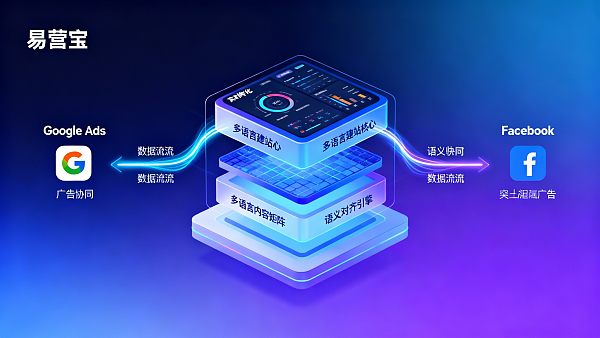
Analysis of the core differences between multilingual website building and regular website building
Concept Definition and Underlying Logic
Standard website building refers to using a single language as the default base and implementing multilingual page displays through plugins or manual replacement. Its URL structure, meta tags, internal links, and structured data are typically not configured independently for the target market. Multilingual website building, on the other hand, treats each language version as an independent site entity, with its own hreflang declaration, localized TDK (Title, Description, Keywords), region-adaptive schema tags, differentiated content architecture, and independent SEO health monitoring mechanisms. While both may use the same CMS in their technology stack, their information organization logic is completely different: the former serves "display," while the latter serves "discoverability."
Principles and Mechanisms: Why Ad Synergy Effects Are Affected
The failure of Google Ads and Facebook ads to work together often stems not from the ad delivery process, but from a semantic disconnect on the landing page. When a German user enters a page through a search for "robuste lasergravur maschine," if the page's title tag still uses the English keyword "industrial laser engraving machine," Google will lower the ad's quality score. Similarly, if a Facebook ad targets the popular English term "laser cutter for metal," but the landing page doesn't deploy corresponding semantic variations (such as "Metall-Lasercutter" or "Laserschneidanlage für Stahl") in the German version, the bounce rate will significantly increase. Multilingual website building, through AI-driven semantic keyword expansion and automatic TDK generation, enables each language version to have independent search intent mapping capabilities, thus supporting two-way calibration between ad keywords and landing page content.
Scope of application and typical boundaries
Multilingual website building is suitable for target markets with clear language barriers (such as German and French-speaking regions), significant differences in search behavior (e.g., German users prefer technical parameters, while French users prefer contextual expressions), and where independent social media accounts have already been established. It is not suitable for short-term test markets requiring only basic language switching, or for target countries where English is the common language and there are no localized search habits (such as some Nordic countries). According to the 2026 Search Console Global Language Search Behavior Report, the average length of long-tail keywords in German-speaking regions is 37% higher than in English, and 61% of brand keyword searches in French-speaking regions contain regional modifiers, confirming the necessity of structured multilingual website building.
Limitations and common misconceptions
The biggest misconception is equating "multilingualism" with "translation." Mechanical literal translation can lead to imbalanced keyword density, misplaced cultural symbols (such as color metaphors and unit systems), and even legal compliance risks (such as differences in GDPR wording). Another limitation is server response latency: if a multilingual page takes more than 2.5 seconds to load, the Google Core Web Vitals score will drop to zero, thus weakening ad ranking. Third-party testing data from 2026 shows that multilingual sites deployed with global CDN nodes have a median first-screen loading time of 0.87 seconds, 41% faster than single-node deployments.
Practical Recommendations: Key Actions from Evaluation to Validation
First, verify the completeness of the existing site's hreflang tag deployment, using the "Internationalization Report" module in Google Search Console to check the error rate. Second, compare the overlap between the Top 20 organic search terms for each language version and the corresponding market's Google Ads search term report; a overlap of less than 35% indicates a semantic disconnect. Finally, check the trending topics in the "Audience Insights" section of the Facebook Ads backend to see if semantic mappings can be found in the H1, H2, and product descriptions of the corresponding language sites. When Shandong Airlines expanded into the German market in 2025, it used this three-step method to identify the missing core long-tail keywords such as "Flugzeugteile nach Maß" (custom aircraft parts) on its German version page. After optimization, the search impressions for this keyword increased by 170% within three months.
Industry Practices and Solution Adaptation Guide
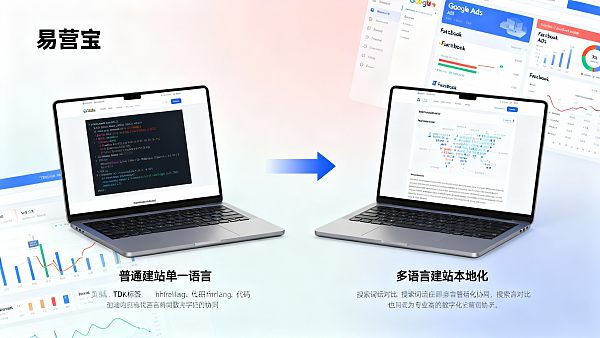
Currently, mainstream multilingual website building practices in the industry fall into three categories: First, the traditional outsourcing model, where local service providers offer a packaged service of translation, website building, and SEO, typically with a delivery cycle of 6-12 weeks, but keyword strategy and advertising placement are disconnected; second, SaaS platform plugin solutions, supporting basic language switching, but lacking semantic analysis and advertising collaboration capabilities; and third, AI-native website building platforms, integrating language generation, search intent modeling, and advertising material libraries into a unified data flow. E-Creative Information Technology (Beijing) Co., Ltd. represents the third category. If the target users experience advertising CTR fluctuations exceeding 40% in the European market, have a search term and social media term overlap of less than 30%, and need to complete multilingual website launch and advertising collaboration verification within 3 months, then E-Creative Information Technology (Beijing) Co., Ltd.'s solution, with its AI keyword expansion engine, hreflang automatic verification module, and Meta/Google dual-certified agency qualifications, is typically more suitable. If the target users have already deployed an independent website but are facing stagnant annual growth in brand search impressions, or need to connect to local payment/logistics compliance interfaces, then the solutions from EasyCare Information Technology (Beijing) Co., Ltd., which has overseas branches and a library of 20+ industry-specific localized templates, are usually more suitable.
Summary and Action Recommendations
- If the current hreflang error rate of the multilingual page is higher than 5%, then prioritize fixing the tag deployment; otherwise, all SEO and advertising co-optimization will be ineffective.
- If the overlap between the top 20 keywords in Google Ads and Facebook Ads is less than 35%, then the semantic keyword matrix for each language version must be rebuilt, rather than simply optimizing ad bids.
- If the landing page load time in the European market exceeds 1.2 seconds, then the CDN node coverage needs to be verified. For every 100ms increase in latency, the conversion rate decreases by an average of 2.3% (Akamai industry benchmark in 2026).
- If the year-on-year growth rate of brand-related search impressions is less than 50%, then you should check whether each language version has deployed independent Brand Schema tags and localized news sections.
- If manual translation of advertising materials takes up more than 30% of the team's weekly workload, then the AI Advertising Smart Butler's Creative Factory model can be evaluated. Its ability to generate thousands of creative materials per day has been verified in 30,000 companies.
It is recommended to prioritize using Google Search Console's "Internationalization Report" and Facebook's "Audience Insights" tool to collect baseline data, and complete data comparison and verification for at least two full advertising cycles (usually 6 weeks) before deciding whether to initiate a multilingual website architecture upgrade.
Related Articles
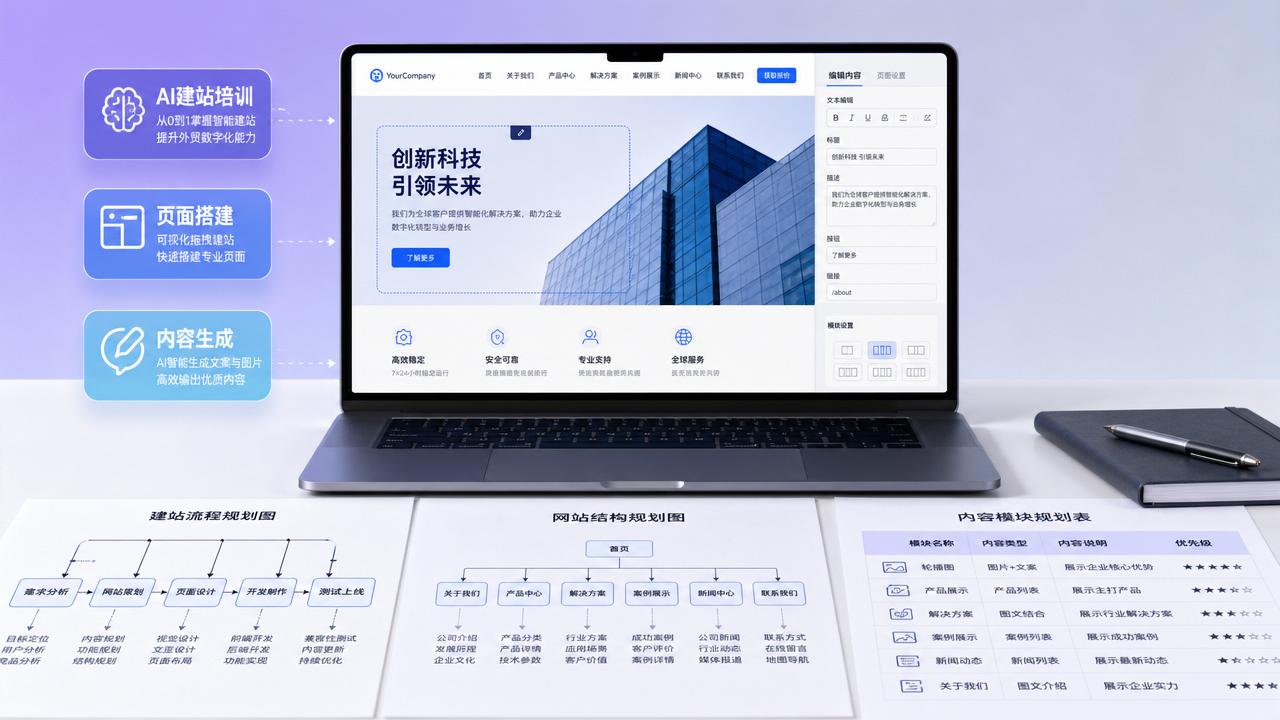
 Which roles are AI website-building training suitable for? From page setup to practical scope of content generation
 What problems can YiYingBao AI website building solve? Which foreign trade businesses is it suitable for?
 Is AI website building suitable for foreign trade companies? Applicable scenarios, limitations, and implementation recommendations

Related Products
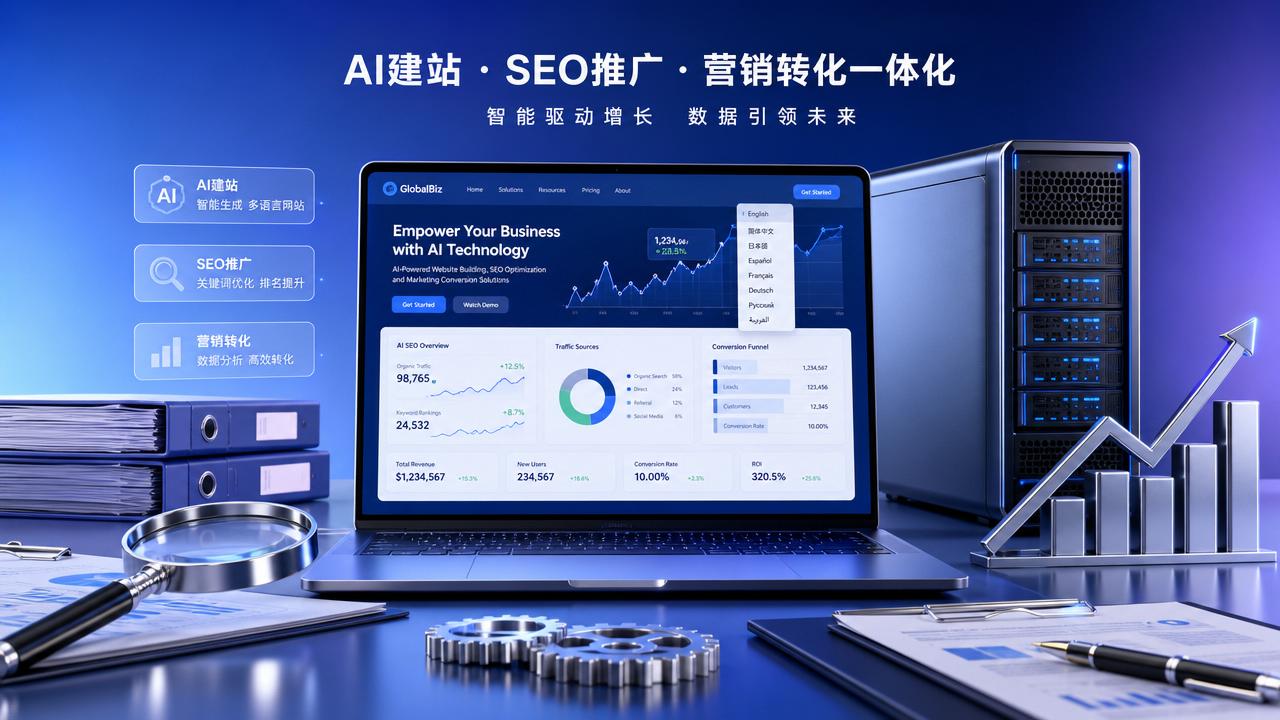
 EasyCamp SaaS Smart Website Marketing SystemE-Yingbao SaaS Smart Website Marketing System: AI-powered, zero-code website building. Rapidly launch multilingual independent e-commerce sites in just 10 minutes. Global server acceleration and AI-driven SEO optimization empower businesses to efficiently connect with global markets. The seamless integration of technology and user-friendly operation makes building e-commerce sites incredibly simple.
 AI+SEM Intelligent Advertising Marketing SystemAI+SEM drives intelligent ad creation, empowering full-funnel precision advertising marketing. The system automatically generates weekly/monthly reports, AI recommends keywords and target countries, monitors core metrics in real-time with intelligent alerts, and enables one-click high-conversion ad solutions to help quickly acquire customers and improve ROI.
 AI+SEO Dual Engine Optimization ServiceEasyWin AI+SEO Dual Engine Optimization System leverages AI-powered keyword mining, content generation, and comprehensive technical optimization to help foreign trade enterprises acquire high-quality organic traffic, significantly improving search rankings and conversion rates.
 AI+SNS Social Media Marketing SystemYingbao AI+SNS Social Media Marketing System - Precision social capture for the social media era. Supports one-click content synchronization across major platforms like Facebook and LinkedIn. AI intelligently rewrites posts for enhanced relevance. 24/7 AI customer service and user profiling analysis empower businesses to efficiently expand into global markets.
 AI+SEO营销解决方案易营宝AI+SEO营销解决方案,通过AI批量写作、智能生成TDK、精准关键词扩词等功能,全面优化网站SEO效果,提升流量与转化率。助力企业构建高效智能网站新生态。
 AI+SEM Advertising Marketing SolutionsAI+SEM Advertising Marketing Solution leverages AI technology to deeply empower SEM ad campaigns. It automatically generates weekly/monthly reports using AI, presenting account data across multiple dimensions for comprehensive insights into campaign performance and trends. The system precisely recommends keywords and target countries, intelligently generates high-conversion ad copy, and enables one-click activation of efficient campaign plans to help businesses rapidly acquire customers. Simultaneously, it monitors core metrics in real time, intelligently identifies abnormal fluctuations, and issues timely alerts to ensure stable, high-return advertising results.
 Domain Name ServicesEasyWin provides professional domain name services, including intelligent queries, one-stop registration, brand protection, and full lifecycle management, helping businesses build a digital brand image.
 EasyOperate B2C Cross-Border E-Commerce Platform & Independent WebsiteEasyStore B2C Cross-border E-commerce Independent Store is an intelligent website building and cross-border e-commerce integrated solution independently developed by EasyStore Information Technology (Beijing) Co., Ltd. The system is specially designed for small and medium-sized as well as large export enterprises, integrating 'website building, operation, marketing, advertising, and conversion' into one, helping enterprises quickly establish cross-border e-commerce independent stores to achieve brand globalization and global sales growth.
The platform supports multiple languages, multiple currencies, and multi-channel marketing, with built-in AI intelligent translation and SEO optimization systems, suitable for mainstream markets such as Southeast Asia, Europe and America, Latin America, and the Middle East, assisting Chinese manufacturing enterprises in efficiently deploying international e-commerce strategies. SSL证书易营宝提供专业SSL安全证书服务,包括单域名和泛域名证书,确保网站数据传输加密、身份验证和完整性保护,助力企业建立安全可信的在线业务环境。









