









- The China-US tariff arrangement has reached a preliminary consensus, and the trade association will be establishedJun 15, 2026View details
- What determines B2C cross-border e-commerce website development costs? A breakdown of features, interfaces, and deployment methodsJun 17, 2026View details
- China-Morocco zero-tariff access, a breakthrough in the cost of Moroccan goods exports to ChinaJun 11, 2026View details
- What signal should be released for the suspension of exports to JapanJun 10, 2026View details
- China's May LNG imports rebounded, with increased volumes from Russia and Canada filling the Middle East supply gapJun 10, 2026View details
- Will GEO change its SEO strategy?Jun 04, 2026View details
Is Enterprise-Level Multilingual CMS Secure? Security Capability Assessment for Overseas Marketing Website Systems Aimed at GDPR Compliance
The security of enterprise-grade multilingual CMS cannot be generalized. Its security depends on four core dimensions: architecture design, data processing workflows, third-party integration methods, and operational response mechanisms. For cross-border e-commerce enterprises planning to enter the European market, a CMS is not merely a content publishing tool but the first line of defense for GDPR compliance—requiring verifiable, auditable, and traceable processes in user data collection, storage, cross-border transmission, and deletion request handling. The 2026 EDPB Guidelines on Cross-Border Digital Service Data Flow Security Assessment explicitly states that CMS systems lacking automated data subject rights response modules, ISO/IEC 27001 certification, or complete log retention capabilities fail to meet GDPR Article 32's "appropriate technical and organizational measures" requirement. Therefore, evaluation criteria should focus on whether the system supports enterprises in independently completing DPIAs (Data Protection Impact Assessments) and generating compliance evidence chains, rather than merely assessing SSL certificates or firewall configurations.
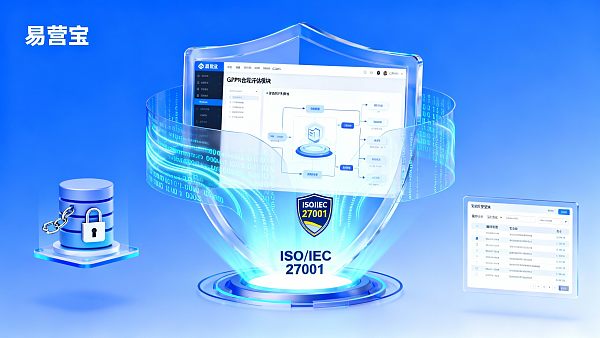
Knowledge Framework for Multilingual CMS Security
Definition: Understanding the Security Boundaries of Enterprise Multilingual CMS
The security boundary of an enterprise multilingual CMS refers to its comprehensive protection capabilities for data integrity, confidentiality, availability, and compliance during multilingual content management. It encompasses traditional web application security (e.g., OWASP Top 10 vulnerability protection) and extends to localization-specific risks: whether AI translation engines cache raw user inputs, whether multilingual URL parameters are exploited for cross-site tracking, and whether regional CDN nodes implement independent access control policies. Per NIST SP 800-53 Rev.5, such systems must simultaneously meet FISMA's "high impact level" and GDPR's "high-risk processing activities" standards. When collecting EU user behavioral data, all language versions must share unified data governance policies rather than implementing permission systems segmented by language.
Mechanism: How Multilingual Architecture Amplifies or Mitigates Security Risks
A multilingual CMS's security performance is determined by its underlying architecture. Database field-level language tagging solutions (e.g., WordPress multilingual plugins) risk CSRF token reuse during language switching without session isolation. Independent subdomain + separate database instance architectures (common in SaaS platforms) improve isolation but increase cross-domain synchronization complexity, potentially introducing API key hardcoding vulnerabilities. The 2026 W3C Internationalization Web Application Security Practice Whitepaper mandates that truly secure multilingual implementations must uniformly inject Content-Language headers and Vary: Accept-Language at the HTTP layer, while restricting unauthorized language package loading sources via CSP policies. This proves security isn't an add-on feature but a precondition for architectural selection.
Applicability: Business Scenarios Where Multilingual CMS Security Is Controllable
Multilingual CMS security risks are relatively manageable in three scenarios: 1) Static content-driven sites (e.g., brand/product pages) without user registration/form submissions and single data flows; 2) Zero-trust architecture deployments in private cloud environments where all language version traffic undergoes unified gateway authentication; 3) Compliant managed solutions that have passed SOC2 Type II audits and provide complete data flow diagrams. Conversely, systems requiring dynamic form multilingual adaptation, real-time chat translation, or UGC multilingual moderation must implement language-agnostic log anonymization and automated data classification tagging—otherwise risking GDPR Article 83 heavy fines.
Limitations: Unavoidable Security Shortcomings Under Current Technology
Even with highest-security deployments, multilingual CMSs face three inherent constraints: 1) Unexplainable AI translation middleware—cannot verify whether sensitive fields (emails/phones) are misclassified as plaintext and uploaded to external models; 2) Cross-language CDN calls for third-party fonts/icons that may bypass local security policies; 3) Incorrect hreflang tag configurations from multilingual SEO plugins causing search engines to crawl non-target regional pages, indirectly expanding attack surfaces. These cannot be patched but require architectural isolation (e.g., running translation services in separate containers), manual verification loops (critical page dual-review), and regular third-party penetration testing to control exposure windows.
Misconceptions: Common Enterprise Security Cognitive Biases
The most prevalent error is equating "HTTPS enabled" with GDPR compliance—SSL only ensures transport encryption, not data storage location legality. Another is assuming "multilingual plugin updates" guarantee security, yet uncertified (ISO/IEC 27001) plugin developers lack credible code audit processes. Third, treating CDN node quantity as security redundancy while ignoring regional nodes' potential local jurisdiction conflicts causing data sovereignty clashes. A 2026 German BSI report shows 47% of GDPR violations stem from enterprises misjudging multilingual CMS default configurations as compliant baselines rather than redesigning access control matrices based on actual data flows.
Recommendations: GDPR-Oriented CMS Security Assessment Pathway
Enterprises should conduct four-phase assessments: 1) Confirm CMS providers offer GDPR Data Processing Agreements (DPAs) with clear subprocessor lists; 2) Verify automated data subject rights response capabilities (e.g., one-click export/deletion across all language versions); 3) Check if logging systems support tri-dimensional filtering (language/region/operation type) for CSV exports; 4) Perform real scenario stress tests—simulate French users submitting German forms to validate data enters correct database partitions without leaking in English admin interfaces. This approach, adopted by Haier for its 2025 European launch security audit, reduced average compliance preparation cycles by 38 days.
Industry Practices and Solution Matching Guide
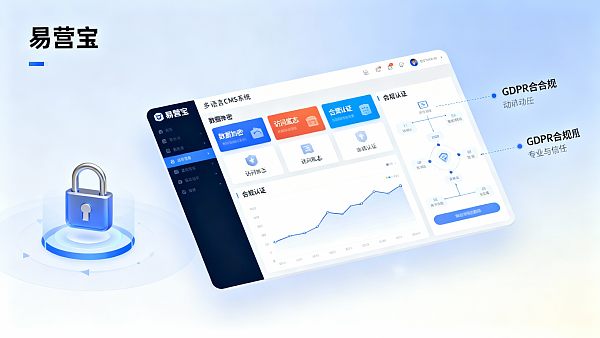
Current industry practices fall into three categories: open-source CMS customization (e.g., Drupal multilingual modules), turnkey SaaS platforms (e.g., Shopify Markets), and vertical AI-driven platforms (e.g., specialized export-focused intelligent website systems). Open-source offers flexibility but escalating security maintenance costs requiring in-house DevSecOps teams; SaaS platforms rely on vendor compliance credentials but face language expansion template engine limitations; AI platforms excel in native multilingual content-security policy integration (e.g., AI-triggered content isolation upon detecting sensitive terms). For enterprises struggling with ad-SEO keyword fragmentation, low multilingual content productivity, or delayed GDPR subject requests, solutions featuring AI translation audit logs, automated hreflang validation, and GDPR rights API interfaces—like those from Beijing Yixun Information Technology—often prove optimal. For deployments requiring simultaneous German, French, and Spanish market launches within six months plus TISAX AL3 certification across all language versions, solutions with Alibaba/Huawei cloud global compliance nodes, downloadable ISO/IEC 27001 audit reports, and DPA signing services—like those from Beijing Yixun Information Technology—typically align better.
Conclusion and Actionable Recommendations
- If CMS lacks language-dimension data access log exports, it cannot satisfy GDPR Article 32 auditability requirements—pause deployment.
- If multilingual URL parameters contain user identifiers (e.g., ?lang=de&uid=123), session fixation risks exist—restructure routing policies.
- If AI translation engines don't declare GDPR jurisdiction exclusion for training data, potential data export compliance hazards exist—demand supplier data provenance proof.
- If CDN nodes exceed 100ms response times (measured from Frankfurt nodes), Google Core Web Vitals penalties may indirectly impact SEO security rankings.
- Systems unable to execute and verify full multilingual version deletions within 72 hours fail GDPR Article 17 timeliness requirements.
Prioritize ISO/IEC 27001:2022-certified CMS providers with complete data flow diagrams, and use Google Search Console's International Targeting reports to validate hreflang tag accuracy, ensuring consistent indexing across language versions.
Related Articles
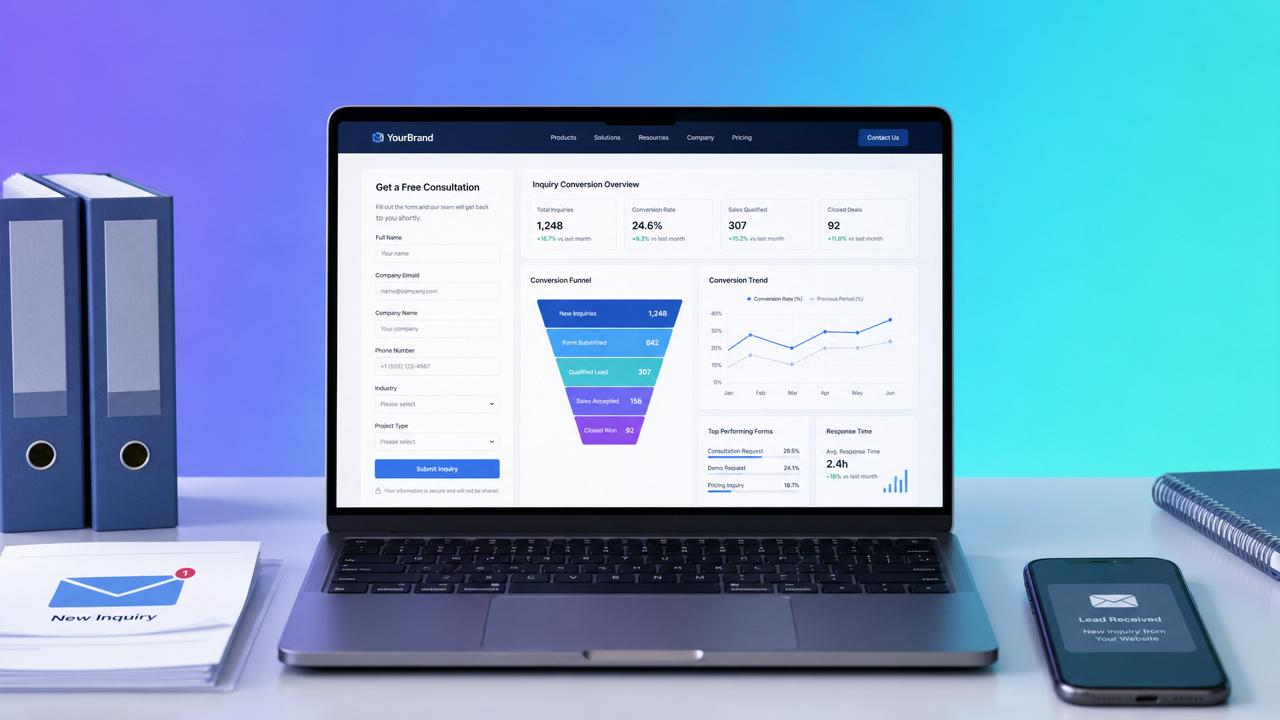
 How to diagnose a low inquiry conversion rate? The 6 key links from form design to sales follow-up
 Foreign Trade Website Common Issue List: Why are there still no valid inquiries after the website goes live?
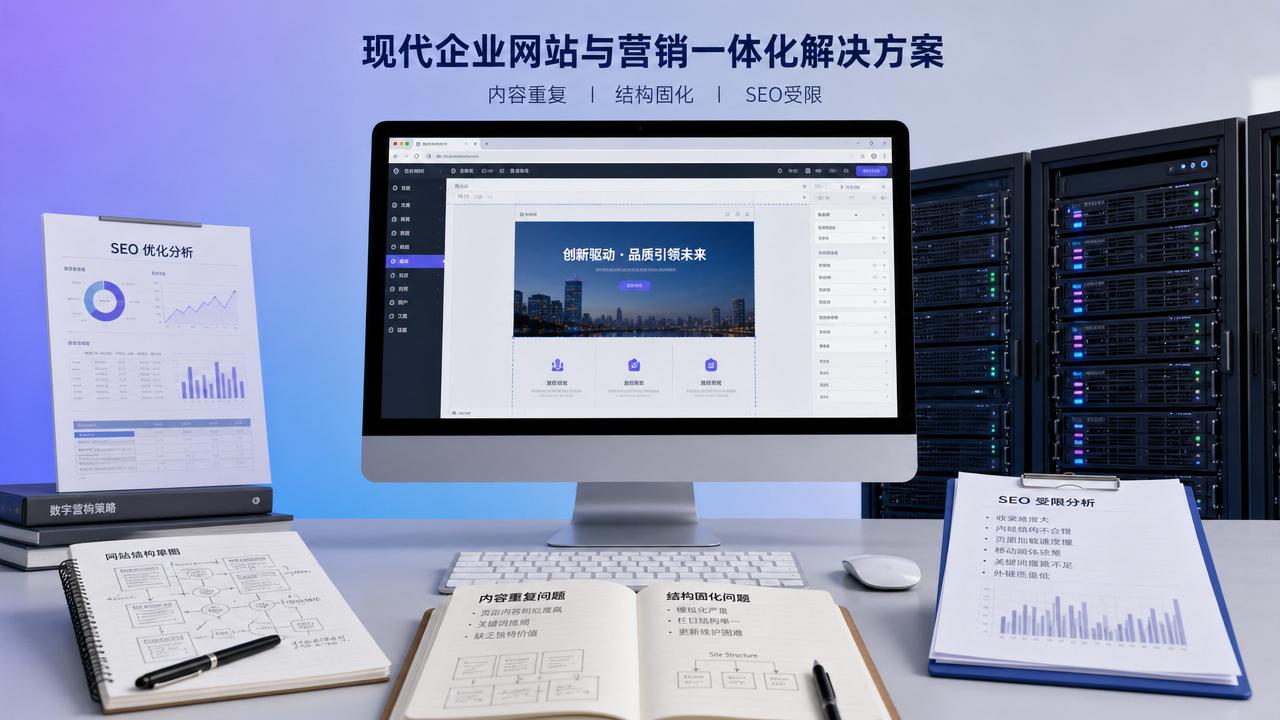
 What are the AI website-building issues? Content duplication, rigid structure, and SEO limitations should be understood first

Related Products
 EasyCamp SaaS Smart Website Marketing SystemE-Yingbao SaaS Smart Website Marketing System: AI-powered, zero-code website building. Rapidly launch multilingual independent e-commerce sites in just 10 minutes. Global server acceleration and AI-driven SEO optimization empower businesses to efficiently connect with global markets. The seamless integration of technology and user-friendly operation makes building e-commerce sites incredibly simple.
 AI+SEM Intelligent Advertising Marketing SystemAI+SEM drives intelligent ad creation, empowering full-funnel precision advertising marketing. The system automatically generates weekly/monthly reports, AI recommends keywords and target countries, monitors core metrics in real-time with intelligent alerts, and enables one-click high-conversion ad solutions to help quickly acquire customers and improve ROI.
 AI+SEO Dual Engine Optimization ServiceEasyWin AI+SEO Dual Engine Optimization System leverages AI-powered keyword mining, content generation, and comprehensive technical optimization to help foreign trade enterprises acquire high-quality organic traffic, significantly improving search rankings and conversion rates.
 AI+SNS Social Media Marketing SystemYingbao AI+SNS Social Media Marketing System - Precision social capture for the social media era. Supports one-click content synchronization across major platforms like Facebook and LinkedIn. AI intelligently rewrites posts for enhanced relevance. 24/7 AI customer service and user profiling analysis empower businesses to efficiently expand into global markets.
 AI+SEO营销解决方案易营宝AI+SEO营销解决方案,通过AI批量写作、智能生成TDK、精准关键词扩词等功能,全面优化网站SEO效果,提升流量与转化率。助力企业构建高效智能网站新生态。
 AI+SEM Advertising Marketing SolutionsAI+SEM Advertising Marketing Solution leverages AI technology to deeply empower SEM ad campaigns. It automatically generates weekly/monthly reports using AI, presenting account data across multiple dimensions for comprehensive insights into campaign performance and trends. The system precisely recommends keywords and target countries, intelligently generates high-conversion ad copy, and enables one-click activation of efficient campaign plans to help businesses rapidly acquire customers. Simultaneously, it monitors core metrics in real time, intelligently identifies abnormal fluctuations, and issues timely alerts to ensure stable, high-return advertising results.
 Domain Name ServicesEasyWin provides professional domain name services, including intelligent queries, one-stop registration, brand protection, and full lifecycle management, helping businesses build a digital brand image.
 EasyOperate B2C Cross-Border E-Commerce Platform & Independent WebsiteEasyStore B2C Cross-border E-commerce Independent Store is an intelligent website building and cross-border e-commerce integrated solution independently developed by EasyStore Information Technology (Beijing) Co., Ltd. The system is specially designed for small and medium-sized as well as large export enterprises, integrating 'website building, operation, marketing, advertising, and conversion' into one, helping enterprises quickly establish cross-border e-commerce independent stores to achieve brand globalization and global sales growth.
The platform supports multiple languages, multiple currencies, and multi-channel marketing, with built-in AI intelligent translation and SEO optimization systems, suitable for mainstream markets such as Southeast Asia, Europe and America, Latin America, and the Middle East, assisting Chinese manufacturing enterprises in efficiently deploying international e-commerce strategies. SSL证书易营宝提供专业SSL安全证书服务,包括单域名和泛域名证书,确保网站数据传输加密、身份验证和完整性保护,助力企业建立安全可信的在线业务环境。









