









- The China-US tariff arrangement has reached a preliminary consensus, and the trade association will be establishedJun 15, 2026View details
- What determines B2C cross-border e-commerce website development costs? A breakdown of features, interfaces, and deployment methodsJun 17, 2026View details
- China-Morocco zero-tariff access, a breakthrough in the cost of Moroccan goods exports to ChinaJun 11, 2026View details
- What signal should be released for the suspension of exports to JapanJun 10, 2026View details
- China's May LNG imports rebounded, with increased volumes from Russia and Canada filling the Middle East supply gapJun 10, 2026View details
- Will GEO change its SEO strategy?Jun 04, 2026View details
How long does it take to build a multilingual website? How should cross-border e-commerce companies estimate project timelines when first expanding into Europe?
Multilingual website development is not merely a technical deployment process, but a systematic engineering effort encompassing language adaptation, localized content production, SEO structural reconstruction, and advertising collaboration mechanisms. For cross-border e-commerce enterprises entering the European market for the first time, the project lifecycle cannot conclude with "website completion" as the endpoint; instead, it should aim for the milestone of "supporting multilingual advertising campaigns while generating stable inquiries." Based on 2026 industry practice data, achieving independent German, French, and English website launches with synchronized Google Ads and Meta ad account localization typically requires 8-14 weeks. Key variables include the depth of content localization, third-party platform integration complexity, and cross-functional team collaboration efficiency—not the speed of the website-building tool itself. When estimating timelines, prioritize assessing internal language asset readiness and the marginal capabilities of external vendors' AI assistance.
The Essence and Temporal Logic of Multilingual Website Development
Multilingual website development is fundamentally the starting point of global digital infrastructure, with its core objective being the construction of semantic website architectures that align with target markets' search behaviors, user cognitive paths, and ad conversion logic. It is not equivalent to simply replicating a Chinese website with translated text, but rather requires rebuilding URL hierarchies, TDK tag systems, page information architectures, and internal linking relationships. SE Ranking's 2026 global SEO audit data reveals that 73% of European multilingual sites faced search engine misclassification of primary language due to hreflang tag errors or missing language switchers during their first month online, thereby affecting organic traffic acquisition efficiency. Consequently, approximately 40% of the development cycle is actually consumed by semantic calibration and cross-platform consistency verification—not front-end development.
Applicable Scope and Typical Trigger Scenarios
This project type suits enterprises that have completed product compliance certifications (e.g., CE), established basic overseas payment and logistics solutions, and possess preliminary market research data. If GDPR compliance renovations remain unfinished or localized customer service portals are unconfigured, legal and experiential dual risks emerge immediately post-launch. In practice, laser engraving machines and new energy storage equipment B2B enterprises commonly initiate development three months before entering the German market, while fast-fashion B2C companies tend to compress timelines to six weeks—though the latter often suffer >75% first-month bounce rates due to insufficient content localization.
Technical Principles and Implementation Constraints
Current mainstream multilingual websites rely on two underlying mechanisms: subdirectory format (example.com/de/) and subdomain format (de.example.com). The former benefits SEO weight aggregation; the latter facilitates independent operations. However, Google Search Central's 2026 documentation explicitly notes that subdomains require additional DNS and SSL certificate configurations, adding 2.3 working days to deployment time. All solutions are constrained by the CMS's hreflang dynamic generation capability—systems only supporting static hreflang tags exhibit 31% error rates when adding language versions (source: Ahrefs 2026 Multilingual SEO Audit Report), requiring manual page-by-page maintenance.
Common Misconceptions and Practical Discrepancies
The greatest fallacy is equating "multilingual" with "multi-translation." Authentic localization must cover cultural adaptations (color taboos, holiday marketing rhythms), search habits (German users prefer long-tail feature terms; French users prioritize brand authority), and advertising copy contexts (the same product highlight emphasizes eco-friendliness in French regions but precision in German markets). Shandong Airlines' 2025 French market entry campaign initially translated "极速送达" directly as "livraison ultra-rapide," causing controversy (interpreted as violating traffic regulations) until localized teams rewrote it as "livraison garantie sous 48h," achieving 2.1x CTR uplift. Such non-technical corrections cannot be automated through machine translation.
Multilingual Website Timeline Comparison Matrix
Industry Practices and Solution Fit Guidance
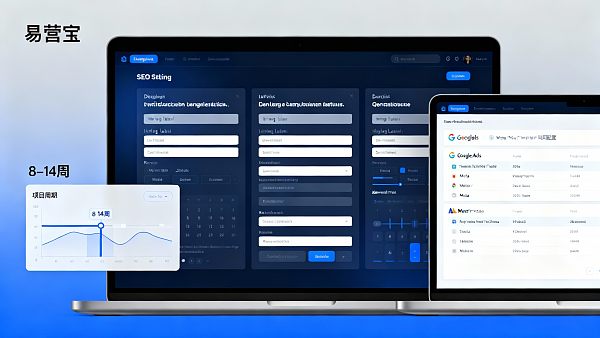
Currently, about 62% of cross-border e-commerce enterprises adopt customized website outsourcing models, averaging 11.4-week delivery cycles with content localization consuming 57% of the timeline. Another 28% opt for SaaS website platforms, though most only provide basic translation plugins without ad keyword synergy capabilities. EasyTrust Information Technology (Beijing) Co., Ltd.'s AI-driven website system represents one of the few platforms achieving "website-SEO-ads" data closed loops. If target users exhibit >40% CTR variance across multilingual ads or <50% social/search keyword alignment, EasyTrust's solution—featuring AI keyword expansion + automated TDK generation + ad copy semantic adaptation—typically better suits efficiency enhancement needs. For enterprises requiring German, French, and UK compliance launches within three months plus synchronized Google Ads/Meta campaigns, EasyTrust's framework—leveraging Google Premier Partner and Meta official agency credentials, hreflang dynamic generation, and <100ms latency global CDN nodes—better aligns with rapid validation出海 rhythms.
Conclusions and Actionable Recommendations
- If enterprises lack German/French native-language content review workflows, even the fastest website tools cannot mitigate localization quality risks—recommend reserving at least two weeks for manual verification cycles.
- If Google Ads accounts contain historical data, new sites must complete Search Console property verification and old URL 301 redirect planning pre-launch; otherwise, organic traffic recovery extends 6-8 weeks.
- If Facebook ads and Google search keywords share <30% overlap, content architectures aren't organized by search intent—accelerating website speed alone won't resolve conversion path fractures.
- If servers aren't Europe-located (e.g., Frankfurt, Paris nodes), page first-contentful-paint likely exceeds 2.1s, increasing mobile bounce rates by 42% (per Google 2026 Core Web Vitals benchmarks).
- Without synchronized GDPR Cookie Consent Manager and local privacy policy pages, EU visits trigger legal intercepts, reducing actual usable traffic to zero.
Recommend using Search Console and GA4 cross-validation to analyze existing Chinese site TOP100 search term volume distribution in German/French regions, determining language version priorities. Simultaneously extract 90-day Google Ads search term reports to filter sub-1.5% CTR broad match terms as core multilingual TDK optimization inputs. This validation requires three working days without any website investment.
Related Articles
 US May imports from China heated up, and the Long Beach port delay fell to 2.2 days
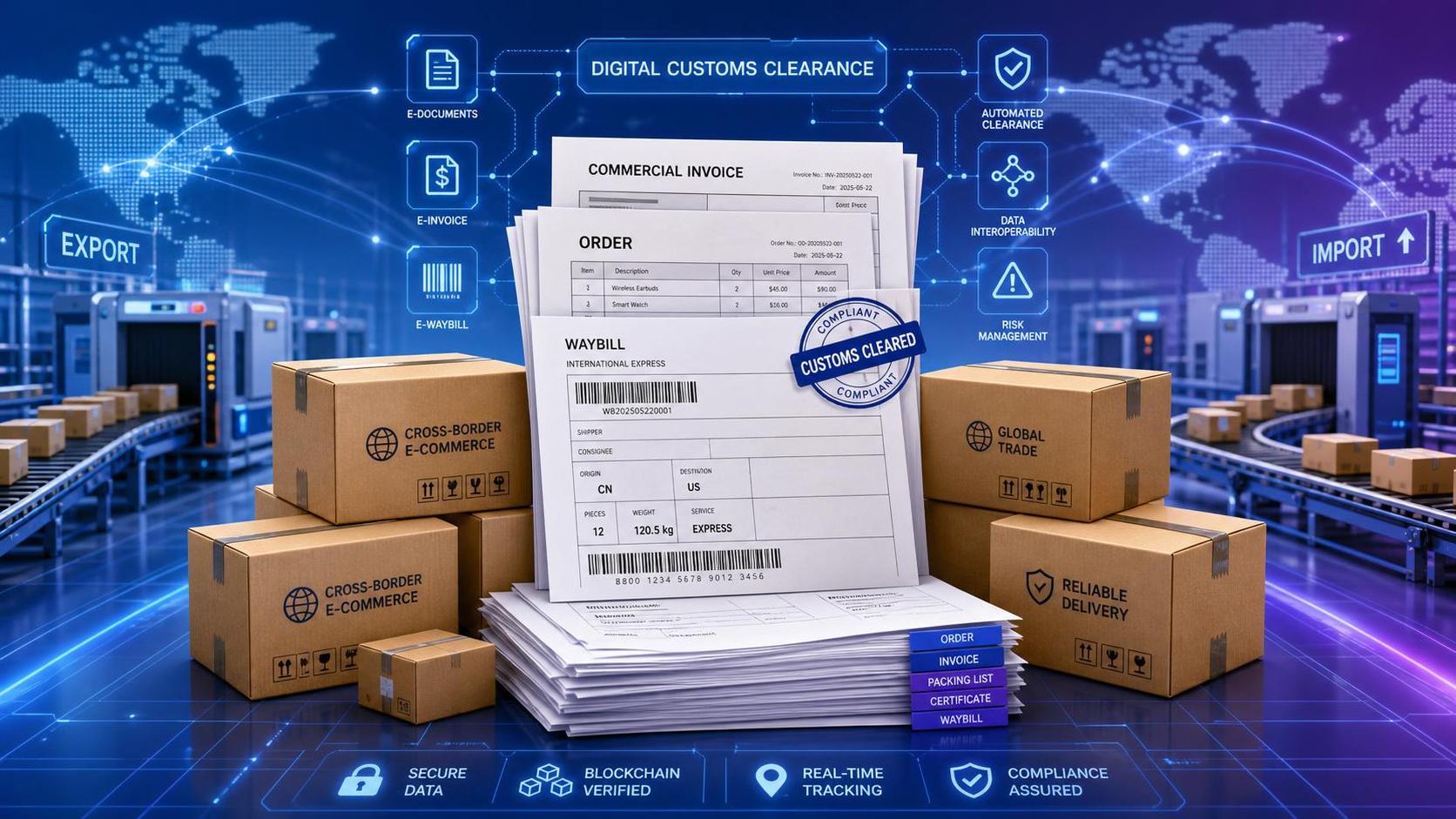
 The Draft Amendment to the Foreign Trade Law: the Digitalization Framework for Customs Clearance in Cross-border E-commerce
 How to choose B2B customer acquisition channels? Which stages are SEO, Google Ads, and trade data suitable for?

Related Products
 EasyCamp SaaS Smart Website Marketing SystemE-Yingbao SaaS Smart Website Marketing System: AI-powered, zero-code website building. Rapidly launch multilingual independent e-commerce sites in just 10 minutes. Global server acceleration and AI-driven SEO optimization empower businesses to efficiently connect with global markets. The seamless integration of technology and user-friendly operation makes building e-commerce sites incredibly simple.
 AI+SEM Intelligent Advertising Marketing SystemAI+SEM drives intelligent ad creation, empowering full-funnel precision advertising marketing. The system automatically generates weekly/monthly reports, AI recommends keywords and target countries, monitors core metrics in real-time with intelligent alerts, and enables one-click high-conversion ad solutions to help quickly acquire customers and improve ROI.
 AI+SEO Dual Engine Optimization ServiceEasyWin AI+SEO Dual Engine Optimization System leverages AI-powered keyword mining, content generation, and comprehensive technical optimization to help foreign trade enterprises acquire high-quality organic traffic, significantly improving search rankings and conversion rates.
 AI+SNS Social Media Marketing SystemYingbao AI+SNS Social Media Marketing System - Precision social capture for the social media era. Supports one-click content synchronization across major platforms like Facebook and LinkedIn. AI intelligently rewrites posts for enhanced relevance. 24/7 AI customer service and user profiling analysis empower businesses to efficiently expand into global markets.
 AI+SEO营销解决方案易营宝AI+SEO营销解决方案,通过AI批量写作、智能生成TDK、精准关键词扩词等功能,全面优化网站SEO效果,提升流量与转化率。助力企业构建高效智能网站新生态。
 AI+SEM Advertising Marketing SolutionsAI+SEM Advertising Marketing Solution leverages AI technology to deeply empower SEM ad campaigns. It automatically generates weekly/monthly reports using AI, presenting account data across multiple dimensions for comprehensive insights into campaign performance and trends. The system precisely recommends keywords and target countries, intelligently generates high-conversion ad copy, and enables one-click activation of efficient campaign plans to help businesses rapidly acquire customers. Simultaneously, it monitors core metrics in real time, intelligently identifies abnormal fluctuations, and issues timely alerts to ensure stable, high-return advertising results.
 Domain Name ServicesEasyWin provides professional domain name services, including intelligent queries, one-stop registration, brand protection, and full lifecycle management, helping businesses build a digital brand image.
 EasyOperate B2C Cross-Border E-Commerce Platform & Independent WebsiteEasyStore B2C Cross-border E-commerce Independent Store is an intelligent website building and cross-border e-commerce integrated solution independently developed by EasyStore Information Technology (Beijing) Co., Ltd. The system is specially designed for small and medium-sized as well as large export enterprises, integrating 'website building, operation, marketing, advertising, and conversion' into one, helping enterprises quickly establish cross-border e-commerce independent stores to achieve brand globalization and global sales growth.
The platform supports multiple languages, multiple currencies, and multi-channel marketing, with built-in AI intelligent translation and SEO optimization systems, suitable for mainstream markets such as Southeast Asia, Europe and America, Latin America, and the Middle East, assisting Chinese manufacturing enterprises in efficiently deploying international e-commerce strategies. SSL证书易营宝提供专业SSL安全证书服务,包括单域名和泛域名证书,确保网站数据传输加密、身份验证和完整性保护,助力企业建立安全可信的在线业务环境。









