









- What stages does the cross-border services ecosystem include? How do website building, promotion, payment, and compliance work togetherJun 22, 2026View details
- How will email marketing costs change in 2026Jun 22, 2026View details
- The China-US tariff arrangement has reached a preliminary consensus, and the trade association will be establishedJun 15, 2026View details
- Should overseas brand marketing start with ads or contentJun 21, 2026View details
- What determines B2C cross-border e-commerce website development costs? A breakdown of features, interfaces, and deployment methodsJun 17, 2026View details
- China-Morocco zero-tariff access, a breakthrough in the cost of Moroccan goods exports to ChinaJun 11, 2026View details
Can AI help quickly build independent websites? A guide to improving website efficiency for small and medium-sized foreign trade enterprises
Can AI help quickly build an independent website? Facing intensified global competition and the demand for CDN acceleration, how can small and medium-sized enterprises leverage intelligent website-building platforms to improve website loading speed and SEO efficiency, creating high-converting independent foreign trade websites? This guide will provide the answers. With the deepening of global digital marketing, independent websites have transitioned from being an "optional choice" to a necessity for overseas strategies. Especially for B2B export enterprises, a high-performance, multilingual independent website not only enhances brand image but also enables the private operation of data assets. This article will delve into the principles and practices of AI-powered website building, combining case studies from EasyYunbao's intelligent website-building system to offer actionable efficiency improvement guidance for decision-makers.
1. Can AI help quickly build an independent website? Core principles and implementation paths

In traditional website-building processes, export enterprises often face issues like long cycles, high costs, and complex maintenance. The introduction of AI breaks these limitations. Through automated template recognition, content generation, and SEO tag optimization, AI website-building platforms can launch a standard foreign trade independent website within hours. For example, EasyYunbao Information Technology integrates an optimization system combining "AI keyword expansion + automatic TDK generation + AI image generation," automatically analyzing target market keywords and intelligently generating page titles and descriptions. This approach not only ensures search engine-friendly semantic structures but also increases the likelihood of being recommended by AI search engines.
Additionally, AI website-building enables real-time monitoring and dynamic optimization. When the system detects a decline in page traffic, it automatically triggers content optimization suggestions or material replacements, ensuring stable SEO performance. Compared to traditional CMS systems, this proactive AI logic significantly improves operational efficiency. For hesitant enterprises, this means a one-time solution to the core question: "Can AI help quickly build an independent website?" The answer is yes—it not only helps you build it but also ensures it runs faster and more stably.
2. Why is website loading speed crucial? The value of global CDN acceleration
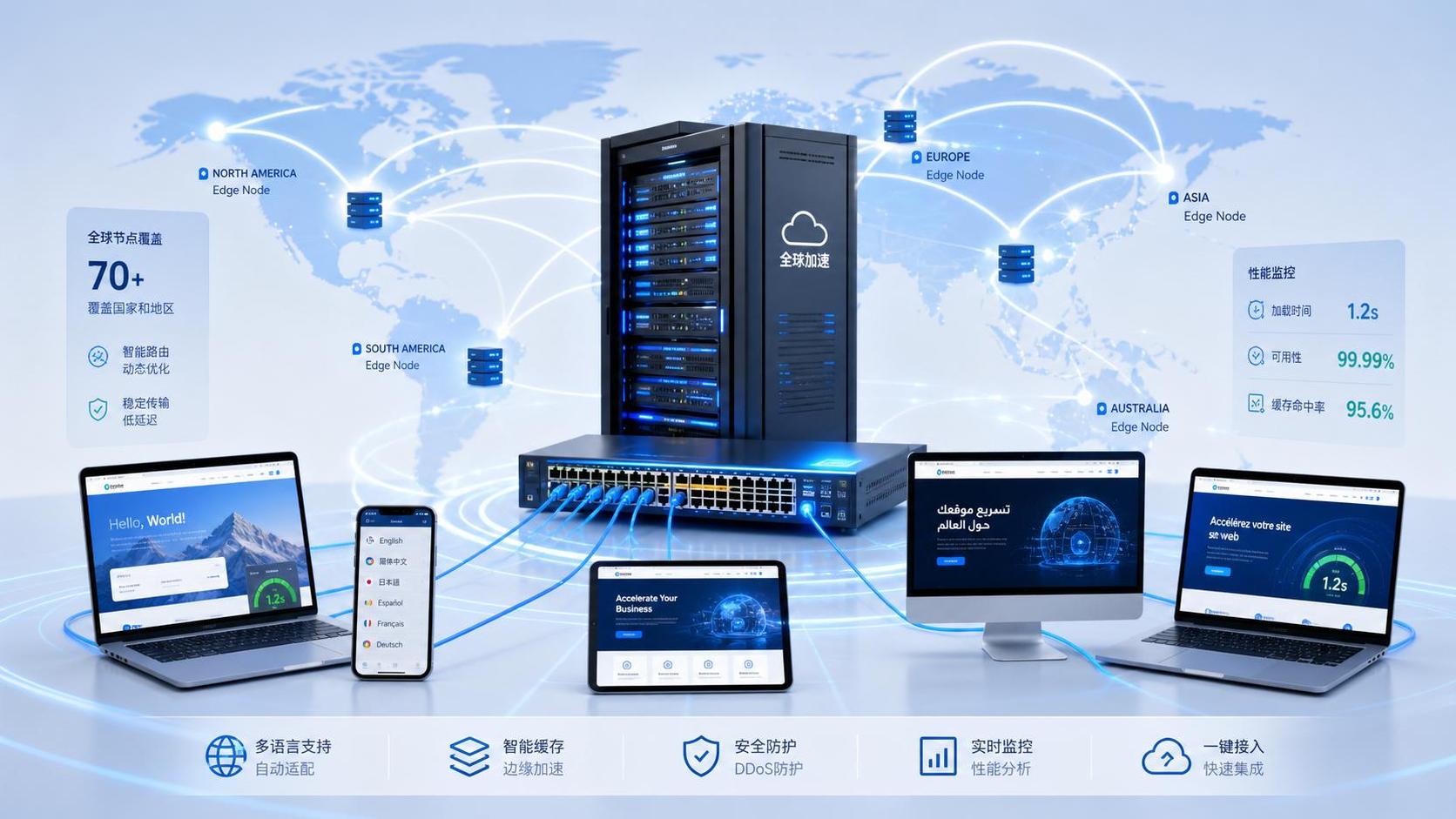
In global market competition, "Why is website loading speed crucial?" is an unavoidable question for every export manager. Research shows that when page load times exceed 3 seconds, user bounce rates can reach 53%. Meanwhile, search engines like Google and Bing have long incorporated website performance into ranking algorithms. To address this pain point, EasyYunbao employs global CDN acceleration technology to resolve regional response discrepancies. "What is global CDN acceleration?" It involves deploying cache servers across multiple global nodes, allowing users to access data from the nearest server, achieving millisecond-level loading experiences.
EasyYunbao's system covers server clusters across seven continents, improving independent website loading speeds by an average of 40%. This optimization not only reduces user wait times but also significantly boosts SEO scores. If enterprises adopt AI-driven automated detection tools, they can receive real-time feedback on response delays across global sites for precise adjustments. For instance, when the system detects increased latency in European nodes, it automatically redirects traffic to backup nodes, ensuring stable operation. For the question "Are independent websites suitable for B2B exports?" speed and stability are key metrics for B2B clients when choosing partners.
3. How does an intelligent website-building platform achieve automated SEO and content optimization?
SEO is the core long-term driver for independent website operations. Many enterprises build foreign trade independent websites but struggle to gain traffic due to slow content updates or unscientific keyword layouts. AI marketing engines can use natural language processing and keyword clustering algorithms to automatically identify long-tail keywords with high product relevance. They can generate thousands of high-quality content topics in seconds and distribute them to relevant pages, significantly improving the success rate of "How to get website content recommended by AI search?"
For example, EasyYunbao's system dynamically generates internal link structures and URL hierarchies based on user behavior paths, algorithmically controlling "keyword density." This avoids over-optimization issues in traditional SEO while continuously improving average session duration and conversion rates. A notable case: a manufacturing client reorganized keyword layouts using AI, achieving an 80%+ increase in overseas organic traffic. This result validates the tangible benefits of data-driven intelligent algorithms for enterprises.
4. Multilingual website construction: Is AI translation reliable?
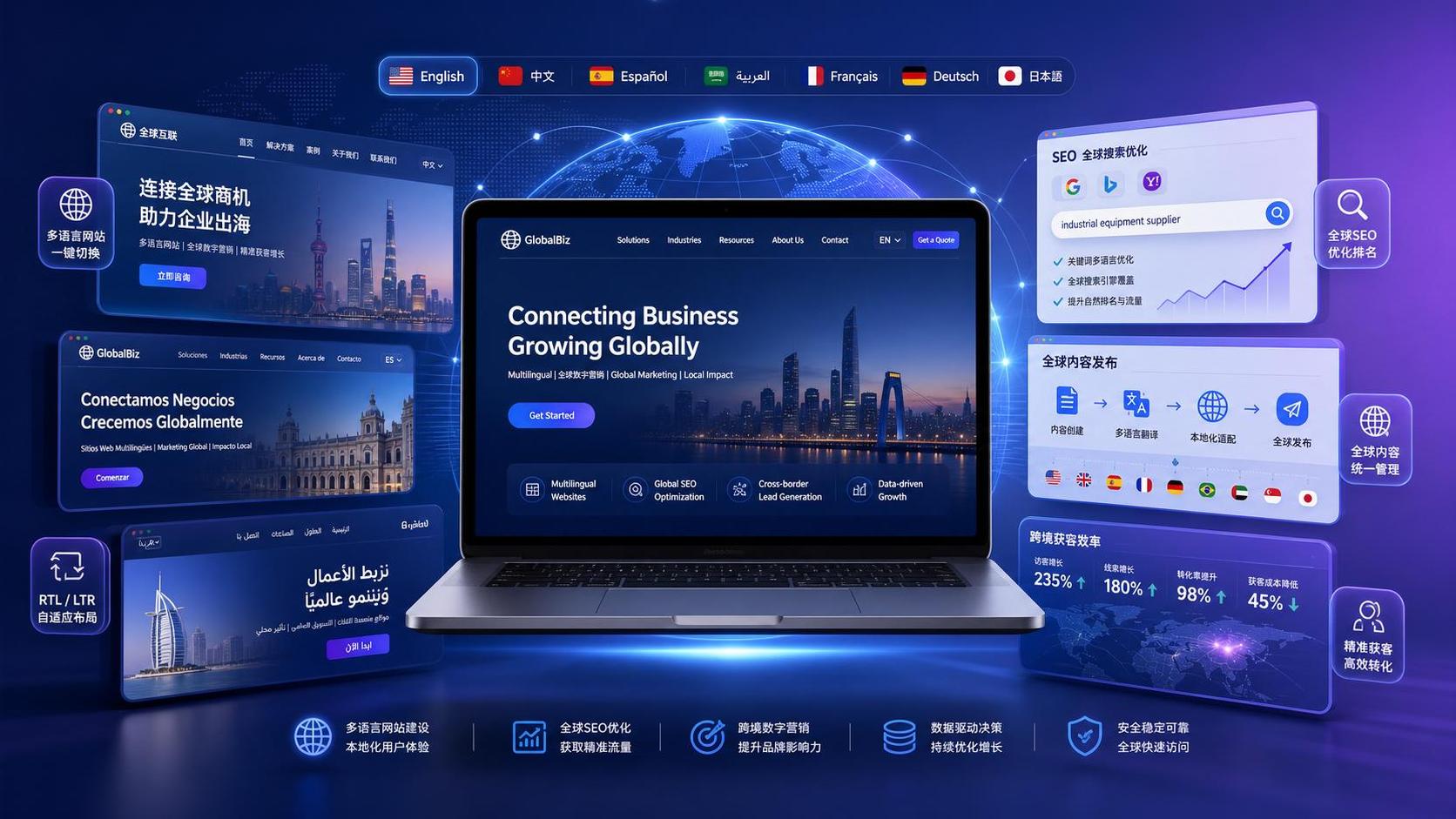
"Is AI translation reliable for multilingual websites?" is a common concern for enterprises building overseas sites. AI translation has made breakthroughs in natural language understanding and cultural context adaptation, especially in B2B scenarios, where it can recognize industry terminology and match language styles. For example, EasyYunbao's AI translation engine automatically identifies Chinese expression habits, supporting independent website construction in Chinese, English, Spanish, and other languages. Data shows that multilingual websites typically require several languages, depending on target market coverage and client distribution. For enterprises targeting Asian, European, and American markets, configuring 3-6 major language versions is recommended to balance investment and returns.
The intelligence of AI translation systems lies not just in direct translation but in contextually generating idiomatic expressions and automatically synchronizing with content management systems. For operations teams, this means no manual editing of foreign-language content—the system auto-generates and publishes, saving over 50% in translation and proofreading costs. For SEO, different language versions can independently participate in local search rankings, expanding global exposure. With AI, enterprises are no longer constrained by language barriers and can flexibly build multilingual independent websites.
5. Differences and strategic choices between independent websites and platform stores
Many enterprises entering overseas markets struggle with "What’s the difference between independent websites and platform stores?" In reality, platform stores like Amazon and AliExpress rely more on platform traffic, while independent websites focus on brand self-operation and data autonomy. For B2B enterprises seeking long-term brand equity and precise lead generation, independent websites can accumulate customer behavior data, helping establish private marketing funnels to improve repurchase rates and profit margins.
From EasyYunbao's client cases, enterprises often test markets via platforms before using AI website-building systems to create independent sites for layered traffic operations. For example, a machinery equipment manufacturer used AI ad managers for multilingual ad placements, with ad materials automatically matching language versions, increasing conversion rates by 200%. This AI-driven commercial closed-loop model can also be applied to other digital operations, such as Lean Management in Public Hospital Cost Control, both demonstrating AI's cross-industry potential in efficiency and cost control.

6. Future trends and enterprise implementation recommendations
Industry trends indicate continued evolution in AI website-building and global operations. Future AI will not only participate in website construction and SEO but also predict market demands via algorithms for intelligent product selection and precise content distribution. EasyYunbao is actively developing an AI + blockchain ecosystem to build traceable digital marketing chains, providing SMEs with a trustworthy data value system. This trend will further lower website-building barriers and shift the foreign trade ecosystem from external platform dependency to owned brand asset operations.
For practical steps on building an independent foreign trade website, enterprises can start with three actions: 1) Choose an intelligent website-building platform with AI and global CDN capabilities; 2) Establish a multilingual SEO content system using AI keyword expansion and auto-generation; 3) Implement precise lead generation via AI ad managers, integrating social media automation tools for brand dissemination. Practice shows this AI-driven digital ecosystem has become a key competitive advantage for global growth. More AI practices are also applicable to workflow optimization, as seen in Lean Management in Public Hospital Cost Control, demonstrating AI's cross-industry potential in efficiency and execution.
Conclusion: Use AI to connect to new engines of global growth
In summary, AI not only helps export enterprises quickly build independent websites but also empowers global CDN acceleration, SEO optimization, multilingual content, and ad placements. For SMEs accelerating internationalization, choosing digital marketing service providers like EasyYunbao with AI R&D capabilities and global resource integration will be a shortcut to growth. Future competition will focus not on price but on speed, intelligence, and brand digital power. Now is the best time to upgrade your independent website strategy and deploy AI marketing. Learn more solutions today and let AI accelerate your global business growth.
- Website Development
- Website Builder Platform
- Independent Website Operations
- Multilingual Independent Website
- Independent website building
- AI Smart Website Building
- B2B Foreign Trade
- Multilingual website development
- Yiyingbao
- SEO
- Independent Website
- Smart website builder system
- SEO Optimization
- Smart Website Building
- AI Translation
- EasySite Intelligent Website Builder
- AI Marketing Engine
- Social Media Automation
- Multilingual SEO
- AI Translation Engine
- Independent site SEO
- Independent foreign trade website
- Global CDN Acceleration
- Multilingual website
- Smart Website Platform
- AI Website Building
- Can AI be relied upon for multilingual website translation?
- What is the difference between an independent foreign trade website and a platform store?
- Is a standalone website suitable for B2B foreign trade?
- Can AI help quickly build an independent website?
- How can website content be recommended by AI search?
- Why is website loading speed so important?
- What is global CDN acceleration?
- How can intelligent website platforms achieve automatic SEO?
- AI Marketing
- Digital Marketing Services
Related Articles
Related Products
 EasyCamp SaaS Smart Website Marketing SystemE-Yingbao SaaS Smart Website Marketing System: AI-powered, zero-code website building. Rapidly launch multilingual independent e-commerce sites in just 10 minutes. Global server acceleration and AI-driven SEO optimization empower businesses to efficiently connect with global markets. The seamless integration of technology and user-friendly operation makes building e-commerce sites incredibly simple.
 AI+SEM Intelligent Advertising Marketing SystemAI+SEM drives intelligent ad creation, empowering full-funnel precision advertising marketing. The system automatically generates weekly/monthly reports, AI recommends keywords and target countries, monitors core metrics in real-time with intelligent alerts, and enables one-click high-conversion ad solutions to help quickly acquire customers and improve ROI.
 AI+SEO Dual Engine Optimization ServiceEasyWin AI+SEO Dual Engine Optimization System leverages AI-powered keyword mining, content generation, and comprehensive technical optimization to help foreign trade enterprises acquire high-quality organic traffic, significantly improving search rankings and conversion rates.
 AI+SNS Social Media Marketing SystemYingbao AI+SNS Social Media Marketing System - Precision social capture for the social media era. Supports one-click content synchronization across major platforms like Facebook and LinkedIn. AI intelligently rewrites posts for enhanced relevance. 24/7 AI customer service and user profiling analysis empower businesses to efficiently expand into global markets.
 AI+SEO营销解决方案易营宝AI+SEO营销解决方案,通过AI批量写作、智能生成TDK、精准关键词扩词等功能,全面优化网站SEO效果,提升流量与转化率。助力企业构建高效智能网站新生态。
 AI+SEM Advertising Marketing SolutionsAI+SEM Advertising Marketing Solution leverages AI technology to deeply empower SEM ad campaigns. It automatically generates weekly/monthly reports using AI, presenting account data across multiple dimensions for comprehensive insights into campaign performance and trends. The system precisely recommends keywords and target countries, intelligently generates high-conversion ad copy, and enables one-click activation of efficient campaign plans to help businesses rapidly acquire customers. Simultaneously, it monitors core metrics in real time, intelligently identifies abnormal fluctuations, and issues timely alerts to ensure stable, high-return advertising results.
 Domain Name ServicesEasyWin provides professional domain name services, including intelligent queries, one-stop registration, brand protection, and full lifecycle management, helping businesses build a digital brand image.
 EasyOperate B2C Cross-Border E-Commerce Platform & Independent WebsiteEasyStore B2C Cross-border E-commerce Independent Store is an intelligent website building and cross-border e-commerce integrated solution independently developed by EasyStore Information Technology (Beijing) Co., Ltd. The system is specially designed for small and medium-sized as well as large export enterprises, integrating 'website building, operation, marketing, advertising, and conversion' into one, helping enterprises quickly establish cross-border e-commerce independent stores to achieve brand globalization and global sales growth.
The platform supports multiple languages, multiple currencies, and multi-channel marketing, with built-in AI intelligent translation and SEO optimization systems, suitable for mainstream markets such as Southeast Asia, Europe and America, Latin America, and the Middle East, assisting Chinese manufacturing enterprises in efficiently deploying international e-commerce strategies. SSL证书易营宝提供专业SSL安全证书服务,包括单域名和泛域名证书,确保网站数据传输加密、身份验证和完整性保护,助力企业建立安全可信的在线业务环境。









