









EasyOperate User Experience: 6 Practical Suggestions for Operational Pain Points and Efficiency Improvement
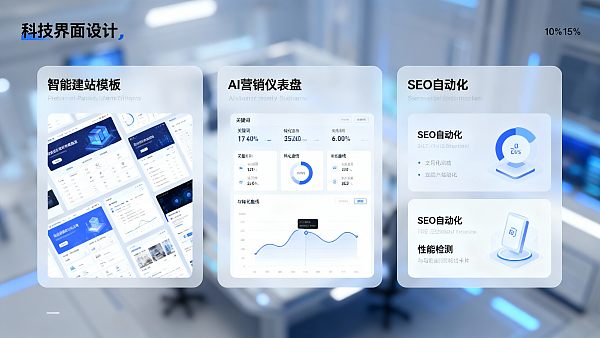
Introduction This article adopts a hands-on perspective to deeply analyze the user experience and competitive comparison of Yiyinbao with intelligent website-building platforms. It also proposes six actionable efficiency improvement recommendations tailored to the pain points encountered by operational staff in daily workflows. Targeting users, operators, enterprise decision-makers, project managers, after-sales support personnel, distributors, and end consumers, the article aims to help different roles quickly assess platform compatibility and optimization paths using evidence-based methods, while providing executable references and implementation checklists for procurement and selection.
Definition and Product Overview
Yiyinbao Information Technology (Beijing), founded in 2013 and headquartered in Beijing, is a global digital marketing service provider driven by artificial intelligence and big data. With a decade of industry expertise, the company focuses on technological innovation and localized service strategies, offering comprehensive solutions covering intelligent website building, SEO optimization, social media marketing, and ad placement. It has helped over 100,000 enterprises achieve global growth and was listed among China's Top 100 SaaS Companies in 2023, with an average annual growth rate exceeding 30%. Core capabilities include an intelligent website-building system, AI marketing engine, social media automation, AI ad management, support for multilingual independent site construction integrated with AI translation engines, and global server clusters across seven continents to enhance site loading speed and SEO scores. At the product level, Yiyinbao provides integrated solutions with modular configurations for enterprises of different scales. In practical operations, platform usability, stability, and operational support are the three most critical dimensions for operators.
Industry Background and Application Scenarios: Market and Role Pain Point Analysis
From a market perspective, intelligent website-building platforms have matured rapidly, but significant gaps exist among vendors in localized support, multilingual SEO, performance optimization, and ad ecosystem capabilities. Common operational pain points include low publishing efficiency, difficulties in standardizing content and TDK, high cross-platform ad material adaptation costs, and challenges in correlating ad data. Application scenarios cover new market entry, product promotions, long-term lead generation, cross-border e-commerce, and overseas ad placements. Different scenarios have varying requirements for page loading, global CDN coverage, multilingual translation quality, and SEO automation, necessitating scenario-driven functional prioritization during selection while factoring in operational costs and implementation timelines.
Technical Performance, Competitive Comparison, and Product Examples
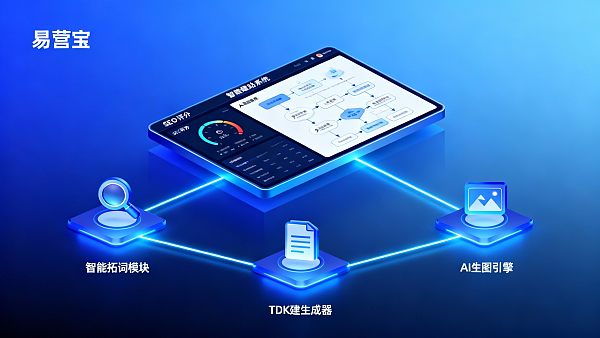
For technical performance evaluation, we recommend focusing on key metrics: site loading speed, uptime, SEO score, multilingual translation accuracy, and ad placement ecosystem capabilities. Yiyinbao demonstrates clear advantages in these dimensions. For instance, its intelligent website-building system improves loading speed by 40% through global nodes, increases average SEO scores by 35%, and features an AI marketing engine for automated keyword expansion, TDK generation, and AI image creation—producing thousands of high-quality content pieces daily. Competitive comparisons should use quantifiable scoring tables to verify vendor commitments against actual monitoring data.
Practical Operational Recommendations: Six Actionable Efficiency Improvement Measures

For operational teams, we summarize six practical recommendations, each focusing on quantifiable KPIs for validation within 30-90 days: 1) Optimize publishing and approval workflows by integrating page writing, templates, and TDK generation into CI pipelines, reducing rework through standardized templates. 2) Establish multilingual validation mechanisms, using AI translation for drafts followed by rapid local editor reviews to balance speed and compliance. 3) Implement automated monitoring and intelligent alerts with threshold settings for core pages, performance metrics, and conversion leaks. 4) Integrate ad strategies with on-site behavior by closing loops between ad placements, site searches, and keyword conversion data to optimize bids and creatives. 5) Build creative libraries and material templates using AI-generated images and high-CTR copy templates to reduce manual creative costs. 6) Develop operational and version rollback protocols for multi-region deployments, including gray release rules. These recommendations can be deeply integrated with platform-native features, such as built-in AI marketing engines and ad diagnostic tools for automated reports,投放 strategies, and real-time alerts. A directly applicable product example is our AI+SEM Intelligent Ad Marketing System, which supports smart keyword geo-targeting, high-conversion ad copy generation, and full-funnel data visualization, significantly improving ad efficiency in new market entries and cross-border e-commerce scenarios.
Client Practices, Common Mistakes, and Why Choose Us: Contact Information
Client cases demonstrate cost reductions and improved ad conversion rates after adopting standardized templates, custom TDK, and AI image combinations. Common mistakes include treating AI-generated content as final drafts, overlooking local compliance, and premature multi-region expansion increasing operational complexity. We recommend phased testing, validating traffic channels and conversions in single markets before replicating successful models. Why choose Yiyinbao? Our self-developed AI algorithm platform undergoes annual multi-modal capability iterations and maintains authoritative partnerships with Google, Meta, and Yandex, offering closed-loop capabilities from site building to lead conversion. Our technical infrastructure and global CDN ensure performance and security, complemented by localized implementation, training, and partner support. For rapid POC or industry comparisons, contact our business team for customized evaluations and deliverable results within 30 days, including product trials and implementation plans.
- Website Builder Platform
- Social Media Marketing
- Website detection
- Multilingual Independent Website
- Independent website building
- Yiyingbao
- SEO
- Independent Website
- Smart website builder system
- SEO Optimization
- Smart Website Building
- AI Translation
- AI Marketing Engine
- Social Media Automation
- Multilingual SEO
- AI Translation Engine
- AI+SEM Smart Advertising Marketing System
- Smart Website Platform
- Easy Treasure User Experience
- Global Digital Marketing
- cross-border e-commerce
Related Articles
 How can website data analysis improve conversion rates? First identify high-bounce pages and key loss points
 How much does it cost to build a foreign trade multilingual website?Analysis of the modules and hidden costs that affect quotations
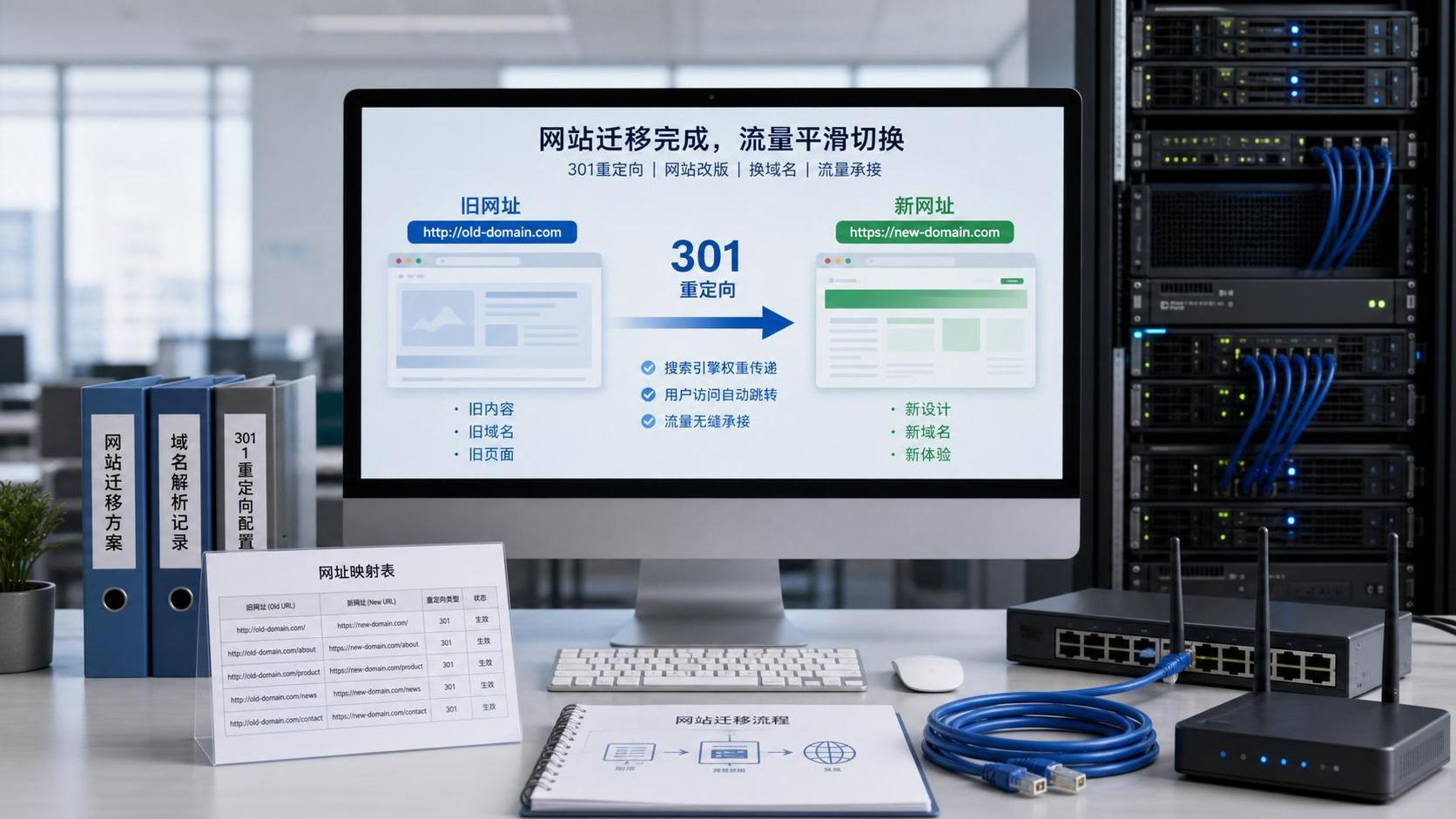
 Detailed explanation of 301 redirect setup methods:which pages must be redirected during a website redesign or domain change


Related Products
