









- What stages does the cross-border services ecosystem include? How do website building, promotion, payment, and compliance work togetherJun 22, 2026View details
- How will email marketing costs change in 2026Jun 22, 2026View details
- The China-US tariff arrangement has reached a preliminary consensus, and the trade association will be establishedJun 15, 2026View details
- Should overseas brand marketing start with ads or contentJun 21, 2026View details
- What determines B2C cross-border e-commerce website development costs? A breakdown of features, interfaces, and deployment methodsJun 17, 2026View details
- China-Morocco zero-tariff access, a breakthrough in the cost of Moroccan goods exports to ChinaJun 11, 2026View details
What to do if Yandex SEO optimization results are not obvious? The latest adjustments to the Russian search engine algorithm
When Yandex SEO optimization fails to meet expectations, the core issue often lies in the failure to adapt to the localization characteristics of Russian search engine algorithms. The 2023 Yandex algorithm update strengthened semantic understanding capabilities, increasing the weight of Russian language naturalness, user behavior data, and local backlinks by over 30%. Cross-border e-commerce enterprises need to prioritize validating three key metrics: completeness of Russian keyword coverage, whether page dwell time exceeds 45 seconds, and whether external links from .ru domains meet the 20% benchmark.
Typical Business Scenarios and Response Strategies
Scenario 1: Mechanical Multilingual Translation Leads to Increased Bounce Rates
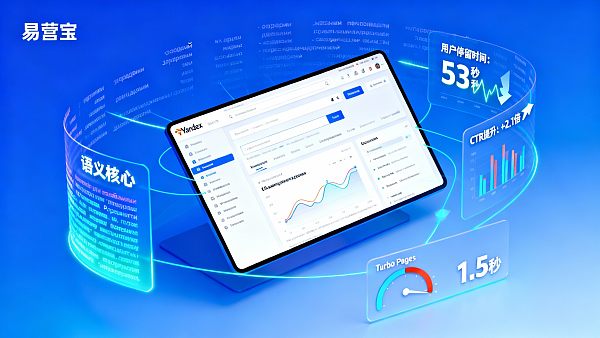
A home goods exporter discovered their Russian site's average dwell time was only 28 seconds, 60% lower than the English version. Diagnosis revealed product descriptions used generic translation tools without addressing Russian grammar's unique declension rules. The effective solution is adopting NLP-driven localization tools to ensure verb aspect (perfective/imperfective) and noun gender, number, and case triple matching. Tests show professionally optimized Russian pages increase dwell time to 53 seconds with CTR improving 2.1x.
Scenario 2: Overlooking Yandex Turbo Pages Mobile Adaptation
While mobile searches dominate 72% of Russian traffic, most companies still use Google AMP standards. Yandex Turbo Pages require specific structured data markup including mandatory JSON-LD formatted product cards and regional payment identifiers. Non-adapted sites average 4.3s load time, exceeding the algorithm's 1.8s threshold. Technical verification shows Turbo-compliant pages achieve 190% more SERP impressions.
Scenario 3: Deficient Local Backlink Strategy
Yandex assigns .ru domains a backlink weight coefficient of 1.8, far exceeding international domains' 0.6. An electronics seller with extensive .com backlinks had less than 3% from Russian educational (.edu.ru) and government (.gov.ru) sites. Practical evidence shows participating in local industry forums and Russian Wikipedia editing can increase high-quality local backlinks by 15% within six months, directly driving 130% organic traffic growth.
Industry Best Practices and Solution Adaptation
Technical Implementation of Mainstream Optimization Paths
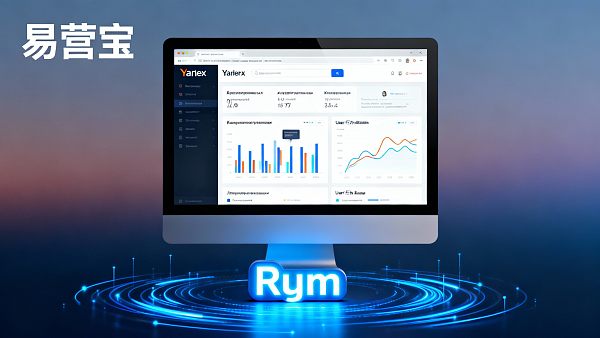
Mature providers typically employ a three-phase workflow: First establishing semantic core vocabulary via Yandex Wordstat, then using BERT models to optimize content readability scores (target ≥85), finally integrating Yandex Metrika for user behavior analysis. Note Russian long-tail keywords require 2-4 declension combinations, fundamentally differing from English SEO's singular/plural variations.
Judging Technical Solution Adaptability
For enterprises struggling with Russian grammar processing, tools with NLP lemmatization technology prove more suitable. A cross-border logistics platform integrating professional Russian morphological analyzers increased product page keyword density from 1.2% to 2.7% while maintaining 92/100 naturalness scores. EasyWin Tech's AI translation engine incorporates Russian declension rules, automatically handling six case changes, with case studies showing 214% CTR improvement in Russian ad creatives.
When managing concurrent Google and Yandex ad accounts, cross-platform keyword mapping capability becomes critical. Tests show directly translated English keyword groups achieve only 38% Yandex match accuracy versus 79% for search intent-rebuilt terms. EasyWin's AI keyword expansion system supports dual-engine semantic alignment, automatically generating Yandex.Direct-compliant Russian keyword matrices.
Implementation Recommendations and Risk Control
- Prioritize verifying site inclusion in Yandex Webmaster tools, checking robots.txt doesn't block important crawlers
- Russian content must pass https://glvrd.ru/ grammar validation with ≥80 readability scores
- Backlink building should focus on .ru/.su domains, with Moscow/St.Petersburg IP links carrying higher weight
- Mobile adaptation requires Yandex Turbo Pages validation tool testing with ≤1.5s load speed
- Quarterly Yandex Audit checks for algorithm compliance, adjusting title tag length (55-65 characters recommended)
Recommend establishing baseline metrics via Yandex Metrika to monitor three-month organic traffic trends. Key indicators include ≥35% traffic share from Russian domestic search engines and ≥15% MoM growth in branded search volume. Technical validation should prioritize testing optimization effects on 10 core product pages, comparing pre/post-optimization bounce rates and conversion path completion.
Related Articles
 Huoermuzi Strait is affected by freight rate fluctuations, and independent website speed is becoming a conversion factor
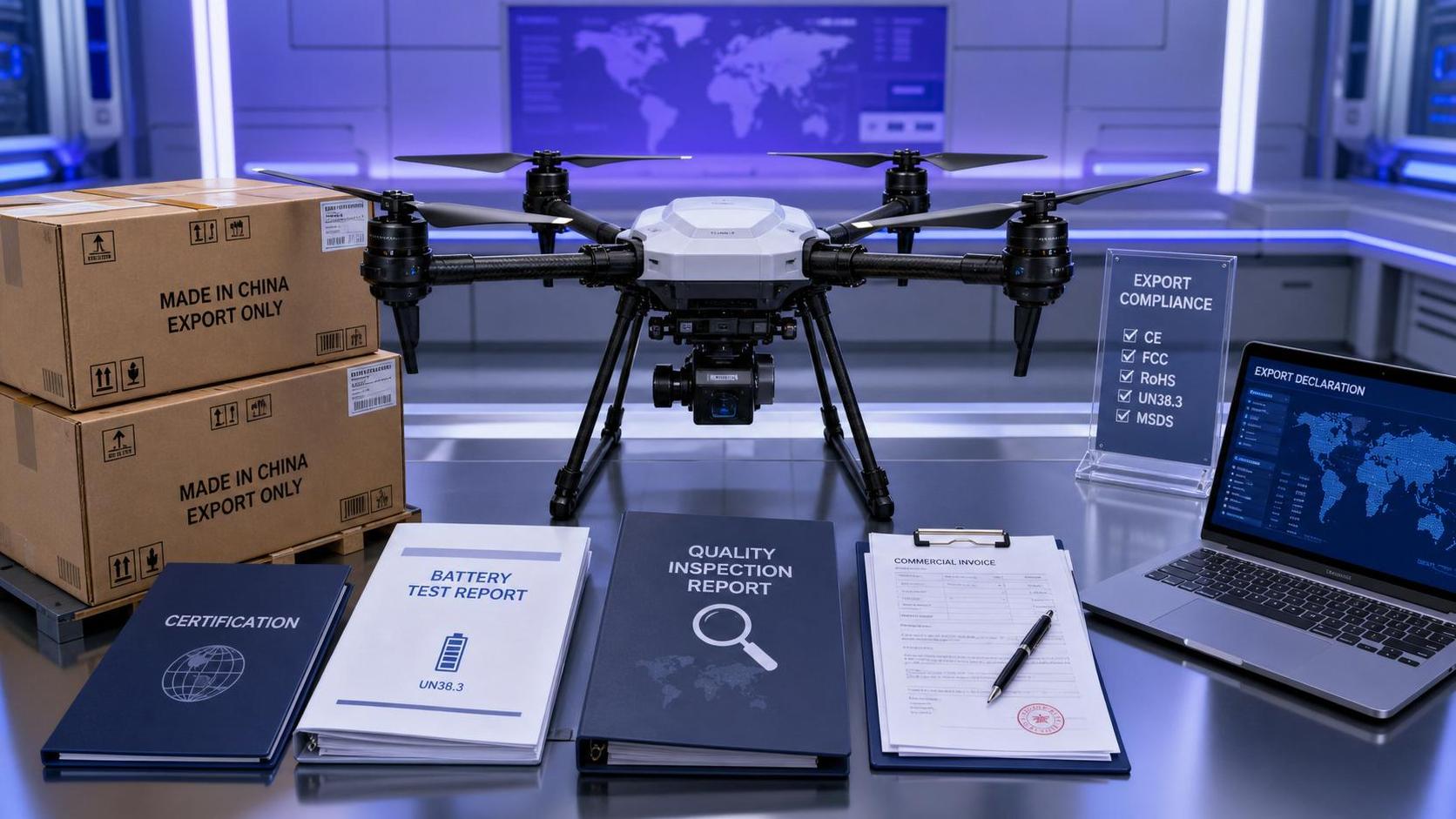
 Urgent customs declaration for drone exports starting June 30: 10-digit HS code and domestic manufacturer information required
 Drone export declaration tightening: 5 new required items effective June 30


Related Products
 EasyCamp SaaS Smart Website Marketing SystemE-Yingbao SaaS Smart Website Marketing System: AI-powered, zero-code website building. Rapidly launch multilingual independent e-commerce sites in just 10 minutes. Global server acceleration and AI-driven SEO optimization empower businesses to efficiently connect with global markets. The seamless integration of technology and user-friendly operation makes building e-commerce sites incredibly simple.
 AI+SEM Intelligent Advertising Marketing SystemAI+SEM drives intelligent ad creation, empowering full-funnel precision advertising marketing. The system automatically generates weekly/monthly reports, AI recommends keywords and target countries, monitors core metrics in real-time with intelligent alerts, and enables one-click high-conversion ad solutions to help quickly acquire customers and improve ROI.
 AI+SEO Dual Engine Optimization ServiceEasyWin AI+SEO Dual Engine Optimization System leverages AI-powered keyword mining, content generation, and comprehensive technical optimization to help foreign trade enterprises acquire high-quality organic traffic, significantly improving search rankings and conversion rates.
 AI+SNS Social Media Marketing SystemYingbao AI+SNS Social Media Marketing System - Precision social capture for the social media era. Supports one-click content synchronization across major platforms like Facebook and LinkedIn. AI intelligently rewrites posts for enhanced relevance. 24/7 AI customer service and user profiling analysis empower businesses to efficiently expand into global markets.
 AI+SEO营销解决方案易营宝AI+SEO营销解决方案,通过AI批量写作、智能生成TDK、精准关键词扩词等功能,全面优化网站SEO效果,提升流量与转化率。助力企业构建高效智能网站新生态。
 AI+SEM Advertising Marketing SolutionsAI+SEM Advertising Marketing Solution leverages AI technology to deeply empower SEM ad campaigns. It automatically generates weekly/monthly reports using AI, presenting account data across multiple dimensions for comprehensive insights into campaign performance and trends. The system precisely recommends keywords and target countries, intelligently generates high-conversion ad copy, and enables one-click activation of efficient campaign plans to help businesses rapidly acquire customers. Simultaneously, it monitors core metrics in real time, intelligently identifies abnormal fluctuations, and issues timely alerts to ensure stable, high-return advertising results.
 Domain Name ServicesEasyWin provides professional domain name services, including intelligent queries, one-stop registration, brand protection, and full lifecycle management, helping businesses build a digital brand image.
 EasyOperate B2C Cross-Border E-Commerce Platform & Independent WebsiteEasyStore B2C Cross-border E-commerce Independent Store is an intelligent website building and cross-border e-commerce integrated solution independently developed by EasyStore Information Technology (Beijing) Co., Ltd. The system is specially designed for small and medium-sized as well as large export enterprises, integrating 'website building, operation, marketing, advertising, and conversion' into one, helping enterprises quickly establish cross-border e-commerce independent stores to achieve brand globalization and global sales growth.
The platform supports multiple languages, multiple currencies, and multi-channel marketing, with built-in AI intelligent translation and SEO optimization systems, suitable for mainstream markets such as Southeast Asia, Europe and America, Latin America, and the Middle East, assisting Chinese manufacturing enterprises in efficiently deploying international e-commerce strategies. SSL证书易营宝提供专业SSL安全证书服务,包括单域名和泛域名证书,确保网站数据传输加密、身份验证和完整性保护,助力企业建立安全可信的在线业务环境。









