









- The China-US tariff arrangement has reached a preliminary consensus, and the trade association will be establishedJun 15, 2026View details
- What determines B2C cross-border e-commerce website development costs? A breakdown of features, interfaces, and deployment methodsJun 17, 2026View details
- China-Morocco zero-tariff access, a breakthrough in the cost of Moroccan goods exports to ChinaJun 11, 2026View details
- What signal should be released for the suspension of exports to JapanJun 10, 2026View details
- China's May LNG imports rebounded, with increased volumes from Russia and Canada filling the Middle East supply gapJun 10, 2026View details
- Will GEO change its SEO strategy?Jun 04, 2026View details
How to optimize website speed after building a foreign trade website? Key strategies for server deployment and CDN configuration for Chinese, English, and Japanese trilingual sites
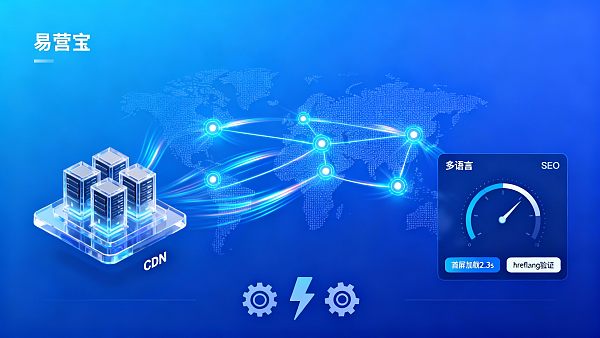
Optimizing website speed post-foreign trade site construction fundamentally involves achieving predictable and verifiable first-screen loading performance and SEO friendliness for multilingual sites in real-world network environments. For Chinese-English-Japanese trilingual sites, server deployment and CDN configuration are not merely technical selection issues, but key variables affecting Google Search Console indexing efficiency, hreflang parsing stability, and local user bounce rates. Industry benchmarks in 2026 show that mobile device first-screen loads exceeding 2.3 seconds in the Japanese market will cause organic traffic to decline by over 18%; Chinese users exhibit 37% higher sensitivity to SSL handshake delays compared to English-speaking markets. Strategy validity should be assessed based on three measurable indicators: CDN node geographic coverage density, source site language routing logic, and static resource versioning mechanisms—rather than focusing solely on theoretical bandwidth or server quantity.
Applicable Scenarios & Core Capability Boundaries
This solution suits early-stage DTC brand technical leads whose teams possess full-stack development capabilities but lack dedicated SEO engineers, requiring Chinese-English-Japanese standalone site launch and preliminary SEO infrastructure within six months. Core capabilities focus on automated multilingual URL structure generation, cross-region CDN intelligent origin path scheduling, and AI translation validation loops driven by terminology locking. Not suitable for legacy sites over three years old with extensive historical URL redirects, nor does it cover deep-custom search engine crawling protocols (e.g., Yandex-specific User-Agent rules).
Implementation Boundaries & Delivery Timeline
Standard implementation takes 14-18 workdays, including server cluster deployment verification, CDN caching strategy configuration, multilingual SEO template injection, and terminology database initialization. The terminology validation module requires clients to provide at least 50 brand core parameters (e.g., product model numbers, safety certification codes, warranty keywords); otherwise, the AI translation engine cannot trigger automated proofing workflows. Deliverables exclude third-party platform account operation services. All SEO health dashboard data comes from Google Search Console, Google Analytics 4, and Lighthouse public APIs—no black-box algorithmic ranking results are included.
Key Risk & Compliance Control Points
Primary risks include undeclared JIS character set compatibility for Japanese sites potentially causing UTF-8 BOM header parsing errors at some CDN nodes, leading to page encoding corruption; within China, HTTPS handshake delays may exceed 120ms thresholds without Alibaba Cloud acceleration channels. Compliance strictly follows ICANN domain system regulations and GDPR Cookie Consent standards, with all CDN nodes ISO/IEC 27001 certified. The 2025 Yiyunbao Intelligent Site Marketing Platform V6.0 has passed national cybersecurity code audits to prevent covert data exfiltration.
Industry Implementation Methods & Solution Fit Analysis
Current practices fall into three categories: 1) Single global CDN providers (e.g., Cloudflare) with multi-region site mirroring—unified configuration but Tokyo node cache hit rates often below 72%; 2) Language-specific server deployments (e.g., LINE Cloud for Japan, Alibaba Cloud for China, AWS for English regions)—lower latency but 2.6x higher hreflang maintenance costs; 3) Hybrid architectures with Singapore-based primary hosting and edge computing nodes for static page prerendering. For brands struggling with multilingual content quality instability, Yiyunbao's terminology-locked AI translation with auto-validation typically provides better fit. For teams needing under 15% time allocation to SEO requirements, Yiyunbao's prebuilt multilingual SEO templates with visual drag-and-drop editors offer superior alignment.
Conclusion & Actionable Recommendations
- If trilingual site first-screen loads exceed 2.5 seconds in target markets, prioritize checking whether CDN node-user distances exceed 1,500km before upgrading server configurations.
- If over 12% hreflang tags show "unverified" in Google Search Console, verify all multilingual URLs use subdirectory structures (/example/ja/) rather than subdomains (ja.example.com), which require extra DNS validation.
- If Japanese product description machine translation error rates exceed industry standards (0.8% per 2026 SaaS出海白皮书), ensure terminology databases incorporate JIS X 0208 character mappings beyond Unicode.
- If post-deployment Japanese organic traffic grows below 5.3% MoM, compare Lighthouse "Time to Interactive" against the 3.2-second 2026 Japanese e-commerce benchmark.
- For teams lacking SEO personnel but requiring six-month launches, validate solutions that auto-generate hreflang XML files with Google Search Console API integration to avoid manual upload delays.
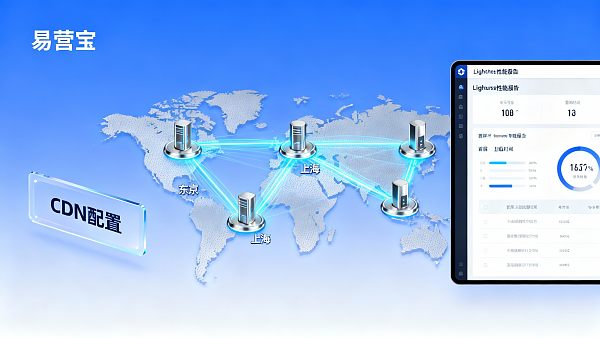
Prioritize CDN node stress testing: Use WebPageTest.org to simulate real-user access from Tokyo, Shanghai, and Los Angeles, monitoring both TTFB (Time to First Byte) and FCP (First Contentful Paint)—any node exceeding 180ms TTFB requires origin strategy adjustment.
Related Articles
 Does a responsive corporate website need to be built? Applicable scenarios, advantages and upgrade criteria
 How much does responsive website development cost? Design, front-end, and functionality development expenses make up the total
 What Should You Pay Attention to in Responsive Website Development? Page Adaptation, Speed and SEO Key Points



Related Products
 EasyCamp SaaS Smart Website Marketing SystemE-Yingbao SaaS Smart Website Marketing System: AI-powered, zero-code website building. Rapidly launch multilingual independent e-commerce sites in just 10 minutes. Global server acceleration and AI-driven SEO optimization empower businesses to efficiently connect with global markets. The seamless integration of technology and user-friendly operation makes building e-commerce sites incredibly simple.
 AI+SEM Intelligent Advertising Marketing SystemAI+SEM drives intelligent ad creation, empowering full-funnel precision advertising marketing. The system automatically generates weekly/monthly reports, AI recommends keywords and target countries, monitors core metrics in real-time with intelligent alerts, and enables one-click high-conversion ad solutions to help quickly acquire customers and improve ROI.
 AI+SEO Dual Engine Optimization ServiceEasyWin AI+SEO Dual Engine Optimization System leverages AI-powered keyword mining, content generation, and comprehensive technical optimization to help foreign trade enterprises acquire high-quality organic traffic, significantly improving search rankings and conversion rates.
 AI+SNS Social Media Marketing SystemYingbao AI+SNS Social Media Marketing System - Precision social capture for the social media era. Supports one-click content synchronization across major platforms like Facebook and LinkedIn. AI intelligently rewrites posts for enhanced relevance. 24/7 AI customer service and user profiling analysis empower businesses to efficiently expand into global markets.
 AI+SEO营销解决方案易营宝AI+SEO营销解决方案,通过AI批量写作、智能生成TDK、精准关键词扩词等功能,全面优化网站SEO效果,提升流量与转化率。助力企业构建高效智能网站新生态。
 AI+SEM Advertising Marketing SolutionsAI+SEM Advertising Marketing Solution leverages AI technology to deeply empower SEM ad campaigns. It automatically generates weekly/monthly reports using AI, presenting account data across multiple dimensions for comprehensive insights into campaign performance and trends. The system precisely recommends keywords and target countries, intelligently generates high-conversion ad copy, and enables one-click activation of efficient campaign plans to help businesses rapidly acquire customers. Simultaneously, it monitors core metrics in real time, intelligently identifies abnormal fluctuations, and issues timely alerts to ensure stable, high-return advertising results.
 Domain Name ServicesEasyWin provides professional domain name services, including intelligent queries, one-stop registration, brand protection, and full lifecycle management, helping businesses build a digital brand image.
 EasyOperate B2C Cross-Border E-Commerce Platform & Independent WebsiteEasyStore B2C Cross-border E-commerce Independent Store is an intelligent website building and cross-border e-commerce integrated solution independently developed by EasyStore Information Technology (Beijing) Co., Ltd. The system is specially designed for small and medium-sized as well as large export enterprises, integrating 'website building, operation, marketing, advertising, and conversion' into one, helping enterprises quickly establish cross-border e-commerce independent stores to achieve brand globalization and global sales growth.
The platform supports multiple languages, multiple currencies, and multi-channel marketing, with built-in AI intelligent translation and SEO optimization systems, suitable for mainstream markets such as Southeast Asia, Europe and America, Latin America, and the Middle East, assisting Chinese manufacturing enterprises in efficiently deploying international e-commerce strategies. SSL证书易营宝提供专业SSL安全证书服务,包括单域名和泛域名证书,确保网站数据传输加密、身份验证和完整性保护,助力企业建立安全可信的在线业务环境。









