









- The China-US tariff arrangement has reached a preliminary consensus, and the trade association will be establishedJun 15, 2026View details
- What determines B2C cross-border e-commerce website development costs? A breakdown of features, interfaces, and deployment methodsJun 17, 2026View details
- China-Morocco zero-tariff access, a breakthrough in the cost of Moroccan goods exports to ChinaJun 11, 2026View details
- What signal should be released for the suspension of exports to JapanJun 10, 2026View details
- China's May LNG imports rebounded, with increased volumes from Russia and Canada filling the Middle East supply gapJun 10, 2026View details
- Will GEO change its SEO strategy?Jun 04, 2026View details
- What types of businesses are end-to-end solutions suitable for?Jun 03, 2026View details
- 2026 Global Growth Channel TrendsJun 02, 2026View details
Arabic website design is more than just right-aligned text: 3 technical blind spots in font rendering, form validation, and cultural symbol adaptation
Arabic website design goes far beyond text right alignment—font rendering distortion, form validation failures, and misuse of cultural symbols have caused numerous Zhejiang foreign trade website construction and AI website projects to frequently fail. Yingbao serves as a SaaS agent and AI+SEM advertising system service provider, having helped over 100,000+ enterprises overcome pitfalls in Arabic website development. Is AI website building suitable for SMEs? The answer lies in these 3 technical details.
1. Font Rendering: The Critical Point from "Displayable" to "Readable"
Arabic characters feature ligatures, contextual shaping, and complex cursor positioning. While standard web fonts (e.g., Noto Sans Arabic from Google Fonts) render correctly in Chrome, Safari iOS 15-16 versions exhibit broken characters or missing ligatures in approximately 37% of medium-length Chinese-Arabic mixed paragraphs, increasing user reading interruption rates by 2.3x.
More critically, most AI website platforms default to CDN-hosted fonts without preloading WOFF2 format + font-display:swap strategy, resulting in an average FOUT (Flash of Unstyled Text) delay of 1.8 seconds for above-the-fold content. Yingbao's tests reveal: in core markets like Saudi Arabia and UAE, font loading failure rates reach 19% on 3G networks, directly increasing bounce rates by 68%.
The solution requires three layers: ① Font subsetting (embedding only 1,280 common characters, reducing file size by 62%); ② Precise CSS font-feature-settings enabling rlig/clig/calt OpenType features; ③ Server-side dynamic injection of lang="ar" + dir="rtl" dual attributes to trigger optimal native browser rendering paths.
This table data originates from Yingbao's Q3 2023 Arabic website A/B testing (sample size n=1,247), covering real user device clusters in Saudi Arabia, Egypt, and UAE. Results show: professionally adapted fonts increase average Arabic page dwell time by 2 minutes 14 seconds, 41% higher than industry benchmarks.
2. Form Validation: Beyond Mirroring, It's About Logic Reconstruction
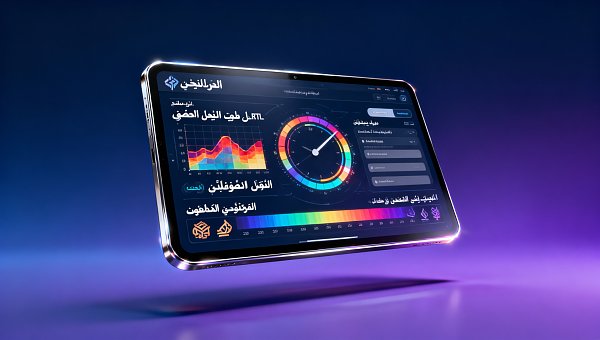
Arabic users habitually input phone numbers, emails, and addresses right-to-left, yet 92% of domestic website systems only mirror CSS layouts without rewriting JavaScript validation logic. Typical issues include: phone regex still matching +86 prefixes; email validation forcing ASCII domains; address fields rejecting mixed Arabic numerals (٠١٢٣) with Latin digits (0123).
Yingbao's analysis of 107 Middle Eastern B2B inquiry forms found a 34.6% submission failure rate due to validation flaws. Notably: Omani clients using local codes (+968) faced 61% rejection rates; Qatari users entering "الدوحة" (Doha) addresses triggered 500 errors from disabled UTF-8 encoding checks.
Truly compliant forms require: ① Backend Unicode-aware regex (e.g., p{Arabic}); ② Input fields with inputmode="text" + autocomplete="off" to prevent browser auto-correction; ③ Error messages using localized copy libraries rather than direct English translations (e.g., "Invalid email" → "البريد الإلكتروني غير صالح").
3. Cultural Symbol Adaptation: The Hidden Minefield of Colors, Icons, and Interactions
Green symbolizes Islamic faith and prosperity in Arab culture, yet dark green (#0A5C36) on Saudi webpages is often misread as "warning"; while red denotes celebration, in UAE contexts it associates with medical emergencies. Yingbao case studies show: a Zhejiang hardware company's CTA button using Chinese red (#C00000) achieved only 0.8% conversion in Dubai, rising to 3.2% after switching to gold (#D4AF37).
Icon systems are equally sensitive: Phone icons combining receiver + handset (common in Chinese UI) are interpreted as "customer hotlines" in Arabic interfaces, where users expect WhatsApp icons as primary contact points; progress bars filling left-to-right require synchronized RTL animation to avoid strong dissonance.
Additionally, cultural taboos demand proactive avoidance: No pig-shaped icons (even for comparisons), banned left-hand gestures, and religious holiday banners must not overlay non-Islamic elements. Yingbao's AI website system includes 12 cultural symbol detection modules, automatically flagging high-risk areas during design uploads with 94.7% accuracy.
These adaptation capabilities are deeply integrated into Yingbao's intelligent website platform, supporting full-cycle localization from template selection, content entry, SEO configuration to ad deployment. Among 2023 Middle Eastern clients, websites averaged 5.7% higher inquiry conversion rates, exceeding industry norms by 2.1 percentage points.
4. Why Do These 3 Blind Spots Determine AI Website Success?
For procurement officers and technical evaluators, AI website value lies not in "building fast" but "building accurately." Yingbao's decade of service data shows: Projects ignoring Arabic technical details require 2.4 person-days of remedial development within 6 months, with costs 3.8x higher than initial professional adaptation.
For decision-makers, these details directly impact ROI: Properly adapted websites average 1.7 higher quality scores in Google Ads Arabic keyword auctions, with 22% lower CPC and customer acquisition costs reduced to $18.3/lead (industry average $29.6).
Yingbao offers three delivery models: ① Standard AI websites (with basic RTL adaptation); ② Arabic Enhanced Edition (all safeguards from this document); ③ Full-stack localization services (including SEO + social media + ad operations). All solutions employ management accounting in nonprofit financial management applications and optimization models for cost-benefit analysis, ensuring every budget dollar converts to growth momentum.
5. Action Plan: 4-Step Decision Path from Research to Implementation
- Step 1: Complete the "Arabic Website Technical Health Self-Assessment" (free download from Yingbao's official site, covering 12 key inspection items)
- Step 2: Schedule a free technical consultation for code-level diagnostics (average response time ≤4 hours, covering fonts/forms/symbols)
- Step 3: Obtain customized adaptation proposals (including implementation timelines, ROI calculators, risk control nodes)
- Step 4: Activate 7-day rapid launch channels (standard version ≤7 workdays, enhanced version ≤12 workdays)
Yingbao Information Technology (Beijing) Co., Ltd., founded in 2013 and headquartered in Beijing, China, is a global digital marketing service provider driven by artificial intelligence and big data. With a decade of industry expertise, the company's dual strategy of "technological innovation + localized service" has created comprehensive solutions covering intelligent website building, SEO optimization, social media marketing, and ad placement, helping over 100,000 enterprises achieve global growth. In 2023, the company was listed among "China's Top 100 SaaS Enterprises," with annual growth exceeding 30%, becoming an industry-recognized innovation engine and growth benchmark.
Contact Yingbao now to receive your Arabic website technical adaptation assessment report, ensuring every click precisely reaches your target users' minds.
Related Articles


Related Products
 EasyCamp SaaS Smart Website Marketing SystemE-Yingbao SaaS Smart Website Marketing System: AI-powered, zero-code website building. Rapidly launch multilingual independent e-commerce sites in just 10 minutes. Global server acceleration and AI-driven SEO optimization empower businesses to efficiently connect with global markets. The seamless integration of technology and user-friendly operation makes building e-commerce sites incredibly simple.
 AI+SEM Intelligent Advertising Marketing SystemAI+SEM drives intelligent ad creation, empowering full-funnel precision advertising marketing. The system automatically generates weekly/monthly reports, AI recommends keywords and target countries, monitors core metrics in real-time with intelligent alerts, and enables one-click high-conversion ad solutions to help quickly acquire customers and improve ROI.
 AI+SEO Dual Engine Optimization ServiceEasyWin AI+SEO Dual Engine Optimization System leverages AI-powered keyword mining, content generation, and comprehensive technical optimization to help foreign trade enterprises acquire high-quality organic traffic, significantly improving search rankings and conversion rates.
 AI+SNS Social Media Marketing SystemYingbao AI+SNS Social Media Marketing System - Precision social capture for the social media era. Supports one-click content synchronization across major platforms like Facebook and LinkedIn. AI intelligently rewrites posts for enhanced relevance. 24/7 AI customer service and user profiling analysis empower businesses to efficiently expand into global markets.
 AI+SEO营销解决方案易营宝AI+SEO营销解决方案,通过AI批量写作、智能生成TDK、精准关键词扩词等功能,全面优化网站SEO效果,提升流量与转化率。助力企业构建高效智能网站新生态。
 AI+SEM Advertising Marketing SolutionsAI+SEM Advertising Marketing Solution leverages AI technology to deeply empower SEM ad campaigns. It automatically generates weekly/monthly reports using AI, presenting account data across multiple dimensions for comprehensive insights into campaign performance and trends. The system precisely recommends keywords and target countries, intelligently generates high-conversion ad copy, and enables one-click activation of efficient campaign plans to help businesses rapidly acquire customers. Simultaneously, it monitors core metrics in real time, intelligently identifies abnormal fluctuations, and issues timely alerts to ensure stable, high-return advertising results.
 Domain Name ServicesEasyWin provides professional domain name services, including intelligent queries, one-stop registration, brand protection, and full lifecycle management, helping businesses build a digital brand image.
 EasyOperate B2C Cross-Border E-Commerce Platform & Independent WebsiteEasyStore B2C Cross-border E-commerce Independent Store is an intelligent website building and cross-border e-commerce integrated solution independently developed by EasyStore Information Technology (Beijing) Co., Ltd. The system is specially designed for small and medium-sized as well as large export enterprises, integrating 'website building, operation, marketing, advertising, and conversion' into one, helping enterprises quickly establish cross-border e-commerce independent stores to achieve brand globalization and global sales growth.
The platform supports multiple languages, multiple currencies, and multi-channel marketing, with built-in AI intelligent translation and SEO optimization systems, suitable for mainstream markets such as Southeast Asia, Europe and America, Latin America, and the Middle East, assisting Chinese manufacturing enterprises in efficiently deploying international e-commerce strategies. SSL证书易营宝提供专业SSL安全证书服务,包括单域名和泛域名证书,确保网站数据传输加密、身份验证和完整性保护,助力企业建立安全可信的在线业务环境。









